Linens & Laundry
The Coastal Hotel-Grade Zippered Mattress Encasement Laundering Protocol: Mitigating Polyurethane Membrane Delamination, Salt-Air Zipper Corrosion, and Sand-Abrasion Failures in Grand Strand Rentals
Learn the hotel-grade laundering standards required to protect zippered mattress encasements from delamination, sand abrasion, and salt corrosion in humid coastal environments.
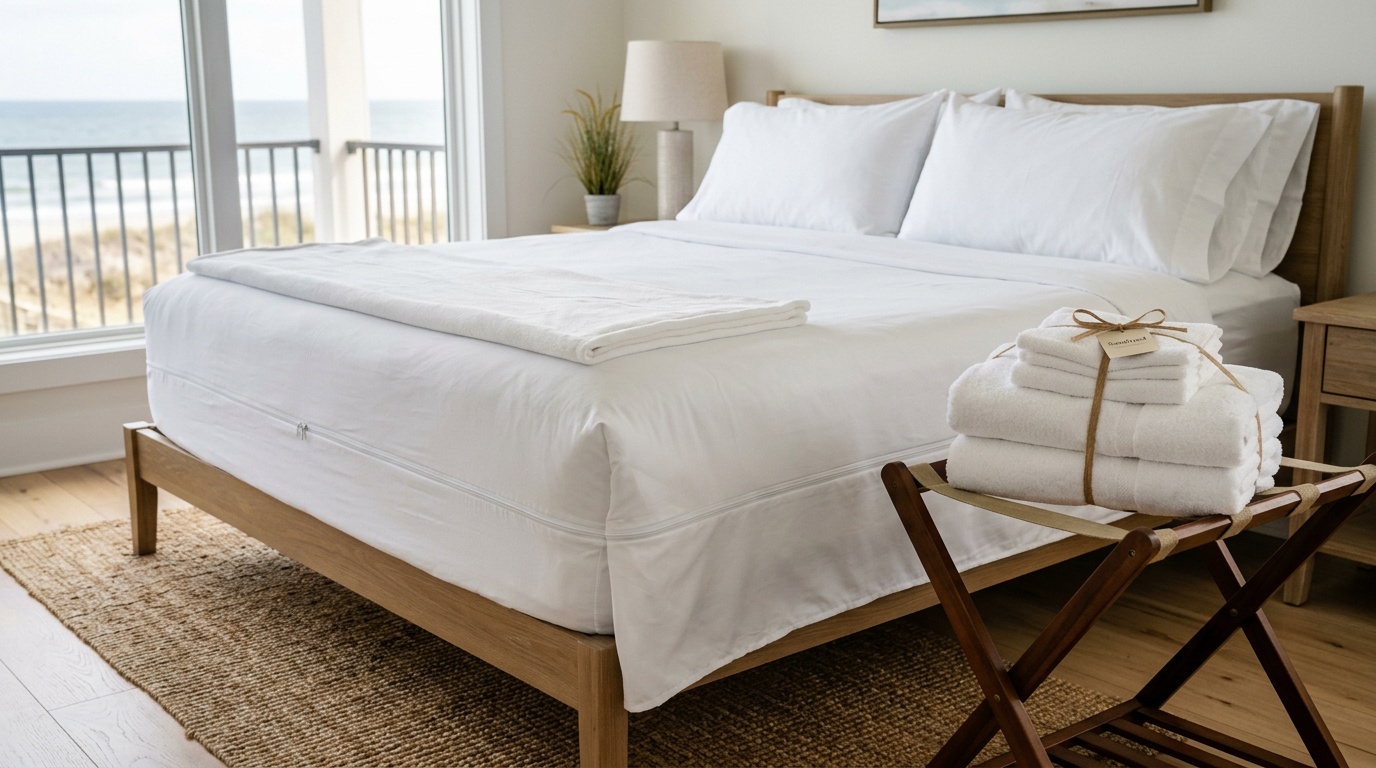
Protecting valuable bedding assets in the high-humidity, sandy environment of the Grand Strand requires more than standard household laundry routines. Zippered mattress encasements serve as the primary defense against bed bugs, allergens, and moisture, but these high-performance technical textiles are easily ruined by improper washing. Exposure to high heat, abrasive sand, and corrosive salt air can quickly destroy the delicate polyurethane membrane and seize the metal components. Property managers and hosts must implement a highly specific laundering protocol to preserve these protective barriers and avoid premature replacement costs.
The Vulnerability of the Polyurethane Membrane: Chemistry and Thermal Limits
At the core of every high-quality mattress encasement is a microscopic, breathable polyurethane membrane bonded to a polyester or cotton knit fabric. This barrier is engineered to be impermeable to liquids and pests while allowing air vapor to pass through for sleeping comfort. However, this synthetic layer is highly sensitive to chemical and thermal extremes. In Myrtle Beach rental operations, the common instinct to sanitize heavily soiled linens using near-boiling water and concentrated chlorine bleach is the primary driver of rapid membrane failure.
When exposed to high-alkaline detergents with a pH level above ten, the plasticizers within the polyurethane backing begin to leach out. This chemical stripping leaves the membrane brittle, stiff, and prone to cracking. Once the backing begins to peel or bubble—a process known as delamination—the encasement completely loses its waterproof and pest-proof properties. The textile may look clean on the outside, but the internal barrier is rendered entirely useless.
Thermal limits are equally strict during both the wash and dry cycles. Polyurethane has a soft point starting at 140 degrees Fahrenheit and can fuse or melt if exposed to commercial drying temperatures that exceed 150 degrees. When a melted encasement is pulled apart, the backing tears, creating microscopic pinholes. These punctures allow allergens, dust mites, and fluids to bypass the protector, exposing the expensive mattress beneath to irreversible damage.
Salt-Air Zipper Corrosion and Tooth Realignment
The physical zipper mechanism is the most common mechanical point of failure on protective encasements. In oceanfront Grand Strand properties, airborne salt crystals constantly drift through open balcony doors and settle into the bedroom fabrics. Over time, these salt deposits accumulate in the zipper teeth and sliders. This salt exposure, combined with high indoor humidity, triggers rapid oxidation on metal sliders and leaves a crusty white residue on plastic zipper coils.
Fine beach sand also migrates into the bedding, settling directly into the grooves of the zipper tracks. When a housekeeper attempts to force a sand-clogged slider during a rapid Saturday afternoon turnover, the excessive tension strips the teeth or derails the slider. This creates a permanent gap in the enclosure. Because bed bugs can exploit any opening larger than one millimeter, a split zipper voids the entire protective status of the encasement.
To prevent mechanical failures, laundry technicians must inspect and prepare the zippers prior to washing. All zippers should be closed to roughly ninety percent of their length before entering the wash drum. This protects the teeth from scraping against the metal drum walls while leaving a small opening for trapped water to drain out. After laundering, applying a dry, non-greasy silicone lubricant to the slider ensures smooth operation under high-pressure turn environments.
Sand-Abrasion Mitigation in the Wash Drum
Beach sand is highly abrasive and extremely difficult to remove once it embeds in the knit fibers of an encasement. During the mechanical agitation of a standard wash cycle, trapped sand grains act like coarse sandpaper. The friction of the sand grinding against the delicate polyurethane membrane wears down the protective layer, causing microscopic thinning and eventual structural breakdown.
Before any encasement is loaded into a washing machine, it must undergo a physical sand-extraction process. Housekeepers should thoroughly shake out the dry protector outdoors or use a low-suction vacuum with a soft brush attachment to lift loose particles from the surface. Laundering a sand-loaded encasement not only destroys the technical textile but also causes severe damage to commercial drain valves, water pumps, and drum seals.
The wash program must incorporate a high-water-level flush cycle at the very beginning of the sequence. This initial flush suspends loose sand grains and drains them from the bottom of the drum before the heavy mechanical extraction and wash agitation phases begin. Skipping this step guarantees that the sand will remain trapped in the load, grinding against the synthetic backing throughout the rest of the wash cycle.
- Perform a dry shake or low-suction vacuum of the textile prior to loading
- Utilize a high-water flush cycle to drain loose sand before agitation
- Keep wash loads loose to allow sand particles to wash away freely
- Avoid washing encasements with heavy cotton beach towels that shed lint
- Regularly clean the commercial washer's drain filters to prevent sand build-up
The Low-Temperature Sanitization Protocol
Sanitizing mattress encasements without using destructive high heat requires a precise chemical management strategy. Traditional hotel-grade thermal disinfection relies on water temperatures exceeding 160 degrees Fahrenheit, which is unsafe for polyurethane. To achieve complete pathogen and allergen elimination at lower temperatures, professional operators must utilize EPA-approved chemical sanitizing agents.
Formulations containing quaternary ammonium compounds or low-concentration peracetic acid are highly effective at temperatures between 100 and 110 degrees Fahrenheit. These sanitizers eliminate bacteria, viral loads, and mold spores without degrading the synthetic backing or stripping the fabric's natural moisture. This ensures the encasement remains sanitary for incoming guests while protecting the physical integrity of the protective barrier.
The wash cycle must conclude with a precise chemical neutralization step. A mild, laundry-safe souring agent should be injected during the final rinse to adjust the textile's pH back to a skin-compatible range of 5.5 to 6.5. Residual alkaline detergents left in the fabric can cause skin irritation for guests and accelerate the yellowing of the knit fabric when exposed to the humid coastal air.
Drying Protocols for Dual-Composition Fabrics
Drying a technical textile with two vastly different sides presents a major operational challenge. The outer knit fabric absorbs water and dries quickly, while the waterproof polyurethane backing traps moisture inside the drum. Standard commercial dryers use moisture sensors that read the dry outer layer and shut off prematurely, leaving the interior membrane damp and prone to mildew. Conversely, timed cycles often overheat the fabric, melting the backing.
To dry these dual-composition fabrics safely, dryers must be set to a low-temperature, delicate cycle with a maximum air temperature cap of 130 degrees Fahrenheit. Adding clean, dry terry towels to the dryer drum helps absorb tumbling moisture from the non-breathable side of the encasement, cutting total drying time by up to thirty percent and preventing wet pockets from remaining trapped in the corners.
High-G-force spin cycles in the washer can also damage these fabrics if not managed correctly. Rapid water extraction can trap water pockets against the waterproof backing, causing the material to balloon and burst under intense pressure. A moderate spin cycle, limited to 100 G-force, is recommended to safely remove bulk water before transferring the encasements to the drying drum.
Post-Laundering Integrity Audits and Inspection Standards
A laundered encasement must never be returned to service without a rigorous quality control inspection. A single micro-tear or a failed zipper lock can expose a clean mattress to immediate contamination, leading to expensive pest treatment and guest relocation. Laundry staff must be trained to conduct a systematic visual and physical audit of every piece after it leaves the dryer.
The most effective inspection method is the light-table or backlight test. Technicians hold the encasement up to a bright light source, looking for any thin patches, peeling backing, or pinpoint light leaks that indicate a breach in the membrane. Any piece showing signs of delamination, severe thinning, or puncture must be permanently retired from inventory to protect the underlying mattress asset.
Finally, the zipper track and end-stop seal must be physically tested. The technician must pull the zipper completely closed to ensure the slider locks smoothly into the protective foam block or fabric flap designed to seal the zipper gap. If the foam block is missing, torn, or frayed, the encasement can no longer guarantee protection against bed bugs and must be flagged for repair or replacement.
Par-Level Logistics and Rotation Strategies
Because of the delicate wash chemistry, low-temperature drying, and mandatory inspection steps, mattress encasements cannot be rushed through a standard same-day turn. Forcing these items through a rapid turnaround cycle leads directly to heat damage or damp installations. Grand Strand property managers must maintain healthy linen par levels to ensure operational quality.
A strict par level of 3.0 is recommended for zippered mattress encasements across all rental properties. This model ensures that one encasement is actively protecting the bed, one clean backup is stored in the property's secure linen closet, and one is undergoing the specialized low-temperature laundering and inspection cycle at the laundry facility. This rotation prevents damp fabric from being installed on a bed, which would otherwise trap moisture and breed mold.
During the lower-occupancy winter season, operators should implement a deep-clean rotation. This involves systematically stripping every mattress encasement in the portfolio for a dedicated, off-site commercial wash. This off-season window allows for a thorough inspection of both the technical textile and the raw mattress underneath, ensuring no moisture or structural issues went unnoticed during the busy summer rush.
In-Unit Laundering Risks vs. Commercial Facility Management
Attempting to launder these complex technical textiles in standard residential washers and dryers located within vacation rental units carries significant risk. Domestic appliances lack the precise temperature controls, chemical injection pumps, and high-volume flush cycles required to safely process polyurethane membranes and extract heavy beach sand. Rushed cleaning crews frequently use the hottest settings to speed up the process, destroying the protective barriers.
By contrast, partnering with a professional commercial laundry service like A2Z Cleaning & Linen Services protects your capital investment. Commercial facilities utilize programmable washer-extractors that run dedicated "encasement cycles." These programs regulate water temperatures to the exact degree, inject precise quantities of low-temperature sanitizers, and use stepped extraction speeds to protect the fabrics from physical damage.
Outsourcing this critical task ensures that your protective bedding is processed under strict, hotel-grade guidelines. This meticulous care extends the operational lifespan of your mattress encasements, maintains your property's sanitization standards, and provides a safe, allergen-free environment for every guest who visits the Grand Strand. To discuss setting up a professional linen management program for your rental portfolio, contact A2Z Cleaning & Linen Services at 843.800.2788.
Key takeaway
Zippered mattress encasements are critical assets that require low-temperature sanitization, careful sand extraction, and low-heat drying to prevent membrane delamination and zipper failures. Implementing a 3.0 par level and utilizing professional commercial laundering ensures these technical textiles remain fully intact to protect your mattress investments. For expert, hotel-grade linen processing and management in Myrtle Beach and the Grand Strand, trust the team at A2Z Cleaning & Linen Services.
Related services
Keep Reading
Linens & Laundry
Preventing Off-Season Mustiness: How to Store Vacation Rental Linens in Myrtle Beach
ReadLinens & Laundry
The TRSA Hygienically Clean Hospitality Standard: Implementing Industrial Wash Chemistry, Bio-Burden Testing, and Soil-to-Clean Separation in Myrtle Beach Commercial Laundries
ReadLinens & Laundry
The Balcony-Dried Salt-Lock Phenom: Mitigating Atmospheric Salt and Hard-Water Mineral Graying in Grand Strand Rental Towels
ReadReady for a spotless property?
Call 843.800.2788 or request a free quote from A2Z Cleaning & Linen Services.