Commercial & Hospitality
The Grand Strand Commercial Disinfection Specialist Career Pathway: Class-A Office Standards, Biohazard Mitigation Certifications, and Local Retention Models
Discover what makes a premier commercial cleaning professional, the essential industry certifications, behavioral hiring strategies, and localized wage benchmarks in the Grand Strand.
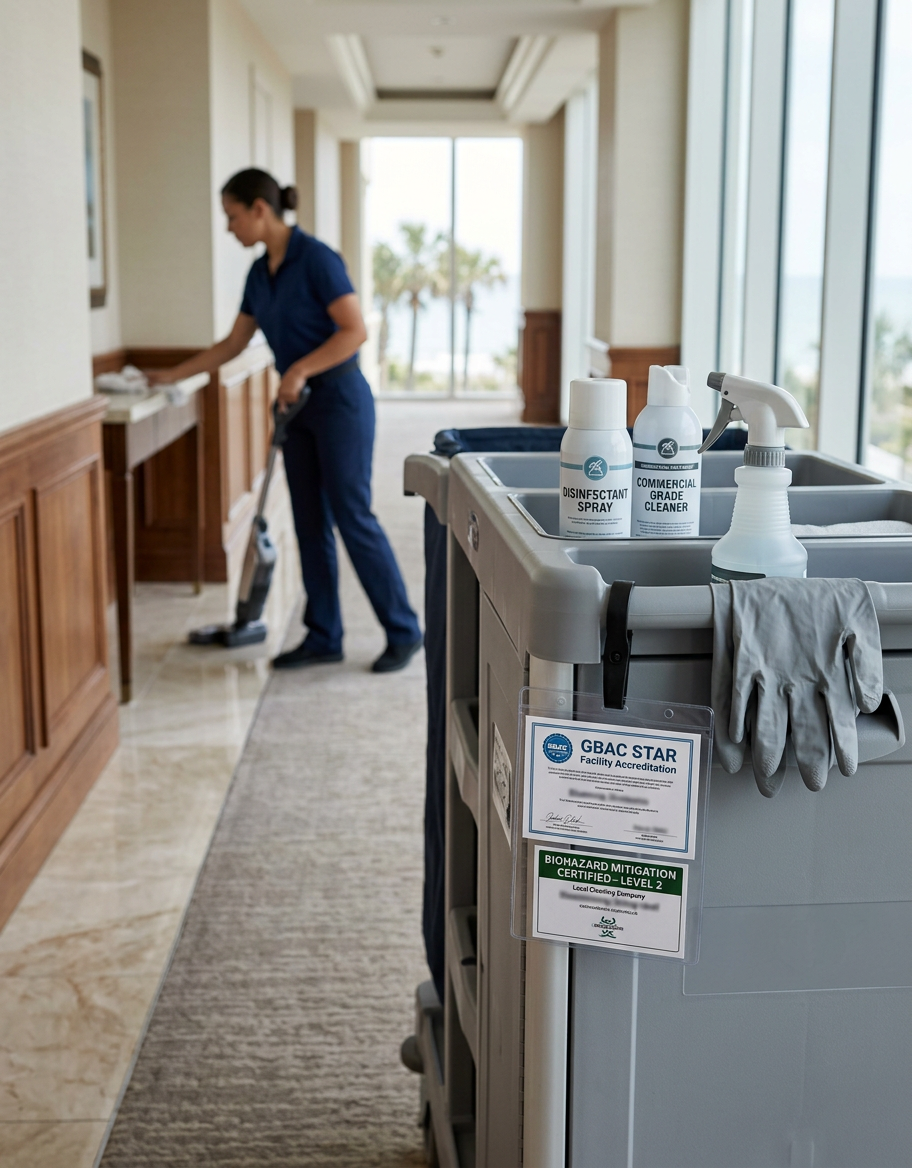
Building a highly reliable, certified commercial cleaning crew along the Grand Strand requires moving beyond traditional hiring practices and embracing structured career pathways. In modern commercial spaces—ranging from high-security financial institutions to multi-tenant medical offices—the demand for technical disinfection and safety-first protocols has never been higher. At A2Z Cleaning & Linen Services, we understand that a truly exceptional clean starts with an exceptional team. By aligning industry-leading training, fair localized compensation, and strict quality controls, we empower our technicians to deliver unmatched consistency for every Myrtle Beach business.
Defining the Modern Commercial Disinfection Specialist
In the modern commercial market of the Grand Strand, the traditional view of custodial work as low-skill labor is obsolete. Today's professional commercial disinfection specialist must navigate complex chemical formulations, sophisticated machinery, and strict safety guidelines to protect public health. From municipal administrative suites to multi-tenant medical offices in Myrtle Beach, these professionals are the first line of defense against infectious pathogens. Understanding the technical demands of this role is crucial for property managers and business owners who rely on these teams to maintain operational continuity.
A true professional in this field understands that cleaning and disinfecting are two entirely separate chemical processes. Cleaning involves the physical removal of soil, dust, and organic matter, while disinfecting utilizes targeted chemical agents to destroy microscopic pathogens. A qualified specialist can analyze a surface, identify its material composition, and select the exact EPA-registered disinfectant required without causing aesthetic or structural damage. This technical competency prevents the costly degradation of luxury vinyl tile, natural stone, and sensitive electronics common in modern offices.
Beyond chemical selection, modern specialists are trained in spatial mechanics, understanding how airborne particles settle and how high-touch points serve as transmission vectors. They manage complex pathways through a facility, systematically moving from clean to dirty zones to avoid cross-contamination. This high level of situational awareness separates an entry-level worker from a career professional. For commercial facilities along the Grand Strand, investing in certified specialists ensures a safer, healthier environment for employees and visitors alike.
Technical Training and Industry Certifications
The foundation of a reliable commercial cleaning career path lies in formal, verified education and industry-standard certifications. In our region, professional organizations look for technicians who hold certifications from the Global Biorisk Advisory Council (GBAC) or the Building Service Contractors Association International (BSCAI). These credentials prove that the technician understands the science of cleaning, including contact times, dwell times, and the safe application of electrostatic sprayers. When a facility partner works with certified technicians, they receive verified sanitary protection rather than just cosmetic neatness.
OSHA 10-Hour General Industry certification is another critical benchmark for commercial technicians operating in industrial or high-occupancy spaces. This training covers hazard communication, personal protective equipment (PPE) selection, bloodborne pathogen safety, and slips, trips, and falls. Ensuring that technicians understand how to read a Safety Data Sheet (SDS) and properly dilute concentrated chemicals is paramount to maintaining a safe working environment. It also protects the property owner from liability associated with chemical accidents or improper hazardous waste disposal.
In addition to national standards, local training must address the unique challenges of the coastal environment. High relative humidity in Myrtle Beach accelerates the growth of mold and mildew in commercial HVAC grilles, window seals, and carpeted transition areas. Certified commercial specialists receive specialized instruction on mitigating these coastal allergens and biological contaminants safely. This regional expertise ensures that local commercial spaces remain fresh, dry, and healthy throughout our hot, humid summers, protecting both indoor air quality and structural integrity.
The Behavioral Interview Protocol for Commercial Crews
Hiring exceptional commercial technicians requires moving beyond basic background checks and employment history. A structured behavioral interview protocol is essential for identifying candidates who possess the attention to detail, reliability, and integrity required for secure commercial spaces. Questions should focus on real-world scenarios, testing how a candidate handles unexpected facility hazards, security discrepancies, or communication challenges. By assessing past behavior under pressure, hiring managers can accurately predict how a technician will perform during an independent night shift in a high-security office.
Effective interview questions must target specific core competencies such as problem-solving, safety compliance, and self-management. For instance, asking a candidate to describe a time they noticed a safety hazard that others overlooked reveals their proactive safety mindset. Another critical question involves asking how they handle a situation where they realize they do not have the proper equipment or chemical to complete a scheduled task. The candidate's response will demonstrate whether they resort to unsafe shortcuts or follow established protocols to resolve the issue professionally.
Evaluating responses requires a standardized rubric that rates candidate answers based on alignment with industry best practices. Candidates who prioritize safety, open communication, and adherence to protocols score high, while those who suggest unauthorized workarounds are weeded out. This vetting process ensures that only highly accountable individuals are placed in sensitive environments like banks, medical facilities, and executive offices. For Grand Strand business owners, this rigorous screening translates directly into peace of mind and secure, reliable service night after night.
- Can you describe a time when you discovered a security breach, such as an unlocked exterior door, while performing your cleaning route, and how you handled it?
- Tell me about a situation where you had to handle a highly sensitive or delicate surface, like limestone flooring or historical woodwork. What steps did you take to ensure no damage occurred?
- How do you manage your workflow and maintain your focus when working an independent, late-night shift with minimal direct supervision?
- Give an example of a time when a piece of cleaning equipment, like a floor buffer or commercial vacuum, malfunctioned mid-shift. What did you do to complete your tasks safely?
- Describe a scenario where you disagreed with a teammate or supervisor about the proper safety protocol for handling a chemical spill. How did you resolve the situation?
Designing Competitive Myrtle Beach Compensation Models
In the highly competitive Grand Strand labor market, retaining skilled commercial technicians requires more than just meeting the minimum wage. Forward-thinking companies must offer competitive, tiered compensation structures that reward skill acquisition, certification, and long-term reliability. Starting wages for entry-level technicians in our region should range from $15.00 to $17.00 per hour, depending on experience. This baseline establishes the role as a professional career path rather than a low-wage, high-turnover job, which ultimately stabilizes service quality for commercial clients.
To incentivize professional development, companies should implement clear wage differentials tied directly to technical certifications. For instance, a technician who completes their OSHA 10-Hour training or earns a GBAC Certified Technician designation should receive an immediate pay increase of $1.00 to $1.50 per hour. Similarly, technicians operating on late-night or early-morning shifts should receive shift differentials to compensate for the unsocial hours. These structured advancements provide employees with a clear financial trajectory, encouraging them to view commercial cleaning as a viable, long-term career.
Beyond hourly wages, providing stable, year-round employment is one of the most powerful retention tools in a highly seasonal coastal market. Many local workers are subjected to drastic seasonal layoffs as tourism fluctuates, creating financial instability. By offering guaranteed, year-round hours, paid time off, and access to health benefits or retirement contributions, commercial cleaning providers can attract and retain the very best local talent. This operational stability directly benefits property managers, who enjoy consistent, high-quality results from a familiar, highly trained team.
Mitigating Cross-Contamination in High-Traffic Municipal and Medical Spaces
Cross-contamination is one of the greatest operational risks in any commercial facility, particularly in medical suites and municipal buildings where hundreds of visitors pass through daily. To combat this, professional commercial technicians are trained in the strict enforcement of color-coded zone cleaning systems. This protocol assigns specific colors of microfiber cloths, flat mops, and cleaning tools to designated zones, ensuring that a cloth used to clean a high-risk restroom fixture is never utilized on an office desk or breakroom counter. This simple yet highly effective system prevents the spread of harmful bacteria throughout the building.
Beyond color-coding, technical specialists employ advanced HEPA-filtration backpack vacuums to protect indoor air quality while floor cleaning. Traditional upright vacuums often kick up fine dust, allergens, and microscopic spores back into the breathing zone, creating respiratory hazards for building occupants. HEPA-certified filtration systems capture 99.97% of particles down to 0.3 microns, ensuring that dust, pollen, and mold spores are completely removed from the environment rather than redistributed. This is particularly vital in the Grand Strand, where coastal pollen and humidity-driven mold spores can quickly degrade indoor air quality.
Finally, the modern career pathway includes training in quantitative disinfection validation using ATP bioluminescence testing. This technology allows technicians to swab a surface after cleaning and receive a digital readout of organic residue in real time. By integrating ATP testing into their regular workflows, technicians can verify that their cleaning methods have successfully achieved hygienic standards. This level of scientific validation elevates the role of the cleaner to a public health technician, providing commercial clients with hard, empirical proof that their facilities are truly clean and safe.
Building a Career Ladder: From Entry-Level Tech to Quality Inspector
One of the primary reasons for high turnover in the commercial cleaning industry is the lack of a visible career ladder. To build a highly reliable and motivated team, companies must outline a clear, transparent pathway for professional advancement. This progression should start at the entry-level Technician tier and lead through Senior Technician, Shift Lead, Field Supervisor, and ultimately, Quality Assurance Inspector. Each step on this ladder should be defined by specific skill milestones, minimum tenure requirements, and corresponding wage increases, giving employees complete control over their career trajectory.
The transition from field work to supervisory roles requires targeted leadership training that focuses on team management, customer service, and advanced technical skills. Senior technicians who show an aptitude for leadership should be enrolled in professional development programs that cover conflict resolution, inventory management, and digital scheduling systems. This preparation ensures that when a technician is promoted to a supervisory role, they possess both the technical expertise and the interpersonal skills required to lead their peers effectively and maintain client satisfaction.
Quality Assurance Inspectors represent the pinnacle of the technical career path, acting as independent auditors who verify compliance with ISSA CIMS-GB standards and client-specific protocols. These specialists utilize digital audit applications to track cleaning metrics, document performance trends, and identify areas for targeted team retraining. By establishing this high-level role, cleaning companies create an internal standard of excellence that keeps all team members accountable. It also shows incoming employees that their dedication and technical mastery can lead to a highly respected, well-paying professional career.
Onboarding and Safety Audits for Class-A Office Portfolios
The first thirty days of a commercial technician's tenure are critical to establishing long-term safety, efficiency, and retention. A structured onboarding process must combine comprehensive classroom instruction with supervised, hands-on field shadowing. During this period, new hires learn the specific operational protocols of Class-A office buildings, including secure building access, tenant privacy guidelines, and emergency shut-off locations. This thorough introduction ensures that technicians do not feel overwhelmed and are fully equipped to meet high-stakes performance expectations from day one.
Field shadowing is a cornerstone of this onboarding process, pairing the new technician with an experienced mentor or field supervisor. This practical training allows the new hire to practice advanced techniques, such as correct chemical dilution, ergonomic backpack vacuuming, and efficient trash-routing, under direct supervision. It also provides the supervisor with an opportunity to assess the technician’s attention to detail and adherence to safety guidelines in a real-world setting. Only after completing a specified number of supervised hours is the technician cleared to work independently on a client’s property.
To maintain high standards over time, regular, unannounced safety and quality audits must be conducted across all commercial portfolios. These audits evaluate a range of critical factors, including correct PPE usage, proper chemical labeling, SDS accessibility, and the technical cleanliness of high-touch surfaces. Any deficiencies identified during an audit are addressed immediately through targeted, constructive retraining sessions rather than punitive measures. This approach fosters a culture of continuous learning and safety compliance, ensuring that our Grand Strand clients receive the highest level of professional care.
Fostering a Culture of Accountability and Reliability
Creating a reliable commercial cleaning team requires cultivating a company culture rooted in mutual respect, clear communication, and shared accountability. When technicians feel valued, respected, and supported by their leadership, they are far more likely to take pride in their work and demonstrate consistent reliability. This begins with open, two-way communication channels where technicians can voice concerns, report equipment needs, or suggest process improvements without fear of reprisal. A responsive management team is the foundation of employee trust and long-term organizational loyalty.
Performance-based recognition and bonus programs are highly effective tools for reinforcing positive behaviors and technical excellence. Implementing monthly rewards for perfect attendance, flawless quality audits, or proactive safety reporting encourages technicians to consistently exceed standards. These programs do not need to be overly complex; simple, meaningful gestures like peer-nominated awards, local gift cards, or public recognition during team meetings go a long way in boosting morale and building a tight-knit, supportive team culture.
Ultimately, a culture of reliability is built on a foundation of professional standards and fair, localized operational practices. By treating commercial cleaning as a vital public health service and investing heavily in technician training, safety, and compensation, we raise the standard of professionalism across the entire Grand Strand. When business owners and property managers partner with a company that prioritizes its workforce, they are investing in a dedicated team of career professionals who are fully committed to protecting their facility, their staff, and their reputation.
Key takeaway
A professional commercial cleaning service is only as good as the training, support, and fair compensation provided to its frontline technicians. By investing in certified career pathways, behavioral vetting, and structured local compensation, A2Z Cleaning & Linen Services builds reliable teams that protect both your commercial property and your professional reputation. If you are ready to experience the difference a highly trained, professional commercial cleaning team can make for your Grand Strand facility, contact us today at 843.800.2788.
Keep Reading
Commercial & Hospitality
The Grand Strand Post-Construction Cleaning Specialist: Technical Dust-Extraction Certifications, Silica-Safety Audits, and Competitive Compensation Structures for New-Build Handover Teams
ReadCommercial & Hospitality
The Cross-Trained Environmental Services Technician: Dual-Track Certification and Year-Round Career Stabilization in Myrtle Beach
ReadCommercial & Hospitality
Designing the High-Retention Cleaning Division: Interview Scorecards, Ergonomic Training, and Localized Compensation Models in Myrtle Beach
ReadReady for a spotless property?
Call 843.800.2788 or request a free quote from A2Z Cleaning & Linen Services.