Vacation Rentals
The Grand Strand Multi-Unit PMS API Integration and Housekeeping Work Order Dispatch Standard: Automating Checklist Audits, Inventory Pulls, and Vendor Service-Level Agreements (SLAs) for Scaling Grand Strand Vacation Rental Portfolios
Learn how property managers scale Grand Strand portfolios by integrating PMS software with cleaning vendor APIs, automating digital checklists, and establishing firm service-level agreements.
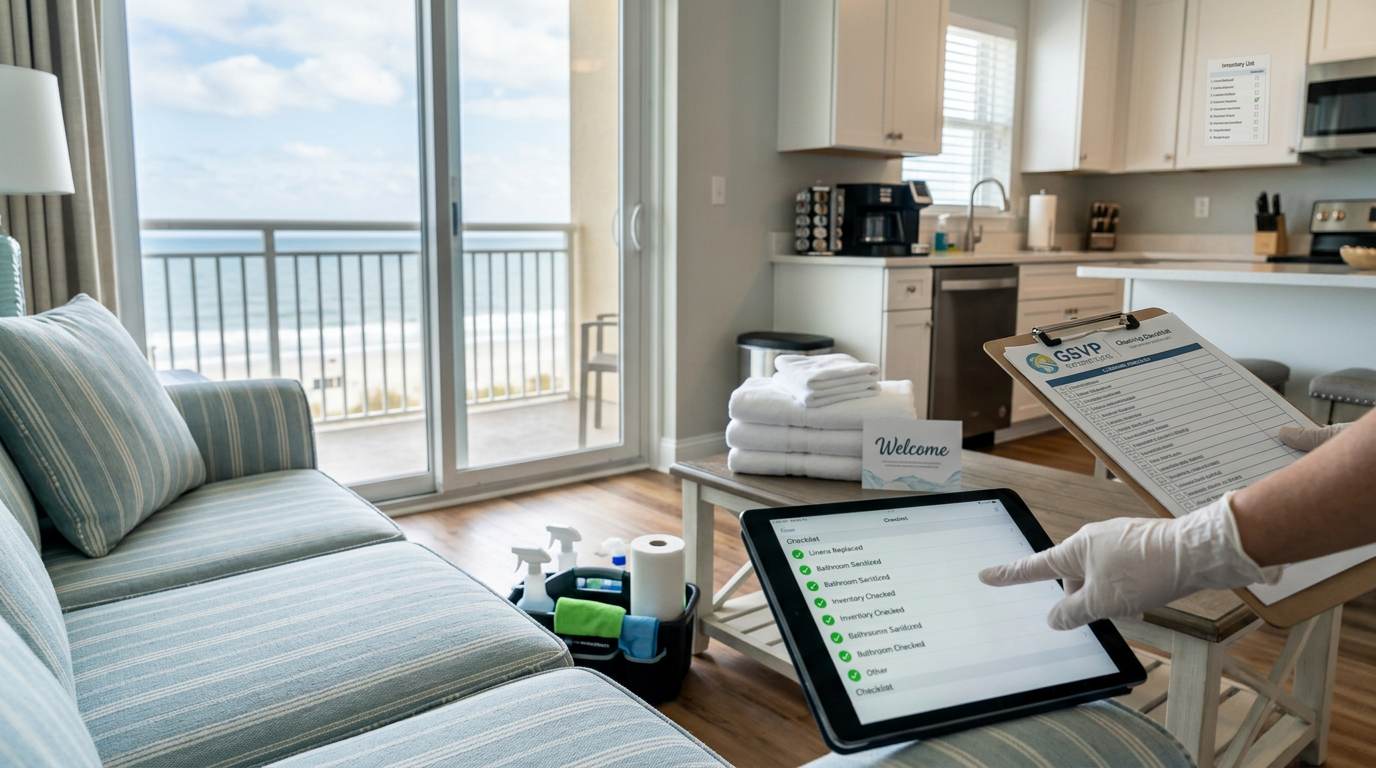
Property managers on the Grand Strand face a unique operational bottleneck as their portfolios scale from boutique offerings to multi-unit empires. Relying on manual text messages, spreadsheet schedules, and paper checklists to coordinate turnovers across miles of coastal highway is a recipe for missed turns and poor reviews. By integrating Property Management Systems (PMS) directly with professional cleaning vendor software via APIs, managers can automate scheduling, enforce quality benchmarks, and track inventories in real time. This operational guide outlines how to build a resilient, automated cleaning and linen ecosystem designed for rapid portfolio scaling.
The Architecture of PMS-to-Vendor API Integrations
Connecting a PMS to a cleaning partner's dispatch platform is the foundation of modern, scalable property operations. Instead of manually exporting check-out dates each week, an active API integration pushes reservation updates instantly to your cleaning service provider. When a guest books, modifies, or cancels a stay, the scheduling calendar updates automatically, eliminating human scheduling errors and missed turns.
Successful integration requires precise mapping of custom data fields between platforms. The PMS must transmit critical data points including the number of guests, pet occupancy status, checkout times, and specific door lock codes directly to the cleaning team's dispatch board. This ensures that housekeepers arrive with the exact operational instructions required for that specific property, such as pet hair remediation tools or extra bed linens.
Real-time updates prevent double-bookings and ensure that cleaning crews are not sent to properties where a late checkout has been approved. A stable API connection should sync at intervals of 15 minutes or less, particularly during peak summer seasons when turnovers must occur within tight four-hour windows. This automated data flow protects both the property manager's reputation and the cleaning team's field efficiency.
Setting the Rules of Engagement: Automated Dispatch Triggers
Automation rules determine how and when a cleaning job is assigned to your vendor partners. By establishing booking window thresholds, managers can define rules for last-minute bookings. For example, any reservation booked within 24 hours of arrival should automatically trigger a high-priority alert to the cleaning dispatcher, bypass standard queueing, and require immediate manual confirmation from the vendor.
When a reservation is cancelled, the integrated system should instantly revoke the cleaning work order to avoid unnecessary trip charges. If a cleaning crew is already en route or has commenced the clean, the system should halt work and notify the property manager of any partial service fees. Clear automated parameters prevent disputes over billing for empty properties.
For back-to-back stays, the system must automatically apply a "same-day turn" tag to the work order. This label prioritizes the property in the cleaning partner's queue, signaling that the property must be vacant, cleaned, inspected, and staged within the standard 10:00 AM to 4:00 PM turnaround window.
Defining the Digital Housekeeping Checklist: Geofenced Starts and Photo-Proof Fields
Standardized quality cannot rely on memory alone, especially across scattered-site vacation rentals. Modern operational systems utilize mobile applications that track the exact GPS location of housekeepers when they start and stop a job. Geofencing ensures that crews are physically on-site before they can open the property's digital cleaning checklist, preventing premature check-ins or inaccurate billing records.
Within the digital checklist, housekeepers must upload high-resolution photos of critical areas before marking a task complete. These photos serve as immutable evidence of the property's pre-arrival condition, shielding managers from fraudulent guest complaints. The checklist should adapt dynamically based on reservation data, inserting specific tasks based on the reservation profile.
Integrating photo verification into the workflow creates a digital paper trail that reduces the need for physical inspections on every single turn. This allows property managers to allocate their inspection resources to high-value properties or units with historically lower cleanliness scores.
- Geofenced check-in to confirm housekeeper presence on the property before work begins.
- Required high-resolution photo uploads of the inside of the refrigerator, oven cavity, and dishwasher.
- Photographic proof of fully stripped and freshly remade beds to verify sheet changes.
- Dynamic checklist adaptation that inserts pet hair extraction steps for pet-friendly reservations.
- Time-stamped checklist completion logs synced directly back to the property manager's dashboard.
Automated Inventory Pull-Sheets: Linking Guest Consumables to Turnover Schedules
Scaling a portfolio requires strict control over supply chains and consumable stocks. By linking cleaning schedules to inventory management modules, managers can automatically generate weekly pull-sheets for laundry facilities and supply depots. The system calculates the exact volume of sheets, towels, toilet paper, soaps, and trash bags needed based on the scheduled check-outs for the upcoming week.
Allowing housekeepers to arbitrarily stock supplies leads to massive inventory shrinkage and bloated operating costs. Automated pull-sheets dictate the exact quantity of guest amenities permitted per unit, ensuring consistency across the portfolio. Crews are supplied with pre-packed amenity kits matching the size of the home, eliminating guesswork in the field.
A professional linen program tracks the age and condition of sheets and towels through scheduled cycle counts. When the software logs that a set of linens has completed its recommended wash cycles, it flags the set for inspection and potential downgrading. This automated life-cycle tracking prevents worn or graying linens from ever reaching a guest bed.
Establishing Housekeeping SLAs: Penalties, Turnaround Windows, and Back-Up Dispatch Routes
Service Level Agreements (SLAs) are the operational guardrails of a healthy manager-vendor relationship. The SLA should clearly define acceptable window thresholds, such as a requirement that 95% of same-day turns must be completed and staged by 4:00 PM. It must also establish penalties for missed turnovers, detailed cleanliness deficiencies, or late arrivals that delay guest check-ins.
When a guest reports a cleanliness issue, the SLA must dictate response timeframes for remediation. A standard protocol requires the cleaning vendor to dispatch a touch-up housekeeper to the property within 45 minutes of notification for urgent items, or within 2 hours for minor cosmetic issues. Clear response times prevent guest frustration from escalating into negative online reviews.
Despite the best automated scheduling, peak summer traffic on the Grand Strand can delay crews. A robust SLA requires the cleaning vendor to maintain a localized float crew or back-up dispatch route. These floaters are strategically stationed in high-density rental zones, such as North Myrtle Beach or the south end of Ocean Boulevard, ready to deploy to properties facing tight turnaround windows.
- Definition of the standard turnaround window, typically from 10:00 AM to 4:00 PM on peak Saturdays.
- Tiered financial penalties for delayed finishes that result in guest compensation or refunds.
- Strict response time limits for resolving guest cleanliness complaints post-arrival.
- Vendor requirements for maintaining emergency backup labor pools during holiday weekends.
- Detailed criteria for acceptable wear and tear versus vendor-responsible damage to property assets.
The Real-Time Quality Audit (QA) Loop: Managing Failed-Item Redos and Communication Channels
When a housekeeper submits a completed job, the work order enters a pending QA status in the operational software. Property managers or dedicated inspectors can then review the uploaded photos or perform an in-person walk-through. If an item fails inspection—such as dust on a ceiling fan or sand in a drawer—the inspector flags the item in the mobile app, triggering an immediate notification to the housekeeper's phone.
The cleaning crew must be given a priority window to remediate the failed item before the property is marked as guest-ready in the PMS. The system should block guest door codes from activating until the QA check is passed, preventing guests from entering while a housekeeper is correcting an issue. This strict workflow prevents awkward guest encounters and ensures perfect first impressions.
Scattered communication across emails, texts, and phone calls leads to critical errors. All communication regarding a property's cleanliness status must be centralized within the operational software. Team members can leave notes, upload voice memos, or pin photos to a specific work order, creating a transparent audit trail for both the manager and the cleaning vendor.
Data-Driven Scaling: Analyzing Cost-Per-Turn, Clean-Duration Metrics, and Housekeeper Performance
As portfolios grow, understanding the precise financial metrics of each unit becomes critical for maintaining profitability. Operational software aggregates historical cleaning costs, allowing managers to calculate the true cost-per-turn for every property layout. This data highlights which properties are highly profitable and which units have high maintenance profiles that require adjustment of cleaning fees.
Tracking the time spent on each clean provides valuable insights into property conditions and housekeeper efficiency. If a three-bedroom condo consistently requires five hours to clean when the portfolio average is three hours, it indicates potential property issues, such as hard-to-clean substrates, excessive decorative clutter, or inadequate owner supply closets that delay crews.
Data dashboards compile housekeeper performance metrics over time, including QA pass rates, average turn times, and guest cleanliness scores. Property managers can use these scorecards during vendor reviews to identify top-performing crews for high-value properties and phase out vendors who fail to meet consistency benchmarks.
- Average cleaning duration tracked by property size, layout, and occupancy limits.
- Quality assurance pass rates per housekeeper and cleaning vendor team.
- True cost-per-turn metrics aggregated by month, season, and property type.
- Guest satisfaction scores linked directly back to the specific turn crew.
- Frequency of maintenance issues reported during cleaning turns.
Partnering with High-Capacity Local Vendors: The Hybrid Internal-External Operational Model
Relying solely on internal cleaning staff creates a hard ceiling on portfolio growth. Building an internal team requires massive capital investment in vehicles, laundry equipment, recruiting, and management overhead. A hybrid model—where a core internal team handles inspections and minor maintenance, while a high-capacity local cleaning vendor manages the heavy lifting of turnovers—offers the highest operational flexibility.
Partnering with an established local service provider like A2Z Cleaning & Linen Services provides property managers with the infrastructure needed to scale. A high-capacity vendor offers centralized laundry facilities, commercial-grade chemicals, backup labor pools, and direct software integration capabilities that independent housekeepers simply cannot match. This infrastructure absorbs peak-season spikes without degrading quality.
Treat your cleaning vendor as a strategic operational partner rather than a transactional expense. Regular collaborative meetings, transparent data sharing, and synchronized technology platforms build trust and alignment. By integrating your businesses at an operational level, you create a seamless, scalable hospitality machine that drives high occupancy, glowing guest reviews, and maximum rental revenue along the Grand Strand.
Key takeaway
Scaling a vacation rental portfolio requires moving away from manual scheduling and transitioning to automated, API-driven vendor workflows. By integrating your PMS with professional cleaning platforms, enforcing digital checklists, and establishing clear SLAs, you ensure consistent quality across every unit. Partnering with a high-capacity team like A2Z Cleaning & Linen Services at 843.800.2788 provides the operational support and technological compatibility required to grow your Grand Strand brand successfully.
Keep Reading

Vacation Rentals
The Grand Strand Scattered-Site Vacation Rental Logistics Standard: Scaling Cleaning Routines, Vendor Dispatch, and Consumable Supply Depots Across 60 Miles of Coastline
ReadVacation Rentals
The Private Game Room and Garage Suite Turnover: Preventing Sticky Arcade Screens, Felt Damage, and Sand Accumulation in Grand Strand Rentals
ReadVacation Rentals
Deep Cleaning Your Myrtle Beach Rental After the Winter Off-Season
ReadReady for a spotless property?
Call 843.800.2788 or request a free quote from A2Z Cleaning & Linen Services.