Commercial & Hospitality
Building a High-Performance Cleaning Team: Interviewing and Vetting Hospitality Staff for Grand Strand Rentals
Learn how to recruit, vet, and retain top-tier cleaning professionals in the Myrtle Beach hospitality market, from essential interview questions to local wage trends.
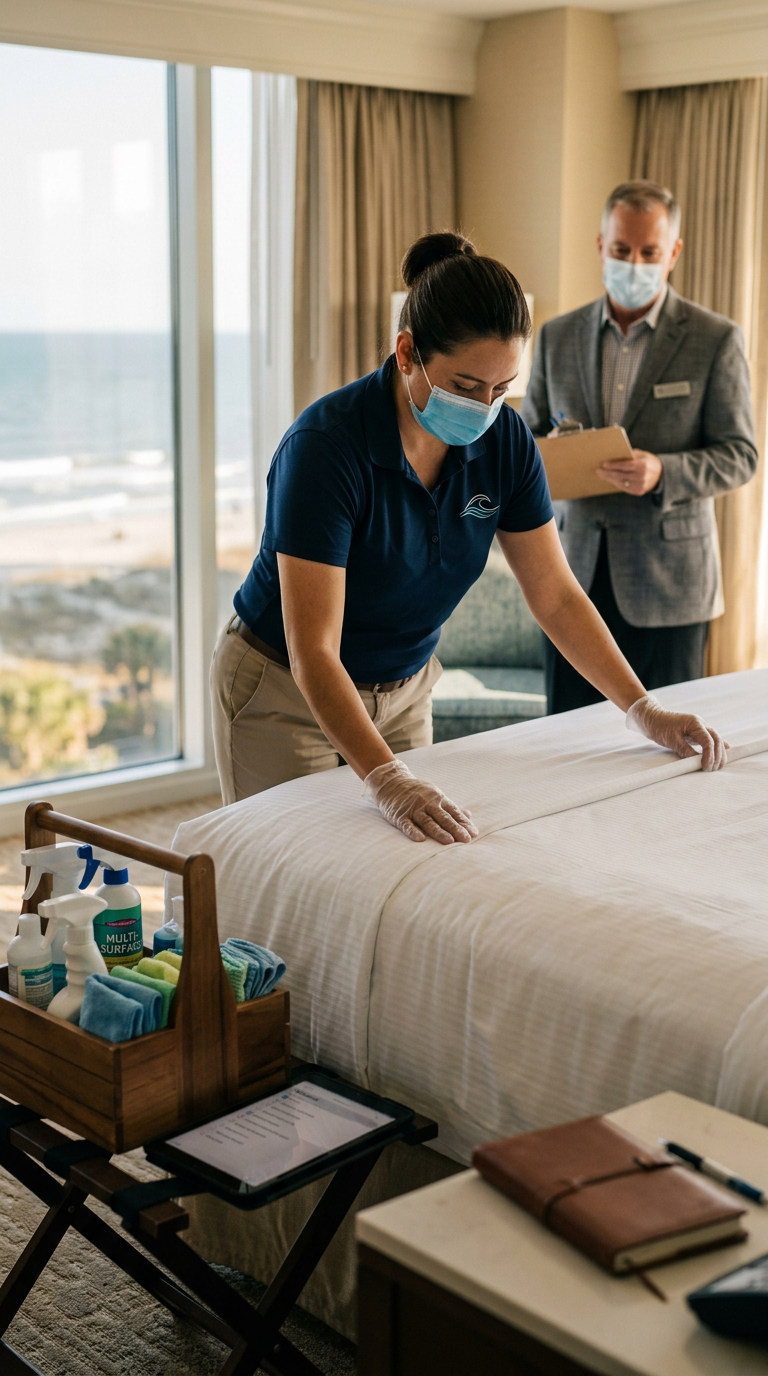
In the high-stakes Grand Strand vacation rental market, your cleaning crew is the backbone of your business. A single missed detail on a busy Saturday turnaround can lead to negative reviews, refund demands, and lost repeat bookings. Building a reliable, professional team requires moving past casual hiring practices and adopting rigorous vetting, structured training, and competitive compensation models.
The Core Competencies of a Professional Coastal Cleaner
Professional cleaning is a skilled trade, particularly in a coastal resort environment like Myrtle Beach. Unlike standard residential cleaning, hospitality cleaning requires an intense pace, physical stamina to handle high-humidity environments, and an acute eye for detail under tight deadlines. A top-tier cleaner must understand cross-contamination protocols, the chemistry of stain removal, and the specific challenges of managing sand, salt-air film, and high-moisture areas.
When evaluating candidates, look for individuals who view cleaning as a career rather than a temporary gig. Reliable team members possess strong time-management skills, a methodical approach to checklists, and the proactive communication skills needed to report property damage or maintenance issues immediately to the management team.
Essential Interview Questions for Vetting Cleaning Crews
To filter out unreliable applicants and identify seasoned professionals, your interview process must go beyond basic work history. You need to understand how a candidate performs under pressure, solves problems on-site, and handles the unique logistics of the Grand Strand geography.
Ask situational questions that force candidates to demonstrate their problem-solving abilities and knowledge of industry standards. Their answers will quickly reveal whether they have the experience necessary to handle a chaotic turn-day.
- How do you prioritize your tasks when a guest checks out late, leaving you with only ninety minutes before the next check-in?
- Can you describe your specific process for sanitizing a bathroom to prevent cross-contamination from other areas of the property?
- What is your protocol if you discover active mold growth, a water leak, or pest activity while cleaning a unit?
- How do you manage the physical demands of working in non-air-conditioned spaces or high-humidity coastal environments during the peak summer season?
Training, Safety Protocols, and Certification Paths
Relying on a cleaner's personal definition of 'clean' is a recipe for inconsistent results. A professional operation must establish standardized training programs based on recognized industry guidelines, such as those from the Worldwide Cleaning Industry Association (ISSA) or the Global Biorisk Advisory Council (GBAC).
Training should cover the proper dilution and dwell times of disinfectants, the safe handling of bloodborne pathogens, and ergonomic safety to prevent on-the-job injuries. Teaching your team the science behind their cleaning products—such as how pH levels affect different surfaces like quartz, marble, and LVP flooring—empowers them to make smart decisions and prevents costly property damage.
Local Compensation and Retention Trends on the Grand Strand
The Grand Strand labor market is highly competitive, especially during the peak tourist season from May through September. To attract and retain reliable talent, property managers must offer competitive compensation that reflects the difficulty of the work and the local cost of living.
Because our market stretches from Little River down to Pawleys Island, travel time and fuel costs are major factors for cleaners commuting from inland areas like Conway or Loris. Offering mileage reimbursement, performance-based turn bonuses, and guaranteed off-season hours are highly effective strategies for reducing turnover and keeping your best workers year-round.
Implementing Systems for Accountability and Support
Even the best cleaners will fail without clear systems of support and accountability. Instead of micromanaging, provide your team with digital, photo-supported checklists that guide them through each specific property layout. This ensures consistency and provides the office team with real-time verification of completed work.
Equally important is providing high-quality tools and simplified logistics. Expecting cleaners to wash, dry, and fold bulky resort linens in-unit during a four-hour window is a primary cause of burnout and delayed check-ins. Partnering with a dedicated commercial laundry and support service allows your cleaning crew to focus entirely on detailing and sanitizing the property.
Key takeaway
Building a reliable cleaning crew requires professional vetting, structured training, fair local compensation, and the operational support of a trusted partner like A2Z Cleaning & Linen Services at 843.800.2788.
Keep Reading
Commercial & Hospitality
The Grand Strand Commercial Disinfection Specialist Career Pathway: Class-A Office Standards, Biohazard Mitigation Certifications, and Local Retention Models
ReadCommercial & Hospitality
The Grand Strand Post-Construction Cleaning Specialist: Technical Dust-Extraction Certifications, Silica-Safety Audits, and Competitive Compensation Structures for New-Build Handover Teams
ReadCommercial & Hospitality
The Professional Cleaning Crew Hiring and Onboarding Standard: Structuring Practical Skill Audits, Localized Compensation Scales, and Interview Matrices for Grand Strand Teams
ReadReady for a spotless property?
Call 843.800.2788 or request a free quote from A2Z Cleaning & Linen Services.