Commercial & Hospitality
Designing the High-Retention Cleaning Division: Interview Scorecards, Ergonomic Training, and Localized Compensation Models in Myrtle Beach
Discover how to build a reliable, professional commercial cleaning team on the Grand Strand using structured interview scorecards, ergonomic safety, and stable year-round pay structures.
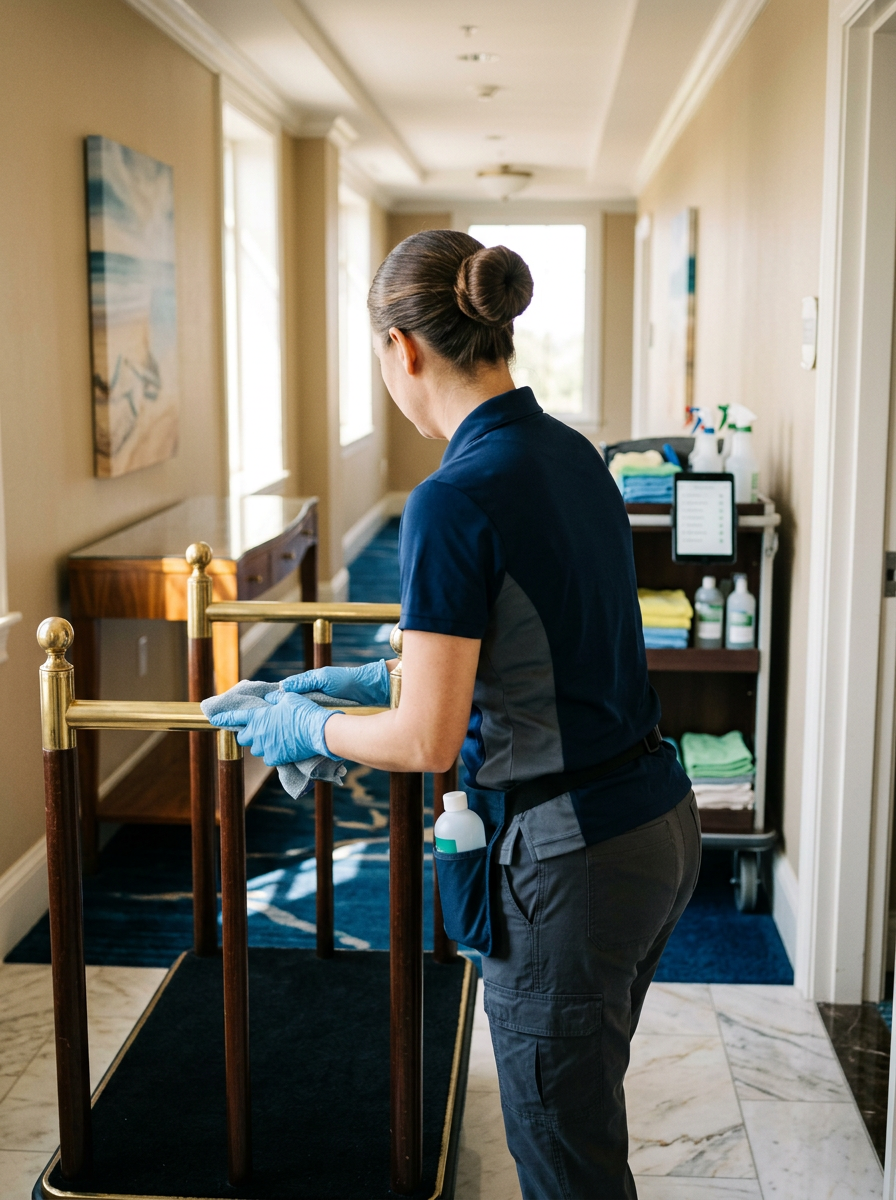
Building a reliable commercial cleaning team in the Grand Strand requires moving past seasonal hiring rushes and embracing a structured, career-oriented approach. For hospitality and commercial properties from Little River down to Pawleys Island, the cost of turnover is incredibly high, directly impacting service consistency and client trust. To combat this, smart organizations are professionalizing their recruitment pipelines, implementing strict ergonomic training, and aligning compensation with the local coastal economy. By offering clear career pathways and prioritizing technician safety, we can elevate environmental services from a transient job into a stable, respected career in our coastal community.
Defining the High-Performance Environmental Services Technician
The modern environmental services (EVS) technician is far more than a casual cleaner; they are skilled specialists tasked with maintaining indoor air quality, surface sanitation, and asset preservation. A top-tier professional exhibits a unique blend of physical endurance, deep spatial awareness, and chemical literacy. They must understand how dwell times affect different sanitizers, how to identify delicate stone surfaces that require neutral pH cleaners, and how to execute methodical, non-cross-contaminating wipe-down patterns to keep commercial facilities safe.
In the high-humidity environment of Myrtle Beach, a great technician also possesses a keen eye for coastal-specific property threats. This includes early identification of localized mildew blooms, moisture buildup on window tracks, and salt-air corrosion on door hardware. They are detail-oriented observers who notice minor structural changes before they become major liabilities for property managers or business owners, acting as the primary eyes and ears of the facilities they service.
Furthermore, reliability and emotional intelligence are crucial components of the high-performance profile. Because cleaning technicians often work in active commercial spaces or vacation rentals, they must display discretion, respect personal property boundaries, and communicate effectively with clients or supervisors. Finding individuals who possess this balance of technical aptitude and soft-skill competence requires a deliberate, structured recruitment strategy rather than casual hiring practices.
The Myrtle Beach Recruitment Blueprint: Interview Scorecards and Behavioral Vetting
Standard, informal interviews often fail to predict on-the-job reliability and technical competence. To build a highly reliable cleaning division, hiring managers must utilize structured interview scorecards that rate candidates on standardized, objective criteria. This approach removes hiring bias and ensures that every recruit is evaluated on core competencies like chemical safety knowledge, problem-solving abilities, physical stamina, and punctuality.
Behavioral questions should focus on real-world scenarios that technicians encounter daily on the Grand Strand. For example, asking a candidate how they handled a situation where a guest arrived early during a tight changeover window reveals their pressure management and customer service skills. Another valuable question asks them to describe a time they noticed a safety hazard, such as a frayed cord or chemical spill, and how they mitigated that risk.
To supplement behavioral vetting, practical skills assessments should be integrated directly into the second stage of the interview process. Candidates should be asked to demonstrate proper vacuuming posture, identify different chemical labels under OSHA’s Hazard Communication standard, or walk through their process for sanitizing a high-touch area. Observing their physical workflow and safety consciousness in real time is the most accurate predictor of long-term success.
- How do you prioritize tasks when clean times are cut short unexpectedly?
- Describe a time you had to clean an unfamiliar surface and how you determined the safe chemical to use.
- What steps do you take to prevent physical fatigue during an intensive eight-hour shift?
- Tell me about a time you noticed a property defect, like a water leak, and how you reported it.
Preventing Occupational Fatigue: Ergonomic Training and Coastal Safety
Cleaning is an intensely physical profession that exposes technicians to repetitive strain injuries, back pain, and heat exhaustion, especially during hot Grand Strand summers. Professional training programs must prioritize ergonomics from day one to protect worker health and reduce workers' compensation claims. Technicians must be trained in the 'neutral spine' technique, learning to bend at the knees rather than the waist when cleaning low-zone areas.
Equipment selection plays a massive role in ergonomic safety and overall fatigue reduction. Outfitting teams with lightweight backpack vacuums that feature padded, weight-distributing waist straps reduces shoulder and lumbar strain compared to heavy upright units. Similarly, utilizing microfiber flat mops with telescoping handles allows technicians of varying heights to maintain an upright posture, avoiding the awkward reaching that causes upper-body tension.
Heat stress mitigation is another critical element of coastal ergonomic safety. When working in oceanfront properties or commercial spaces where AC systems are strained, technicians must be trained on hydration schedules and the early signs of heat exhaustion. Providing cooling vests, mandatory shade breaks, and mineral-replenishing beverages during peak summer months ensures that your team remains healthy, productive, and physically supported throughout their shifts.
Elevating the Profession: Certifications and Skills Development
To transform a cleaning job into a viable career path, structured training must be tied to industry-recognized certifications. Programs like the ISSA’s Cleaning Industry Management Standard (CIMS) or the Global Biorisk Advisory Council (GBAC) trained-technician programs provide workers with formal credentials. This educational framework covers advanced topics such as bloodborne pathogen protocols, color-coded microfiber systems, and green cleaning methodologies.
Implementing a tiered certification ladder within your organization directly boosts retention by giving technicians clear goals to strive for. A Level I technician might master basic surface care and chemical safety, while a Level II specialist advances to hard-floor restoration, carpet extraction, and post-construction detailing. This structured progression gives employees a sense of professional pride and a tangible pathway toward higher wages and specialized roles.
Ongoing educational workshops should be held monthly to reinforce these skills and introduce new technologies. Topics can range from the chemistry of salt-air film removal to the safe operation of electrostatic sprayers. When technicians understand the 'why' behind their cleaning processes—such as the molecular science of emulsification or sanitization—they perform their duties with greater precision and take ownership of their professional development.
Building a Leadership Pipeline: Transitioning Field Staff to Management
The most reliable cleaning supervisors and quality assurance inspectors are almost always promoted from within. Having spent hundreds of hours executing hands-on turns and commercial cleans, these individuals understand the operational realities of the job better than anyone else. Establishing a formal leadership pipeline allows talented field technicians to transition smoothly into roles such as crew leads, trainers, and operations managers.
Transitioning from a field technician to a leadership role requires targeted professional development. Training must expand beyond cleaning mechanics to encompass team communication, conflict resolution, digital scheduling systems, and client relations. Investing in leadership workshops and mentoring programs prepares technicians for these administrative responsibilities, ensuring they are set up for success rather than overwhelmed by their new duties.
By publicizing these career pathways during the initial onboarding process, companies attract candidates who are looking for long-term career growth rather than temporary, seasonal work. This long-term outlook completely changes the cultural dynamic of the cleaning crew, fostering a collaborative, supportive environment where team members actively help each other succeed, resulting in highly cohesive and reliable service delivery.
Empowering Teams with Operational Technology and Digital Tools
Implementing user-friendly, modern field technology is a powerful way to streamline workflows and reduce on-the-job stress for cleaning crews. Mobile applications that provide real-time route optimization, step-by-step room checklists, and instant photo-upload capabilities eliminate administrative guesswork. Technicians can instantly view specific client preferences, access gate codes, and report property damage without needing to make multiple phone calls to dispatch.
These digital tools also provide objective proof of work, protecting technicians from unfair complaints and boosting their professional confidence. When a cleaner can log a completed task with timestamped high-resolution photos, they build a solid record of high performance. This transparency fosters mutual trust between the field staff, administrative office, and property clients, reinforcing a culture of accountability and professional integrity.
Furthermore, training staff on advanced diagnostic tools, such as moisture meters, slip-resistance meters, and ATP bioluminescence monitors, elevates their technical status. Instead of simply wiping surfaces down, technicians learn to measure and verify sanitization levels scientifically. Empowering employees with this high-tech equipment shows them that their work is valued as a vital science-based service, further motivating them to maintain industry-leading standards.
Designing Sustainable Workday Structures to Prevent Burnout
Burnout is a major driver of turnover in the cleaning industry, often caused by unrealistic scheduling, excessive drive times, and lack of adequate break windows. To maintain a reliable, year-round team, operations managers must design sustainable workday structures. This means calculating realistic cleaning times that account for high-occupancy soil levels, complex floor plans, and traffic patterns along busy coastal corridors like Highway 17.
Rotating demanding tasks among team members also prevents repetitive strain and physical exhaustion. For example, a technician who spent their morning operating a heavy carpet extractor should be assigned lighter dusting or detailing duties in the afternoon. This thoughtful distribution of labor keeps the physical demands balanced, ensuring that no single employee is pushed to their physical limit during a grueling work week.
Lastly, establishing open lines of communication where technicians can safely voice concerns about safety, workload, or equipment performance is vital. When employees feel heard and see their feedback leading to tangible improvements—such as replacing a faulty vacuum or adjusting a tight schedule—they feel valued and respected. This supportive culture is the ultimate foundation for building a highly loyal, professional, and reliable commercial cleaning team.
Key takeaway
Building a reliable, high-performing cleaning team requires investing in structured training, ergonomic safety, and competitive, year-round compensation. By professionalizing the role of environmental services technicians, commercial and residential properties in the Grand Strand enjoy more consistent, higher-quality results. To learn more about our certified teams and professional cleaning services, contact A2Z Cleaning & Linen Services at 843.800.2788.
Keep Reading
Commercial & Hospitality
The Hospitality Environmental Services Skill-Validation Rubric: Practical Field-Testing, Behavioral Vetting, and Local Wage Benchmarks
ReadCommercial & Hospitality
The Grand Strand Commercial Disinfection Specialist Career Pathway: Class-A Office Standards, Biohazard Mitigation Certifications, and Local Retention Models
ReadCommercial & Hospitality
The Coastal Environmental Specialist Career Track: Transforming Seasonal Labor Into Certified, Year-Round Grand Strand Field Technicians
ReadReady for a spotless property?
Call 843.800.2788 or request a free quote from A2Z Cleaning & Linen Services.