Coastal Living
The Coastal Consumer Guide to Restoring Sunbrella Cushions and Outdoor Patio Fabrics: Mitigating Salt-Damp Mildew, Sunscreen-Stain Binding, and Color-Safe Extraction in Grand Strand Homes
Discover the science behind outdoor fabric damage, the true costs of restoration versus replacement, and safety tips for cleaning Sunbrella cushions along the Grand Strand.
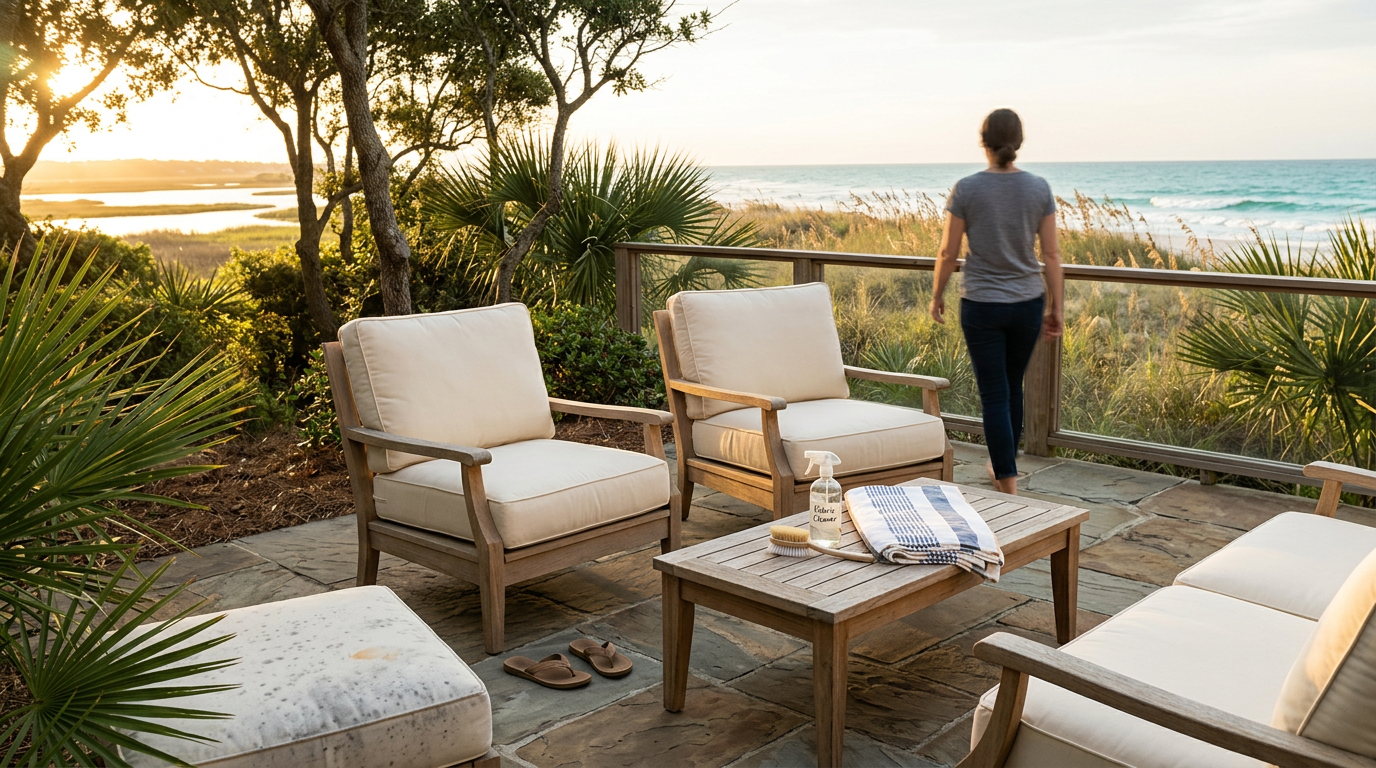
Coastal living in the Grand Strand means enjoying beautiful outdoor spaces, but the combination of humid salt-air, intense UV rays, and organic soils can quickly take a toll on outdoor furniture. Premium outdoor fabrics like Sunbrella are engineered to withstand the elements, yet they are not immune to the stubborn black spots of mold, greasy sunscreen stains, and embedded sand. Homeowners often struggle to clean these fabrics without causing permanent damage to the fibers, seams, or protective coatings. This comprehensive guide outlines the science of coastal outdoor fabric degradation, compares DIY and professional restoration, explains the actual costs, and provides safety protocols to keep your outdoor living spaces pristine.
The Chemistry of Coastal Fabric Degradation: Why Salt-Air and Humidity Cause Mold
Outdoor fabrics along the Grand Strand face a relentless combination of high humidity and airborne salt. Salt behaves as a natural humectant, meaning it actively attracts and holds moisture from our humid coastal air directly within the fabric's weave. This micro-environment remains damp far longer than it would inland, creating the perfect breeding ground for mold and mildew spores. While solution-dyed acrylic fibers themselves resist rot, the organic debris, pollen, and dust trapped between the fibers decompose, providing the exact nutrient source mold needs to colonize.
The resulting black and gray spotting is not just an aesthetic issue; it can lead to health concerns and unpleasant odors on your patio or screened porch. Over time, the root-like structures of mold, known as hyphae, weave deep into the fabric matrix. If left untreated, this organic growth bonds with salt crusts and airborne soot, making standard washing methods ineffective. Understanding this chemical interaction is crucial because attempts to scrub away the mildew without addressing the underlying moisture-retaining salt deposits will only result in rapid recolonization.
Furthermore, intense coastal ultraviolet (UV) radiation breaks down inferior textiles, but even high-grade fabrics experience accelerated wear when salt crystals act as microscopic magnifying lenses on the fibers. As the crystals dry, they expand and abrade the acrylic filaments during normal use. This abrasion weakens the textile’s structural integrity and makes it more porous. Consequently, a specialized cleaning approach must neutralize the salt, emulsify the organic soils, and safely extract the embedded debris without harming the base fiber.
The Sunscreen and Sebum Bond: How Organic Oils Ruin Outdoor Upholstery
Sunscreen, body oils, and sweat are unavoidable parts of beach life in Myrtle Beach, but they are highly destructive to outdoor fabrics. These organic lipids act as powerful adhesives, grabbing hold of fine silica sand, pollen, and environmental soot. When a guest sits on a patio lounger with sunscreen on their skin, they transfer a layer of oils that immediately sinks into the weave. This oil-and-sand mixture then bakes under the hot Carolina sun, polymerizing into a sticky, stubborn crust that resists water-based cleaning.
Standard household detergents are rarely formulated to break down these polymerized lipids without the use of excessive heat or harsh solvents, both of which can ruin the fabric. If you try to wash these areas with simple soap, you will often find that the greasy stain remains, continuing to attract more dirt and darkening over time. Professional restoration requires specialized lipid-emulsifying surfactants that can safely sever the bond between the oily barrier and the acrylic fibers, allowing the contaminants to be suspended and thoroughly rinsed away.
Additionally, the chemical ingredients in modern sunscreens, such as avobenzone and oxybenzone, can chemically react with iron and other minerals present in Grand Strand coastal water or well water. This reaction often leaves behind stubborn, rust-colored yellow or orange stains on light-colored Sunbrella fabrics. Attempting to scrub these stains with chlorine bleach can actually lock the iron stains into the fabric permanently. Homeowners must use targeted chelating agents to safely release these mineral-organic bonds and restore the fabric’s original hue.
Product Safety: Choosing Safe, Non-Toxic Cleansers for Children and Pets
Many homeowners believe that drenching outdoor cushions in harsh chlorine bleach is the only way to kill mold and sanitize the fabric. However, chlorine bleach is highly corrosive and poses significant health risks to children, pets, and the surrounding coastal landscape. Runoff from bleach-heavy cleaning can seep into your lawn, kill decorative patio plants, and harm local coastal ecosystems. Moreover, bleach residues left on the fabric can off-gas in the heat, irritating the skin, eyes, and lungs of anyone relaxing on the furniture.
While Sunbrella fibers are colorfast and technically bleach-resistant, the threads used to sew the cushions together are often not. Bleach rapidly degrades standard sewing threads, causing the seams to split open after just a few weeks of sun exposure. Safe, professional restoration utilizes biodegradable, EPA-approved botanical sanitizers and pH-neutral surfactants. These advanced formulas break down the cell walls of mold and mildew on contact without releasing toxic fumes or destroying the structural threads that hold your high-end outdoor cushions together.
When evaluating cleaning products or hiring a service, always prioritize formulas that are free from volatile organic compounds (VOCs), phosphates, and heavy optical brighteners. Green-certified, botanical sanitizers provide peace of mind, knowing that your children and pets can safely lounge on the cushions immediately after they dry. These safe chemistries clean deeply while preserving the soft, breathable texture of the acrylic fibers, ensuring that your outdoor living spaces remain healthy, comfortable, and environmentally responsible.
What to Ask a Grand Strand Cleaning Company Before Hiring
Not all cleaning companies have the training or equipment required to handle expensive outdoor fabrics. Before hiring a service to restore your patio cushions, you must ask specific questions to protect your investment. A company that treats your delicate outdoor Sunbrella cushions with the same high-pressure, aggressive methods used for concrete driveways will likely ruin your furniture and void your manufacturer warranties.
Cleaning the fabric face is only half the battle; if the interior cushion foam remains soaked with dirty water, mold will return within days. Professional companies use specialized moisture-extraction tools to draw water out of the foam core and may utilize high-velocity air movers to ensure the cushions dry completely in our humid coastal climate. Confirming their drying protocols upfront is essential to prevent structural rot.
Finally, always ask if they offer fabric re-treatment as part of their service package. A reputable restoration company will always recommend applying a premium, manufacturer-approved fluoropolymer protectant after a deep clean. This step is essential because any deep cleaning process that removes embedded oils will inevitably wear down the original water-repellent finish. Confirming that they use high-quality, safe protectants and apply them evenly ensures your cushions remain protected against future spills.
- Do you use low-pressure hot-water extraction, or do you pressure wash outdoor cushions?
- Are your cleaning solutions safe and biodegradable for coastal lawns, children, and pets?
- How do you ensure the interior foam cores are dried completely to prevent mold regrowth?
- Will you reapply a premium fluoropolymer protectant like 303 Marine Fabric Guard after cleaning?
- What is your protocol for identifying and treating sunscreen-related avobenzone stains?
The True Financial Cost: Professional Restoration vs. Cushion Replacement
High-quality outdoor furniture is a significant financial investment. Replacing a full set of custom-made Sunbrella cushions for a sectional or deep-seating patio set can easily cost between $1,500 and $4,000, depending on the thickness, size, and fabric pattern. Many homeowners are shocked to learn that custom cushions often cost nearly as much as the metal or wicker frames themselves. Choosing to discard stained or moldy cushions prematurely is an expensive habit that can be easily avoided through professional restoration.
In contrast, professional deep cleaning, sanitization, and re-treatment typically cost only a fraction of replacement prices. A comprehensive restoration service generally ranges from $30 to $75 per cushion, depending on the size, level of staining, and whether they require deep-foam moisture extraction. This represents a massive savings of up to 80% compared to buying new. By restoring the fabric and reapplying a protective barrier, you can easily extend the functional lifespan of your premium outdoor furniture by several years.
Additionally, professional maintenance preserves the structural integrity of the inner foam. High-density outdoor foam, such as dry-fast or open-cell foam, is designed to drain water quickly, but it can become clogged with body oils, sand dust, and mold spores over time. When professionals flush out these internal contaminants, they restore the foam's elasticity, breathability, and comfort. Investing in professional care not only saves you thousands of dollars in replacement costs but also ensures your outdoor furniture looks and feels luxurious for its entire lifecycle.
Step-by-Step Homeowner Preventative Maintenance Protocol
To maximize the lifespan of your outdoor fabrics between professional cleanings, Grand Strand homeowners should establish a simple, consistent maintenance routine. Regular brushing and rinsing prevent dry sand crystals from working their way deep into the acrylic weave and grinding down the fibers when guests sit. Shaking or vacuuming the cushions weekly can make a dramatic difference in preventing long-term wear.
Once a month, perform a gentle rinse with fresh, cool water from your garden hose to wash away surface salt-air deposits. Do not use a high-pressure nozzle; a gentle shower setting is ideal. If you spot a spill, such as sunscreen, food grease, or drinks, blot it immediately with a clean, dry microfiber cloth. Avoid rubbing, which pushes the stain deeper into the fabric, and spot-clean the area with a mild, pH-neutral soap solution.
Finally, during periods of heavy rain, high pollen counts, or winter storage, always cover your outdoor furniture with high-quality, breathable covers or store the cushions in a dry, well-ventilated space. Never store cushions while they are damp, as this guarantees mold growth. By combining these simple, proactive home care steps with periodic professional deep cleaning and re-protection, you can keep your Grand Strand outdoor living spaces looking pristine and comfortable year-round.
- Brush off loose dirt, sand, and pollen weekly using a soft-bristled hand brush.
- Rinse cushions monthly with fresh, low-pressure water to dissolve and wash away salt crusts.
- Blot spills immediately with a microfiber cloth instead of rubbing the stain into the fibers.
- Spot-clean fresh stains with a mild, pH-neutral dish soap and lukewarm water, rinsing thoroughly.
- Store cushions in a dry, covered space during extended periods of non-use or heavy rain.
Key takeaway
Restoring your premium Sunbrella cushions and outdoor fabrics is a highly cost-effective and environmentally friendly alternative to replacement when done with color-safe, low-pressure extraction. To learn more about our safe, non-toxic outdoor fabric restoration services in Myrtle Beach and the Grand Strand, contact A2Z Cleaning & Linen Services today at 843.800.2788.
Keep Reading

Coastal Living
The Coastal Bathroom Exhaust Fan and Ducted Ventilation Decontamination Protocol: Mitigating Humid Mold Spores, Lint-Cement Build-Up, and Botanical Airway Protection in Grand Strand Homes
ReadCoastal Living
The Coastal Shiplap and Tongue-and-Groove Wood Ceiling Decontamination Protocol: Mitigating Salt-Damp Dust Binding, Mold-Spore Colonization, and Breathable Allergen Re-emission in Grand Strand Homes
ReadCoastal Living
The Cost of Restoring Coastal Woven Wood and Bamboo Shades: Mitigating Salt-Damp Mildew, Fiber Fraying, and Tension-Cord Failures in Grand Strand Homes
ReadReady for a spotless property?
Call 843.800.2788 or request a free quote from A2Z Cleaning & Linen Services.