Coastal Living
The Coastal Ductless Mini-Split AC Unit and Air Handler Decontamination Protocol: Mitigating Humid Mold Biofilms, Allergen Dispersion, and Safe Botanical Sanitization in Grand Strand Homes
Discover how high coastal humidity and salt air turn ductless mini-split units into breeding grounds for mold and allergens, and learn our safe, botanical decontamination protocol.
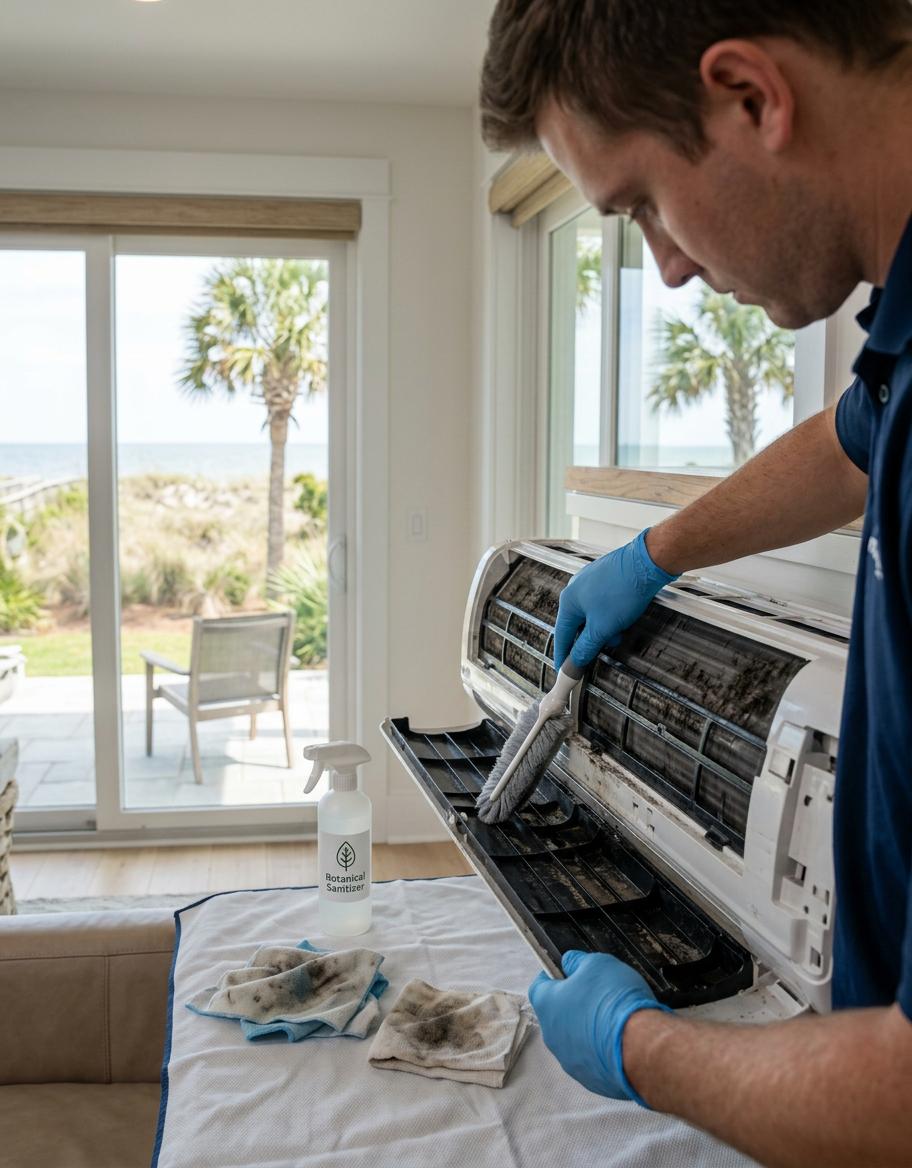
Ductless mini-split air conditioning units have become an architectural staple across Myrtle Beach and the wider Grand Strand. These systems offer targeted, efficient cooling for sunrooms, master suites, and historical beach cottages. However, their unique design makes them highly susceptible to localized humidity traps, dust-mite nesting, and rapid mold colonization. Left unmanaged, these compact air handlers blow millions of microscopic allergens directly into your family's breathing zone, compromising your indoor air quality and health.
The Micro-Climate of the Grand Strand Mini-Split: Why Coastal Units Breed Spores
Ductless mini-split systems operate by pulling warm, moisture-laden air directly from the room across a set of cold copper and aluminum evaporator coils. In the humid climate of the Grand Strand, where relative humidity levels routinely climb above eighty percent during the summer, this process generates an extraordinary volume of water condensation. This moisture is designed to collect in a shallow internal drain pan and flow out of the home through a narrow gravity-fed line.
The challenge arises because these units sit directly within our living spaces, constantly exposed to microscopic household dust, pet dander, and ocean salt spray. This salt-laden air creates a sticky, microscopic film on the delicate aluminum fins of the evaporator coil. When household dust and airborne mold spores pass through the unit, they stick to this damp, saline-coated surface, creating a nutrient-rich foundation for fungal growth.
Because these systems cycle on and off to maintain a precise temperature, the internal components spend hours in a dark, warm, and damp state. This creates the ultimate incubator for mold species such as Cladosporium, Aspergillus, and Penicillium. Within just a few weeks of unmonitored operation during our peak summer season, a invisible spore colony can grow into a dense, resilient biofilm that coats the entire interior housing of your air handler.
- High relative humidity combined with salt-air residue creates a sticky, adhesive film on internal coils.
- The dark, damp, and warm interior during off-cycles provides the ideal growth conditions for fungal spores.
- Organic household dust acts as a continuous food source for nesting mold and yeast colonies.
- Traditional ducted systems hide these issues behind drywall, but mini-splits release spores directly into the room.
Identifying the Signs of Mini-Split Contamination: From Musty Air to Black Flakes
Recognizing when your ductless unit has crossed the line from a simple cooling appliance to an active allergen distributor is critical for your family's health. The first and most common indicator is a distinct sour, musty, or vinegar-like odor that fills the room immediately after the unit starts its cooling cycle. This smell is caused by microbial volatile organic compounds released by active yeast and mold colonies living inside the blower assembly.
A visual inspection can quickly confirm these suspicions. If you peer through the horizontal air discharge louvers with a flashlight, you may notice tiny black, gray, or green specks lining the plastic directional fins. This is not simple household lint. These specks are clusters of mold hyphae and accumulated skin flakes that have bonded to the rotating components of the system.
When contamination reaches an advanced stage, you may notice the unit spitting tiny water droplets or small black flakes onto the floor or furniture below. This occurs because the internal condensate pan is overflowing due to a gelatinous algae plug, or the blower wheel has become so heavily weighted down with wet biofilm that it can no longer spin smoothly, shearing off chunks of the mold accumulation.
The Physics of Airflow: How Neglected Blowers Circulate Microscopic Allergens
Inside every mini-split indoor unit lies a cylindrical component known as a squirrel cage blower wheel. This wheel spins at high speeds to pull air through the evaporator coil and push it back out into your room. Because of its complex, multi-bladed design, the blower wheel has hundreds of tiny crevices that are highly susceptible to dust and moisture accumulation, making it a primary site for mold colonization.
As the blower wheel spins, centrifugal force constantly shears off microscopic fragments of the mature mold colonies growing on its blades. These fragments, along with thousands of viable fungal spores and dust mite allergens, are projected directly into the room's air currents. Because these particles are microscopic, they remain suspended in your indoor breathing zone for hours, where they are easily inhaled.
For residents and guests dealing with asthma, seasonal allergies, or chronic respiratory conditions, this continuous exposure can trigger immediate symptoms. Morning congestion, dry coughs, irritated eyes, and headaches are frequent complaints in homes with contaminated mini-split units. Furthermore, the localized humidity surrounding a damp air handler can encourage dust mite reproduction on nearby bedding and window dressings.
The Step-by-Step Decontamination Protocol: Powering Down and Safe Disassembly
Properly cleaning a coastal mini-split unit requires a methodical, safety-first approach that goes far beyond simply wiping down the plastic exterior casing. The decontamination protocol must always begin by switching off the dedicated circuit breaker for the unit. Simply turning the system off with the remote control leaves live electrical currents running to the internal control boards, posing a severe shock hazard.
Once power is verified as off, technicians wear protective N95 masks and eye protection before carefully releasing the hidden plastic clips along the top and bottom of the unit's outer shroud. This plastic shell must be removed with extreme patience, as years of exposure to coastal sun and warm air can make the plastic casing brittle and prone to cracking under sudden pressure or improper leverage.
With the outer shroud successfully removed, the reusable mesh dust filters, horizontal louvers, and vertical directional vanes can be detached. To protect your home's surrounding drywall, paint, and flooring from wastewater, a specialized, waterproof mini-split cleaning bib is securely mounted behind and beneath the unit's chassis, channeling all rinse water safely down into an industrial collection bucket.
- Always disconnect the primary circuit breaker to eliminate all electrical hazards before cleaning.
- Wear appropriate personal protective equipment to prevent inhaling dislodged mold spores.
- Carefully disengage the outer plastic shroud to expose the inner coils and blower assembly.
- Install a specialized containment bib to catch all chemical overspray and wastewater.
Chemical Safety: Why Harsh Bleach Destroys Fins and Why Botanical Surfactants Reign
When faced with mold, many homeowners instinctively reach for traditional chlorine bleach. However, using bleach on a mini-split's aluminum evaporator coil is a recipe for system failure. Bleach is highly corrosive to thin aluminum and copper components. In our salt-air environment, bleach residues accelerate galvanic corrosion, which quickly creates pinhole leaks in the refrigerant coils, ruining the unit.
Instead of corrosive chemicals, our protocol utilizes EPA-registered, botanical disinfectants formulated with natural active ingredients like thymol or citric acid. These plant-derived compounds are highly effective at breaking down the cellular walls of mold, bacteria, and viruses on contact. Crucially, they achieve this disinfection standard without releasing harsh, lingering chemical vapors into your home's enclosed spaces.
These botanical sanitizers are combined with natural, biodegradable surfactants that work to loosen the oily binders holding sand-grit, skin cells, and pet dander to the metal fins. By breaking this chemical bond, the accumulated grime can be easily washed away without the need for aggressive physical scrubbing, which can bend the delicate aluminum fins and permanently restrict the unit's airflow capacity.
Deep Evaporator Coil and Blower Wheel Cleaning: Safe Mechanical Extraction
With the botanical cleaning solution applied and allowed to dwell on the coils for the required contact time, the physical extraction process begins. Technicians use a specialized, low-pressure detailing sprayer to gently flush the evaporator coils from top to bottom. High-pressure power washers must never be used here, as they will instantly fold the paper-thin aluminum fins, blocking all future heat transfer.
Next, attention turns to the heavily soiled blower wheel. The botanical surfactant is sprayed deep into the fan blades, and a specialized, long-bristled detailing brush is used to manually agitate and release the stubborn biofilm from each individual blade. The wheel is then thoroughly rinsed with clean water, with the dirty runoff carrying the emulsified mold and dust safely down into the containment bib.
The final phase of mechanical cleaning involves the condensate drain pan and drain line. The pan is treated with a botanical sanitizing solution to dissolve any lingering algae slime. A specialized flush tool is then used to push low-pressure water through the drain line, clearing any gelatinous plugs and verifying that gravity-fed condensation can flow freely out of the home without backing up.
Preventive Maintenance: Managing Humidity, Filter Washing Schedules, and Airflow Checks
To maintain clean indoor air quality after a deep decontamination, Grand Strand homeowners must establish a strict routine for filter maintenance. During our humid summer months, the reusable mesh filters should be removed, rinsed under warm water with a mild botanical soap, dried completely, and reinstalled every two weeks. This simple task stops heavy dust loads from passing through to the damp internal coils.
Another effective preventative strategy is utilizing your system's 'Dry Mode' or running the fan-only cycle for fifteen to twenty minutes after a heavy cooling session. This process allows the internal fan to dry off the wet evaporator coils and blower wheel before the unit powers down completely, depriving dormant mold spores of the stagnant moisture they need to germinate.
Finally, keeping your overall household humidity under control is essential. By utilizing supplemental whole-house dehumidifiers to maintain indoor relative humidity below fifty-five percent, you drastically reduce the latent moisture load on your mini-split system. This team effort ensures your air handlers run dry and stay clean, keeping mold growth from taking hold between professional cleanings.
- Wash and dry the reusable mesh air filters every two weeks during the humid summer season.
- Run the fan-only mode for fifteen minutes after cooling to dry out the internal components.
- Keep the home's overall relative humidity below fifty-five percent with supplemental dehumidifiers.
- Inspect the external drain line discharge point regularly to ensure water is flowing freely.
Professional Decontamination vs. DIY: Protecting Your Coastal Investment and Family Health
While basic filter washing is an excellent DIY task for homeowners, a deep internal decontamination of a mini-split system should be left to trained professionals. The delicate nature of the electrical control boards, the fragility of the plastic shrouds, and the specialized containment gear required to prevent mold spores from spreading throughout your room make this a highly technical service.
Choosing professional care also protects your financial investment. A mini-split unit choked with mold and dust can suffer a drop in operating efficiency of up to thirty percent, driving up your summer electric bills and putting unnecessary strain on the compressor. Regular, expert sanitation ensures your multi-zone systems operate at peak efficiency, preventing expensive premature breakdowns.
At A2Z Cleaning & Linen Services, we specialize in high-standard, health-conscious cleaning solutions tailored specifically for the unique demands of Myrtle Beach homes. Our team uses safe, botanical disinfectants and professional containment protocols to restore your ductless systems, ensuring your family breathes clean, fresh, and allergen-free air all year round. Call us today at 843.800.2788 to schedule your home's air quality inspection.
Key takeaway
Ductless mini-split units are highly efficient but require dedicated, mold-conscious sanitation to protect your indoor air quality in our humid coastal environment. By avoiding corrosive chemicals like bleach and utilizing safe, botanical decontamination protocols, you can eliminate harmful allergens and protect your family's health. For professional, eco-friendly mini-split sanitation and deep home cleaning across the Grand Strand, trust the expert team at A2Z Cleaning & Linen Services.
Keep Reading
Coastal Living
The Coastal Home Library, Bookshelf, and Paper Ephemera Decontamination Protocol: Mitigating Humid Paper-Mold, Silverfish Infestations, and Botanical Airway Protection in Grand Strand Homes
ReadCoastal Living
The Coastal Bathroom Exhaust Fan and Ducted Ventilation Decontamination Protocol: Mitigating Humid Mold Spores, Lint-Cement Build-Up, and Botanical Airway Protection in Grand Strand Homes
ReadCoastal Living
The Coastal Shiplap and Tongue-and-Groove Wood Ceiling Decontamination Protocol: Mitigating Salt-Damp Dust Binding, Mold-Spore Colonization, and Breathable Allergen Re-emission in Grand Strand Homes
ReadReady for a spotless property?
Call 843.800.2788 or request a free quote from A2Z Cleaning & Linen Services.