Coastal Living
The Coastal Home Library, Bookshelf, and Paper Ephemera Decontamination Protocol: Mitigating Humid Paper-Mold, Silverfish Infestations, and Botanical Airway Protection in Grand Strand Homes
Protect your family's health and preserve your book collection from coastal humidity, silverfish, and paper-mold with our step-by-step botanical decontamination guide.
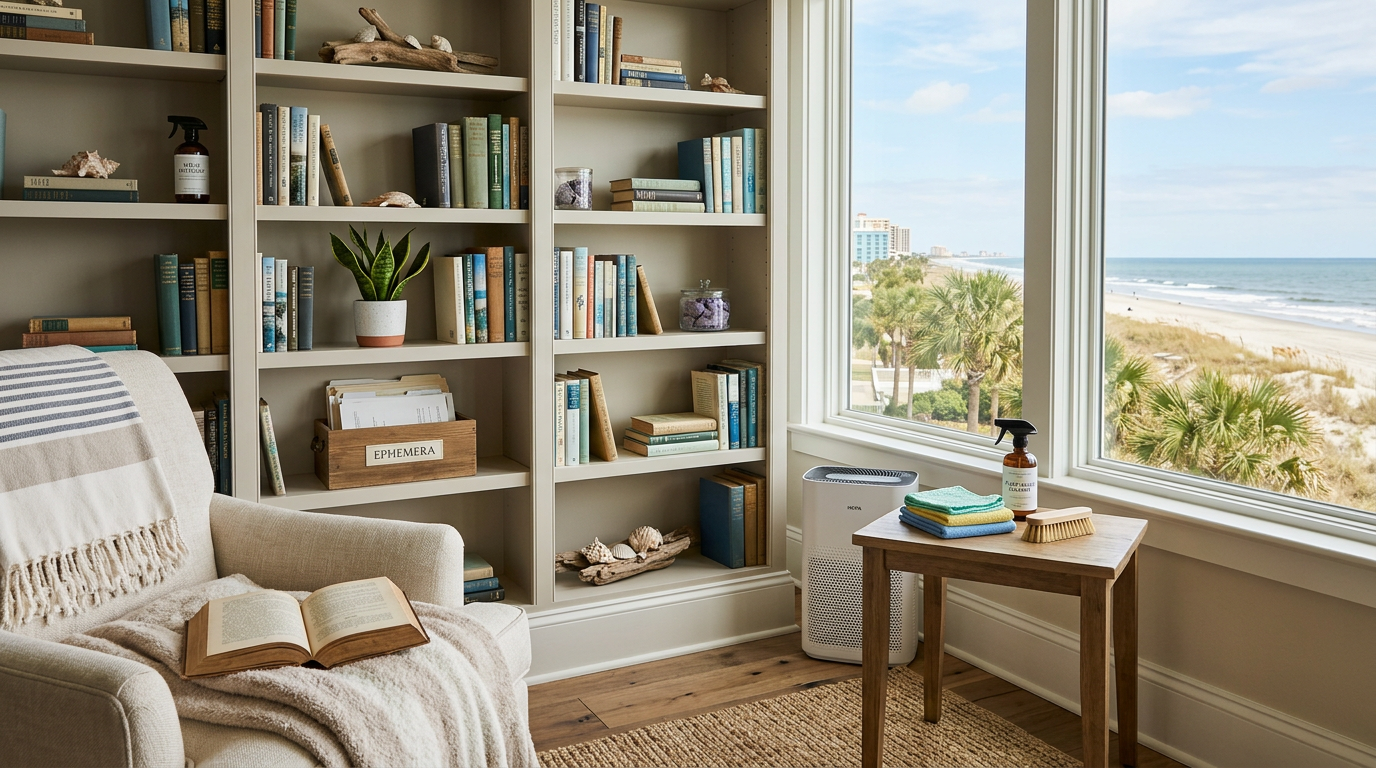
Living along the Grand Strand brings beautiful ocean views, but it also introduces persistent humidity and salt air that can threaten your home's indoor air quality. Books, paper ephemera, and shelving are highly susceptible to moisture absorption, turning home libraries into breeding grounds for mold and allergens. To protect your family's respiratory health and preserve your literary treasures, a specialized cleaning approach is essential. This guide outlines a safe, botanical, and highly effective protocol to decontaminate your home library and restore your indoor environment.
The Microclimate of Coastal Home Libraries and Bookshelves
In the Grand Strand’s sub-tropical climate, indoor humidity can fluctuate wildly, especially in older beach cottages and multi-story coastal homes. When bookshelves are placed against exterior-facing walls, they encounter temperature differentials that lead to localized microclimates. Books, composed of organic wood pulp, cotton fibers, and starch-based adhesives, are highly hygroscopic. This means they continuously absorb moisture from the surrounding air, creating a perpetually damp environment within tightly packed shelves that remains hidden from casual view.
Once the relative humidity within these microclimates remains above 60% for prolonged periods, dormant mold spores inevitably germinate. The tightly packed arrangement of books restricts natural airflow, trapping pocketed moisture and preventing the HVAC system from effectively drying the paper fibers. Consequently, home libraries become quiet incubators for fungal colonies, slowly degrading structural integrity while releasing millions of microscopic, invisible spores directly into the home's breathing zone.
This problem is compounded by coastal salt air, which introduces hygroscopic salt particles into the home. These particles settle on shelf surfaces, attracting additional moisture and bonding with ambient house dust to form a nutrient-rich film. This damp organic paste provides the perfect fuel source for mold, making standard dusting methods ineffective and requiring a systematic, decontamination-oriented approach to preserve both physical collections and human respiratory health.
Identifying Coastal Paper-Mold (Foxing) and Active Spore Colonization
To address mold in a coastal library, one must first distinguish between foxing and active mold growth. Foxing presents as stable, rust-colored spots or rings on older paper, caused by iron oxidation or chemical impurities in the paper manufacturing process. While foxing affects the aesthetic value of books, it is chemically inert and does not actively release allergens or compromise indoor air quality, meaning it does not require sanitization or chemical treatment.
Active mold colonization, conversely, is characterized by a soft, powdery, or fuzzy texture in shades of white, grey, green, or black. These active colonies feed on the cellulose in the paper and binding boards, leaving smearable residues that smear when touched. Active mold emits a distinct, earthy, musty odor caused by microbial volatile organic compounds (mVOCs), which serve as a clear warning sign that air quality is being compromised.
Fungal spores from active colonies pose a significant health hazard, particularly for individuals with asthma, seasonal allergies, or compromised immune systems. As books are handled, these microscopic spores are easily aerosolized, spreading throughout the living space and landing on other soft surfaces. Promptly identifying active mold versus inert foxing is the critical first step in determining whether safe containment and botanical decontamination protocols must be initiated.
The Silverfish and Booklice Threat in Humid Environments
High humidity and organic bookbinding materials do not just attract mold; they also invite damaging structural pests. Silverfish and booklice are small, wingless insects that thrive in environments where relative humidity exceeds 50%. These pests feed on starches, dextrin adhesives, and mold spores found on book covers, pages, and wallpaper backing, causing irreversible physical damage to collections while creating hidden biological hazards within the shelving.
As these pest populations grow, they leave behind tiny droppings, yellow stains, and shed exoskeletons that accumulate in the dark spaces behind books. These insect fragments are potent allergens that mix with household dust. When disturbed, these allergens can trigger sneezing, skin irritation, and severe respiratory reactions, especially in children and pets who spend time near low-lying shelves or reading nooks in Grand Strand homes.
Eradicating these pests requires a dual approach that addresses both the physical insects and their primary food source: mold. Simply applying synthetic chemical pesticides to shelves is unsafe, as these chemicals off-gas in confined spaces and contaminate the books. Instead, managing moisture levels and utilizing green, botanical sanitation products is the safest, most sustainable method to disrupt their lifecycle and secure a healthy indoor environment.
Safe Extraction and Dust-Containment Protocols
The physical removal of dust and mold spores must be executed using strict containment standards to prevent contaminating the wider home. Never use dry feather dusters or standard household vacuums, which lack adequate filtration and will blast fine spores back into the air. Instead, utilize a commercial-grade vacuum equipped with a certified HEPA filter, ensuring all exhaust air is completely scrubbed of micro-particles down to 0.3 microns.
Before moving any books, establish a clean workstation nearby, preferably outdoors or in a well-ventilated room with a HEPA air scrubber running. Carefully remove each volume from the shelf, holding it firmly shut to prevent dust or spores from falling between the pages. Gently pass the HEPA vacuum brush attachment over the top edge, spine, and bottom edge of each book block to extract loose particulate matter safely.
Once the books are cleared from a shelf section, use the vacuum’s crevice tool to thoroughly clean the corners, shelf support tracks, and backboards. This step removes the built-up sand-grit, salt dust, and insect debris that naturally accumulate over time. By executing this dry extraction process first, you prevent wetting the soil, which would otherwise create a muddy, difficult-to-clean paste on the shelves.
- Always use a certified HEPA-filter vacuum to capture micro-spores down to 0.3 microns.
- Establish a clean, well-ventilated staging area away from the main shelving unit.
- Keep book blocks closed tightly while vacuuming the exterior edges of each volume.
- Use a vacuum crevice tool to clear shelf corners, support pegs, and rear panels.
- Perform dry-soil extraction completely before introducing any liquid cleaning agents.
Material-Safe Botanical Sanitization for Shelving Substrates
Once dry particulate extraction is complete, the shelf substrates must be sanitized using green, botanical disinfectants. Traditional cleaning agents like chlorine bleach are highly corrosive, emit toxic fumes, and can warp wood or ruin delicate paint finishes. Additionally, bleach does not prevent mold from returning on porous wood surfaces, as its high water content penetrates the wood while the active chlorine remains on the surface.
A safe, eco-friendly alternative is a botanical disinfectant formulated with thymol (extracted from thyme oil) or food-grade citric acid. These natural compounds rupture the cell walls of mold spores without releasing harmful synthetic volatile organic compounds into your home. When applied correctly, botanical sanitizers provide an effective kill rate for mold and bacteria while remaining completely safe for children, pets, and sensitive indoor ecosystems.
To apply, lightly moisten a clean microfiber cloth with the botanical solution—never spray the shelf directly, as excess moisture can pool and damage the wood. Wipe down all surfaces of the shelving, including the undersides and supports. Allow the botanical sanitizer to dwell on the surface for the manufacturer’s recommended time to ensure complete disinfection, then wipe dry with a clean microfiber cloth to remove all residual moisture.
Decontaminating and Preserving Book Covers and Pages
Decontaminating the books themselves requires an incredibly delicate, low-moisture touch to protect the paper and bindings from structural warping. For non-rare books with active mold on the covers, lightly dampen a soft microfiber cloth with a highly diluted botanical sanitizer, ensuring it is damp to the touch but not wet. Gently wipe the exterior covers and spines, working in single, unidirectional strokes to lift the mold without embedding it further.
For interior pages, never use liquid cleaners. Instead, use a clean vulcanized rubber sponge, often called a dry-cleaning soot sponge, to gently lift surface mold and dirt from the paper. Work from the inner gutter of the page outward to avoid tearing the delicate paper fibers. If pages are slightly damp from coastal humidity, insert clean piece-sheets of unbuffered acid-free blotting paper between them to absorb the trapped moisture.
After cleaning, the books must be completely dry before returning to the shelves. On clear, low-humidity days, you can expose non-valuable books to brief, indirect sunlight outdoors to utilize natural UV sanitization. For valuable or sensitive collections, place them in a room with a dedicated dehumidifier and oscillating fans to ensure gentle, continuous air movement that thoroughly dries the paper fibers without causing warping or heat damage.
Environmental Controls: Maintaining the 50% Relative Humidity Threshold
Cleaning the shelves and books is only a temporary fix if the underlying indoor air quality and humidity issues are not resolved. In the Grand Strand area, the golden rule for preserving paper and preventing mold germination is keeping indoor relative humidity consistently below 50% to 55%. Running a central HVAC system on the "Auto" setting rather than "On" prevents the system from blowing moisture back into the home during off-cycles.
Installing a dedicated, whole-house or console-style dehumidifier near large home libraries is highly recommended. Pair this with a digital hygrometer placed directly on the bookshelf to monitor localized humidity levels in real-time. Additionally, ensure there is at least a two-inch gap between the back of the bookshelf and the wall, which promotes continuous airflow and prevents the stagnant, cool air pockets where condensation and mold thrive.
Finally, optimize your home’s air filtration by upgrading to high-efficiency MERV 11 or MERV 13 HVAC filters, and replace them every 30 to 45 days during the humid summer peak. These filters capture airborne mold spores, pet dander, and fine coastal dust before they can settle on your books. This simple habit dramatically reduces the allergen load in your home library and helps maintain a clean, healthy breathing environment for your family.
- Set your central HVAC system fan setting to 'Auto' rather than 'On' to control humidity.
- Position dedicated dehumidifiers close to large bookshelves or library walls.
- Maintain a two-inch gap between the back of the bookshelves and exterior walls.
- Upgrade home HVAC filters to MERV 11 or MERV 13 and replace them every 30 to 45 days.
- Monitor localized moisture levels continuously using a digital hygrometer.
Professional Restoration vs. DIY Safety Limits
While minor mustiness on a few modern books can easily be managed at home using these botanical protocols, large-scale mold outbreaks require professional intervention. If you discover mold spreading across entire walls, behind built-in bookcases, or onto historical, valuable volumes, attempting to clean it yourself can result in permanent damage to your collection and dangerous exposure to high concentrations of airborne allergens.
Professional cleaning technicians possess specialized containment equipment, high-capacity HEPA air scrubbers, and advanced moisture-detection tools to safely remediate affected library spaces. They can identify hidden moisture intrusion, such as slow window leaks or poor wall insulation, that may be driving the humidity spikes. Relying on professional expertise ensures that both your physical investments and your family’s respiratory health are fully protected using industry-standard protocols.
For families in Myrtle Beach, Surfside Beach, and throughout the Grand Strand, maintaining a healthy, allergen-free home is a year-round priority. At A2Z Cleaning & Linen Services, we specialize in high-standard, health-conscious cleaning solutions that protect your living spaces from coastal elements. If you are struggling with musty closets, humid bookshelves, or general indoor air quality concerns, reach out to our expert team today at 843.800.2788 for professional care.
Key takeaway
Maintaining a healthy home library in a coastal climate requires vigilant humidity management and gentle, non-toxic cleaning practices. By prioritizing botanical sanitizers and HEPA-filtered extraction, you protect both your family's respiratory health and your cherished book collections. For professional assistance with coastal moisture, mold mitigation, or deep cleaning, trust the team at A2Z Cleaning & Linen Services.
Keep Reading

Coastal Living
The Coastal Bathroom Exhaust Fan and Ducted Ventilation Decontamination Protocol: Mitigating Humid Mold Spores, Lint-Cement Build-Up, and Botanical Airway Protection in Grand Strand Homes
ReadCoastal Living
The Coastal Shiplap and Tongue-and-Groove Wood Ceiling Decontamination Protocol: Mitigating Salt-Damp Dust Binding, Mold-Spore Colonization, and Breathable Allergen Re-emission in Grand Strand Homes
ReadCoastal Living
The Coastal Wicker, Rattan, and Woven Reed Furniture Decontamination Protocol: Mitigating Humid Mold Colonization, Allergen-Binding Crevices, and Fiber-Safe Botanical Restoration in Grand Strand Homes
ReadReady for a spotless property?
Call 843.800.2788 or request a free quote from A2Z Cleaning & Linen Services.