Coastal Living
The Coastal Wicker, Rattan, and Woven Reed Furniture Decontamination Protocol: Mitigating Humid Mold Colonization, Allergen-Binding Crevices, and Fiber-Safe Botanical Restoration in Grand Strand Homes
A comprehensive, botanical-based guide to removing microscopic mold spores, dust mites, and salt-crust from woven wicker and rattan furniture in humid Grand Strand coastal environments.
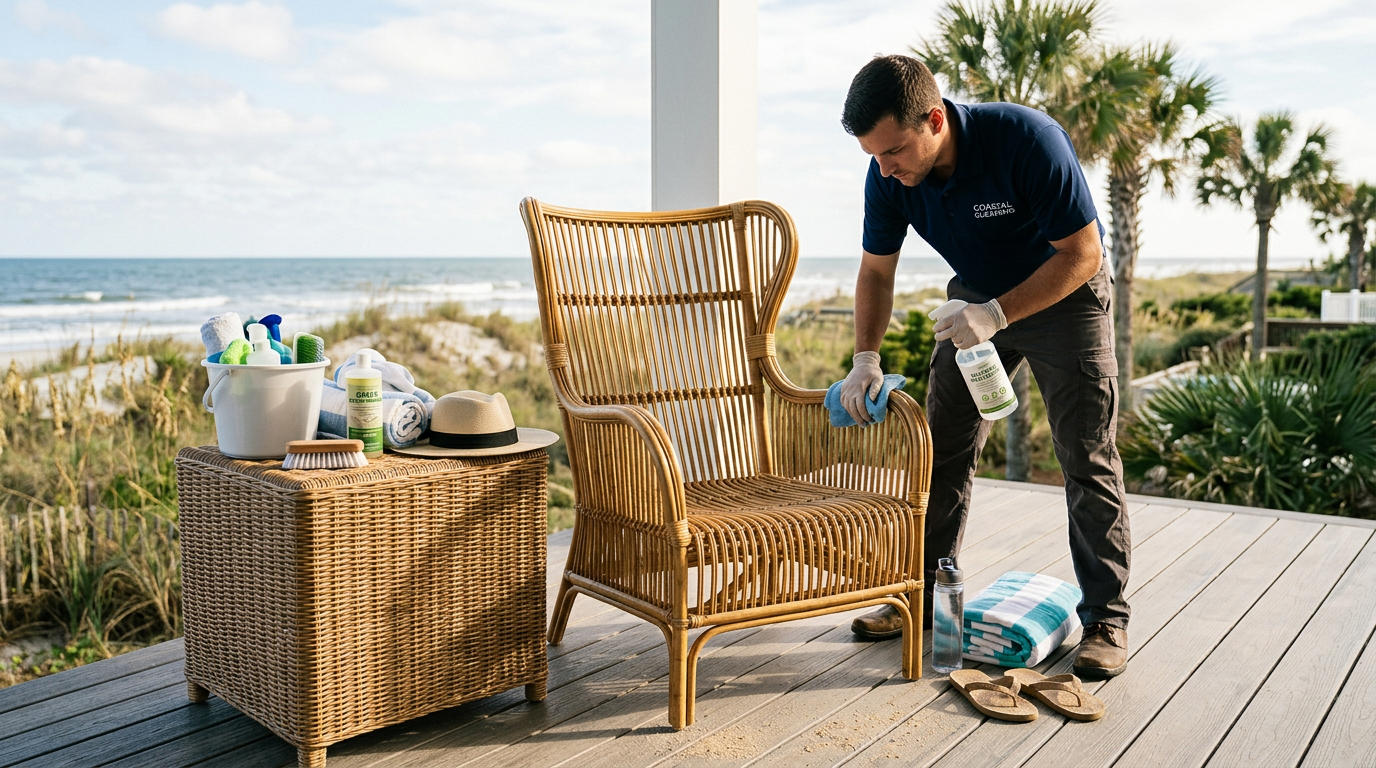
In the Grand Strand's humid maritime climate, natural woven furniture like wicker, rattan, and split-reed brings a classic coastal aesthetic into our homes. However, the very weave that makes these pieces beautiful also creates a labyrinth of micro-crevices that trap dust, pet dander, skin cells, and microscopic salt particles. When left unmanaged, these pockets become breeding grounds for mold and dust mites, directly compromising your indoor air quality and triggering seasonal allergies. At A2Z Cleaning & Linen Services, we believe that preserving your family's health and protecting your coastal investments go hand in hand through specialized, green-certified cleaning practices.
The Micro-Climate of Woven Fibers: Why Wicker and Rattan Trap Coastal Allergens
Natural woven furniture materials, including rattan cane, willow, split-reed, and seagrass, possess highly textured surfaces with hundreds of intersecting joints per square foot. In Myrtle Beach homes, these tight gaps act as passive physical filters, capturing airborne dust, pet dander, and outdoor pollen carried in on ocean breezes. Because these fibers are naturally porous, they absorb microscopic organic matter, binding it deep within the weave where standard dusting tools cannot reach.
Over time, this accumulated dust forms a dense matrix of organic allergens. Unlike smooth wood or leather surfaces, woven furniture holds onto these particles, allowing them to accumulate undisturbed. When someone sits on a dusty wicker chair, a localized plume of fine particulate matter is ejected back into the breathing zone, significantly degrading indoor air quality. This invisible aerosolization can trigger respiratory discomfort, sneezing, and asthma symptoms in sensitive family members.
The physical properties of these natural materials also attract static charges during dry spells, which pulls more airborne fine dust into the crevices. When humidity rises, this dust absorbs moisture from the air, swelling inside the weaves and locking itself in place. Managing this requires a dedicated decontamination strategy that addresses both the physical trapping mechanism and the environmental conditions of the Grand Strand.
The Chemistry of Coastal Mold Growth on Natural Cellulosic Substrates
Mold spores are omnipresent in the coastal Carolina environment, constantly drifting indoors through open doors, windows, and HVAC intake systems. For mold to colonize, it requires moisture, oxygen, and an organic food source. Natural fibers like rattan and willow are rich in cellulose, which provides a perfect substrate for mold species such as Aspergillus and Penicillium when indoor relative humidity levels exceed 55 percent.
The complex overlapping structure of woven furniture creates dead air zones where local humidity remains elevated, even if the center of the room feels dry. When salty air carries moisture into these micro-crevices, the salt acts as a humectant, pulling additional water vapor out of the air and concentrating it on the organic fibers. This localized dampness accelerates spore germination, leading to invisible fungal hyphae spreading through the core of the furniture.
Once a mold colony establishes itself within the weave, it releases volatile organic compounds (VOCs) and mycotoxins that cause the characteristic musty smell of coastal cottages. These biological contaminants are highly sensitizing to humans. Standard quick-fix cleaning methods often fail because they only address surface growth, leaving the root system of the mold intact within the deep structural joints of the furniture.
High-Efficiency Particulate Air (HEPA) Pre-Vacuuming: The Critical First Dry Step
The most critical rule of woven furniture decontamination is to never apply liquid cleaning solutions directly to dry, dusty fibers. Doing so liquefies the accumulated dust, pet dander, and mold spores, turning them into a muddy slurry that flows deeper into the joints and permanently stains the wood. Instead, the process must begin with a thorough dry extraction using a certified High-Efficiency Particulate Air (HEPA) vacuum.
Utilize a soft-bristled, natural-hair dusting brush attachment on your vacuum to gently dislodge compacted dust without scratching the delicate fibers or stripping original varnishes. Work systematically from the top of the furniture piece downward, using light, directional strokes that follow the grain of the weave. Ensure the brush bristles penetrate deep into the overlapping crevices where dust mites and dried salt-grit aggregate.
Pay special attention to the undersides of seats, the areas behind structural supports, and the tight intersections of wrapped bindings. These hidden zones are often neglected during routine cleanings and hold the highest concentration of allergens. By utilizing a true HEPA vacuum, you capture 99.97 percent of particles down to 0.3 microns, ensuring that extracted mold spores and allergens are safely contained within the machine rather than redistributed into your living room's air supply.
The Botanical Sanitization Formula: Avoiding Harsh Bleach and Chemical VOC Off-Gassing
Many homeowners instinctively reach for chlorine bleach when addressing mold on wicker or rattan, but this approach does more harm than good. Bleach is highly corrosive to natural organic fibers, breaking down the structural lignin that gives rattan its strength and flexibility. Furthermore, bleach contains water that penetrates deep into the wood while leaving the active chlorine on the surface, which actually feeds future mold growth once the chlorine evaporates.
To protect both the material integrity of your furniture and the health of your household, we utilize botanical sanitizers derived from natural plant extracts, such as thyme oil (thymol) or citric acid. These green-certified solutions destroy mold spores and bacterial cell walls on contact without releasing hazardous VOCs into your home. They are entirely safe for use around children and pets, offering a highly effective, non-toxic alternative to synthetic disinfectants.
These botanical formulations also leave behind no toxic chemical residues that could off-gas into your living spaces over time. They are completely biodegradable and do not strip away the natural protective waxes found on high-quality wicker and rattan. By choosing botanical chemistry, you preserve the indoor air quality of your Grand Strand home while ensuring your beloved heirloom furniture remains structurally sound and free from chemical degradation.
Precision Low-Moisture Agitation and Crevice Detailing Workflows
Once dry extraction is complete, apply your botanical sanitizing solution using a low-moisture misting bottle. The goal is to lightly dampen the woven surfaces without saturating the inner core of the fibers. Excessive water causes natural reeds to swell, warp, and weaken, which can loosen the structural tension of the weave and lead to sagging seats or broken joints over time.
Work the sanitizing solution into the tightest crevices using a soft-bristled detailing brush or a clean, non-abrasive microfiber cloth wrapped around a thin wooden dowel. Use circular motions to agitate the weave gently, lifting bound salt-crust, skin oils, and stubborn mold biofilms. Microfiber is ideal for this task, as its split-fiber technology mechanically traps and lifts contaminants away from the wood rather than smearing them across the surface.
Wipe down the entire surface with a damp microfiber cloth rinsed in clean, warm water to remove any suspended soils and sanitizing residues. Ensure you work systematically, section by section, dry-wiping each area immediately after cleaning to prevent water from pooling in the hollow spaces or structural overlaps of the furniture. This controlled, low-moisture technique ensures thorough decontamination while maintaining the physical integrity of the weave.
- Use a low-moisture misting bottle to prevent deep wood saturation.
- Agitate tight weaves with a soft-bristled detail brush in circular patterns.
- Wrap microfiber cloths around thin wooden dowels to reach deep crevices.
- Wipe away dislodged soils immediately with a damp, clean microfiber towel.
- Never use pressure washers or garden hoses on natural wicker or rattan.
Mitigating Salt-Damp and Restoring Fiber Elasticity with Safe Humectants
Natural woven fibers rely on a delicate balance of moisture to remain flexible; if they dry out completely, they become brittle and prone to snapping under weight. However, conventional furniture polishes often contain petroleum distillates and synthetic silicones that coat the fibers in a sticky film. This artificial barrier traps moisture inside the wood, creating a micro-environment that encourages deep-seated mold growth while attracting fresh airborne dust.
To restore elasticity safely, apply a thin layer of natural humectants such as food-grade linseed oil, tung oil, or a light glycerin-based conditioner. These organic compounds penetrate the porous cellular structure of the reeds, nourishing the wood from within and restoring its natural resilience against physical stress. Apply the oil sparingly with a clean microfiber cloth, allowing it to absorb for fifteen minutes before buffing away all excess residue.
Buffing is a critical step, as any leftover oil on the surface will act as an adhesive for sand-grit, pollen, and pet hair. A properly conditioned wicker or rattan piece should have a dry-to-the-touch, satin sheen that naturally repels moisture and dust. This protective botanical barrier helps prevent salt air from drying out the fibers, extending the lifespan of your coastal furniture while keeping allergens from binding easily to the weave.
Accelerated Structural Drying and Airflow Management
In the Grand Strand's high-humidity environment, wet-cleaned woven furniture must be dried as rapidly as possible to prevent mold spores from germinating during the drying cycle. If natural fibers remain damp for more than 24 hours, new mold colonies can establish themselves, undoing all your decontamination efforts. Never leave damp wicker or rattan to dry in a stagnant, humid room or under direct, harsh midday sunlight.
Position the cleaned furniture in a well-ventilated space with a dedicated dehumidifier running to pull moisture out of the surrounding air. Set up high-velocity air movers or standard floor fans directed at the pieces to promote rapid evaporation from every angle, including the underside. The continuous airflow breaks up boundary layer humidity, pulling dampness out of the deepest woven joints where water tends to collect.
Avoid placing damp furniture directly outdoors in coastal heat, as intense UV radiation can cause natural fibers to shrink unevenly, bleach out, and warp. Keep the pieces indoors under controlled climate conditions until they are completely dry to the core. Only after the furniture is fully dried and stabilized should you return any cushions, fabric throws, or seat pads to the frames.
Long-Term Preventive Maintenance: Regulating Indoor Air Quality and Dust Loads
Maintaining pristine indoor air quality and keeping woven furniture free of allergens requires a proactive, long-term care routine. Vacuum your wicker and rattan pieces with a HEPA-equipped vacuum at least once every two weeks during the peak coastal season. This prevents the initial accumulation of organic dust and salt-grit, keeping the fibers clean before moisture can bind them together.
Keep indoor relative humidity strictly regulated between 45 and 53 percent using your home's HVAC system and dedicated whole-home or regional dehumidifiers. This humidity range is the golden zone: it is dry enough to inhibit mold spore germination and dust mite reproduction, yet moist enough to prevent natural woven fibers from drying out and becoming brittle. Monitor these levels with a digital hygrometer placed in your primary living areas.
Position your woven furniture away from high-moisture zones, such as directly in front of sliding glass doors where humid salt air enters, or against cold exterior walls where condensation can form. Ensure there is adequate space around each piece of furniture to allow for continuous room airflow. By combining regular dry maintenance with environmental controls, you protect both your family's health and the timeless beauty of your coastal home.
- Vacuum woven structures bi-weekly using a HEPA vacuum and soft brush attachment.
- Maintain indoor relative humidity levels between 45 and 53 percent year-round.
- Position natural woven furniture away from drafty entryways and cold exterior walls.
- Keep a minimum of three inches of clearance behind woven pieces to ensure continuous airflow.
- Use digital hygrometers to track micro-climate humidity levels in living spaces.
Key takeaway
Preserving the indoor air quality of your coastal home requires specialized attention to the complex, dust-trapping weaves of wicker and rattan furniture. By implementing a HEPA-vacuuming and botanical-based decontamination protocol, you can eliminate hidden allergens and mold without exposing your family to harsh chemical VOCs. For professional assistance with deep-cleaning and safeguarding your Grand Strand property's delicate interior surfaces, contact A2Z Cleaning & Linen Services at 843.800.2788.
Keep Reading
Coastal Living
The Coastal High-Velocity Ceiling Fan and Vaulted Ceiling Decontamination Protocol: Mitigating Static-Cling Allergen Crust, Humidity-Driven Mold Spores, and Eco-Friendly Dust Capture in Grand Strand Homes
ReadCoastal Living
The Coastal Window Treatment and Blackout Drapery Sanitization Protocol: Mitigating Humid Mold Spores, Pollen Reservoirs, and VOC-Free Allergen Release in Grand Strand Homes
ReadCoastal Living
The Under-Sink Cabinet Microclimate: Mitigating Mold Spore Colonization, Condensation Vectoring, and Chemical Off-Gassing in Grand Strand Homes
ReadReady for a spotless property?
Call 843.800.2788 or request a free quote from A2Z Cleaning & Linen Services.