Coastal Living
The Coastal Window Treatment and Blackout Drapery Sanitization Protocol: Mitigating Humid Mold Spores, Pollen Reservoirs, and VOC-Free Allergen Release in Grand Strand Homes
Discover how coastal humidity, salt air, and window condensation transform drapes into allergen traps, and learn our safe, botanical protocol to restore indoor air quality.
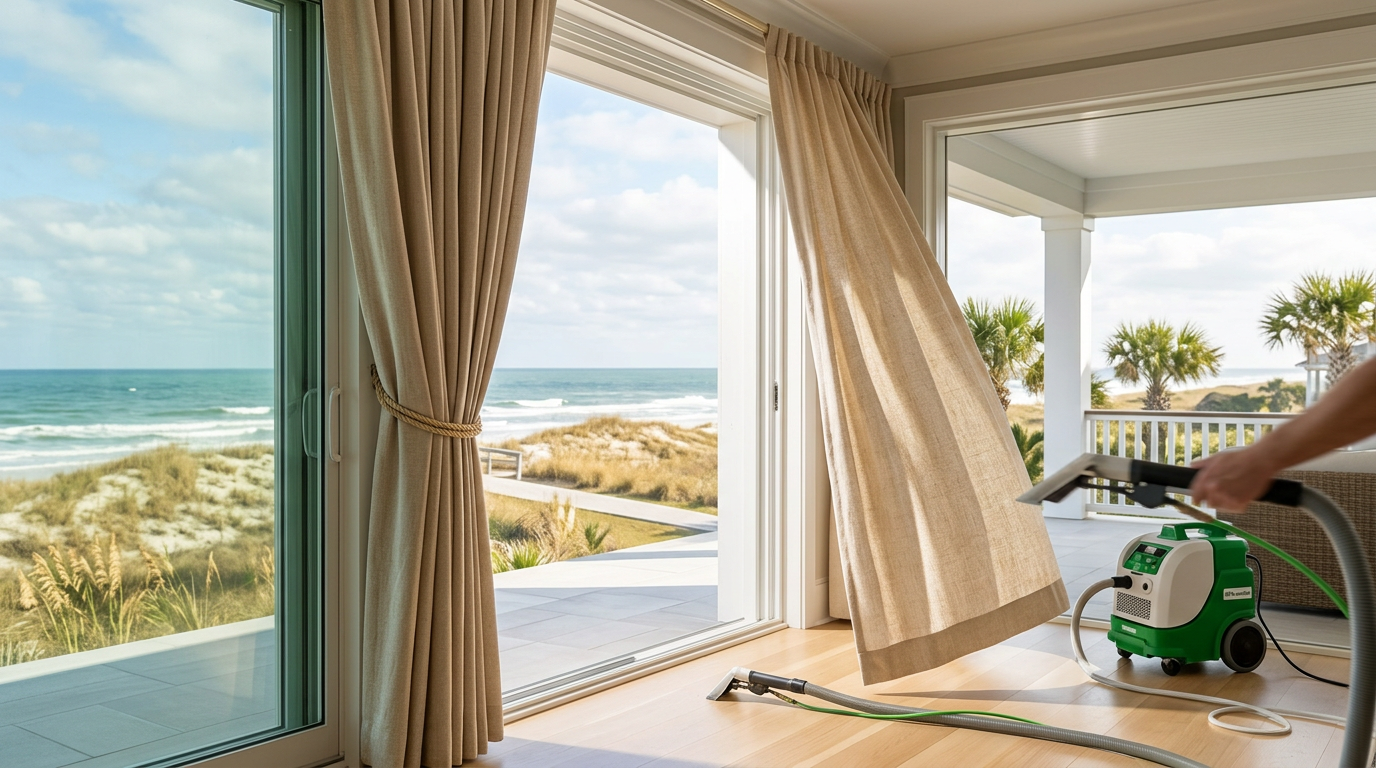
In our beautiful Grand Strand environment, we naturally focus on keeping sand off our floors and salt off our decks, but one of the most significant air-quality hazards in coastal homes hangs right at eye level. Heavy window treatments, Roman shades, and blackout draperies act as giant, vertical air filters that constantly capture airborne particles from incoming sea breezes. Over time, the unique combination of high coastal humidity, microscopic salt crystals, and seasonal pollen turns these fabrics into breeding grounds for dust mites and mold spores. At A2Z Cleaning & Linen Services, we believe that maintaining a healthy home requires addressing these hidden allergen reservoirs with safe, sustainable, and botanical-based sanitation methods.
The Physics of Window-Side Condensation and Spore Colonization
In the hot summer months across the Grand Strand, we rely heavily on air conditioning to keep our indoor environments comfortable. When the hot, humid air outside meets the cool glass pane of an air-conditioned room, condensation inevitably forms on the interior surface of the window. Because heavy draperies and blackout linings hang closely against these windows, they regularly absorb this standing moisture.
This moisture transfer creates a dark, damp, and stagnant microclimate between the back of the window treatment and the glass. Under these conditions, common coastal molds such as Aspergillus and Cladosporium can colonize the fabric backing in as little as 24 to 48 hours. This mold growth often starts as small, invisible spots on the lining, slowly spreading and releasing spores into the room before any physical discoloration becomes visible on the front of the drape.
Simply spraying the fabric with standard household air fresheners or cover-up scents does nothing to eliminate the root biological hazard. In fact, adding commercial liquid sprays can increase the dampness of the fabric, worsening the mold colonization. Effective remediation requires breaking the moisture cycle and safely neutralizing the living fungal structures without damaging the delicate fibers of your custom window installations.
- Condensation forms when warm, humid outdoor air meets cool, air-conditioned window glass.
- Heavy fabrics and blackout linings absorb this window moisture, creating stagnant damp zones.
- Mold spores germinate on the dark, damp reverse side of drapes within 48 hours.
- Standard cover-up sprays add unwanted moisture and fail to address the underlying biological hazard.
Why Traditional Dry Cleaning and Harsh Chemicals Fail the Sustainability Test
Many homeowners naturally assume that sending drapes to a traditional dry cleaner is the best solution for deep cleaning. However, conventional dry cleaning relies heavily on chemical solvents like perchloroethylene (PERC), a known volatile organic compound (VOC) that can off-gas into your home for weeks after cleaning. Hanging chemically treated drapes in a closed, air-conditioned bedroom can seriously degrade your indoor air quality and irritate sensitive airways.
Furthermore, harsh commercial chemicals, chlorine-based bleaching agents, and synthetic fragrances can permanently damage delicate coastal fibers. Intense Myrtle Beach sunlight reacts with these chemical residues, accelerating the yellowing, dry-rotting, and structural weakening of natural cotton, linen, and silk drapes. Over time, the fabrics become brittle, prone to tearing, and lose their natural luster.
To protect both your family's health and your investment in high-quality home furnishings, we must look to green, sustainable alternatives. Utilizing botanical-based surfactants, natural mineral salts, and targeted thermal disinfection allows us to achieve hospital-grade sanitization. This eco-friendly approach ensures that no toxic residues are left behind to off-gas into your living spaces or harm the coastal environment.
Step 1: Electrostatic HEPA Vacuuming and Dry-Soil Extraction
The first step of our professional sanitization protocol focuses on the complete removal of dry soils before any moisture is introduced. Attempting to clean draperies with wet solutions while they are still covered in dust and salt will only create an abrasive mud that gets ground deep into the fabric fibers. To prevent this, our technicians use commercial-grade HEPA vacuum systems designed to trap 99.97% of particles down to 0.3 microns.
Using specialized, non-snagging horsehair brush attachments, we work systematically from the top pleats of the drapery down to the bottom hem. We pay close attention to the leading edges, the deep folds, and the dust-collecting fabric weights at the base. Both the front face and the reverse backing of the fabric are vacuumed using overlapping, vertical strokes to ensure that every grain of sand, pet dander particle, and pollen grain is physically extracted.
This dry-extraction process is also highly effective at lifting dead dust mites and their allergen-inducing waste products. By utilizing gentle electrostatic agitation, we release clinging debris from the weave without stretching or distorting the hang of the fabric. Once the dry-soil load has been reduced to zero, the window treatments are fully prepared for the safe, low-moisture sanitization phase.
Step 2: Low-Moisture Vapor Sanitation and Thermal Disinfection
To address biological contaminants like live dust mites and mold spores without saturating the fabric, we utilize advanced dry steam vapor technology. Unlike wet steam extractors that leave fabrics damp for hours, commercial dry steam vapor contains only 5% to 6% liquid water content. This superheated vapor is applied at low pressure, allowing it to penetrate deeply into the weave of the fabric without wetting the fibers to a dangerous degree.
The extreme heat of the dry vapor—exceeding 240 degrees Fahrenheit at the tip—instantly denatures the proteins in mold spores, dust mites, and bacteria, rendering them completely inactive. This process provides thorough thermal disinfection without the need for synthetic biocides or harsh bleaching agents. It is an incredibly safe and highly sustainable method for treating delicate, sun-weakened coastal fabrics.
As the vapor passes through the drapery, it also relaxes the individual fibers, naturally releasing set-in wrinkles and neutralizing trapped coastal odors. This step is particularly beneficial for heavy blackout drapery and thermal linings, which are highly susceptible to trapping musty, stale air. The result is a physically sanitized, odor-free fabric that dries completely within minutes, eliminating any risk of secondary mold growth.
- Superheated dry vapor contains only 5% to 6% liquid water, protecting drapes from oversaturation.
- Temperatures exceeding 240 degrees Fahrenheit instantly neutralize mold spores and dust mites.
- Thermal disinfection eliminates the need for harsh synthetic biocides or toxic chemical agents.
- Low-pressure application relaxes fibers, removes wrinkles, and dries completely in minutes.
Step 3: Botanical Emulsification and pH-Balanced Soil Release
For stubborn spots, window soot, and greasy fingerprint residues near the pull cords, we apply targeted botanical emulsifiers. These plant-derived formulas utilize natural active ingredients, such as thyme-based thymol or organic citric acid, to break down sticky residues and oily soils. Unlike harsh synthetic detergents, these biodegradable solutions lift soils from the fibers without leaving behind sticky, chemical soap films.
Maintaining a balanced pH is critical when treating coastal fabrics that are exposed to intense UV sunlight. Highly alkaline or acidic commercial cleaners can weaken natural fibers, causing them to degrade rapidly under solar heat. Our botanical solutions are carefully pH-balanced to match the specific fiber profile of your window treatments, ensuring the structural integrity of your drapes remains completely uncompromised.
After the botanical cleaner has emulsified the soil, we perform a gentle, low-moisture extraction using purified water. This step rinses away the suspended grime and the green cleaning agent, leaving the fabric completely clean and neutral. Because no sticky detergent residues remain in the fibers, your drapes will actually repel future dust and soil much longer than if they were cleaned with traditional methods.
The Critical Backing and Lining Treatment: Protecting Against Black Mold
The synthetic thermal backings and white blackout liners that directly face your window panes require a specialized level of care. Because this side of the window treatment bears the brunt of condensation, temperature swings, and intense UV exposure, it is the most common site for black mold colonization. We treat this backing with a dedicated, plant-based disinfectant registered with the EPA for home sanitization.
Our technicians mist a fine, uniform layer of this botanical disinfectant across the entire reverse surface of the drapery. This specialized formula targets fungal cell walls on contact, preventing mold spores from regenerating even when exposed to future window condensation. This preventive barrier is completely non-toxic, scent-free, and safe for homes with curious pets and crawling children.
This critical step is what truly sets a professional coastal sanitization protocol apart from basic house cleaning. By focusing on the hidden window-facing side of the drapes, we address the root cause of poor indoor air quality. We ensure that the barrier hanging between your family's sleeping areas and the humid outdoors remains clean, healthy, and completely free of active fungal growth.
Setting a Sustainable Maintenance Schedule for Grand Strand Homeowners
To maintain excellent indoor air quality and protect your home furnishings, we recommend scheduling a professional drapery sanitization at least once a year for inland Grand Strand homes, and twice a year for oceanfront properties. Coordinating these cleanings with seasonal transitions—such as early spring before pollen season, and late autumn after the humid summer months—helps keep allergen levels consistently low.
Between professional visits, there are several simple actions you can take to protect your window treatments. We advise maintaining indoor humidity levels below 50% using your home HVAC system or a dedicated dehumidifier. Ensuring that drapes are pulled slightly away from the window glass during cold, damp nights can also prevent condensation from transferring directly into the fabric backing.
At A2Z Cleaning & Linen Services, our mission is to deliver clean, healthy, and beautiful indoor spaces for our Myrtle Beach neighbors. By combining advanced, low-moisture extraction technologies with safe, botanical sanitizing agents, we protect both your family's respiratory health and the longevity of your coastal home's interior. Give our family-owned team a call today at 843.800.2788 to schedule your comprehensive window treatment sanitization.
- Schedule professional window treatment sanitization twice a year for oceanfront properties.
- Align cleanings with seasonal transitions to manage pollen and summer humidity loads.
- Maintain indoor humidity levels below 50% to prevent condensation and mold growth.
- Ensure drapes do not touch cold glass panes directly to minimize moisture absorption.
Key takeaway
Coastal window treatments act as silent traps for salt-air moisture, dust mites, and mold spores that compromise your indoor air quality. By implementing a professional, VOC-free botanical sanitization protocol, you can protect your family's respiratory health and preserve your custom draperies for years to come. Contact A2Z Cleaning & Linen Services at 843.800.2788 to restore the air quality of your Grand Strand home.
Keep Reading
Coastal Living
The Under-Sink Cabinet Microclimate: Mitigating Mold Spore Colonization, Condensation Vectoring, and Chemical Off-Gassing in Grand Strand Homes
ReadCoastal Living
The Coastal Closet Microclimate: Managing Leather Mold, Organic Fiber Allergens, and Low-VOC Botanical Preservation in Grand Strand Homes
ReadCoastal Living
The Coastal Dehumidifier and Condensate Drain Line Maintenance Protocol: Mitigating Bio-Sludge, Spore Reservoirs, and Indoor Air Quality Failures in Grand Strand Homes
ReadReady for a spotless property?
Call 843.800.2788 or request a free quote from A2Z Cleaning & Linen Services.