Coastal Living
The Coastal High-Velocity Ceiling Fan and Vaulted Ceiling Decontamination Protocol: Mitigating Static-Cling Allergen Crust, Humidity-Driven Mold Spores, and Eco-Friendly Dust Capture in Grand Strand Homes
Discover how to eliminate sticky salt-damp allergen crust and mold spores from high-vaulted ceiling fans in Myrtle Beach using safe, botanical wet-capture methods.
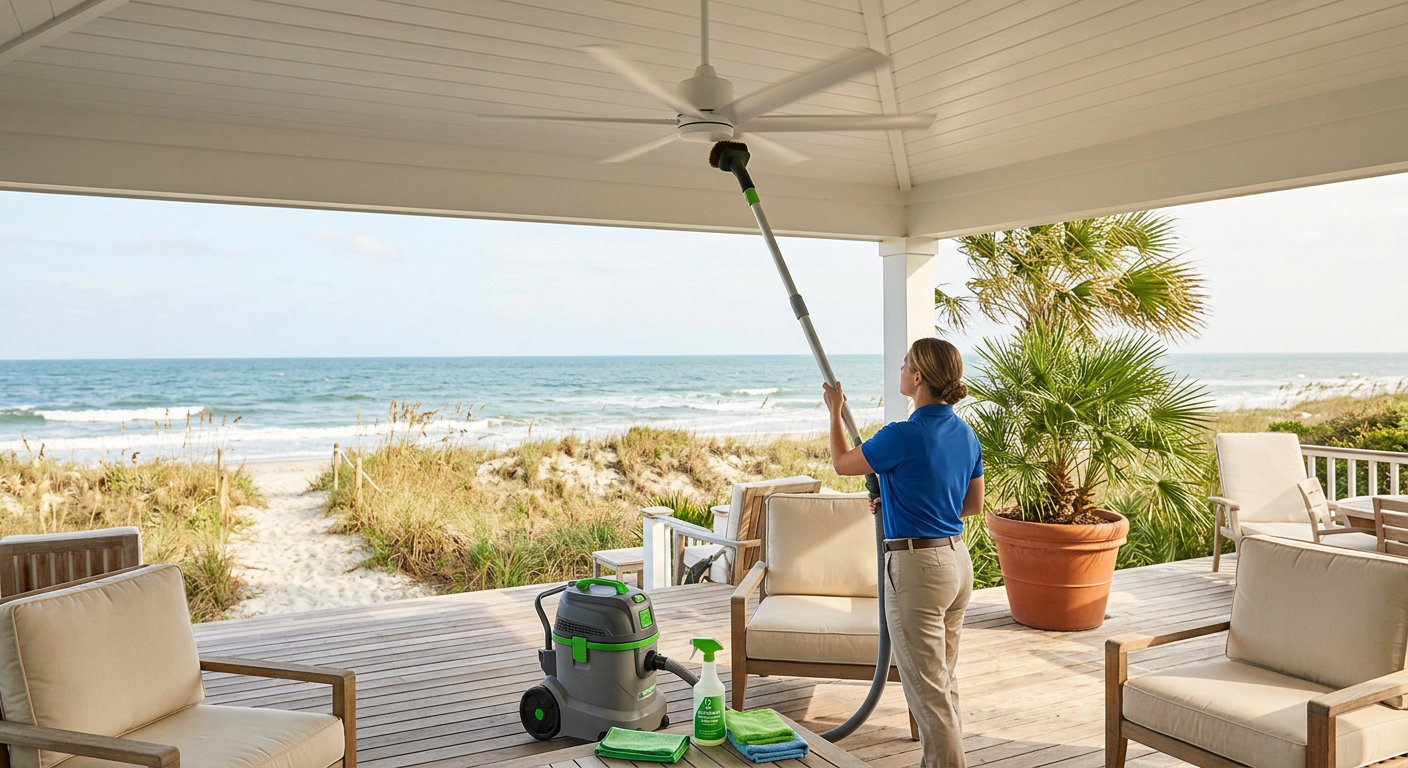
Running high-velocity ceiling fans is a necessity for managing the warm, humid air of the Grand Strand. However, as these blades spin, they accumulate a thick, sticky crust of salt air, skin cells, pet dander, and mold spores. When the fans are operated, they continuously shower this allergen-dense mixture directly into your living spaces, severely degrading indoor air quality. Implementing an eco-friendly wet-capture decontamination protocol is essential for protecting your family's respiratory health.
The Anatomy of Coastal Fan Crust: How Salt-Humid Air and Static Charge Create an Allergen Magnet
In our maritime environment, ceiling fans operate under intense physical pressures. As the spinning blades cut through the air, they generate a continuous electrostatic charge. This static charge acts like a magnet for airborne particulates, pulling in dust, pet hair, and lint. In dry climates, this dust remains loose, but the high relative humidity of the Grand Strand completely alters its physical structure.
The moisture-laden coastal air deposits microscopic salt-spray crystals onto the charged blades. This moisture blends with the dust, creating a sticky, cement-like film. This damp, organic substrate becomes an ideal breeding ground for airborne mold spores, which anchor deeply into the material. Within weeks, simple household dust turns into a dark, dense crust that resists normal air movement and ventilation.
This crust is primarily composed of skin scales, dander, textile fibers, and salt residues. Because these organic materials are highly hygroscopic, they continuously absorb water from the humid air, expanding the physical volume of the grime. As the buildup thickens, it creates a rough surface that speeds up the capture of more airborne particles, rapidly compounding the indoor air quality crisis in your home.
The Indoor Air Quality Threat: Aerobiology of the 'Helicopter Effect' on Coastal Allergy Sufferers
When a heavily coated ceiling fan is switched on, it triggers a phenomenon known as the 'helicopter effect.' The centrifugal force from the spinning blades shears off microscopic particles from the accumulated crust. Rather than falling straight down, these fine allergens are propelled outward, remaining suspended in the indoor air for hours where they are easily inhaled by your family.
For Grand Strand residents dealing with asthma, seasonal allergies, or chronic sinus issues, this continuous cycling of allergens is a severe health trigger. The aerosolized mixture of dust mites, mold spores, and pet dander causes persistent airway irritation, coughing, and morning congestion. Because these fans sit directly over high-use areas like beds and dining tables, exposure occurs during your most vulnerable hours.
This continuous agitation also risks spreading fungal contamination throughout your living space. Mold spores shed from the fan blades can land on carpets, upholstery, and bedding, colonizing these soft surfaces if indoor humidity rises above sixty percent. Eliminating this biological load from your blades is a critical preventative step for maintaining a safe, healthy, and sanitary indoor environment.
The Pitfalls of Conventional Dusters: Why Dry Dusting Exacerbates the Respiratory Load
Traditional cleaning tools often worsen indoor air quality when used on high-access fixtures. Dry feather dusters, static plastic wands, and dry cloths do not actually capture the sticky coastal crust. Instead, these dry methods break up the dust layer, launching millions of microscopic particles directly into the air column where they settle onto carpets and furniture below.
Dry cleaning methods are unable to break down the sticky, salt-bound matrix holding the grime to the fan blades. They merely scrape off the loose outer dust while leaving the damp, mold-harboring base layer fully intact on the substrate. Furthermore, dry friction generates a fresh static charge on the blade, immediately attracting new dust particles back to the surface.
To safely decontaminate a ceiling fan without polluting your home's air, you must adopt a professional wet-capture protocol. Wet-capture relies on specific liquid chemistry to encapsulate, neutralize, and lift the soil without letting particles escape into the air. This ensures that every microgram of biological debris is physically trapped and extracted from your living space permanently.
The Eco-Friendly Wet-Capture Chemistry: Formulating Botanical Surfactants for Salt-Damp Dust
Cleaning safely in a humid coastal environment requires green chemistry that breaks down complex salt-organic bonds without off-gassing toxic chemicals. Harsh synthetic detergents can release volatile organic compounds (VOCs) that irritate sensitive airways and degrade indoor air quality. We rely on botanical surfactants derived from natural plant sugars and coconut-based lipids to safely liquefy the buildup.
These botanical formulas lower the surface tension of water, allowing it to penetrate the dense, sticky salt-and-dander crust. Natural enzymes can be integrated to actively digest the proteins found in skin cells and pet dander. When paired with natural citric acid, the solution easily dissolves tough sea-salt bonds, releasing the crust's grip on the blade surface.
For sanitation, thymol—a botanical extract from thyme oil—offers a highly effective, non-toxic alternative to chlorine bleach. Thymol penetrates fungal cell membranes, destroying mold spores on contact without emitting noxious fumes or damaging the fan's finish. This eco-friendly chemistry leaves the indoor air clean, fresh, and completely safe for children and pets immediately after cleaning.
Step-by-Step High-Access Extraction Protocol: Safe, Ladder-Free Dust Capture
Safely reaching high-velocity fans on vaulted ceilings requires specialized equipment and a methodical physical approach. We utilize extendable carbon-fiber poles fitted with specialized contour heads that wrap around the fan blade. Before beginning, a heavy, damp canvas drop cloth is placed directly beneath the fixture to catch any stray droplets, protecting your hardwood or carpeted floors.
The core of the wet-capture extraction technique is the 'pillowcase method' adapted for high-reach systems. A heavy-gauge microfiber sleeve is saturated with our botanical surfactant solution, then wrung out until it is damp but not dripping. This sleeve is slid over the fan blade, sandwiching the top, bottom, and edges of the blade at the same time.
With firm, steady pressure, the sleeve is pulled backward along the blade toward the tip. This movement traps one hundred percent of the damp dust crust inside the microfiber envelope, preventing any debris from falling. The process is repeated for each blade, switching to a clean, freshly laundered sleeve for every fan to prevent cross-contamination and soil redeposition.
- Inspect fan mounting hardware and blade brackets for structural stability and balanced alignment prior to cleaning.
- Apply eco-friendly, botanical surfactant solution to high-loop microfiber sleeves, avoiding oversaturation to prevent motor moisture intrusion.
- Utilize specialized envelope-style cleaning tools to fully encase the blade top, bottom, and edges in a single motion.
- Draw the cleaning tool slowly from the motor base to the blade tip to trap damp debris inside the microfiber fabric.
- Extract any remaining moisture with a dry microfiber buffing sleeve to prevent new dust from sticking to damp surfaces.
Motor Housing and Canopy Cleaning: Removing Internal Salt-Air Residues and Preventing Mechanical Drag
While the fan blades catch the most visible dust, the motor housing and ceiling canopy hold hidden risks. The heat generated by the electric motor draws damp, salt-laden air into the housing vents. Over time, salt-crusted lint builds up inside the motor casing, trapping heat and creating potential mechanical drag, electrical strain, or even fire hazards.
To safely clean the motor housing without causing electrical issues, we employ a low-moisture extraction sequence. First, a certified HEPA vacuum with a non-conductive, soft brush attachment is used to draw loose lint out of the ventilation slots. This safely extracts dry dust from the internal windings instead of pushing it deeper into the motor.
Next, the exterior housing and the ceiling canopy are wiped down with a microfiber cloth lightly dampened with botanical sanitizer. This step neutralizes mold spores that settle on the warm upper surfaces of the fixture. Clean motor vents allow your fan to run cooler, reducing energy consumption and preventing the burning-dust smell common in coastal homes.
Vaulted Ceiling Tongue-and-Groove Cleaning: Addressing Mold Anchoring on Architectural Woodwork
Vaulted ceilings in Grand Strand homes often feature elegant tongue-and-groove wood paneling or exposed beams. Unfortunately, these architectural elements contain deep seams where rising humid air deposits mold spores, dust, and spider webs. Because warm air naturally rises, the high ceiling acts as a massive reservoir for allergens that are continuously disturbed by fan operations.
Cleaning these elevated wood surfaces requires a dry-vapor steam extraction method or damp microfiber flat mops treated with a mild botanical timber preservative. The flat mop is run carefully along the wood grain, lifting dust out of the crevices without over-wetting the natural timber. This preserves the delicate wood finish while neutralizing lingering mold.
This systematic process removes the invisible film of sticky cooking oils and sea-salt aerosol that acts as glue for airborne dust. Treating the vaulted ceiling and the ceiling fan as one connected system ensures the entire upper room is sanitized. This prevents immediate re-contamination of the newly cleaned fan blades, keeping your indoor air cleaner for longer.
Professional Maintenance Schedules: Establishing a Seasonal Air-Quality Cadence
Managing indoor air quality in a humid coastal climate is a continuous process that requires regular maintenance. In Myrtle Beach, ceiling fans run almost constantly from early spring through late autumn, leading to rapid allergen buildup. We recommend a comprehensive fan and high-ceiling decontamination service three times a year to stay ahead of sticky dust crust.
The ideal schedule starts with a spring deep clean in March to clear out winter dust before high humidity begins. A mid-summer refresh in July removes the heavy buildup of pollen, mold spores, and pet dander accumulated during the hottest months. An autumn service in October prepares the home for winter, ensuring warm-air circulation remains clean.
Partnering with a professional team like A2Z Cleaning & Linen Services ensures this difficult, high-access task is completed safely and to the highest environmental standards. Our technicians use advanced high-reach systems and botanical chemistry, protecting your physical safety and your home's air quality. Let us handle the high-reach hazards so you can breathe easier.
- Establish a tri-annual cleaning cadence to align with the unique humidity cycles of the Myrtle Beach climate.
- Prioritize deep-cleaning of high-access ceiling structures before the spring allergy season begins in earnest.
- Incorporate HEPA-vacuum motor extraction to prevent electrical drag and extend the lifespan of high-velocity fan motors.
- Utilize zero-VOC, botanical sanitizers to protect the health of children, pets, and chemically sensitive family members.
- Routinely inspect high-access light fixtures and vaulted vents during each scheduled ceiling fan service.
Key takeaway
Maintaining pristine indoor air quality in a humid coastal home requires moving beyond outdated dry-dusting habits that recycle allergens. By implementing a professional wet-capture decontamination protocol with botanical chemistry, you can keep your high-access ceiling structures and high-velocity fans entirely free of toxic mold and salt-damp crust. For help maintaining a healthy Grand Strand home, call A2Z Cleaning & Linen Services at 843.800.2788.
Keep Reading

Coastal Living
The Coastal Window Treatment and Blackout Drapery Sanitization Protocol: Mitigating Humid Mold Spores, Pollen Reservoirs, and VOC-Free Allergen Release in Grand Strand Homes
ReadCoastal Living
The Under-Sink Cabinet Microclimate: Mitigating Mold Spore Colonization, Condensation Vectoring, and Chemical Off-Gassing in Grand Strand Homes
ReadCoastal Living
The Coastal Closet Microclimate: Managing Leather Mold, Organic Fiber Allergens, and Low-VOC Botanical Preservation in Grand Strand Homes
ReadReady for a spotless property?
Call 843.800.2788 or request a free quote from A2Z Cleaning & Linen Services.