Coastal Living
The Coastal Shiplap and Tongue-and-Groove Wood Ceiling Decontamination Protocol: Mitigating Salt-Damp Dust Binding, Mold-Spore Colonization, and Breathable Allergen Re-emission in Grand Strand Homes
Discover how to safely clean and decontaminate coastal wood ceilings. Learn to eliminate salt-damp dust binding, mold spores, and trapped allergens using botanical, low-moisture protocols.
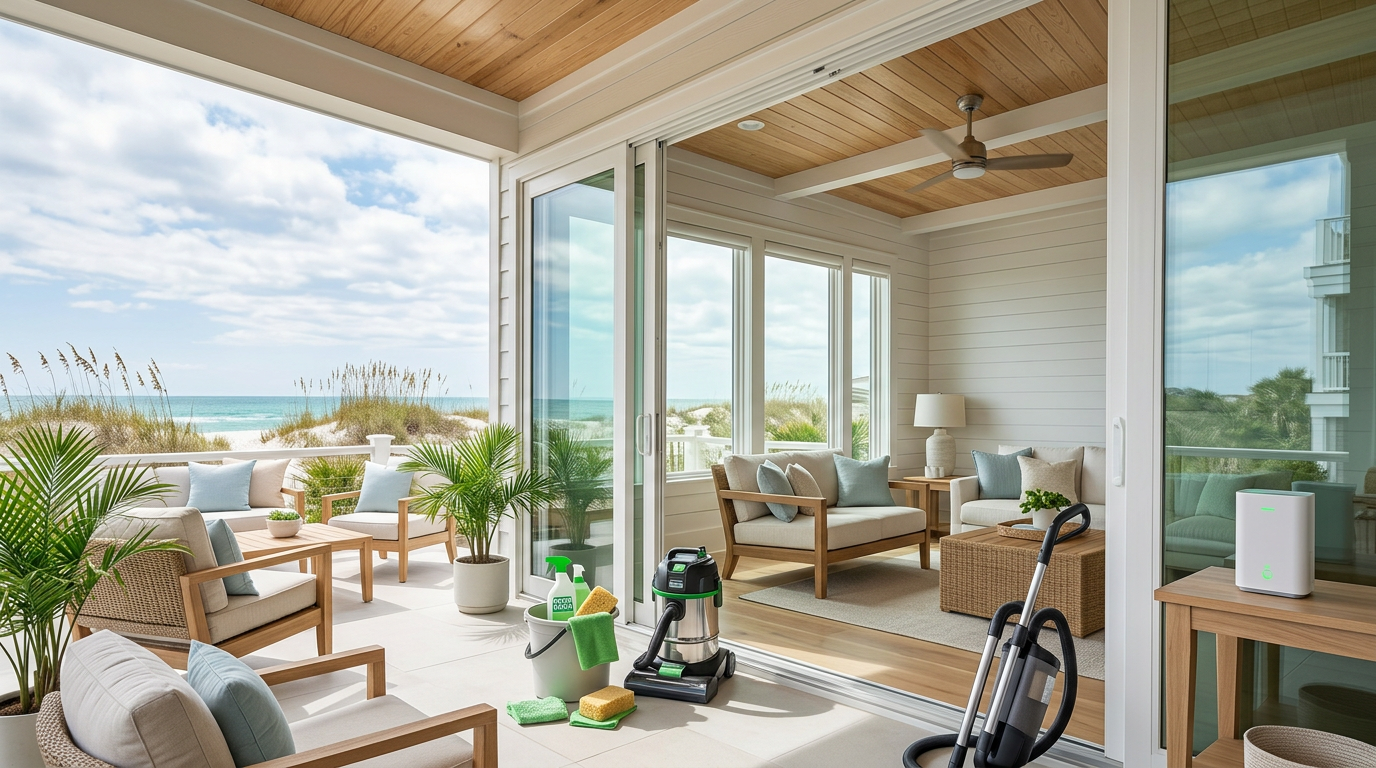
In Grand Strand homes, the aesthetic appeal of shiplap and tongue-and-groove wood ceilings is undeniable, bringing coastal character and architectural warmth to kitchens, living areas, and master suites. However, the unique intersection of salt-laden maritime air, high indoor relative humidity, and horizontal wood crevices creates an ideal, hidden sanctuary for airborne allergens and mold spores. Standard dusting methods often fail to penetrate these deep grooves, leaving behind a sticky, salt-damp residue that acts as a magnet for fine sand-dust and biological contaminants. Understanding how to safely decontaminate these architectural features using botanical, substrate-safe chemistry is essential for preserving both your home's indoor air quality and its structural value.
The Anatomy of Salt-Damp Dust Binding on Coastal Wood Ceilings
Coastal homes along the Grand Strand experience persistent airborne salinity, which easily migrates indoors through open doors, windows, and HVAC fresh-air intakes. This microscopic salt aerosol is highly hygroscopic, meaning it continuously pulls moisture directly from our humid coastal air and deposits it onto horizontal surfaces. When this sticky, micro-thin moisture film settles into the horizontal grooves of shiplap and tongue-and-groove ceilings, it transforms into an adhesive binder. Standard dry dusting is wholly ineffective here; it merely smears the salt-laden slurry, locking fine sand-dust, dander, and pollen into the wood grain.
Over time, this accumulation forms a dark, crusty buildup within the recessed tongues and bevels of the ceiling planks. This is not mere household dirt; it is a complex matrix of organic particulate matter bound together by crystallized sodium chloride and atmospheric moisture. Because ceilings are rarely cleaned with the frequency of floors or countertops, this binder can harden for months or years, steadily degrading the wood's protective finish. The resulting crust becomes an active reservoir for fine particulate matter, which is continuously shed back into the breathing zone whenever ceiling fans or HVAC systems cycle on.
To address this issue safely, homeowners and property managers must move away from aggressive, dry friction sweeping, which only releases fine allergens into the room's air envelope. Instead, a scientific approach that breaks down the ionic bond of the salt-damp residue is required. By utilizing targeted, low-moisture botanical solutions, you can dissolve the sticky binding agent without swelling the wood joints or damaging delicate finishes. This preserves the structural integrity of the ceiling while systematically neutralizing the static-clinging mechanisms that hold airborne dust captive.
- Hygroscopic salt particles draw airborne humidity directly onto ceiling planks, creating a sticky micro-film.
- Recessed grooves and bevels act as natural gravity traps for rising household allergens and dander.
- Dry dusting techniques smear the salt-grit slurry, pushing abrasive silica deeper into the wood grain.
- Accumulated PM2.5 particulate matter is periodically shed back into the living space via airflow.
The Mold-Spore Colonization Cycle in Recessed Wood Grooves
Wood is a naturally porous, organic material composed of cellulose, which serves as a primary food source for mold and fungal spores. When you combine this cellulose substrate with the moisture trapped by hygroscopic salt deposits in dark, unventilated ceiling crevices, you create the perfect microclimate for mold colonization. Spores of Aspergillus, Penicillium, and Cladosporium—common to the Myrtle Beach climate—settle deep within the v-joints of shiplap. Once nestled, they utilize the trapped moisture to germinate, sending out microscopic root-like structures called hyphae directly into the wood fiber.
Once a colony establishes itself within the tongue-and-groove joints, it operates largely out of sight, sheltered from UV light and direct air currents. As the mold feeds on the wood's organic binders and trapped skin cells, it begins its reproductive cycle, releasing millions of new, invisible spores into your indoor air. This biological activity is often the root cause of mysterious, musty odors that persist even after floors and linens have been thoroughly cleaned. For sensitive individuals, asthmatics, and young children, this continuous spore emission leads to poor indoor air quality and chronic upper respiratory irritation.
Traditional remediation often relies on harsh chlorine bleach, which is highly detrimental to both indoor air quality and wood fibers. Bleach contains a high water content that penetrates the wood, leaving the active chlorine on the surface to evaporate while pushing moisture deeper into the grain, ultimately feeding the mold roots. A sustainable, non-toxic protocol must utilize botanical surfactants and EPA-registered, plant-based fungicides. These formulations penetrate the wood's vascular system to kill the fungal roots without introducing hazardous volatile organic compounds into your family's home.
- Cellulose-rich wood planks provide an abundant organic food source for opportunistic fungal spores.
- Deep v-joints shield germinating mold colonies from natural air circulation and sunlight exposure.
- Chlorine bleach fails to eradicate subsurface hyphae, often exacerbating long-term mold growth in wood.
- Active mold colonies continuously release airborne spores, compromising respiratory health and air quality.
Botanical Chemistry vs. Synthetic VOCs on Interior Wood
Maintaining healthy indoor air quality requires strict oversight of the chemicals introduced during the cleaning process, especially on high-surface-area structures like ceilings. Conventional commercial wood cleaners often rely on synthetic solvents, petroleum distillates, and artificial fragrances designed to mask odors rather than eliminate them. These formulations emit high levels of volatile organic compounds that linger in the upper air column of a home, where they are easily inhaled. Over time, these airborne chemical residues can irritate mucosal membranes, trigger asthma attacks, and degrade the overall wellness of your indoor environment.
In contrast, botanical chemistry leverages the natural, antimicrobial power of plant extracts, such as thymol (derived from thyme oil) and citric acid. These bio-based surfactants effectively break down grease, salt films, and organic soils without off-gassing hazardous fumes or leaving behind toxic residues. Furthermore, plant-based formulations are fully biodegradable and pose no risk to children, pets, or chemically sensitive residents. By choosing botanical solutions, you ensure that the air inside your Grand Strand home remains as clean and refreshing as the ocean breeze outside, without compromising cleaning efficacy.
When applied to finished or unfinished wood, botanical cleaners also protect the substrate from chemical-stripping damage. Synthetic cleaners can strip away protective sealants, oils, and paints, leaving the underlying wood vulnerable to moisture absorption and fiber warping. Botanical alternatives work in harmony with wood's natural characteristics, cleansing the surface while preserving the integrity of the paint or polyurethane seal. This sustainable approach extends the lifespan of your architectural features, preventing the need for premature, carbon-heavy refinishing or replacement projects down the line.
- Synthetic solvents off-gas harmful volatile organic compounds directly into the household breathing zone.
- Botanical surfactants utilize plant extracts to dissolve tough salt-films without chemical residues.
- Thymol and citric acid provide powerful, EPA-registered sanitization without synthetic fragrances.
- Gentle botanical solutions protect delicate wood sealants and finishes from chemical erosion.
The Low-Moisture Mechanical Extraction Protocol
Cleaning shiplap and tongue-and-groove ceilings requires a precise balance of chemistry and mechanical action to prevent water damage. Wood is highly susceptible to hydro-expansion; introducing excessive liquid water into the joints can cause the wood to swell, cup, warp, or split, ruining the flush alignment of the planks. Therefore, a low-moisture mechanical extraction protocol is critical. The process begins with high-efficiency particulate air (HEPA) vacuuming using a soft-bristled brush attachment. This step extracts dry, loose sand, dust, and allergen particles from the crevices before any moisture is applied, preventing the creation of a muddy slurry.
Following the dry extraction, the botanical cleaning solution is applied using a damp microfiber pad system rather than a direct spray. This ensures that the wood receives only a controlled, micro-thin layer of moisture, sufficient to dissolve the salt-damp binder but insufficient to saturate the seams. The microfiber pads should be structured with tight, loop-weft fibers designed to trap and lock away the dissolved soils rather than pushing them around. Technicians must work systematically along the length of each individual plank, ensuring that the recessed grooves are meticulously wiped out using specialized crevice tools wrapped in microfiber.
The final phase of the protocol involves a dry-buffing step to remove any lingering moisture from the wood surface. High-velocity air movers are positioned strategically within the room to facilitate rapid, even drying of the ceiling structure. This rapid-dry phase is essential to prevent any localized water spots from forming and to ensure that no residual moisture remains trapped in the wood joints to spark mold regrowth. By adhering to this strict, low-moisture methodology, you achieve deep sanitization and allergen removal while completely safeguarding the dimensional stability of your wood ceiling.
- HEPA-vacuuming with soft brushes extracts loose sand and allergens prior to liquid application.
- Damp microfiber application prevents water saturation and subsequent wood cupping or warping.
- Meticulous joint-by-joint wiping removes stubborn soil deposits from deep, recessed bevels.
- Forced-air drying with commercial air movers eliminates localized moisture pools within minutes.
Tackling Fine Sand-Grit and Silica Abrasion in Wood Joints
The sandy environment of the Grand Strand means that fine silica dust is a constant presence inside coastal homes. Wind-driven sand is ground into ultra-fine particles that rise with indoor air currents and eventually settle into high-level horizontal surfaces, including ceiling joints. Silica is highly abrasive, acting like microscopic sandpaper under the influence of structural vibrations and natural wood expansion and contraction. If this grit is allowed to remain in the tongue-and-groove joints, it slowly grinds away the paint or clear coat, exposing raw wood to humid air.
This mechanical wear is particularly severe in rooms with ceiling fans, where constant vibration accelerates the friction between the sand-grit and the wood surfaces. Once the protective sealant is compromised, the exposed wood fibers readily absorb atmospheric moisture, accelerating the rot and mold cycle. Standard cleaning practices often overlook this hidden wear, focusing only on visible flat surfaces. To mitigate this risk, a specialized focus must be placed on deep-groove extraction, ensuring that every grain of abrasive silica is dislodged and vacuumed away before mechanical wiping begins.
By implementing a regular, non-abrasive decontamination protocol, you prevent this progressive structural wear. Using soft, split-fiber microfiber materials ensures that the silica is lifted away from the surface rather than scraped across it. This preserves the smooth finish of your shiplap, keeping the protective paint or polyurethane barrier intact. Protecting this finish is your first line of defense against both environmental moisture invasion and the accumulation of future allergen deposits, ensuring the long-term beauty and safety of your coastal interior.
- Wind-driven coastal silica dust acts as an abrasive sandpaper within wood joints.
- Structural vibrations and wood expansion accelerate mechanical wear on protective sealants.
- Exposed raw wood fibers quickly absorb humid air, inviting rot and mold colonization.
- Split-fiber microfibers lift abrasive grit safely away without scratching the painted finishes.
Mitigating Indoor Air Pollution and Allergen Re-emission
Indoor air quality is heavily influenced by the accumulation of settled dust on elevated horizontal surfaces. When ceilings are neglected, they act as a massive dust sink, holding onto pollen, dander, dust mite feces, and mold spores. During periods of high indoor activity, temperature shifts, or HVAC cycling, this dust is disturbed and falls back down into the living zone. This phenomenon, known as allergen re-emission, keeps indoor particulate levels consistently high, even in homes where floors are vacuumed daily.
The issue is magnified in open-concept coastal homes with vaulted or double-height tongue-and-groove ceilings. Rising warm air carries airborne contaminants upward, where they become trapped in the ceiling's micro-textures and joints. When cooling cycles begin, the downward draft from HVAC registers and ceiling fans forces these concentrated allergens back down into your family's breathing space. By systematically decontaminating these elevated surfaces, you break this cycle of continuous re-emission, significantly reducing the allergen load within your home and creating a healthier environment.
To ensure a sustainable and healthy outcome, the decontamination process must be paired with high-efficiency air filtration. During the cleaning process, running portable HEPA air purifiers captures any microscopic particles that may become airborne despite low-moisture controls. This dual-action approach—combining physical surface extraction with active air filtration—ensures that your home's air quality is immediately and measurably improved. It represents a proactive investment in preventative health for everyone residing in or visiting your Grand Strand property.
- Elevated ceilings act as dust sinks, accumulating allergens that periodically fall into breathing zones.
- Convection currents and HVAC cycling actively redistribute settled ceiling dust throughout the home.
- Double-height and vaulted ceilings concentrate rising allergens in upper-level air volumes.
- Coordinating surface cleaning with HEPA air filtration captures escaping airborne particulates.
Sustainable Wood Preservation and Safe Sealant Care
The long-term sustainability of coastal home finishes relies on using care methods that do not require frequent reapplication of paints or sealants. Many conventional wood polishes and cleaners contain silicones, mineral oils, or waxes that create a temporary shine but leave a sticky, synthetic residue behind. This residue actually accelerates the accumulation of salt, sand, and dust, requiring more frequent and aggressive cleaning. Over time, these layers of built-up polish can yellow, cloud, or crack, necessitating a chemical strip-and-refinish process that releases toxic fumes into the home.
A sustainable maintenance protocol utilizes pH-neutral, residue-free botanical cleaners that clean without leaving a film. These solutions rinse away completely, leaving the wood's natural or painted finish clean, dry, and resistant to dust accumulation. By keeping the surface free of sticky chemical residues, you reduce the rate of dust attraction, meaning your ceilings stay clean for longer periods. This minimizes the labor, water, and product resources required for ongoing maintenance, aligning your home care routine with eco-friendly and sustainable living principles.
When wood requires conditioning, look for natural, plant-based oils like linseed or tung oil, which penetrate the wood fibers to provide water resistance without synthetic chemicals. Applying these sustainable conditioners to raw or stained tongue-and-groove ceilings strengthens the wood's natural defenses against humid salt-air. This proactive care keeps the wood supple, prevents splitting, and seals out moisture, ensuring that your ceiling remains an asset rather than a source of indoor air pollution for decades to come. For professional support, contact A2Z Cleaning & Linen Services at 843.800.2788 to schedule a custom ceiling decontamination consultation.
- Silicone-based polishes leave sticky residues that attract and bind sand-grit and allergens.
- Residue-free botanical formulas maintain a clean, dry surface that naturally repels dust build-up.
- Reducing cleaning frequency preserves natural wood oils and extends paint coating lifespans.
- Plant-based conditioning oils protect wood from humidity damage without off-gassing harmful chemicals.
Key takeaway
Safeguarding the beauty and health of your Grand Strand wood ceilings requires shifting from aggressive dry-dusting to a low-moisture botanical decontamination protocol. By systematically dissolving salt-damp binders and extracting trapped allergens from recessed joints, you protect both your investment and your home's indoor air quality. Contact A2Z Cleaning & Linen Services at 843.800.2788 to restore your home's architectural features safely and sustainably.
Keep Reading

Coastal Living
The Coastal High-Velocity Ceiling Fan and Vaulted Ceiling Decontamination Protocol: Mitigating Static-Cling Allergen Crust, Humidity-Driven Mold Spores, and Eco-Friendly Dust Capture in Grand Strand Homes
ReadCoastal Living
The Coastal Mini-Split and PTAC Evaporator Coil Decontamination Protocol: Mitigating Mold Spores, Salt-Damp Dust Loading, and Botanical Disinfection in Grand Strand Homes
ReadCoastal Living
The Coastal Sliding Glass Door Track and Weep-Hole Decontamination Protocol: Mitigating Mold Bio-Sludge, Wind-Driven Allergens, and Chemical Runoff in Grand Strand Homes
ReadReady for a spotless property?
Call 843.800.2788 or request a free quote from A2Z Cleaning & Linen Services.