Vacation Rentals
The Coastal Digital Lockset and Smart Entry Hardware Turnover Protocol: Mitigating Salt-Crust Jamming, Low-Battery Failures, and Guest Lockout Incidents in Grand Strand Vacation Rentals
Discover a professional protocol to prevent coastal lock failure, battery drain, and guest lockouts in your Myrtle Beach vacation rental properties.
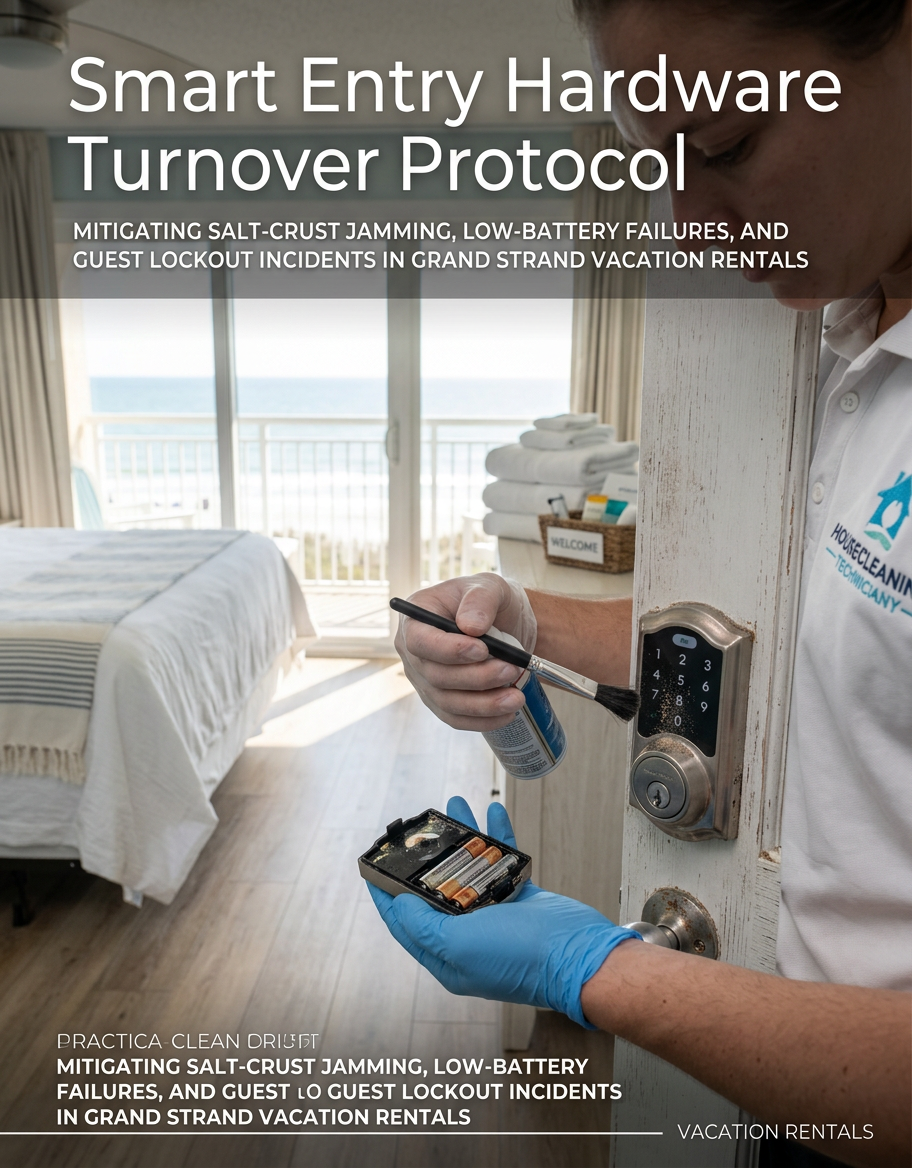
In the fast-paced Grand Strand vacation rental market, the check-in experience sets the entire tone for a guest's stay. There is nothing more damaging to a property's online rating than a family arriving at 4:00 PM only to find their digital smart lock completely dead or jammed by salt crust. This comprehensive operations guide outlines a step-by-step physical maintenance and validation protocol designed to eliminate keyless entry failures during peak rental seasons. By implementing these practices, property managers and homeowners can protect their hardware investments and secure flawless check-in reviews.
The High Stakes of the First Touchpoint
In the competitive Grand Strand vacation rental market, the guest experience begins at the front door. A seamless check-in at 4:00 PM sets a positive tone for the entire stay, while a malfunctioning smart lock immediately triggers anxiety, frustrates weary travelers, and leads to negative reviews. If guests cannot access the property after a long drive down Highway 17, your property management rating is already compromised.
Electronic locksets face relentless operational pressure during the peak Myrtle Beach summer season. Dozens of unique guest, cleaning, and maintenance codes are cycled weekly, straining the physical and digital components of the hardware. When smart lock assemblies fail, property managers face expensive emergency maintenance dispatches, upset guests, and potential compensation claims that directly erode nightly rental margins.
Standardizing a dedicated lockset turnover protocol is essential to mitigate these operational risks. Integrating a systematic physical audit and sanitation routine into every single departure cleaning checklist preserves hardware longevity and ensures guest satisfaction. This proactive approach stops predictable mechanical failures before they can disrupt a guest's highly anticipated coastal vacation.
- Eliminates late-night emergency maintenance calls and locksmith fees
- Protects your property listing from damaging one-star check-in reviews
- Extends the operational lifespan of expensive digital entry hardware
- Provides clear operational accountability for cleaning and inspection staff
The Coastal Triad of Hardware Failure: Salt, Sand, and Humid Battery Drain
The marine environment of the Grand Strand presents unique challenges to digital electronic components. Airborne salt spray deposits microscopic sodium chloride crystals inside lock housings, forming conductive pathways that cause short circuits on delicate motherboards. Over time, high relative humidity accelerates this galvanic corrosion, causing responsive keypads to suddenly go completely dark without warning.
Sand is another relentless threat to smooth mechanical lock operations. Fine quartz sand grains blown from local beaches easily migrate into keyway cylinders, button housings, and deadbolt chambers, acting as a highly abrasive grit. This particulate buildup jams internal pins, strips motorized gears, and causes electronic clutches to slip, leaving guests unable to lock or unlock the door.
Additionally, intense coastal heat and high humidity degrade standard alkaline batteries at an accelerated rate. High-temperature exposure triggers internal self-discharge, while the increased resistance of a swelling wooden door causes motorized deadbolts to draw double the standard current to operate. Understanding these environmental stressors is key to selecting the right protective maintenance products and replacement schedules for your properties.
The Turn-by-Turn Keypad Sanitation and Cleaning Process
Cleaning delicate touchscreens and physical buttons requires a specialized technique to prevent liquid intrusion into the electronic housing. Turn cleaners must never spray liquid cleaners, bleach, or water directly onto a lock faceplate. Liquid droplets seep through the seams around the buttons, causing immediate and irreversible circuit board corrosion or touchscreen ghost-inputs.
The correct protocol requires misting a clean microfiber cloth with 70% isopropyl alcohol until it is slightly damp, never dripping wet. Technicians carefully wipe all exterior surfaces, dissolving sunscreen oils, fingerprints, and salty residues without leaving streaks. For physical button keypads, a dry, soft-bristle detailing brush is used first to dislodge trapped sand grains from the narrow crevices before wiping.
To protect the exterior housing from UV degradation and salt-crust accumulation, apply a thin layer of specialized marine-grade silicone protectant to plastic or metal bezels once a month. This non-greasy coating repels airborne moisture and salt particles, allowing them to be easily wiped away during routine turnovers. This simple step keeps the lock hardware looking pristine and functioning smoothly despite relentless exposure to the elements.
The Mechanical Deadbolt and Strike Plate Alignment Audit
Coastal humidity causes wooden entry doors to swell and shift constantly, throwing off deadbolt and strike plate alignment. When a door is misaligned, the motorized deadbolt rubs against the brass strike plate, creating friction that drains the batteries rapidly and often triggers a "jammed lock" error. A door must close easily and lock completely without requiring the guest to pull, push, or lift the handle.
During every turnover, clean-teams must perform a physical alignment test by slowly closing the door and observing the deadbolt action. The bolt should slide effortlessly into the strike plate pocket with at least two millimeters of clearance on all sides. If the bolt scrapes against the edge of the plate, the strike plate must be adjusted or recessed deeper into the jamb to prevent motor strain.
Sand accumulation inside the strike plate dust box must also be cleared out during the turnover inspection. A vacuum crevice tool or a quick blast of compressed air removes packed sand that would otherwise prevent the deadbolt from fully extending. Ensuring a clear, frictionless pathway for the lock bolt directly extends the operational life of the internal motor and clutch assembly.
Battery Preventative Maintenance and Voltage Verification
Relying solely on low-battery notifications from property management software (PMS) integrations is a risky strategy for coastal operations. Wifi latency, system disconnects, and rapid battery voltage drops in extreme summer heat can cause a lock to die before an alert is ever received. A proactive battery replacement schedule is the only reliable way to prevent midnight guest lockouts.
For high-occupancy Grand Strand vacation rentals, batteries should be proactively replaced every 60 to 90 days during peak season, regardless of reported charge percentages. Cheap carbon-zinc or standard alkaline batteries should be avoided, as they are prone to leaking corrosive acid that ruins expensive lock terminals. Instead, use high-quality AA lithium batteries, which perform exceptionally well in high temperatures and maintain stable voltage curves.
Turn supervisors should carry a handheld digital battery load tester to verify the true remaining capacity of installed cells during inspections. If a battery pack registers below 1.25 volts per cell under load, the entire set must be replaced immediately. This preventative step ensures the lock has ample power to drive the heavy motorized mechanism through any minor, unexpected door swelling.
The Backup Key and Lockbox Redundancy Protocol
A smart lock is only as reliable as its physical backup system. Every vacation rental property must have a secondary, analog method of entry, typically a heavy-duty mechanical push-button lockbox installed in an accessible but discreet location. This emergency key repository must be checked, cleaned, and tested during every turnover to ensure it remains a viable backup during power outages or digital failures.
Mechanical lockboxes are highly susceptible to salt-air corrosion, which seizes the internal dials and prevents the faceplate from releasing. Cleaners must clear out spider webs and sand, then spray the internal mechanism with dry graphite lubricant rather than wet oils like WD-40. Wet lubricants attract windblown sand and salt dust, quickly forming an abrasive sludge that permanently ruins the lock's internal tumblers.
Turn staff must also verify that the backup key is physically inside the lockbox and that the combination wheels spin freely before resetting them to the master code. If the backup key is missing or damaged, it must be reported immediately to the coordination office. Keeping this redundant entry path operational is the ultimate safeguard against costly professional locksmith dispatches during peak holiday weekends.
Training Turn Staff for Real-Time Lock Diagnostics
Equipping turnover cleaning teams with basic lock diagnostic skills dramatically reduces guest-facing hardware failures. During their final walkthrough, cleaners must perform the "five-second lock test." This involves locking and unlocking the unit three times consecutively using both the keypad and the physical thumbturn to verify immediate, smooth mechanical responses.
Staff should be trained to recognize warning signs like a slow or struggling motor whine, grinding noises, or a loose lockset housing. A loose lockset allows moisture to seep behind the protective rubber gaskets, exposing internal wiring to salt-laden air. If the lock housing wobbles when the handle is turned, the mounting screws must be tightened immediately to restore the weather-tight seal.
Immediate reporting protocols must be established for any digital anomalies, such as delayed button responses, faint LED lights, or unexpected error beeps. Identifying these subtle issues during the day allows property managers to dispatch a maintenance technician before the guest arrives at night. This proactive approach turns potential emergencies into routine, stress-free daytime maintenance tasks.
Integrating Lock Inspections into the PMS Workflow
To scale this level of quality control across multiple properties, lock inspections must be integrated directly into your Property Management System (PMS). Turnover checklists should require cleaners to submit a timestamped photo of the illuminated keypad and log the current battery voltage reading. This digital paper trail provides immediate quality verification and accountability for every rental unit in your Grand Strand portfolio.
Property managers should also maintain a secure, centralized master key register and physical key overrides for all electronic locksets. These physical keys should be organized in a secure central office and coded anonymously to prevent security breaches if a key set is lost. Having a reliable master key system allows your local maintenance team to quickly resolve complex electronic failures without damaging the door or frame.
Partnering with a professional cleaning and property care company ensures these technical checklists are executed flawlessly during every high-pressure seasonal turn. The team at A2Z Cleaning & Linen Services possesses the specialized training and local expertise to manage these complex coastal hardware challenges. Contact A2Z Cleaning & Linen Services at 843.800.2788 to optimize your property care workflows and protect your Grand Strand vacation rental investments.
Key takeaway
Maintaining physical entry hardware is just as critical as interior cleanliness for securing high guest ratings in coastal properties. Implementing a strict lock maintenance protocol prevents expensive midnight lockout emergencies and protects valuable vacation rental portfolios. Contact A2Z Cleaning & Linen Services at 843.800.2788 to elevate your property turnover standards today.
Keep Reading
Vacation Rentals
The Grand Strand Owner-Stay and Guest-of-Owner Turnover Protocol: Mitigating Customized Inventory Depletion, PMS Scheduling Mismatches, and Post-Departure Housekeeping Billing Leakage
ReadVacation Rentals
The Coastal Trash Can, Recycling Bin, and Exterior Roll-Out Cart Turnover Protocol: Mitigating Seafood Decay Odors, Pest Intrusions, and Guest Review Failures in Grand Strand Vacation Rentals
ReadVacation Rentals
The Grand Strand Split-Portfolio Scheduling and Vendor Redundancy Protocol: Managing Multi-Tier Cleaning Partners, PMS-Linked Turn Triggers, and Peak-Season Quality Safeties
ReadReady for a spotless property?
Call 843.800.2788 or request a free quote from A2Z Cleaning & Linen Services.