Commercial & Hospitality
The Coastal Environmental Specialist Career Track: Transforming Seasonal Labor Into Certified, Year-Round Grand Strand Field Technicians
Discover how a professionalized career path, advanced certifications, and ergonomic training turn seasonal cleaning jobs into high-paying, year-round careers in Myrtle Beach.
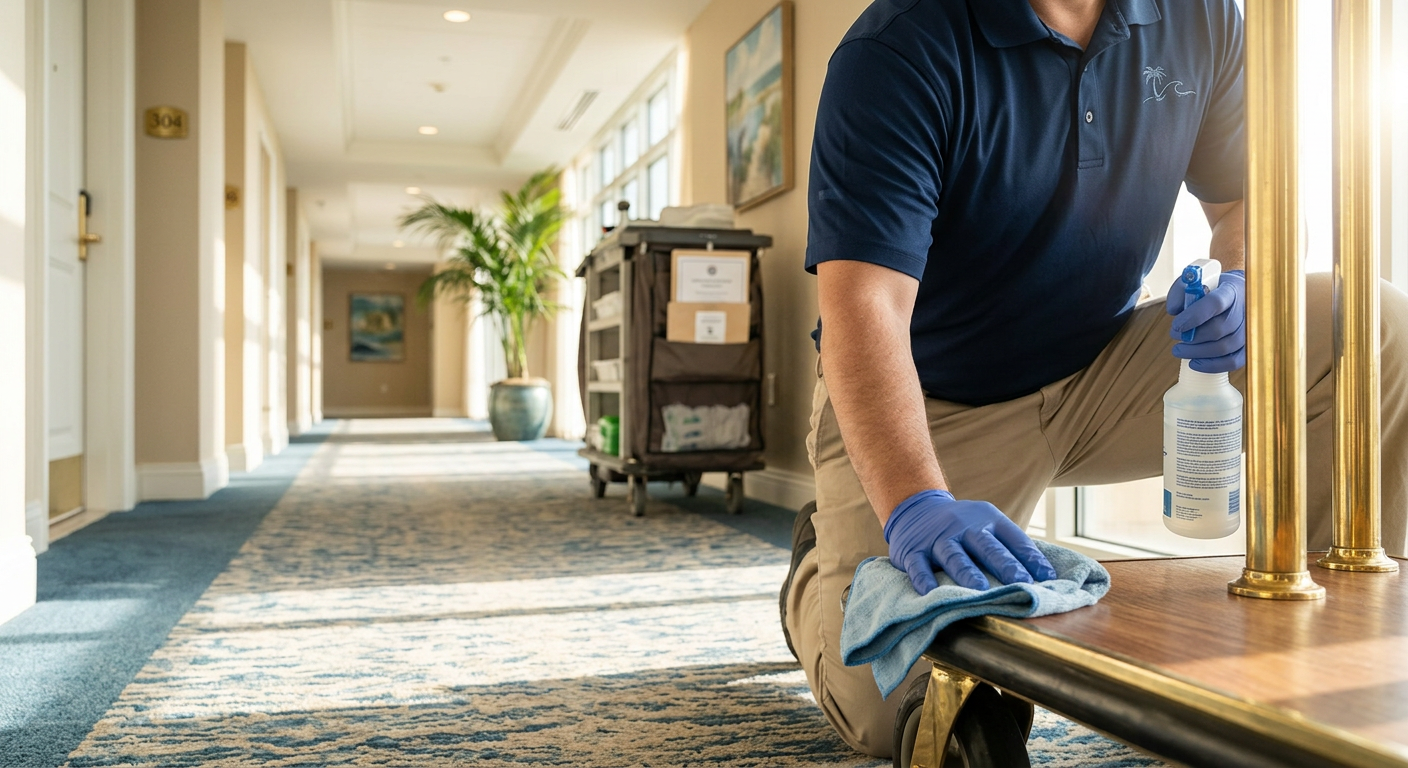
The Grand Strand hospitality economy is fueled by millions of annual visitors who expect pristine environments in vacation rentals, luxury resorts, and local businesses. Meeting this high standard requires a shift in how we view the cleaning industry, moving away from temporary seasonal labor and toward professionalized, certified career paths. At A2Z Cleaning & Linen Services, we believe that building a reliable team starts with respecting the trade, offering robust training, and providing year-round career stability. This comprehensive guide outlines the standards, certifications, and structural changes required to build and sustain a elite team of coastal environmental technicians.
The Anatomy of a High-Velocity Coastal Field Technician
An elite coastal environmental technician is far more than a casual cleaner; they are skilled professionals operating in a high-stakes, fast-paced hospitality climate. In the Myrtle Beach region, environmental factors like high relative humidity, airborne sea salt, and heavy sand tracking require specialized technical knowledge. A top-tier technician understands how these elements interact with various building materials, from luxury LVP flooring to porous natural stone and delicate sliding glass door tracks.
Beyond technical knowledge, successful field technicians possess exceptional spatial awareness and systematic efficiency. They approach a space not as a series of random chore-like tasks, but as a structured workflow designed to eliminate cross-contamination while maximizing cleaning speed. This mental discipline allows them to identify and treat overlooked areas, such as high-zone dust traps, PTAC air filters, and moisture-prone bathroom crevices, all within a compressed changeover window.
Strong emotional intelligence and a deep-seated pride of workmanship are also hallmark traits of a true hospitality professional. These technicians understand that their work directly impacts a vacation rental owner's livelihood, a resort's online reputation, and a guest's physical health. They document property issues, manage chemical safety with precision, and communicate fluidly with dispatch and inspection teams to ensure seamless property operations.
Vetting for Coastal Grit: The Interview Framework and Behavioral Diagnostics
Traditional, surface-level job interviews often fail to identify the long-term reliability and physical grit required for commercial and vacation rental cleaning. To build a highly reliable field team along the Grand Strand, hiring managers must employ structured behavioral interviewing techniques. This process should move past basic historical employment questions to evaluate how an applicant manages real-world operational stress, rapid schedules, and sudden physical demands.
An effective vetting framework also assesses an applicant's baseline understanding of safety and environmental protocols. It is essential to screen for coachability and a willingness to learn standardized procedures rather than relying on self-taught, non-compliant cleaning habits. Asking scenario-based questions about chemical dilution, chemical mixing hazards, and workplace injuries reveals their underlying safety consciousness.
Finally, the interview process should gauge an applicant's alignment with a year-round career path. Those looking only for a temporary summer job will rarely invest the effort required to master advanced cleaning techniques. By screening for individuals who value professional growth, certifications, and consistent off-season employment, hospitality providers can dramatically reduce costly mid-season turnover.
- Can you describe a time when you discovered property damage or a major maintenance issue during a shift, and how you documented and reported it?
- How do you systematically organize your cleaning supplies and tools before entering a large, multi-story vacation rental to minimize wasted movement?
- Describe a situation where a cleaning task took longer than expected. How did you manage your time to finish the job without sacrificing quality standards?
- What specific precautions do you take when handling professional-grade disinfectants, and why is dwell time critical to the sanitization process?
- How do you physically prepare yourself for a demanding, high-heat summer changeover shift in a multi-story oceanfront home?
Structured Training Paths: Transitioning from Housekeeping to Certified Specialist
True professionalization in the cleaning industry begins with replacing informal shadowing with structured, accredited education programs. Transitioning seasonal laborers into certified environmental specialists requires a clear, step-by-step training curriculum. This education must cover advanced chemical safety, the science of sanitization, and the technical operation of specialized extraction and filtration machinery.
Aligning company training with globally recognized bodies, such as the International Sanitary Supply Association (ISSA) or the Global Biorisk Advisory Council (GBAC), elevates both service quality and employee morale. When technicians receive official certifications, they realize their work is a respected trade with measurable standards. This formal training covers critical topics like OSHA hazard communication, cross-contamination prevention, and bloodborne pathogen protocols.
Localized training must be layered on top of these national standards to address the specific challenges of the Myrtle Beach environment. This includes practical training modules on salt-air glass remediation, sand extraction from high-traffic commercial carpets, and safe mold and mildew mitigation in high-humidity coastal zones. Our team at A2Z Cleaning & Linen Services prioritizes these localized disciplines to ensure every technician is fully prepared for coastal realities.
The Physical Science: Ergonomic Mastery and Safety Protocols
Professional cleaning is a highly physical, athletic occupation that places repetitive strain on the body if performed incorrectly. Without dedicated ergonomic training, field technicians face high rates of musculoskeletal injury, fatigue, and early burnout, especially during peak summer changeovers. Teaching proper body mechanics is just as critical as teaching proper chemical usage to ensure long-term career viability.
Ergonomic training programs must instruct technicians on how to protect their spines, shoulders, and wrists during high-volume tasks. This includes demonstrating the proper stance for vacuuming, the correct way to lift heavy laundry bundles using the legs rather than the back, and how to use long-reach extension poles to clean ceiling fans without awkward stretching. By protecting their physical well-being, we preserve their health and retain our best talent.
Heat stress mitigation is another essential safety protocol for Grand Strand operations. Summer temperatures in South Carolina, combined with elevated indoor humidity in vacant properties, pose real dehydration risks. Field managers must enforce mandatory hydration schedules, recognize the early signs of heat exhaustion, and organize team rotations that allow technicians to cool down between demanding physical clean-outs.
Compensation and Benefits Trends in the Myrtle Beach Market
To build a reliable team of professional cleaners, the old model of low-wage seasonal employment must be replaced with sustainable compensation packages. In the competitive Grand Strand market, offering a living wage is the absolute baseline for attracting serious talent. Forward-thinking companies are moving toward performance-based compensation structures that reward efficiency, low defect rates, and advanced certifications.
Offering year-round, guaranteed hours is the single most powerful incentive for retaining elite technicians through the winter off-season. When technicians know they have financial stability during the quieter coastal months, they do not have to seek out-of-industry work. This stability creates an experienced, dependable core workforce that is fully prepared for the busy spring and summer ramp-up phases.
Comprehensive benefits packages, including paid time off, health insurance options, and retirement planning, are becoming industry standards for professional cleaning organizations. These benefits elevate the industry, proving to employees that their physical labor is valued and that they have a viable long-term future in hospitality environmental services. Professionalization pays dividends in reduced turnover and impeccable client satisfaction.
Building a Reliable Team: The Peer-Mentorship and Shadowing Program
A reliable, cohesive field team is not built overnight; it is carefully cultivated through structured onboarding and peer-mentorship programs. Throwing a newly hired technician into a high-pressure commercial turnover on their first day is a primary driver of early resignation. Instead, a successful onboarding strategy pairs new hires with seasoned team leads for a multi-week transition period.
This shadow phase allows the new technician to learn company-specific workflows, chemical dilution systems, and time-saving techniques in a supportive environment. It also gives the peer mentor an opportunity to model the professionalism, communication, and work ethic expected by the company. This process ensures that quality standards are consistently transferred to the new hire before they work independently.
Regular feedback loops during this initial phase help to build trust and confidence. Weekly check-ins with field supervisors allow new technicians to voice concerns, clarify procedural questions, and receive constructive coaching. This supportive structure fosters a sense of belonging and teamwork, which directly translates into a more reliable, dedicated workforce.
- Pairing new hires with certified lead technicians for their first forty hours of field operations to build practical confidence.
- Utilizing daily morning huddles to discuss route safety, specific property challenges, and team-wide performance goals.
- Implementing digital feedback loops where technicians can easily view their quality audit scores and customer reviews.
- Structuring monthly team roundtables to gather field input on equipment performance, chemical effectiveness, and scheduling.
- Recognizing outstanding performance through peer-nominated awards that celebrate adherence to safety and quality protocols.
The Path to Leadership: Career Progression Maps in Grand Strand Hospitality
The ultimate tool for retaining high-performance environmental technicians is a transparent, achievable career progression map. If an employee perceives their job as a dead-end position with no opportunity for upward mobility, their engagement will naturally decline over time. By showing a clear trajectory from entry-level cleaner to executive operations management, companies inspire long-term loyalty and professional drive.
A standard progression pathway should divide roles into clear tiers, such as Technician I, II, and III, with each level requiring specific skill milestones, time in grade, and certification achievements. For example, moving to a Technician II position might require an OSHA-10 safety card and a specialized carpet care certification. Each promotion must be accompanied by a structured wage increase to keep the incentive real and tangible.
Beyond senior technician roles, career paths should branch into specialized areas like Quality Assurance Inspection, Field Training, Fleet Management, and Client Relations. Promoting internally ensures that the company's leadership team has a deep, first-hand understanding of field operations. This practice creates a resilient corporate structure capable of delivering consistent, high-quality environmental services across the Grand Strand.
Key takeaway
Transforming cleaning jobs into respected, certified careers is the only sustainable way to build a reliable hospitality service team along the Grand Strand. By investing in rigorous training, ergonomic safety, and year-round compensation packages, A2Z Cleaning & Linen Services continues to lead the industry in quality and worker retention. For professional environmental services backed by a dedicated, expert workforce, call A2Z Cleaning & Linen Services at 843.800.2788.
Keep Reading
Commercial & Hospitality
The Hospitality Environmental Services Skill-Validation Rubric: Practical Field-Testing, Behavioral Vetting, and Local Wage Benchmarks
ReadCommercial & Hospitality
Designing the High-Retention Cleaning Division: Interview Scorecards, Ergonomic Training, and Localized Compensation Models in Myrtle Beach
ReadCommercial & Hospitality
The Grand Strand Commercial Disinfection Specialist Career Pathway: Class-A Office Standards, Biohazard Mitigation Certifications, and Local Retention Models
ReadReady for a spotless property?
Call 843.800.2788 or request a free quote from A2Z Cleaning & Linen Services.