Linens & Laundry
The Coastal Resort Linen Facility and High-Volume Laundry Operations Specialist Career Pathway: Technical Wash-Chemistry Certifications, Behavioral Interview Protocols, and Competitive Grand Strand Compensation
Discover the professional career path of Grand Strand commercial laundry specialists, including technical wash chemistry, certification standards, and hiring protocols.
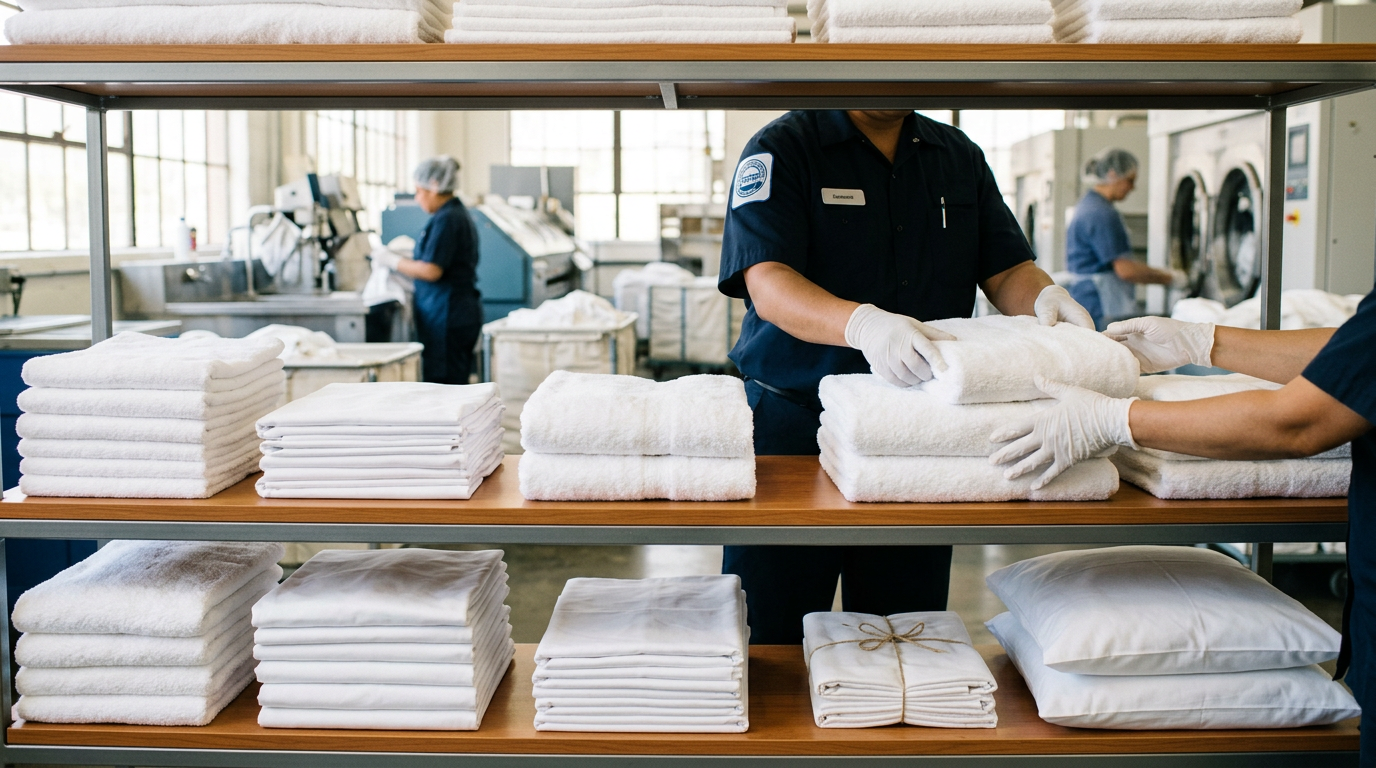
Myrtle Beach's high-density hospitality sector relies heavily on the continuous flow of sanitized sheets and plush towels to keep thousands of vacation rentals and resorts running smoothly. A2Z Cleaning & Linen Services (843.800.2788) recognizes that behind every pristine coastal turn is an elite team of high-volume laundry operations specialists who master complex machinery and advanced chemistry. Elevating the role of the laundry technician from a transitional job to a skilled career pathway is essential for maintaining Grand Strand lodging standards. This article details the recruitment, technical training, and retention architectures required to build a world-class hospitality laundry team.
The High-Volume Coastal Laundry Specialist Persona
Operating a commercial-grade laundry facility requires more than basic manual labor; it demands high physical stamina coupled with sharp mental alertness. Sorters and loaders must process hundreds of pounds of soiled textiles every hour, identifying tear damage, biological hazards, and misplaced resort inventory in a fraction of a second. This rapid-fire cognitive triage prevents damaged goods from reaching the wash wheel, protecting commercial machinery and conserving expensive chemistry. A great specialist maintains high energy and visual accuracy throughout long shifts, realizing that their front-line inspection directly impacts the property's brand reputation.
Contemporary hospitality laundry operations utilize computerized tunnel washers, high-pressure extraction presses, and automated flatwork ironers. An elite specialist possesses a strong mechanical aptitude, allowing them to monitor machinery diagnostics, recognize abnormal utility consumption, and troubleshoot minor feeding or folding jams. Instead of mindlessly feeding fabric into a folder, they understand the tension settings, temperature parameters, and moisture retention levels required to produce a crisp, hotel-grade finish. This technical curiosity separates career-minded operators from temporary labor.
Working around high-temperature steam, commercial electrical systems, and concentrated industrial chemicals requires a deep commitment to safety. A top-tier laundry specialist prioritizes personal protective equipment, adheres strictly to lock-out/tag-out procedures, and maintains clean, dry walking surfaces to prevent slip-and-fall hazards. They approach their workspace with professional discipline, understanding that a single safety lapse can disrupt the entire supply chain for dozens of oceanfront resorts during a peak summer weekend.
Essential Technical Certifications and Education Paths
To transform entry-level workers into skilled technicians, facilities must champion formal educational pathways and professional credentials. The Association for Linen Management (ALM) offers the Certified Laundry Superintendent (CLS) and Certified Linen Management Professional (CLMP) designations. These comprehensive programs teach operators the science of fiber structure, water conservation, thermal energy management, and labor cost optimization. Encouraging staff to pursue these credentials elevates the operational intelligence of the entire facility and establishes a clear path for internal promotion.
In addition to ALM credentials, operators should seek certifications from the Textile Rental Services Association (TRSA), particularly the Certified Hygienically Clean Hospitality designation. This training focuses on microbiological testing, pathogen defense, and Hazard Analysis and Critical Control Points (HACCP) system implementation. Technicians learn how to prevent cross-contamination by maintaining strict physical separation between soil-sorting areas and clean packing zones, ensuring every sheet delivered meets strict sanitary standards.
Local training must also include comprehensive OSHA Hazard Communication standards. Laundry specialists must be fully certified in reading Safety Data Sheets (SDS), handling high-strength alkali builders, souring agents, and chlorine bleaches safely. Employers should document this chemical handling training annually, combining classroom instruction with hands-on spill-response drills to ensure complete compliance and workplace safety.
- Association for Linen Management (ALM) - Certified Linen Management Professional (CLMP)
- TRSA Hygienically Clean Hospitality Certification
- OSHA 10-Hour General Industry Certification with Hazard Communication focus
- In-house Industrial Equipment Operator Licensing (for folders, ironers, and tunnel washers)
- Advanced Wash-Chemistry Specialist Certification (provided by chemical manufacturing partners)
Designing Behavioral Interview Protocols for Laundry Crews
Standard interview questions often fail to identify the qualities needed for a high-production, high-temperature laundry environment. Hiring managers should implement structured behavioral interview protocols that assess a candidate's stress tolerance, reliability, and team-first mindset under pressure. Asking candidates to describe specific past experiences where they had to resolve a production bottleneck or handle a sudden machinery breakdown reveals their problem-solving capabilities far better than hypothetical questions.
Reliability is the cornerstone of peak-season Grand Strand operations, where a single missing shift can delay dozens of vacation rental check-ins. Interview questions must probe a candidate's historical attendance patterns and their personal strategies for managing transportation challenges during high-traffic summer months. Look for candidates who demonstrate foresight, such as planning alternative routes or having back-up childcare arrangements already established before the season begins.
Evaluating a candidate's receptiveness to safety protocols is equally vital during the interview process. Asking how they handled a coworker who bypassed a safety guard on an ironer reveals their commitment to collective workplace safety. A candidate who speaks up to protect their team members shows the leadership potential and safety-conscious attitude necessary for long-term career progression within the facility.
- Describe a time when your shift was short-staffed during a busy period. How did you manage your workload without sacrificing quality?
- What specific steps do you take when you notice a piece of machinery is operating louder or slower than normal?
- Can you share an instance where you had to correct a safety hazard created by a coworker? How did you approach them?
- Tell me about a time you noticed a stain-pattern trend on incoming linen. What steps did you take to notify management or adjust the sort?
Wash-Chemistry Mastery and Stain-Extraction Training
An exceptional laundry specialist must understand the delicate balance of the wash wheel's four variables: chemistry, temperature, time, and mechanical action. Training programs must teach technicians how high-pH alkali builders swell cotton fibers to release deep sand and body oils, and how subsequent souring steps neutralize the pH to match human skin. Operators who master these concepts can adjust formulas for varying soil levels, saving water and reducing chemical damage to expensive linens.
Coastal environments present unique staining challenges, primarily sunscreen oils containing avobenzone, which react with dissolved iron in local municipal water to create bright orange rust stains. Training technicians to identify these chemical-bonded stains before bleaching is critical, as chlorine bleach permanently sets avobenzone stains. Specialists must be trained to apply targeted acid-based spotters and thermal-active surfactants to lift these stubborn oils cleanly without destroying the base fabric.
Modern facilities are increasingly integrating ozone laundry systems, which dissolve ozone gas into cold water to achieve rapid disinfection. Specialists must be trained in managing ozone concentration levels, monitoring dissolved oxygen levels, and verifying that the wash cycles achieve complete sanitization. This technology reduces thermal energy usage and chemical exposure, but it requires highly trained operators who can calibrate and monitor the equipment precisely.
Compensation Benchmarks and Benefits Trends in the Grand Strand
To attract and retain premier talent in the highly competitive Grand Strand market, facilities must move away from entry-level wage structures. Offering a living wage that reflects the physical and technical demands of the role is the first step in building a reliable workforce. Leading companies use tiered pay structures, where technicians receive immediate hourly wage increases as they master specific equipment, earn professional certifications, or step into shift-lead responsibilities.
Seasonal retention bonuses are a powerful tool for maintaining staff continuity from May through September. Structuring these incentives around monthly attendance, safety records, and production accuracy ensures that employees remain motivated during the most demanding weeks of the year. Additionally, offering end-of-season bonuses helps mitigate the late-summer attrition that often plagues coastal hospitality businesses.
Beyond base pay, modern laundry specialists seek comprehensive benefits packages that provide year-round stability. Offering health, dental, and vision coverage, alongside paid time off and retirement savings matching, signals that the company views laundry operations as a legitimate career rather than seasonal labor. Providing reliable, year-round hours—even during the winter off-season—builds deep loyalty and drastically reduces spring recruitment costs.
Mitigating High-Heat Burnout and Ergonomic Injury
The physical environment of a commercial laundry plant is demanding, with ambient temperatures regularly rising near flatwork ironers and steam dryers. Preventing employee burnout requires active climate control management, including high-volume low-speed (HVLS) fans, dedicated spot-cooling units at stationary folding docks, and air-conditioned break rooms. Managers must treat heat mitigation as a safety priority, ensuring that workers have constant access to chilled, electrolyte-replacing beverages.
Ergonomic injuries, particularly repetitive strain disorders and lower-back pulls, are common risks in high-volume operations. Specialists must receive formal training on proper body mechanics, such as bending at the knees when pulling heavy, water-laden sheets from extraction bins. Utilizing spring-loaded utility carts that keep linens at waist level prevents constant bending and reduces physical fatigue, allowing operators to work safely and comfortably throughout their shifts.
Implementing a mandatory station-rotation schedule every two to three hours is highly effective at reducing physical strain and mental fatigue. Rotating workers between sorting, feeding, folding, and packing keeps minds active and uses different muscle groups throughout the day. This simple scheduling adjustment reduces repetitive motion injuries while keeping the workforce engaged and alert.
Building a Reliable Shift-Structure and Cross-Training Matrix
A resilient laundry operation cannot rely on a few key individuals to manage critical steps like wash-aisle programming or chemical replenishment. Building a robust cross-training matrix ensures that every team member is fully trained on at least three distinct operational stations. This redundancy protects the plant from single-point-of-failure risks when a key operator is absent, keeping production lines moving smoothly regardless of staffing changes.
Structuring shifts with overlapping transition periods prevents production drops during shift changes. A thirty-minute overlap allows incoming and outgoing crews to discuss current machine performance, linen backlogs, and immediate chemical replenishment needs. This direct communication keeps the plant floor running smoothly and maintains steady production rates, preventing bottlenecks during peak afternoon turnover hours.
Clear, visible communication boards displaying real-time production goals versus actual output help keep teams aligned and motivated. When technicians can easily see their performance metrics, they take pride in their collective speed and accuracy. This transparency fosters a collaborative environment where team members actively support one another to meet daily linen dispatch deadlines.
Auditing Career Path Progression and Quality Benchmarks
Retaining top talent requires a transparent career progression ladder that shows entry-level sorters exactly how they can transition into machine operators, lead technicians, and plant managers. Conducting biannual career development reviews—rather than simple annual performance evaluations—allows managers to align company growth with personal employee aspirations, providing a clear roadmap for skill acquisition and wage increases.
Quality audits must be integrated into daily operations to maintain high standards and provide objective feedback to the team. Tracking key performance indicators (KPIs) like pieces-per-operator-hour (PPOH), fabric reject rates, and chemical cost per pound helps technicians understand how their individual work affects the facility's overall efficiency. Rewarding teams that consistently meet or exceed these quality benchmarks builds pride in their craft.
Ultimately, treating laundry operations as a highly technical, respectable career field transforms a facility's culture and performance. By investing in professional certifications, implementing structured behavioral interviews, and offering competitive compensation, Grand Strand operators can build a stable, expert workforce. This dedication to operational excellence ensures that local vacation rentals and resorts receive the exceptional linen service their guests expect.
- Track Pieces-Per-Operator-Hour (PPOH) across individual stations daily.
- Maintain a target re-wash rate of under two percent through precise stain identification.
- Audit chemical dispenser calibration monthly to prevent fabric damage and skin irritation.
- Conduct weekly safety walkthroughs to ensure all emergency stops and guards are operational.
- Review individual cross-training progress monthly to update the facility's operational matrix.
Key takeaway
Building an elite commercial laundry team in the Grand Strand requires moving beyond seasonal hiring habits to establish a structured, certified career pathway. By investing in professional wash-chemistry training, utilizing behavioral interviews, and offering competitive compensation, facilities secure the reliable talent needed to maintain pristine linen standards. A2Z Cleaning & Linen Services remains dedicated to elevating industry standards through expert training and reliable local operations.
Keep Reading
Linens & Laundry
The Coastal Hotel-Grade Zippered Mattress Encasement Laundering Protocol: Mitigating Polyurethane Membrane Delamination, Salt-Air Zipper Corrosion, and Sand-Abrasion Failures in Grand Strand Rentals
ReadLinens & Laundry
Preventing Off-Season Mustiness: How to Store Vacation Rental Linens in Myrtle Beach
ReadLinens & Laundry
How to Keep White Towels Actually White
ReadReady for a spotless property?
Call 843.800.2788 or request a free quote from A2Z Cleaning & Linen Services.