Vacation Rentals
The Coastal Vacation Rental Refrigerator, Freezer Ice Maker, and Door Gasket Turnover Protocol: Mitigating Fish-Odor Cross-Contamination, Sandy Ice-Chute Blocks, and Gasket Mildew under Grand Strand Saturday Turn Pressures
A step-by-step cleaning and disinfection protocol for vacation rental refrigerators and ice makers to prevent odor complaints and gasket mold during busy Grand Strand turnover days.
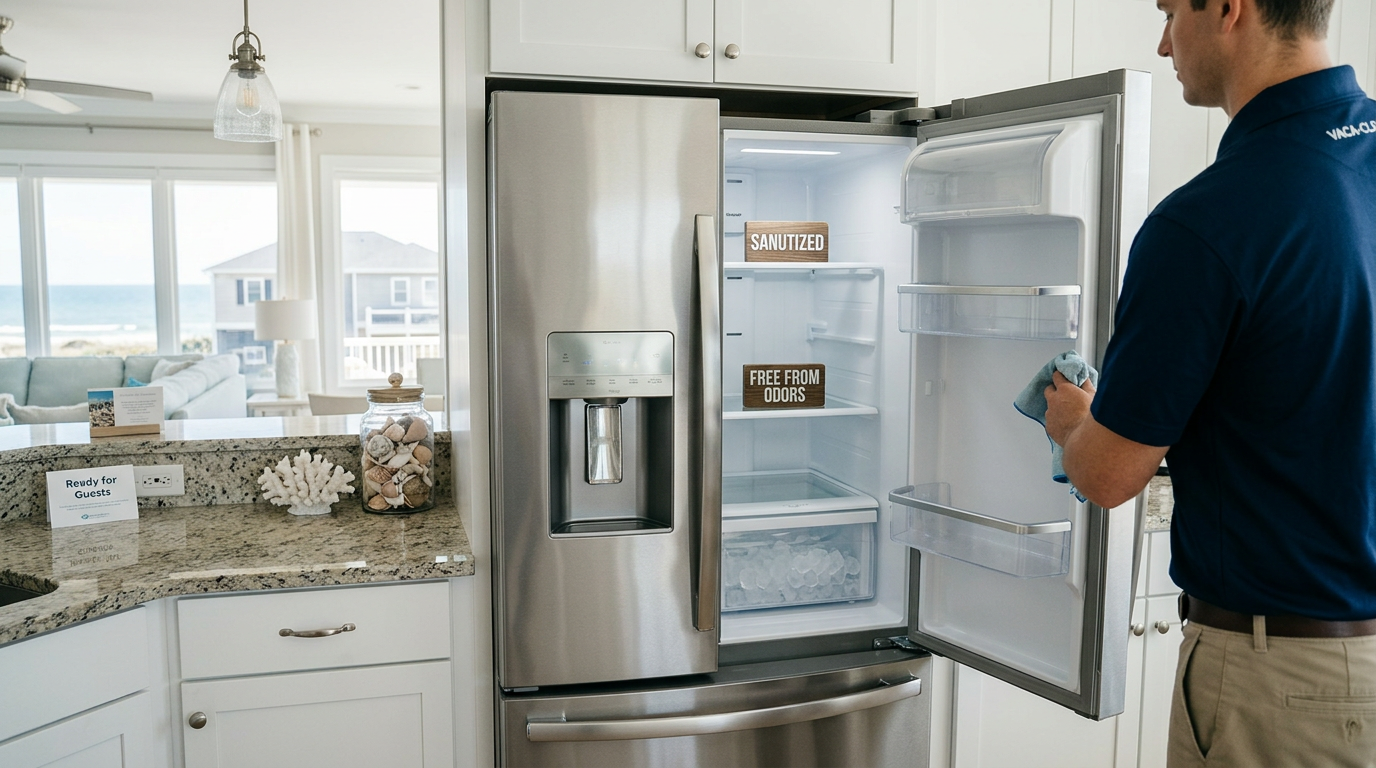
In the fast-paced world of Grand Strand vacation rentals, few guest touchpoints impact first impressions as immediately as the kitchen refrigerator. A single lingering odor of last week’s seafood boil, a mold-speckled door gasket, or a sandy ice-dispenser chute can trigger an instant low-star cleanliness review. Managing these high-risk areas during the tight Saturday turn window requires a systematic, chemically precise protocol that goes far beyond a superficial wipe-down. This guide details how professional hosts and property managers can standardize their refrigerator turnover processes to guarantee pristine, odor-free appliances every single week.
The High-Humidity Door Gasket Vulnerability: Stopping Mold and Mildew at the Seal
The soft, magnetic PVC gaskets sealing refrigerator and freezer doors are prime breeding grounds for mold and mildew in the humid Grand Strand climate. Warm air enters every time the door is opened, condensing into moisture that pools within the deep accordion folds. Over a busy week, this moisture mixes with food crumbs and skin oils, forming a dark biofilm. If left unaddressed, this biofilm quickly blooms into black mold, which is highly visible and highly damaging to guest trust.
Standard surface wiping is insufficient for cleaning these folds; housekeepers must physically stretch the bellows open to expose hidden pockets. A non-abrasive, EPA-approved botanical disinfectant should be sprayed directly into the folds to break down organic matter without degrading the vinyl. Using a microfiber cloth wrapped around a non-metallic spatula ensures that every millimeter of the gasket is scrubbed clean. Avoid bleach, which dries out and cracks the PVC over time.
Once cleaned, the gaskets must be thoroughly dried using a clean microfiber cloth to prevent immediate moisture re-accumulation. Housekeepers should also inspect the physical integrity of the seal, looking for tears or areas where the magnet has demagnetized. A failing gasket causes the appliance to run constantly, driving up utility bills and accelerating frost build-up. Addressing minor gasket mold weekly prevents the need for costly, mid-season gasket replacements.
The Freezer Ice Maker and Dispenser Chute: Eliminating Sand Silt and Biological Slime
Automatic ice dispensers are a massive convenience for beachgoers, but they are highly susceptible to airborne beach sand and biological slime. Guests returning from Myrtle Beach often deposit sand onto the dispenser lever while filling water bottles, allowing grit to travel up the chute. Furthermore, the dark, damp environment inside the dispenser chute is highly vulnerable to mold and yeast colonization. This results in an unsightly pink or black slime that can contaminate the ice cubes.
During the Saturday turn, housekeepers must empty the ice bin entirely if any signs of sand or clumping are present. The bin should be washed with warm, soapy water, sanitized with a food-safe solution, and dried completely before being reinstalled. The dispenser chute must be wiped down with a long, flexible bottle brush saturated with an EPA-registered food-safe sanitizer. This step removes any hidden sand-grit bridges that can jam the mechanical flap.
It is also critical to inspect the water filter status light on the refrigerator control panel during every turnover. A clogged or expired water filter not only slows down ice production but can also alter the taste of the water. Keep a centralized inventory of replacement filters in your cleaning supply depot to ensure immediate swaps can occur. Clean ice is a fundamental guest expectation, and a clean delivery pathway is the only way to guarantee it.
- Empty the ice bin completely if sand, mold, or pink yeast is detected.
- Wash the bin with warm, soapy water and sanitize with food-safe solution.
- Scrub the dispenser chute with a flexible bottle brush and sanitizer.
- Check the water filter status light and replace the filter if expired.
- Wipe down the external ice dispenser lever to remove sticky residues.
Seafood Odor Neutralization: Eradicating Volatile Organic Compounds Without Harsh Perfumes
Grand Strand vacationers frequently cook fresh, local seafood, storing leftover shrimp, crab, or fish in the rental's refrigerator. The volatile organic compounds responsible for seafood odors are incredibly persistent, absorbing into plastic interior walls and lingering long after the food is gone. Masking these odors with heavily perfumed chemical sprays is a major mistake, as these synthetic fragrances can transfer onto the next guest's fresh groceries. Instead, the focus must be on complete molecular odor neutralization.
To neutralize stubborn seafood odors, housekeepers should spray all plastic surfaces with an active enzyme-based cleaner or a diluted solution of food-grade white vinegar. These solutions break down the odor-causing proteins on contact without leaving behind harmful chemical residues. For severe cases, an activated charcoal odor absorber or a fresh box of baking soda should be placed in the back of the refrigerator. Ensure the baking soda box is dated and replaced monthly.
Additionally, verify that the refrigerator's internal air filter, if equipped, is clean and functional. Many modern French-door refrigerators feature a carbon air filter designed to continuously scrub odors from the circulating air. If a rental unit frequently hosts seafood-loving guests, these filters should be replaced every three months rather than the standard six. Eliminating unpleasant smells before the guest opens the refrigerator door is key to securing high cleanliness scores.
Glass Shelving and Drawer Track Detailing: Removing Sticky Sugars and Trapped Sand Grit
Spillages from sweet beach drinks, condiments, and melting ice cream often drip down the sides of the refrigerator, pooling in the plastic tracks of the crisper drawers. As the appliance cools, these residues harden into a sticky cement that binds to the plastic. At the same time, fine sand carried in on fresh produce or guest fingers settles into these sticky patches. This creates an unhygienic paste that is highly visible to incoming vacationers.
To clean these areas efficiently, all removable glass shelves and plastic bins should be pulled out of the unit entirely. This allows housekeepers to wash them in the kitchen sink using warm water and dish soap, which is much faster than scrubbing them inside the cold refrigerator. Pay special attention to the glass seams where the pane meets the plastic frame, as liquids often seep into these crevices. Use a detail brush to clear out any trapped residue.
The molded plastic tracks built into the refrigerator walls must be wiped clean with a sanitizing microfiber cloth. If sticky residue remains, a warm, damp cloth left on the track for two minutes will soften the sugar, allowing it to slide off easily. Ensuring that drawers slide smoothly and glass shelves are crystal clear communicates a high standard of care to guests. It also prevents the mechanical cracking that occurs when guests force stuck drawers.
Exterior Stainless Steel and Door Handle Decontamination: Preventing Salt-Air Pitting and Smudge Build-Up
The exterior of the refrigerator is the first thing a guest sees when they enter the kitchen, making it a critical focal point for visual cleanliness. In coastal South Carolina, airborne salt-spray can drift into open-door rental units, depositing a microscopic layer of corrosive salt on stainless steel surfaces. If this salt film is left on the metal, it reacts with humidity to cause pitting, rust spots, and permanent discoloration. Furthermore, door handles accumulate high concentrations of grease and fingerprints.
To combat salt-air corrosion, housekeepers must avoid using abrasive scrubbing pads or harsh chlorine-based cleaners on stainless steel. Instead, use a specialized stainless steel cleaner and polish applied with a clean, high-density microfiber cloth. Always wipe in the direction of the metal's natural grain to prevent fine scratching and ensure a streak-free shine. This process leaves a protective, microscopic barrier that repels water spots, dust, and fingerprint oils throughout the guest's stay.
For the door handles, a thorough disinfection step is required before polishing. Use an EPA-registered sanitizer to wipe down the entire length of the handles, including the hard-to-reach backside where fingers grip. This area is a primary vector for cross-contamination and must be completely decontaminated. A sparkling, streak-free stainless steel exterior with sanitized handles immediately reassures the guest that the entire kitchen is clean and safe.
The Leftover Food and Condiment Disposal Standard: Clear Rules for Guest Consumables
One of the most common operational dilemmas in vacation rental cleaning is deciding what to do with leftover guest consumables. While some hosts believe leaving behind half-used condiments like ketchup or salad dressing is a helpful gesture, it actually presents significant cleanliness risks. Guests expect a completely sanitized, empty refrigerator upon arrival; seeing a previous guest's opened items can make them feel as though the appliance was not properly cleaned or cared for.
A strict zero-tolerance policy should be established for all opened food and beverage items during the Saturday turn. Housekeepers must clear out every single item from the refrigerator and freezer, including ice cream boxes, frozen meals, and condiments. Unopened, non-perishable items can occasionally be donated if the property management company has a formal program, but open containers must be discarded immediately. The only exception should be clearly labeled, host-provided welcome amenities.
Once the refrigerator is completely empty, the interior walls must be wiped down with a food-safe sanitizing solution to remove any invisible splatters. This step ensures that the next guest is presented with a completely blank canvas for their vacation groceries. A completely empty and clean refrigerator is a universal sign of a professional, thoroughly turned vacation rental that meets high platform expectations.
- Discard all opened food, condiments, and beverages left by previous guests.
- Wipe down all interior surfaces with a food-safe sanitizer after emptying.
- Inspect the freezer for forgotten frozen foods or leaking containers.
- Place a fresh, dated box of baking soda in the back of the unit.
- Ensure any host-provided welcome drinks are clean and neatly presented.
Saturday Turn Efficiency and Timing: Integrating the Refrigerator Protocol into the Turnover Workflow
With a tight check-out at 10:00 AM and check-in at 4:00 PM, Saturday turnovers require extreme time-management discipline. Housekeepers cannot afford to spend an hour detailing a single refrigerator; the process must be streamlined and sequenced with other kitchen tasks. The refrigerator protocol should begin as soon as the housekeeper enters the property. This allows chemical cleaning agents enough contact time to break down spills while other tasks are completed.
The first step upon entering the kitchen is to empty the refrigerator of all trash and spray any stubborn, sticky spots with sanitizer to let them pre-soak. Next, the housekeeper should move on to stripping linens or starting the first load of laundry. By the time they return to the kitchen, the hardened spills will be softened and easy to wipe away. This sequencing reduces physical scrubbing time and keeps the turnover moving forward.
Keeping a standardized turn kit stocked with specialized tools—such as detail brushes, plastic scrapers, and stainless steel polish—also saves valuable minutes. Housekeepers should not have to run back to their supply vehicles to find the right cleaner. By integrating the refrigerator protocol into a highly coordinated workflow, property managers can achieve flawless cleanliness standards without compromising their strict afternoon deadlines or guest check-in schedules.
Quality Assurance Inspections: The Five-Point Refrigerator Sign-Off Checklist
Even the most experienced housekeepers can miss tiny details during the high-stress rush of peak-season Saturdays. This is why a formal quality assurance inspection is a vital final step in the turnover process. Before a rental unit is cleared for guest arrival, a field inspector or lead housekeeper must physically audit the refrigerator. This inspection should follow a structured, five-point checklist to ensure no critical spots were overlooked.
The inspector must first check the physical cleanliness of the door gaskets, pulling them back to verify the absence of mold or crumbs. Second, they should inspect the glass shelving and drawer tracks under a flashlight to confirm that no sticky residue or sand remains. Third, the freezer's ice chute and bin must be checked for sand silt or clumped ice. Fourth, the inspector must smell the interior, and fifth, they must check the exterior for streaks.
If any point on the checklist fails, the housekeeper must correct the issue immediately before the property is marked as ready in the property management system. This double-layer quality control system virtually eliminates guest complaints regarding refrigerator cleanliness. Investing those few extra minutes in inspection saves hours of post-arrival guest coordination and protects the property's online review ratings on platforms like Airbnb and VRBO.
- Inspect the deep folds of the magnetic door gaskets for mold or debris.
- Verify that glass shelves are free of streaks and tracks slide smoothly.
- Examine the ice dispenser chute and bin for sand or pink slime.
- Perform a sniff test of the interior to confirm complete odor neutralization.
- Check the exterior stainless steel and handles for fingerprints and salt corrosion.
Key takeaway
A pristine, odor-free refrigerator is an essential cornerstone of vacation rental cleanliness that directly influences guest satisfaction and platform reviews. By implementing this detailed turnover protocol, Grand Strand hosts can protect their appliances from coastal wear, eliminate seafood odors, and secure five-star ratings.
Keep Reading

Vacation Rentals
The Grand Strand Vacation Rental Housekeeping Quality Assurance and Field Inspector Career Pathway: Technical Diagnostic Protocols, Behavioral Interview Blueprints, and Peak-Season Compensation Models
ReadVacation Rentals
The Grand Strand Scattered-Site Vacation Rental Logistics Standard: Scaling Cleaning Routines, Vendor Dispatch, and Consumable Supply Depots Across 60 Miles of Coastline
ReadVacation Rentals
The Coastal Vacation Rental In-Unit Washer and Dryer Turnover Protocol: Mitigating Sand-Clogged Drums, Damp Gasket Mildew, and Leftover Lint Hazards under Grand Strand Saturday Turn Pressures
ReadReady for a spotless property?
Call 843.800.2788 or request a free quote from A2Z Cleaning & Linen Services.