Vacation Rentals
The Coastal Vacation Rental In-Unit Washer and Dryer Turnover Protocol: Mitigating Sand-Clogged Drums, Damp Gasket Mildew, and Leftover Lint Hazards under Grand Strand Saturday Turn Pressures
A step-by-step turnover protocol for in-unit laundry appliances in Grand Strand vacation rentals, preventing sandy residues, moldy odors, and fire hazards during rapid Saturday shifts.
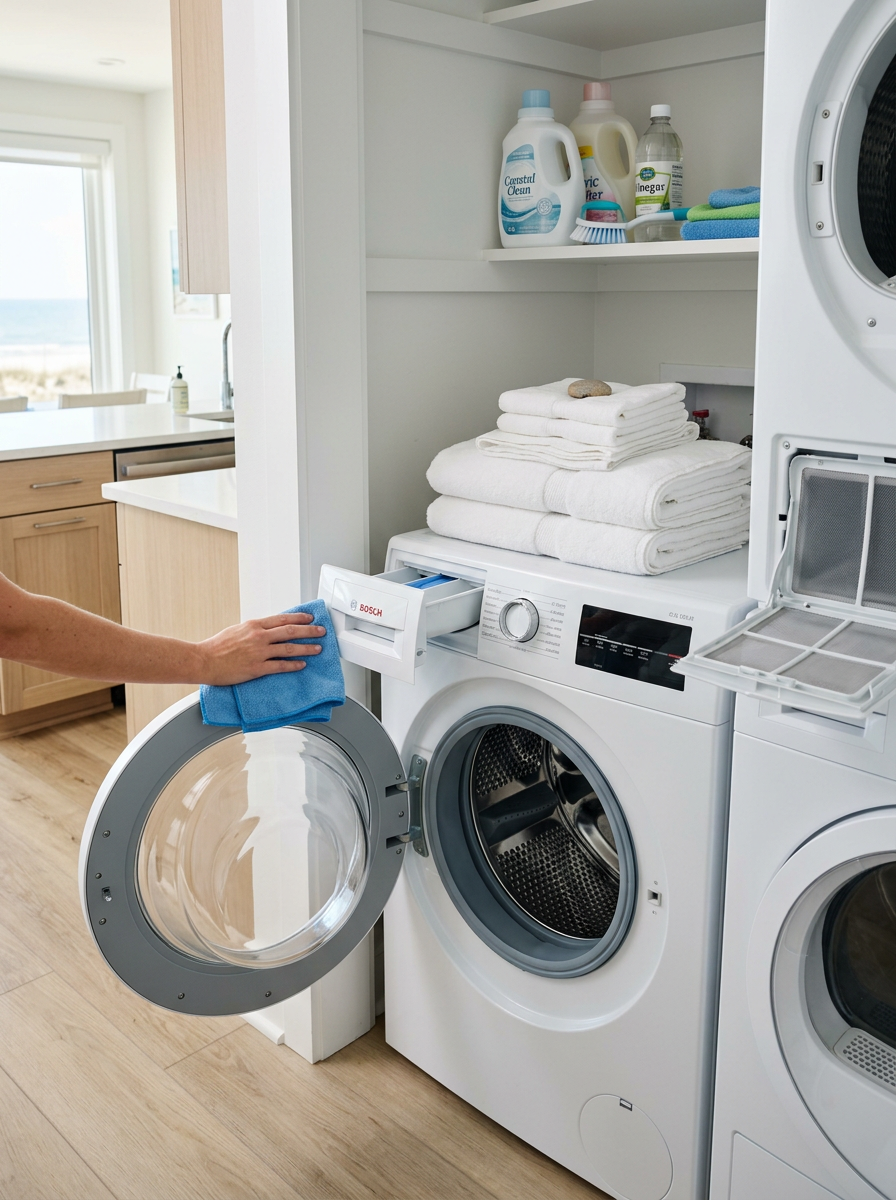
In-unit laundry appliances are among the most heavily used amenities in Grand Strand vacation rentals, enduring daily cycles of salt-crusted swimwear and sand-laden beach towels. Despite their high utility, these appliances are frequently neglected during rapid Saturday turnovers, leading to accumulated debris, moldy odors, and mechanical breakdowns. Implementing a rigorous laundry station protocol is essential for preserving hardware, preventing guest complaints, and securing five-star property reviews. This guide establishes a systematic, highly efficient cleaning routine tailored to the unique environmental challenges of coastal short-term rentals.
The High-Stakes In-Unit Laundry Challenge on the Grand Strand
In Grand Strand vacation rentals, an in-unit washer and dryer is no longer a luxury; it is a critical amenity that guests expect to use daily. From rinsing salt water out of swimwear to washing sandy beach towels, these appliances endure punishing cycles throughout the peak rental season. However, because they are hidden behind utility closet doors, they are frequently overlooked during rapid Saturday turnover shifts, leading to accumulated debris and immediate guest complaints.
When a guest opens a washing machine only to be greeted by a musty, swamp-like odor or a ring of coarse sand lining the drum, their confidence in the property’s overall cleanliness vanishes. This negative first impression directly translates to poor reviews on booking platforms. Furthermore, mechanical failures caused by sand-clogged pumps or lint-choked exhaust ducts can disrupt a guest’s stay, triggering emergency maintenance calls and costly refund demands.
Standard household cleaning routines fail to address the specific environmental loads placed on coastal laundry systems. High local humidity prevents standing water in machine gaskets from evaporating, creating a perfect breeding ground for mold and mildew. To protect your property’s hardware and preserve your listing's ranking, your housekeeping team must follow a standardized, highly efficient, and repeatable turnover protocol designed specifically for coastal environments.
The Outer Surface and Control Panel Micro-Sanitization
The exterior surfaces of in-unit laundry machines are high-touch zones that accumulate sticky detergent drips, fabric softener film, and salty finger oils. To restore these surfaces during a Saturday turn, technicians must spray a neutral disinfectant or a seventy percent isopropyl alcohol solution onto a microfiber cloth rather than directly onto the control panel. Spraying liquid directly onto electronic touchscreens or dial mechanisms risks shorting out sensitive control boards.
Technicians must pay close attention to the door handle, the latching mechanism, and the rim of the door glass where sticky hand oils accumulate. Scrub any detergent spills on the top or sides of the machine casing immediately, as dried detergent acts as an adhesive for floating beach sand and airborne lint. This creates a dark, gritty residue that is difficult to remove once hardened by utility-closet heat.
In the Grand Strand's salt-air environment, the exterior metal hinges and door seams are highly susceptible to premature corrosion and rust. Wipe down these metal joints with a dry microfiber cloth to remove salt-spray film that enters through nearby sliding doors or open windows. This simple step prevents the orange staining that makes even a functional machine look old and neglected.
The Front-Load Door Gasket and Rubber Boot Evacuation
Front-load washing machines are notorious for trapping stagnant water, sand, and stray hair inside the folds of the grey rubber door gasket. Because the utility closet remains closed and humid between guest stays, this trapped moisture rapidly turns into dark mold biofilms. During every turnover, the housekeeper must physically peel back the layers of this rubber boot to extract trapped sand-grit, bobby pins, and lint.
Use a damp, non-abrasive microfiber cloth saturated with a mild botanical disinfectant or a diluted chlorine bleach solution to scrub inside the rubber folds. Pay special attention to the small weep holes at the bottom of the gasket, which are designed to drain water back into the tub. These holes are easily plugged by beach sand and lint, which stops drainage and causes stagnant water to pool.
Once the sand and debris are cleared, wipe the entire gasket dry with a clean cloth. Leaving the rubber boot wet simply invites more mold growth before the next guest arrives. If mold spots have already stained the rubber, a specialized mold-remover gel should be applied during deep-clean intervals, as rapid Saturday turns do not allow sufficient dwell time for deep stain extraction.
The Washing Machine Drum and Soap Dispenser Drawer Decontamination
The interior washing drum can harbor an invisible layer of body oils, sunscreen residues, and undissolved laundry detergent known as soap scum. This film traps bacteria and causes a sour odor that transfers directly to the guest’s clothes. Technicians should run a quick physical inspection of the drum, wiping the stainless-steel baffles to remove any stuck debris, melted lip balm, or overlooked beach sand.
The soap dispenser drawer is another common failure point for guest reviews. Guests frequently overload these compartments with liquid detergent and thick fabric softeners, leaving a sticky, gooey mess that hardens over time. Pull the drawer completely out of the machine housing by pressing the release tab, then rinse it under warm running water to dissolve all built-up chemical residues.
Before sliding the clean drawer back into place, use a damp cloth to wipe down the inside of the drawer cavity. This area often collects black mold due to constant moisture and lack of airflow. Ensuring this drawer is spotless signals to detail-oriented guests that the property is managed with professional care, which is a major factor in securing five-star reviews.
The Dryer Drum and Lint Trap Extraction Workflow
A clogged dryer lint trap is a major operational hazard that degrades drying efficiency and presents a serious fire risk in wood-framed coastal condominiums. During every turn, housekeepers must slide out the lint screen, peel off the accumulated lint, and use a narrow crevice tool or flexible brush to vacuum out the deep housing slot. This prevents fine, sandy lint from bypassing the filter and settling in the internal exhaust duct.
Sand has a tendency to migrate from beachwear, pass through the washing cycle, and settle in the joints of the dryer drum or the small crevices around the lint screen frame. Wipe down the interior of the dryer drum with a damp cloth to collect these loose sand grains. This step prevents the next guest from experiencing the annoying scratching sound of tumbling sand during their first laundry load.
Inspect the dryer drum paddles for any melted plastics, crayon marks, or sticky residues left by previous guests. If any residue is found, gently scrape it off with a plastic putty knife or dissolve it using a small amount of isopropyl alcohol on a cloth, ensuring the drum is fully ventilated and dry before the unit is turned back on.
The Utility Closet Floor, Hoses, and Drain Line Inspection
The narrow confines of a laundry utility closet often act as a collection point for discarded dryer sheets, sand clumps, and stray laundry pods that fell behind the machines. Housekeepers must vacuum the floor area around and between the appliances during every turn. Eliminating this debris prevents pest infestations, as insects are drawn to the warmth, humidity, and organic soap residues found in these closets.
Perform a rapid visual inspection of the water supply hoses and the drain line behind the washing machine. Look for any active drips, salt-crust buildup on the brass valves, or signs of hose bulging, which can indicate an impending high-volume water leak. In the Grand Strand's coastal climate, brass and copper fittings oxidize quickly, and detecting these issues early prevents catastrophic water damage.
Ensure the drain hose is securely seated in the standpipe or wall box. If the machine drains into a floor drain, verify that the drain is clear of lint accumulation and sand slurry. A clogged floor drain can cause immediate flooding during the machine’s high-velocity discharge cycle, resulting in ruined flooring and guest displacement during their stay.
The "First-Wash" Guest Presentation and Starter-Kit Reset
To provide a premium guest experience, the laundry closet must look organized and ready for immediate use. Once cleaning is complete, the washing machine door must be left slightly ajar to allow air circulation and prevent mold odors from developing before check-in. Many professional hosts use a magnetic door prop or a specialized strap to hold the door open exactly two inches without blocking the closet walkway.
Place a neatly arranged laundry starter kit on top of the dryer or on an adjacent shelf. This kit typically includes two single-use HE laundry detergent pods, a fabric softener sheet, and a small card explaining basic machine instructions and a polite reminder to clean the lint trap after every load. This presentation reassures guests that the amenities are fully operational and managed with hospitality-focused attention.
Double-check the interior of both drums one final time to ensure no stray socks, underwear, or beach towels from the previous guest were missed. Discovering a stranger’s damp, personal items inside the washer is a major hygiene violation for incoming guests and is a frequent driver of negative reviews on booking platforms.
Implementing the Laundry Station Inspection Check into the Saturday Shift
Under the intense time constraints of Grand Strand Saturday turnovers, housekeepers cannot spend thirty minutes deep-cleaning laundry appliances. Instead, property managers must integrate this protocol into the standard housekeeping flow as a fast, four-minute systematic sweep. By breaking the protocol down into sequential physical movements, technicians can complete the check without slowing down the overall turn.
Start the sweep by pulling the soap drawer and lint screen first, letting the drawer rinse while wiping down the outer control panels. Next, wipe the rubber gasket, clear the drums, vacuum the lint slot, and finish by checking the rear hoses and resetting the starter kit. Training staff to execute these steps in the exact same order ensures consistency and prevents skipped steps during high-volume turnover days.
A2Z Cleaning & Linen Services understands that every square inch of your vacation rental impacts your guest’s experience and your property's online reputation. By establishing structured protocols for every appliance, we protect your physical assets and help secure those critical five-star reviews. To learn more about our comprehensive turnover services, contact our local team today at 843.800.2788.
- Step 1: Inspect the wash drum and rubber gasket folds for trapped sand, hair, and stray items.
- Step 2: Remove, rinse, and clean the soap dispenser drawer and its housing cavity.
- Step 3: Clean the dryer lint screen and vacuum the deep housing slot with a crevice tool.
- Step 4: Wipe down outer control panels, touchscreens, and door handles with disinfectant.
- Step 5: Verify rear supply hoses are dry, drain lines are secure, and floor debris is cleared.
- Step 6: Place the starter laundry kit and prop the washer door slightly ajar.
Key takeaway
Maintaining clean, sand-free, and odorless in-unit laundry appliances is essential for protecting your vacation rental hardware and securing positive guest reviews. By integrating this systematic four-minute turnover protocol into your Saturday workflow, you eliminate common points of failure before guests ever check in. For expert, locally grounded turnover management in Myrtle Beach and the Grand Strand, trust the professionals at A2Z Cleaning & Linen Services.
Keep Reading

Vacation Rentals
The Coastal Vacation Rental Outdoor Grill and BBQ Station Turnover Protocol: Mitigating Grease Fire Risks, Carbon-Crust Build-Up, and Low-Propane Lockouts under Grand Strand Saturday Turn Pressures
ReadVacation Rentals
The Coastal Under-Bed and Behind-Furniture "Look-Back" Inspection Protocol: Mitigating Hidden Guest Detritus, Lost Charging Cables, and Low-Angle Inspection Failures in Grand Strand Vacation Rentals
ReadVacation Rentals
The Coastal Ceiling Fan and Vent Dust-Release Protocol: Mitigating Humid Grey Lint, Static-Cling Dander, and Airflow Failures in Grand Strand Rental Turnovers
ReadReady for a spotless property?
Call 843.800.2788 or request a free quote from A2Z Cleaning & Linen Services.