Vacation Rentals
The Coastal Under-Bed and Behind-Furniture "Look-Back" Inspection Protocol: Mitigating Hidden Guest Detritus, Lost Charging Cables, and Low-Angle Inspection Failures in Grand Strand Vacation Rentals
A deep dive into clearing the low-angle zones of vacation rentals to protect your property's cleanliness ratings, prevent lost-and-found headaches, and secure five-star guest reviews.
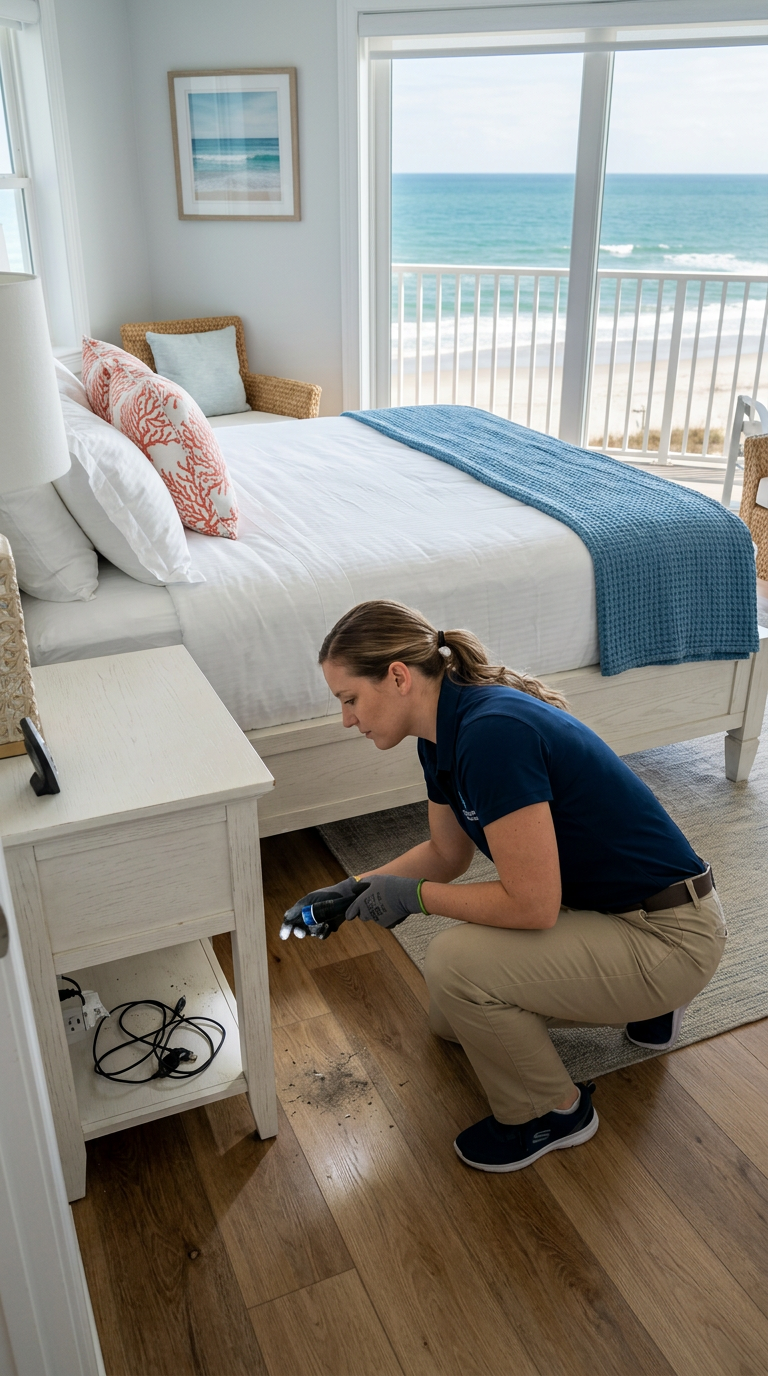
In the fast-paced Myrtle Beach vacation rental market, a property's cleanliness rating can be made or broken by what lies just out of plain sight. Guests arriving for a beach holiday expect flawless accommodations, and they often begin their stay by dropping luggage, plugging in phone chargers, or searching the floor for electrical outlets. When they bend down and discover a previous guest's stray sock, a plastic water bottle, or a layer of sandy dust, their trust in the property's hygiene is instantly shattered. By implementing a rigorous physical checking protocol for under-bed and behind-furniture zones, Grand Strand hosts can eliminate these high-risk blind spots and secure the five-star reviews essential for platform visibility.
The Psychology of the Low-Angle Inspection: Why Guests Look Under the Bed
When guests first cross the threshold of a rental property, they do not just view it from a standing position. Young children immediately head to the floor to play, while adults crouch down to locate power outlets, unpack low suitcases, or retrieve items that rolled under the furniture. If they find trash or thick dust in these hidden spaces, they immediately assume the rest of the home was cleaned with similar neglect, which often triggers an microscopic inspection of the entire property.
This initial impression is a high-stakes moment because finding previous guests' personal items or debris signals a superficial turnover clean. In the competitive rental markets of Myrtle Beach and North Myrtle Beach, a single negative review detailing dirty under-bed areas can severely drag down your overall cleanliness average. Platform algorithms prioritize properties with consistent top-tier cleanliness scores, making these hidden zones directly tied to your booking revenue.
Conversely, discovering valuable personal items left behind by previous guests and proactively returning them can turn a potentially negative situation into a stellar review. When a cleaning team systematically clears these zones, they protect the host's reputation and demonstrate an elite level of professional care. It shifts the operational dynamic from reactive troubleshooting to proactive quality assurance.
The Coastal Micro-Climate: Sand, Humidity, and Electrostatic Dust Rabbits
The unique environmental conditions of the Grand Strand accelerate the accumulation of dust and debris beneath low-profile furniture. Ocean breezes carry fine quartz sand through open sliding doors and entryways, while high indoor humidity levels act as an adhesive. This moisture binds airborne skin cells, pet dander, and clothing fibers together, causing them to settle quickly in stagnant, unventilated air zones.
Beneath large platform beds and heavy dressers, this mixture forms dense, electrostatic dust rabbits that cling stubbornly to carpets and luxury vinyl plank flooring. Unlike dry dust found in inland climates, coastal dust is heavy, damp, and highly visible when illuminated by a guest's phone flashlight. If left unaddressed over several back-to-back Saturday turnovers, these damp accumulations can develop musty odors that compromise indoor air quality.
Furthermore, the constant operation of ceiling fans and HVAC systems creates air currents that pull loose sand and hair across the floor, depositing them directly under the bed skirt. This means that even if a guest does not drop an item, the natural airflow of a coastal condo ensures that the under-bed zone becomes a magnet for debris within just a few days of occupancy.
The Physical Mechanics of the Bed-Frame Inspection Loop
To consistently clear these low-angle zones, cleaning technicians must follow a structured physical movement protocol rather than relying on a casual glance. Technicians must be trained to kneel or lie flat to get their eyes parallel with the floor level. Relying on the room's ambient ceiling lights or weak cell phone screens is insufficient, as dark bed frames cast deep shadows that easily conceal trash.
The technician begins on the left side of the mattress, sweeps a high-intensity LED flashlight across the floor to the center support beam, and then moves to the foot of the bed to inspect the central cavity. They repeat this inspection from the right side, ensuring a complete 360-degree sweep of the flooring. If any items or dust are spotted, they are pulled out immediately using a low-profile microfiber sweep.
This mechanical sweeping must be completed before the fresh sheets are placed on the bed frame to avoid cross-contaminating the clean linens with airborne dust. By treating the under-bed area as a primary cleaning zone rather than an afterthought, property managers can ensure that the most vulnerable area of the bedroom is completely sanitised for every guest arrival.
- Equip all technicians with high-intensity, wide-beam LED flashlights or headlamps.
- Use extendable, low-profile microfiber flat mops specifically designed for low clearances.
- Perform the physical crouch sweep from three sides of every bed frame.
- Clear all dust and debris before opening or laying out fresh, sanitized bed linens.
Managing the Left-Behind Item Chain of Custody
When personal property is discovered under or behind furniture, technicians must follow a strict digital logging protocol to protect guest privacy and prevent loss. Frequently recovered items include expensive electronics, tablet computers, smartwatches, prescription medications, children's stuffed animals, and passports. Technicians should never handle these items carelessly or leave them on a kitchen counter where they might be forgotten.
The protocol requires the technician to take a time-stamped digital photograph of the item exactly where it was found under the bed or behind the nightstand. This photo is immediately uploaded to the property management system to establish a clear record of the discovery. The item is then placed inside a sealed, clear plastic bag labeled with the property name, unit number, date, and technician's name.
The coordinator then contacts the departing guest to coordinate shipping or secure pickup before the next guest checks in. This level of professionalism not only provides peace of mind to distressed guests but also demonstrates that your vacation rental operations are managed by a highly disciplined and trustworthy team.
The Behind-Nightstand and TV Console Dust Trap
The narrow gaps behind nightstands and entertainment consoles are notorious harborages for dust, lint, and loose trash. Because these areas house multiple power cords, charging blocks, and surge protectors, electrostatic charges naturally pull airborne debris into the tangled cables, wrapping them in thick layers of grey grime.
During a rapid Saturday turnover, these hard-to-reach areas are frequently bypassed, leaving a visible layer of dirt that guests see when they plug in their personal devices. To clean this safely, technicians must use a dry microfiber wand to gently slide between the wall and the furniture backing, lifting dust off the baseboards and cables without unplugging the equipment.
Technicians should also check that all cords are neatly bundled with Velcro straps and kept off the floor, which minimizes the surface area where dust and sand can accumulate. Any loose trash, such as bottle caps, discarded tissues, or plastic wrappers, must be extracted and disposed of immediately.
Sofa and Armchair Crevice Clearance
Living room seating areas bear the brunt of beach vacation wear and tear. Sand from wet swimsuits, popcorn from movie nights, and loose coins settle deep into the crevices of sofas and armchairs. When a guest sits down, their weight pushes these particles further into the frame, creating abrasive friction that damages upholstery fabric over time.
The turnover protocol requires removing all cushions on every clean. Technicians must use a crevice tool attachment on a commercial backpack vacuum to thoroughly suction the inner seams, corners, and the deck of the furniture. They must also tilt the entire sofa forward to vacuum the floor directly underneath, where sand and forgotten trash inevitably migrate.
If the sofa is a sleeper model, the technician must pull out the mattress frame to inspect the interior cavity. This area often harbors sand, food crumbs, and stray items that must be cleared to prevent mechanical damage and ensure a hygienic environment for the next guest sleeping on the pull-out.
- Remove all removable cushions on sofas and armchairs during every turnover clean.
- Vacuum the inner deck, seams, and crevice channels using a high-suction crevice attachment.
- Tilt the furniture frame forward to access and vacuum the floor directly underneath.
- Inspect and vacuum the inner cavity of pull-out sleeper sofas for sand and debris.
Quality Control and the Supervisor "Look-Back" Audit
Quality control is the final defense against negative guest feedback. Supervisors must perform a dedicated "Look-Back" audit before clearing a unit for guest arrival. Rather than standing in the doorway and scanning the room at eye level, the supervisor must physically enter and perform the "crouch test" at key vantage points.
The supervisor kneels at the bedroom doorway and peers under the bed with a high-powered flashlight, checking for any missed spots or dust shadows. They also inspect behind the nightstands, looking for visible dust build-up or stray cords that could pose a trip hazard or look disorganized.
Any deficiencies found must be logged in the inspection app and corrected immediately by the technician before the unit is marked as "Guest Ready." This rigorous double-check system ensures that every property maintains the highest standards of cleanliness, regardless of how busy the turnover day is.
Integrating the Protocol into Tight Turn Windows
During the peak summer season in Myrtle Beach, cleaning teams face intense pressure to turn properties around in narrow four-hour windows between check-out and check-in. To maintain quality without sacrificing speed, the "Look-Back" protocol must be seamlessly integrated into the standard cleaning workflow rather than treated as an extra task.
The under-bed and behind-furniture checks are performed during the initial "strip and prep" phase of the turn. As the technician strips the linens and empties the trash, they use their flashlight to inspect these low-angle zones and extract any debris. This prevents dust from settling on freshly made beds and ensures that any left-behind items are found and logged early in the clean.
By standardizing this workflow, teams can consistently deliver immaculate properties that earn five-star reviews and build guest trust, ensuring long-term success for vacation rental owners in the Grand Strand.
Key takeaway
Maintaining pristine low-angle zones is a critical operational standard that directly protects your vacation rental's reputation and booking revenue. For professional turnover cleaning and linen services that keep your Myrtle Beach property immaculate, contact A2Z Cleaning & Linen Services at 843.800.2788.
Keep Reading
Vacation Rentals
The Pull-Out Sleeper Sofa Turnover Protocol: Preventing Sand-Grit Accumulation, Fabric Sanitation Failures, and Mechanical Rust in Grand Strand Rentals
ReadVacation Rentals
Managing the Saturday Changeover: Peak Season Cleaning Strategies for Grand Strand Hosts
ReadVacation Rentals
The Coastal Ceiling Fan and Vent Dust-Release Protocol: Mitigating Humid Grey Lint, Static-Cling Dander, and Airflow Failures in Grand Strand Rental Turnovers
ReadReady for a spotless property?
Call 843.800.2788 or request a free quote from A2Z Cleaning & Linen Services.