Vacation Rentals
The Pull-Out Sleeper Sofa Turnover Protocol: Preventing Sand-Grit Accumulation, Fabric Sanitation Failures, and Mechanical Rust in Grand Strand Rentals
Protect your guest reviews and extend the lifespan of your rental's hard-working sleeper sofas with our professional step-by-step cleaning, maintenance, and sanitation protocol.
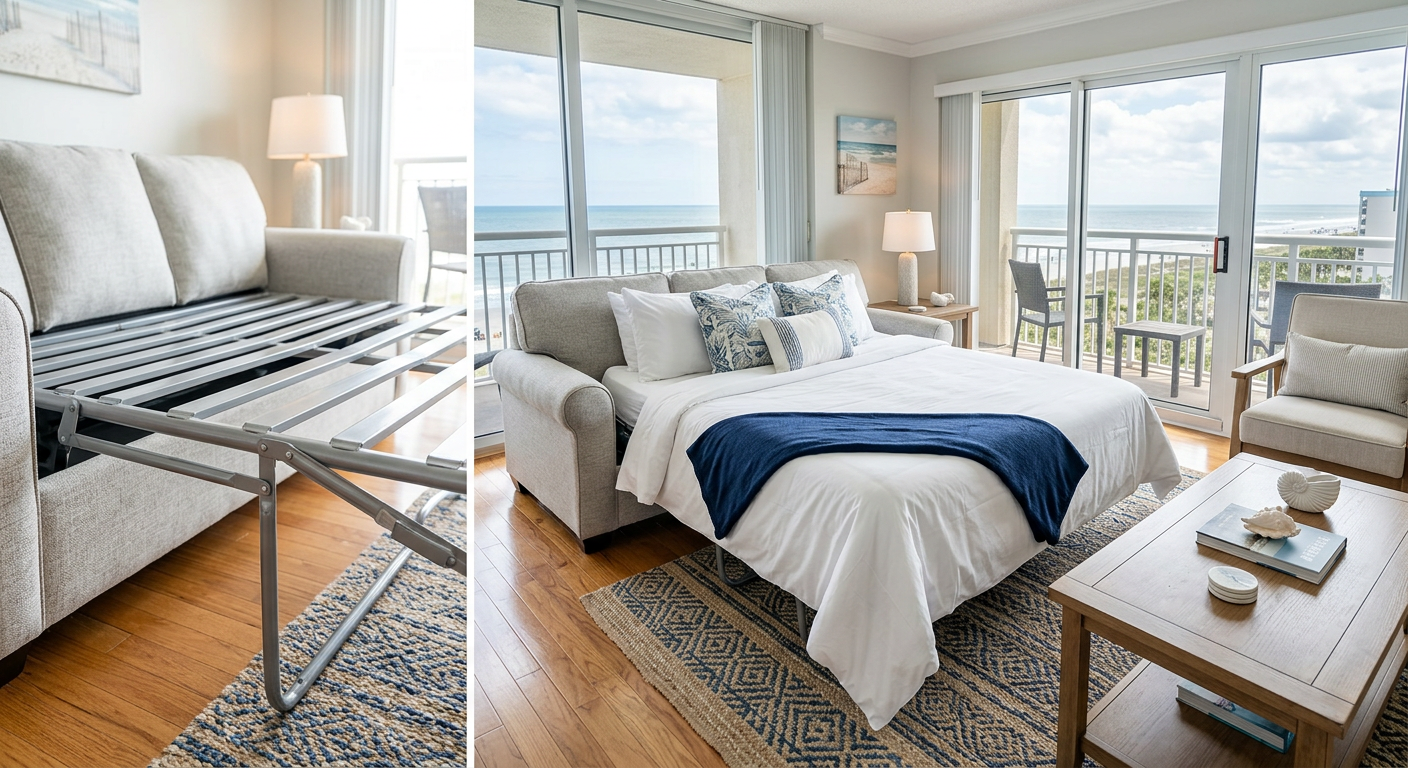
Managing high-occupancy vacation rentals along the Grand Strand requires an uncompromising eye for hidden details, especially when it comes to secondary sleeping areas. Sleeper sofas are invaluable assets for maximizing guest counts in Myrtle Beach and Surfside Beach condos, yet they are frequently overlooked during standard turnovers. Neglecting the cleaning, sanitation, and mechanical maintenance of these pull-out beds can quickly lead to ruined linens, mechanical failures, and damaging guest reviews. At A2Z Cleaning & Linen Services (843.800.2788), we have developed a rigorous, professional protocol to keep these high-use fixtures pristine, comfortable, and fully operational year-round.
The Sleeper Sofa as a High-Risk Zone for Review Failures
In Grand Strand vacation rentals, sleeper sofas are indispensable workhorses, allowing family-focused properties in Myrtle Beach and Garden City to maximize guest counts. However, they are also notorious vectors for cleanliness complaints, frequently harboring hidden debris beneath the cushions. If a guest opens a pull-out bed to find sand-grit, leftover food wrappers, or stained protective covers, the perception of the entire property's cleanliness instantly plummets. This single oversight can turn a potential five-star review into an expensive refund request before the first night is over.
The unique coastal climate of the Grand Strand compounds the risk of neglecting this hidden bed. High indoor humidity, driven by ocean breezes and constant balcony door traffic, can trap moisture within the folded sofa cavity. When organic debris like skin cells, hair, and beach sand settle into these dark, unventilated spaces, they create an ideal breeding ground for dust mites and mildew. A thorough sleeper sofa inspection must therefore transition from an occasional deep-clean task to a standardized element of every single turnover clean.
Standard turnover checklists often stop at the surface level, leaving the internal mechanical frame unexamined unless the booking specifically indicates a high guest count. This is a critical operational mistake, as guests frequently open the sofa out of curiosity, to let children play, or to find lost items like TV remotes and cell phones. Discovering accumulated dust, trash, or sand in the undercarriage instantly shatters the guest's trust. Implementing a disciplined inspection and sanitization protocol ensures this secondary sleeping area matches the pristine standard of the primary bedrooms.
The Mechanical Frame Extraction and Sand-Debris Evacuation
Executing a thorough turn cleaning of a pull-out sleeper sofa begins with removing all seat and back cushions and placing them on a clean, dry surface, never directly on the floor. Once the cushions are cleared, the technician must fully extend the sleeper mechanism to expose the entire inner cavity. This action reveals the metal frame, springs, and the deep recessed fabric pockets where sand, hair, and dust-bunnies accumulate. This zone is a primary collector of beach sand tracked in from the dunes of Surfside or North Myrtle Beach.
Technicians must utilize a high-powered commercial vacuum equipped with a narrow crevice tool to thoroughly clean the interior perimeter of the sofa carcass. Particular attention should be paid to the corners, the fabric seams along the inner arms, and the bottom floor pan beneath the folded mechanism. Sand acts as an abrasive, grinding down fabric fibers and metal finishes over time if left unaddressed. Vacuuming must be done systematically, moving from the top rail down to the floor level to capture falling particles.
After vacuuming the loose grit, the technician must wipe down the exposed wooden structural rails and the inner fabric lining using an EPA-approved, low-VOC disinfectant. This step eliminates dust and organic residues without leaving behind harsh chemical fumes that could linger when the sofa is folded back up. For properties that permit pets, this interior cavity must also be treated with a targeted pet-dander neutralizing spray to prevent allergen transfer to subsequent, non-pet-owning guests.
- Remove all seat and back cushions, placing them on a clean, elevated surface.
- Fully extend the metal frame to expose the interior cavity and floor pan.
- Vacuum the entire perimeter with a narrow crevice tool to extract abrasive sand-grit.
- Wipe down wooden structural rails and inner lining fabric with an EPA-approved disinfectant.
- Apply a low-VOC odor-neutralizing spray to eliminate any trapped pet dander or organic odors.
Mattress Decontamination: Neutralizing Body Oils, Moisture, and Coastal Salt
Sleeper sofa mattresses are typically thinner and more susceptible to moisture absorption than standard mattresses, making them highly vulnerable to coastal salt-air and sweat. During the turnover, the mattress must be fully unfolded and inspected on both sides for perspiration stains, body oils, and biological fluids. If any staining is detected, immediate spot-treatment is required using an enzyme-based fabric cleaner that breaks down organic proteins without oversaturating the delicate foam or inner-spring core.
Moisture management is critical in Grand Strand properties where guests often sit on furniture in damp swimwear. If a guest folds a damp sleeper mattress back into the sofa frame, the trapped moisture will inevitably develop a musty, sour odor within hours. After treating any spots, the mattress must be allowed to air out completely, utilizing a high-velocity air mover if necessary during the tight turnover window. This step prevents the formation of mold spores within the compressed mattress layers.
Once dry, the mattress must be encased in a high-quality, zippered, waterproof, and bedbug-proof mattress protector. This protector acts as a physical barrier against spills, sweat, and sand, making future turn cleanings faster and protecting the property owner’s asset from premature replacement. During each turnover, this protective cover must be wiped down with a neutral disinfectant or swapped out for a freshly laundered cover if any staining or heavy sand accumulation is present.
Managing the Mechanical Pivot Joints: Preventing Salt-Air Rust and Squeaks
The metal scissor mechanisms of pull-out sofas in oceanfront Grand Strand condos are highly vulnerable to corrosion. Airborne salt particles penetrate indoor living spaces every time sliding doors are opened, settling onto metal hinges and linkages. Over time, this salt-air exposure causes the protective coatings on the steel frame to oxidize, leading to stiff joints, rust spots, and loud, metallic squeaks. A squeaky bed is a common target for negative guest reviews, as it disrupts sleep with every movement.
To prevent rust and maintain smooth mechanical operation, turn cleaners and maintenance staff must perform a monthly inspection of the metal frame’s pivot joints. Traditional lubricants like WD-40 should be avoided, as their wet, sticky residues attract and lock in sand-grit, accelerating mechanical wear and creating a dark, greasy paste that can easily stain linens. Instead, technicians should apply a dry silicone-based lubricant or a food-grade white lithium grease directly to the moving joints, wiping away any excess immediately.
During this mechanical audit, the technician must also check for bent or misaligned support bars, loose rivets, and worn-out tension springs. A bent bar not only makes the bed uncomfortable but can also jam the mechanism, preventing the guest from closing the sofa and leading to emergency maintenance calls. Addressing these structural issues proactively during the turnover window protects guests from physical injury and saves property managers from costly last-minute service dispatches during busy summer weekends.
The Pull-Out Linen Management Protocol: Par-Levels, Sanitary Barriers, and Storage
One of the most common operational challenges in vacation rental management is deciding where and how to store the dedicated linens for the sleeper sofa. Leaving sheets and blankets folded inside the closed sofa is a poor practice, as the compression traps humidity and causes the linens to smell stale or musty when unfolded. Instead, the sleeper sofa linen pack should be treated as a distinct, sealed inventory unit, prepared off-site at an industrial laundry facility to guarantee sanitization.
A proper sleeper sofa linen pack should include a fitted sheet, flat sheet, two pillowcases, a lightweight blanket, and a freshly laundered mattress pad. These items should be sealed in a clear, water-resistant utility bag and placed in the master closet, a designated hallway storage cabinet, or neatly on top of the made-up sofa during the final staging. This presentation reassures guests that the bedding is fresh, clean, and has not been sitting inside a dusty metal cavity since the last booking.
Standardizing par-levels for these auxiliary linens is essential for maintaining smooth turnover operations across large portfolios. Property managers should maintain a strict 3-par inventory for sleeper sofa linens: one in use, one dirty in transit to the laundry hub, and one clean on the shelf. This buffer prevents clean teams from delaying departures due to missing sheets, ensuring that even unexpected high-occupancy bookings can be accommodated without compromising professional linen standards.
- Fitted sheet matching the sleeper mattress size.
- Flat sheet and two clean pillowcases.
- Lightweight, easily launderable blanket.
- Freshly laundered waterproof mattress protector.
- A laminated instructional card for opening and closing the unit.
Safety Inspections: Identifying Structural Fatigue and Entrapment Hazards
Because sleeper sofas are frequently utilized by children and teenagers, they are subject to unique safety risks that require vigilant inspections during every turn. Technicians must check the integrity of the safety straps or locking mechanisms that hold the bed secure when closed. If these straps are broken or missing, the mattress and frame can shift during transport or standard seating use, potentially damaging the sofa carcass or creating a hazard when the next guest attempts to open it.
Technicians must also examine the gap between the extended frame and the sofa base to identify potential finger-pinch or entrapment points. Any exposed sharp metal edges or broken springs must be reported immediately to the property manager for repair. A damaged spring can tear through the mattress protector and mattress fabric, causing painful scratches to guests and ruining expensive linens. Regular physical safety audits ensure the property remains fully compliant with hospitality safety expectations.
Furthermore, the deck cloth—the fabric barrier that sits between the seat cushions and the folded metal mechanism—must be checked for tears or sagging. A compromised deck cloth allows dust, crumbs, and lost items to fall directly onto the mattress and frame below, while also reducing seating support when the sofa is closed. Keeping this barrier intact is essential for preserving the comfort of both the seating and sleeping configurations of the furniture piece.
The Guest-Ready Reset: Presentation, Labeling, and Host-Guest Communication
The final step of the sleeper sofa protocol focuses on visual presentation and clear communication, which are vital for securing excellent guest reviews. When the sofa is closed, the seat cushions must be properly plumped, aligned, and smoothed to hide any wrinkles caused by the underlying bed frame. If the cushions are sagging or misaligned, it signals to arriving guests that the furniture is worn out or poorly maintained, starting their stay on a negative note.
To improve the guest experience, property managers should place a neat, professionally laminated instructional card on the sofa or inside the welcome binder. This card should provide clear, step-by-step instructions on how to open and close the sleeper sofa safely without damaging the mechanism or stripping the gears. It should also state where the fresh, sealed linen pack is stored within the property, eliminating late-night phone calls from confused guests searching for extra sheets and blankets.
By proactively communicating how to use the sleeper sofa and showing where the clean bedding is located, hosts demonstrate high-level attention to detail and professional hospitality. This transparent approach reduces guest anxiety, minimizes accidental damage to the mechanical frame from improper operation, and elevates the overall quality of the stay. When guests see a beautifully presented sofa accompanied by fresh, clean linens, their confidence in the property's cleanliness is solidified.
Implementing the Protocol: Integrating the Sleeper Sofa Audit into Your Turn Cleaning Checklist
For Grand Strand property managers and hosts, translating this protocol into daily operations requires structured training and clear accountability. The sleeper sofa audit must be a mandatory line-item on the digital inspection software used by clean teams. Cleaning technicians should be required to upload a photo of the fully opened, vacuumed metal frame and the sealed linen pack before the property can be marked 'guest-ready' in the property management system.
Integrating this level of detail into the fast-paced turnover window requires a highly trained, professional environmental services team. Relying on casual, unvetted seasonal labor often leads to these hidden zones being skipped under the pressure of tight checkout schedules. Partnering with a specialized coastal cleaning service like A2Z Cleaning & Linen Services ensures that every sleeper sofa undergoes a systematic, rigorous decontamination process during every single turnover, protecting your ratings and your property.
Ultimately, investing the time and effort into maintaining your property's sleeper sofas pays dividends in the form of glowing five-star reviews, repeat bookings, and extended asset lifespans. By treating this versatile piece of furniture with the same sanitary care as a primary luxury bed, you eliminate a major source of guest friction and elevate your brand above the competition in the highly active Myrtle Beach vacation rental market.
Key takeaway
By treating your property's sleeper sofas with the same rigorous care as primary beds, you protect your reviews, safeguard guest safety, and prolong the life of your furniture assets. Contact A2Z Cleaning & Linen Services at 843.800.2788 to bring professional, detail-oriented hospitality standards to your Grand Strand rental portfolio.
Keep Reading
Vacation Rentals
The Coastal Under-Bed and Behind-Furniture "Look-Back" Inspection Protocol: Mitigating Hidden Guest Detritus, Lost Charging Cables, and Low-Angle Inspection Failures in Grand Strand Vacation Rentals
ReadVacation Rentals
Managing the Saturday Changeover: Peak Season Cleaning Strategies for Grand Strand Hosts
ReadVacation Rentals
The Coastal Ceiling Fan and Vent Dust-Release Protocol: Mitigating Humid Grey Lint, Static-Cling Dander, and Airflow Failures in Grand Strand Rental Turnovers
ReadReady for a spotless property?
Call 843.800.2788 or request a free quote from A2Z Cleaning & Linen Services.