Vacation Rentals
The Coastal Vacation Rental Outdoor Grill and BBQ Station Turnover Protocol: Mitigating Grease Fire Risks, Carbon-Crust Build-Up, and Low-Propane Lockouts under Grand Strand Saturday Turn Pressures
Operational guidelines for managing, cleaning, and safety-auditing outdoor grills during rapid Grand Strand Saturday turnovers to protect assets and secure five-star guest reviews.
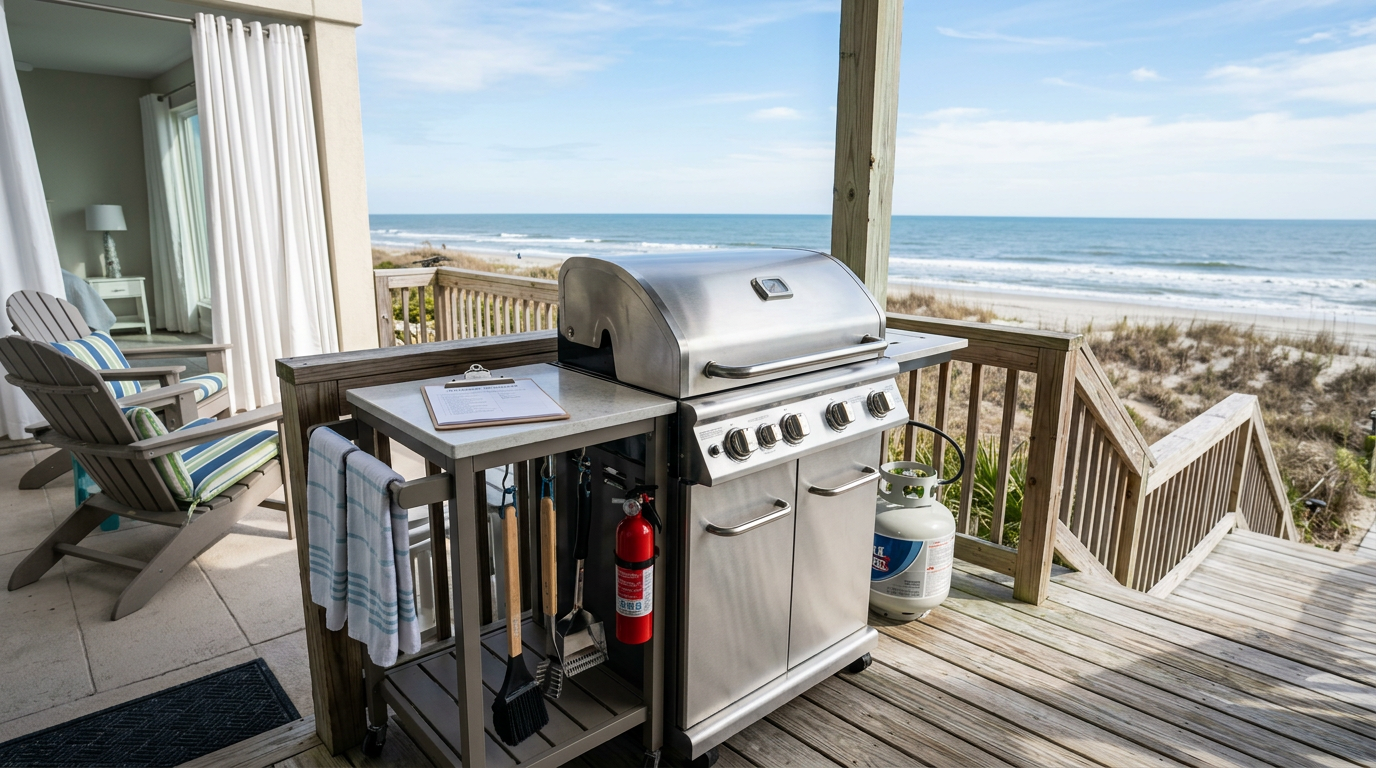
For Grand Strand vacation rental guests, arriving at an oceanfront beach house and firing up the grill is a highly anticipated first-night tradition. However, salt-heavy coastal air, stubborn grease accumulation, and the intense time constraints of Saturday turnovers make outdoor grill maintenance a frequent failure point for property managers. A dirty griddle, empty propane tank, or flare-up hazard can instantly trigger a negative review before the guest's vacation even gets underway. Implementing a rigorous, high-velocity outdoor cooking station turnover protocol is essential to protecting your physical property, ensuring guest safety, and maintaining pristine rental reviews.
The Grand Strand Guest Grill Expectation and First-Night Review Risks
In the competitive Myrtle Beach vacation rental market, high-quality outdoor grills are premium amenities that frequently drive booking decisions, particularly for multi-generational families. When guests check in on a humid Saturday afternoon after a long drive, their immediate plans often involve grilling fresh local seafood on the deck. Finding a greasy, carbon-caked grill from the previous guests instantly damages their perception of the property's cleanliness, leading to immediate complaints and setting a negative tone for their entire stay.
Beyond aesthetic disappointment, a neglected outdoor grill poses a severe threat to guest safety and property preservation. Accumulated grease, leftover marinades, and high coastal winds can trigger sudden flare-ups and intense grease fires that damage nearby vinyl siding, wooden deck railings, or expensive composite outdoor kitchens. A single negative review mentioning a scary grill fire or an unusable, filthy BBQ station can drop a listing's platform ranking and deter safety-conscious families from booking in the future.
To mitigate these operational risks under the tight timelines of a Saturday turnover, property managers must implement a systematic, high-velocity grill inspection and cleaning protocol. Relying on guests to clean the grill before their checkout is a recipe for operational failure. The turnover team must treat the outdoor grill as a high-priority, high-touch appliance, ensuring it is sanitized, functionally audited, and fully fueled before the next guest arrives at 4:00 PM.
The High-Velocity Degreasing and Carbon-Stripping Sequence
Cleaning a heavily soiled grill grate within the tight 30-minute window of a standard vacation rental turn requires a highly structured chemical and mechanical approach. Housekeepers should begin by firing up the grill to high heat for five minutes to carbonate loose food residue, making it easier to dislodge. Once heated, the grates must be scrubbed using a safe, wire-free abrasive pad or a heavy-duty pumice stone to prevent dangerous metal wire bristles from shedding onto the cooking surface and entering guest food.
For cold-cleaning workflows, technicians must use a fast-acting, food-safe degreaser formulated to break down caramelized animal fats without damaging cast iron or stainless steel grates. The degreaser should be applied directly to the warm grates, allowed to dwell for three to five minutes, and then wiped clean with industrial-grade microfibers or heavy-duty utility paper towels. It is vital to rinse the grates thoroughly with clean water afterward to eliminate chemical residues that could alter the taste of the guest's food.
During this sequence, housekeepers must also inspect the flavorizer bars or heat tents located directly beneath the grates. These metal tents catch dripping grease and are notorious for accumulating carbon crust that restricts heat distribution and causes uneven cooking. A quick scrape with a stiff putty knife removes the thickest buildup, directing the debris down into the collection tray and ensuring the heating system operates efficiently for the incoming guests.
Propane Tank Weight Verification and Reserve Cylinder Logistics
There are few guest experiences more frustrating than having an outdoor grill run out of fuel halfway through cooking a family dinner. To eliminate this issue, Grand Strand rental operations must enforce a strict two-cylinder system for every property equipped with a liquid propane (LP) grill. The primary tank must be connected to the regulator, while a secondary, fully charged backup cylinder must be securely stored nearby, locked within a ventilated, child-safe exterior enclosure or utility closet.
During every Saturday turn, the cleaning technician or property inspector must physically verify the fuel level of both propane tanks. Relying on visual pressure gauges can be deceptive, as temperature fluctuations in the coastal heat can cause inaccurate readings. The most reliable verification method is lifting the tank to check its weight or using a portable digital hanging scale to ensure the active tank contains at least five to ten pounds of propane, while the backup tank remains completely full.
If the active tank falls below a quarter-full threshold, the technician must swap it with the fully charged backup cylinder and log a replenishment ticket in the property management software. This triggers an automated dispatch to the linen or maintenance driver to replace the empty tank on their next run, ensuring the backup reserve is never left empty. This seamless redundancy guarantees guests never face a low-propane lockout when attempting to cook.
Grease Tray, Drip Pan, and Fire Hazard Mitigation
The accumulation of grease in the lower collection tray is the primary catalyst for dangerous grill fires in coastal vacation rentals. Under the intense heat of the Myrtle Beach summer, pooled grease liquefies rapidly, creating an easily ignitable fuel source just inches below the active burners. The turnover protocol must mandate the extraction, scraping, and thorough cleaning of the slide-out grease tray and the disposable drip cup during every single guest transition.
Cleaning technicians should carefully slide out the main grease pan, scraping coagulated fats and charred food debris into a heavy-duty waste bag using a flexible plastic scraper. The metal pan should then be wiped down with a degreasing agent to remove any remaining oily film. To streamline future turnovers and protect the metal from premature rusting caused by acidic food drippings, the tray can be lined with a custom-fit, heavy-duty aluminum foil liner designed for easy replacement.
The small drip catch cup located beneath the tray must be emptied, washed with grease-cutting dish soap, and replaced with a fresh aluminum cup liner. Inspecting this area also allows technicians to check for signs of pest activity. The smell of grease frequently attracts coastal rodents, raccoons, and insects; keeping these collection zones meticulously clean and free of standing organic residue is the most effective way to prevent unwanted wildlife encounters on the guest deck.
- Always scrape cold solidified grease into a trash bag before applying wet degreasing agents to prevent clogging storm drains.
- Use heavy-duty aluminum foil pan liners that match the specific manufacturer model for rapid swap-outs during turns.
- Inspect the immediate surrounding deck areas for grease splatters that could cause guest slip hazards on wet wood.
- Verify that the heat deflectors are positioned correctly over the burners to prevent direct grease-to-flame contact.
- Wipe down the interior cookbox walls with a stiff plastic putty knife to dislodge flaky carbon deposits before they drop on food.
Exterior Surface De-salting and Stainless Steel Polishing
Grand Strand oceanfront and near-ocean properties are constantly exposed to a harsh environment of salt spray, high humidity, and intense ultraviolet radiation. This combination quickly oxidizes stainless steel and painted metal grill exteriors, leading to unsightly "tea-staining" rust spots and pitted surfaces. To preserve these expensive property assets, the turnover team must treat the grill's exterior with a dedicated salt-neutralizing wipe-down during every cleaning cycle.
Housekeepers should spray the outer lid, control panel, side shelves, and cabinet doors with a mild, non-abrasive cleaner formulated to dissolve salt-crust and airborne grime. Using clean microfiber cloths, they must wipe down the surfaces in the direction of the stainless steel grain to prevent micro-scratches. This step removes sticky fingerprints, sunscreen residues left by previous guests, and the sticky ocean salt film that makes the metal feel unpleasant to the touch.
Once clean, a thin layer of food-grade stainless steel protectant or mineral oil should be applied to the exterior metal surfaces. This protective barrier repels moisture and salt-air deposits, significantly extending the operational lifespan of the grill while giving it a polished, clean appearance. A gleaming, clean grill exterior immediately communicates to arriving guests that the property is managed with a high level of professional care and attention to detail.
Igniter and Burner Port Functionality Auditing
A grill that will not light is just as useless to a guest as one with no propane. Salt air and high humidity frequently corrode the delicate battery connections in electronic igniters, while spiders and small coastal insects often spin webs inside the burner venturi tubes, blocking gas flow. During the turn inspection, the technician must perform a rapid functional test by turning on the gas and pressing the ignition button to verify that all burners light smoothly and evenly.
If the igniter clicks but fails to spark, the technician should immediately check and replace the AA or AAA battery housed behind the ignition button, which is a common failure point easily resolved in under two minutes. If the igniter fails entirely, a long-reach multi-purpose utility lighter must be placed in a designated drawer inside the kitchen, and its presence noted in the guest arrival instructions so they are not left without a way to light the grill.
The technician must also visually inspect the flame pattern of the burners. The flames should be crisp, blue, and evenly distributed along the entire length of the burner tubes. If the flames are lazy, yellow, or patchy, it indicates clogged burner ports or an obstruction in the gas line. If time permits, a small wire brush can be used to clear the clogged ports; otherwise, a maintenance ticket must be submitted immediately to prevent poor cooking performance and carbon monoxide build-up.
Grill Utensil Decontamination and Storage Standardization
The tools provided for grilling—tongs, spatulas, basting brushes, and scrapers—are often overlooked during the high-pressure turnover window, leading to critical guest complaints. Finding grease-crusted utensils stuffed back into a kitchen drawer or left hanging on the side of a dirty grill is an immediate red flag for guests. All outdoor cooking utensils must be retrieved by the housekeeper at the start of the turnover and brought inside for sanitization.
These utensils should be run through the kitchen dishwasher on a high-heat sanitizing cycle to ensure they are free of food-borne pathogens, animal fats, and outdoor dust. If a dishwasher is not available or time is extremely limited, they must be washed by hand in hot, soapy water, sprayed with a food-safe botanical sanitizer, and dried completely. Basting brushes with silicone bristles should be checked for damage, and any worn or melted tools must be discarded.
Once sanitized, the grill utensils should be stored in a designated, weatherproof plastic utility container clearly labeled "Grill Tools." This container should be kept in a specific kitchen cabinet or pantry rather than left outdoors on the grill cart. Keeping the tools indoors protects them from coastal insects, bird droppings, and rust-inducing humidity, ensuring the next guests open a clean box of sparkling, sanitary tools when they are ready to cook.
Documenting the Grill Turnover in the PMS Mobile App
To maintain quality control across a large Grand Strand property portfolio, the grill cleaning and auditing process must be integrated directly into the property management system (PMS) mobile app. Housekeepers and inspectors should not be allowed to mark a property as "Ready for Check-In" without uploading photographic evidence of the completed grill protocol. This digital trail protects both the cleaning vendor and the property manager from false claims of cleanliness issues.
The mobile checklist should require three specific photos: a clear shot of the sparkling, clean cooking grates; a photo of the empty and lined grease tray; and a photo of the backup propane cylinder confirming it is in place and locked. Additionally, the app should prompt the technician to input the estimated fuel level of the active tank (e.g., 50%, 75%, or Full) to maintain an accurate inventory log and prevent surprise fuel shortages.
This real-time documentation allows the guest services team to confidently address any incoming inquiries about the grill's condition. If a guest calls claiming the grill is dirty or out of gas, the property manager can immediately pull up the timestamped photos from that morning's turn to verify the facts, coordinate a swift resolution, or guide the guest on how to operate the system. This level of operational accountability is what separates premier Grand Strand rental portfolios from unmanaged listings.
Key takeaway
An outdoor grill is a high-impact amenity that directly influences guest satisfaction and safety in Grand Strand vacation rentals. By implementing a systematic turnover protocol that covers deep-cleaning, safety audits, and fuel logistics, property hosts can protect their assets while securing five-star reviews. To learn how we can support your property operations with detailed, professional turnovers, contact A2Z Cleaning & Linen Services at 843.800.2788.
Keep Reading

Vacation Rentals
The Coastal Under-Bed and Behind-Furniture "Look-Back" Inspection Protocol: Mitigating Hidden Guest Detritus, Lost Charging Cables, and Low-Angle Inspection Failures in Grand Strand Vacation Rentals
ReadVacation Rentals
The Pull-Out Sleeper Sofa Turnover Protocol: Preventing Sand-Grit Accumulation, Fabric Sanitation Failures, and Mechanical Rust in Grand Strand Rentals
ReadVacation Rentals
Managing the Saturday Changeover: Peak Season Cleaning Strategies for Grand Strand Hosts
ReadReady for a spotless property?
Call 843.800.2788 or request a free quote from A2Z Cleaning & Linen Services.