Vacation Rentals
The Coastal Vacation Rental Under-Bed and Behind-Furniture Turnover Protocol: Mitigating Hidden Guest Detritus, Sand Dunes, and Low-Score Reviews under Grand Strand Saturday Turn Pressures
Ensure your Myrtle Beach rental passes the 'dropped phone charger' test with our expert protocol for clearing hidden sand, debris, and lost guest items from under low-clearance furniture.
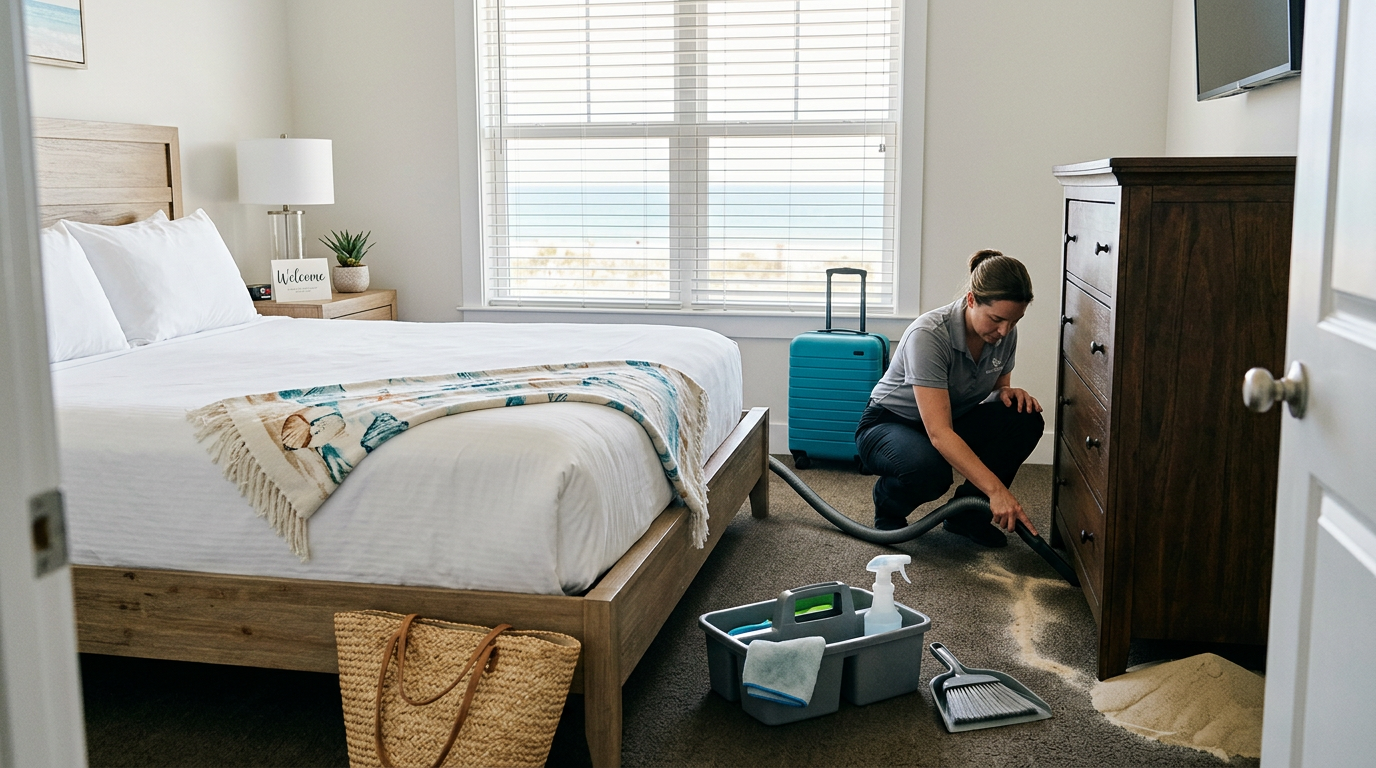
In the highly competitive Myrtle Beach vacation rental market, a property's cleanliness rating is often decided in the places guests do not immediately see upon arrival. The moment a guest drops a phone charger, a child's toy, or an earring, they will look under the bed or peer behind a nightstand, instantly exposing any gaps in your housekeeping team's cleaning routine. Trapped beach sand, forgotten water bottles, and thick dust bunnies in these hidden areas can quickly turn a potential five-star review into a disappointing three-star complaint. Implementing a rigorous, systematic protocol for clearing under-bed and behind-furniture zones during back-to-back Saturday turnovers is essential to protecting your property's reputation and search ranking.
The Psychology of the Dropped Charger and Its Impact on Guest Reviews
Modern travelers have exceptionally high standards for short-term rentals, fueled by rising platform fees and competitive options along the Grand Strand. While a spotless kitchen and pristine linens set a positive initial impression, a single missed item from a previous guest can shatter a visitor's sense of hygiene and privacy. Finding an empty water bottle, a stray sock, or a discarded wrapper under a dresser immediately signals that the turnover cleaning was rushed, leading guests to question whether more critical surfaces like bedsheets or bathrooms were thoroughly sanitized.
The most common catalyst for discovering hidden debris is the search for electrical outlets. Because wall outlets in coastal condos and beach homes are typically located behind nightstands, headboards, and living room credenzas, guests are guaranteed to look into these narrow gaps within their first few hours of arrival. If they are met with a gray wall of dust bunnies, pet dander, or sandy residue, their trust in your property is compromised, frequently resulting in immediate calls to management and critical feedback on booking platforms.
By treating under-bed and behind-furniture spaces as high-priority zones rather than afterthoughts, hosts can eliminate one of the most common triggers for negative online reviews. A systematic approach to these hidden areas ensures that no matter where a guest drops their keys, chargers, or children's toys, they will only find clean, dust-free flooring. This level of detail-oriented care reassures guests of the home's deep cleanliness and directly supports maintaining your superhost status.
The Physics of Sand Accumulation in Coastal Furniture Dead Zones
The unique environment of Myrtle Beach introduces physical challenges that standard inland cleaning protocols simply cannot resolve. Fine quartz beach sand behaves differently than typical household dust; it is heavy, abrasive, and easily carried indoors on beach bags, sandals, and damp skin. Once inside, this sand is dragged across the floors by drafts and foot traffic, eventually settling in the calm air currents found beneath low-clearance beds, sofas, and heavy media consoles.
Over the course of a single rental week, sand accumulates in these low-clearance zones, forming mini-dunes that grind against flooring surfaces. On luxury vinyl plank (LVP) or hardwood floors, this trapped sand acts like sandpaper every time a guest sits on a bed or adjusts a nightstand, slowly wearing away the protective topcoat and clouding the floor's finish. In carpeted bedrooms, the sharp edges of the sand grains cut into the carpet fibers under the weight of heavy furniture legs, accelerating fiber wear and creating permanent traffic patterns.
Furthermore, the high relative humidity of the Grand Strand causes sand and dust to bind together into a heavy, cement-like crust. When moist salt air enters a property through open balcony doors, it dampens the fine dust particles resting behind headboards and under dressers. As this mixture dries during the air conditioning cycle, it adheres stubbornly to baseboards and flooring, requiring mechanical agitation rather than simple dry dusting to fully remove.
The Saturday Turn Dilemma: Balancing Speed with Thorough Inspections
The peak summer season on the Grand Strand brings the intense logistical challenge of the Saturday turnover window. With departing guests checking out at 10:00 AM and arriving guests expecting access by 4:00 PM, housekeepers have a narrow six-hour window to clean, sanitize, and stage large multi-bedroom properties. Under this extreme pressure, cleaning teams naturally focus on highly visible surfaces, often skipping the tedious task of kneeling to inspect beneath heavy furniture.
To combat this trend, property managers and hosts must integrate under-furniture inspections into the core turnover workflow rather than leaving them as an end-of-clean luxury. This requires a shift in how housekeepers move through a room, transforming a chaotic rush into a structured sequence of movement. By establishing a clear, physical path around each room that prioritizes low-clearance areas first, teams can clear debris before they begin the dusting and floor-mopping phases.
Incorporating this check into the initial room assessment is highly efficient because it prevents double work. For example, finding a previous guest's lost items or trash after the floors have already been swept and mopped forces the housekeeper to repeat the floor cleaning process. Sweeping under-bed zones first ensures that any displaced sand or debris is captured during the primary vacuuming pass, keeping the overall turnover on schedule.
Essential Professional Tools for Low-Clearance Cleaning
Relying on standard cleaning tools to reach beneath low-set coastal furniture is both ineffective and physically exhausting for housekeeping staff. Standard upright vacuums are too bulky to slide under king-sized beds or deep sofas, often leaving a wide band of untouched dust and sand in the center of the room. To achieve a true professional clean within the tight Saturday turnover window, teams must be equipped with specialized, low-profile tools designed for tight clearances.
The most critical tool for this protocol is a high-lumens LED tactical flashlight or headlamp. Ambient room light is rarely sufficient to illuminate the deep recesses under a bed or behind a heavy dresser, making it impossible to see clear down to the baseboard. A strong, focused beam of light instantly reveals hidden dust, stray items, and sand deposits, allowing the housekeeper to clean with precision rather than sweeping blindly.
Additionally, cleaning carts should feature flexible, flat microfiber wands and low-profile vacuum attachments. These thin, wand-style dusters can slip into gaps as narrow as half an inch, electrostaticly trapping dust and hair without kicking particles into the air. For carpeted areas, a vacuum hose equipped with a flat, under-appliance crevice tool allows suction to reach all the way to the back walls without requiring the housekeeper to slide heavy furniture, preventing muscle strains and protecting the property from wall scrapes.
- High-lumens LED flashlight or headlamp for mandatory visual inspections
- Flexible, flat microfiber dusters with telescoping handles for hard-to-reach dust
- Low-profile canister vacuum nozzles or flat crevice attachments
- Microfiber damp-mop pads with ultra-slim swiveling frames for hard floors
- Heavy-duty felt furniture sliders to protect LVP flooring when light shifting is required
Step-by-Step Under-Bed Clearing and Sanitization Protocol
The under-bed area is the largest hidden zone in any rental bedroom and requires a methodical, multi-step cleaning approach. The protocol begins the moment the housekeeper enters the room to strip the linens. Before any new sheets are placed on the mattress, the housekeeper must kneel at the foot of the bed and shine their LED light across the entire floor beneath the frame, scanning from left to right and front to back.
First, any physical debris, trash, or lost guest items must be carefully retrieved. Housekeepers should never reach blindly under a bed with their bare hands; instead, use a long-handled grabber tool or the flat wand of a duster to pull items forward. This step protects staff from potential hazards like broken glass, hairpins, or sharp toys while ensuring that every foreign object is removed from the space.
Next, the housekeeper must address the accumulation of sand and dust. For hard surface floors, use a flat, dry microfiber sweep to gather the sand from the center of the bed frame outward toward the edges, where it can be easily vacuumed. For carpeted floors, use a low-profile vacuum wand, moving in slow, overlapping passes to pull deeply embedded sand out of the carpet pile. Finish by damp-mopping hard floors with a flat microfiber mop pad lightly treated with a neutral, quick-drying cleaner to remove the sticky salt-air film.
Managing Behind-Furniture Dead Zones to Prevent Mold and Odor
The space between the back of heavy furniture and the wall is another critical area where dust and moisture conspire to create issues. In the humid environment of the Grand Strand, poor air circulation behind nightstands, dressers, and living room sofas creates microclimates ripe for mold and mildew growth. When guests push damp beach towels, wet swimsuits, or coolers against these pieces of furniture, moisture gets trapped in the tight gap, leading to musty odors and wall damage.
During every turnover, housekeepers must inspect these vertical dead zones using their flashlights. Check for items that may have slipped down behind the headboard or nightstand, such as charging blocks, water bottles, or books. Remove any trapped debris and use a dry microfiber wand to clear away cobwebs and dust from the back of the furniture and the baseboards, which prevents dust from binding with airborne humidity.
If dampness or a musty smell is detected, the furniture should be gently pulled a few inches away from the wall to allow proper airflow from the HVAC system. Spray the area with a light mist of a botanical sanitizer to neutralize any potential mold spores, ensuring the product does not stain the wall or the back of the furniture. Ensuring a two-inch gap remains between the wall and heavy wood furniture during final staging is an excellent preventative measure that promotes air circulation and simplifies future cleanings.
Lost-and-Found Management for High-Value Items
Clearing under-bed and behind-furniture zones frequently yields high-value personal items left behind by departing guests. Items like tablets, jewelry, passports, smartwatches, and children's favorite stuffed animals are commonly dropped in these crevices and forgotten. How your cleaning team handles these discoveries can turn an stressful situation for a guest into a masterclass in hospitality and customer service.
When a housekeeper finds a personal item, they must immediately document it according to your company's lost-and-found protocol. Take a clear photograph of the item exactly where it was found, note the room and specific location (e.g., 'under the master bed, left side'), and report it to the property manager or host. The item should then be placed in a clean, labeled bag and transported to a secure central storage area to prevent loss or confusion.
Prompt communication is vital. Notifying the departing guest about their lost item before they even realize it is missing—or while they are still driving home from the Grand Strand—builds immense goodwill. Providing a seamless, secure process for shipping the item back to the guest not only secures a glowing review but also establishes your rental brand as highly professional, trustworthy, and caring.
The Quality Assurance Audit: Passing the White-Glove Inspection
The final step in ensuring the success of your under-furniture cleaning protocol is the quality assurance audit. Before a property is marked as ready for check-in in your property management system, a lead housekeeper or inspector must conduct a physical walk-through. This audit must include a random sweep of at least two under-bed and behind-furniture zones to verify that the cleaning staff executed the protocol correctly.
During the audit, the inspector should use the 'flashlight and mirror' technique, shining a light into the furthest corners of the floor under the beds and behind the living room sofa. If any traces of sand, hair, or dust are visible, the room does not pass, and the housekeeper must return to touch up the space. This strict standard ensures that the property is truly rent-ready and that no guest will ever be greeted by another family's leftovers.
Maintaining a consistent inspection log helps identify patterns and training opportunities for your team. If an inspector notices that sand is consistently missed under the beds in a specific unit, they can work with the housekeeper to adjust their tool selection or cleaning technique. This commitment to continuous improvement is what separates average rental properties from the top-tier, highly rated homes on the Grand Strand.
Key takeaway
A spotless vacation rental is built on the details that guests only see when they look closely. By implementing a strict under-bed and behind-furniture protocol, Grand Strand hosts can protect their properties from sand damage, secure five-star reviews, and provide a truly clean environment for every guest. For professional support in keeping your rental property pristine from corner to corner, contact A2Z Cleaning & Linen Services at 843.800.2788.
Keep Reading

Vacation Rentals
The Coastal Vacation Rental Sleeper Sofa and Fold-Out Bed Turnover Protocol: Mitigating Hidden Sand-Grit, Lost Detritus, and Bedding-Mismatch Delays under Grand Strand Turn Pressures
ReadVacation Rentals
The Coastal Trash Can, Recycling Bin, and Exterior Roll-Out Cart Turnover Protocol: Mitigating Seafood Decay Odors, Pest Intrusions, and Guest Review Failures in Grand Strand Vacation Rentals
ReadVacation Rentals
The Grand Strand Peak-Season Vacation Rental Turnover Specialist Career Pathway: Technical Pace-Setting Certifications, Saturday-Turn Behavioral Interview Matrices, and High-Retention Compensation Models
ReadReady for a spotless property?
Call 843.800.2788 or request a free quote from A2Z Cleaning & Linen Services.