Commercial & Hospitality
The IICRC S300 Commercial Upholstery Cleaning Standard: Implementing Fiber-Identification Protocols, Wet-to-Dry Extraction Ratios, and High-Humidity Dry-Time Management in Grand Strand Commercial Spaces
Discover how the national IICRC S300 standard protects Grand Strand commercial upholstery from sand-grit wear, sunscreen lipids, and high-humidity microbial risks.
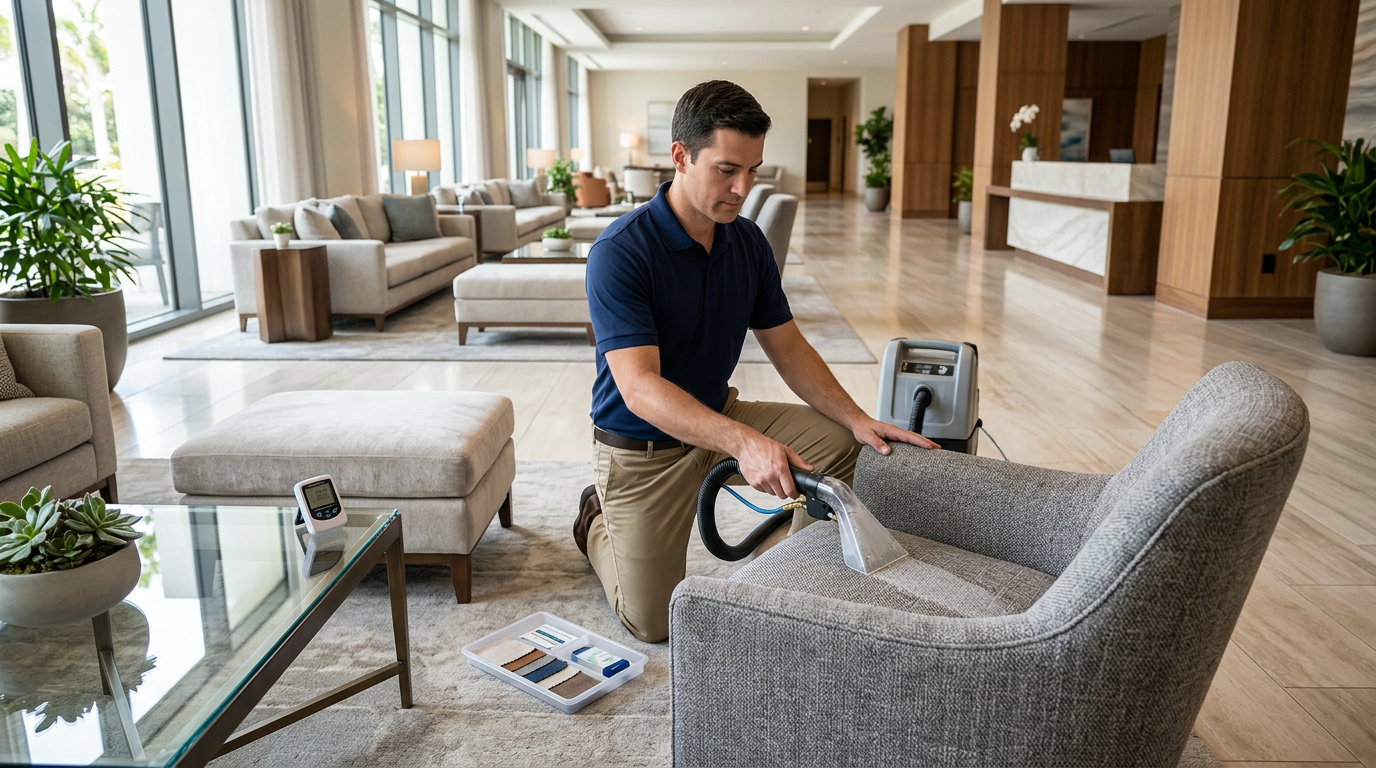
For Grand Strand resort operators, property managers, and commercial facility leaders, upholstery represents a significant capital investment that is constantly under siege. The unique coastal environment of Myrtle Beach introduces high ambient humidity, airborne salt-spray, and abrasive quartz sand, all of which accelerate fiber degradation. To protect these assets, leading operators look to the national benchmark: the Institute of Inspection Cleaning and Restoration Certification (IICRC) S300 Standard for Professional Upholstery Cleaning. By implementing these rigorous, science-based protocols, commercial properties can dramatically extend the lifespan of their furniture, maintain high aesthetic standards, and ensure a hygienic environment for guests and staff alike.
The National Foundation of IICRC S300 in Coastal Commercial Settings
The IICRC S300 standard is the premier national guideline governing professional upholstery maintenance, establishing a scientific framework that goes far beyond simple surface-level cleaning. In the Grand Strand commercial hospitality market, upholstery faces unique stressors from near-constant guest turnovers and high-traffic public areas. When salt-air and ambient humidity interact with airborne dust, they form a sticky film on fabrics that traps soils. The S300 standard addresses these challenges by outlining a systematic approach to inspection, soil suspension, extraction, and drying, ensuring that fibers are thoroughly sanitized without causing structural damage.
Applying the S300 standard locally means recognizing that coastal upholstery requires customized care plans rather than a one-size-fits-all approach. For property managers of high-density condominium complexes and busy resort lobbies, a generic clean can ruin expensive furniture. S300-trained technicians use these national protocols to evaluate the construction, backing, and filling materials of each piece of furniture. This comprehensive assessment ensures that the cleaning process does not compromise the integrity of the underlying frame, foam, or fabric seams, protecting your commercial assets over years of heavy use.
Ultimately, following these standardized protocols ensures operational consistency and predictable outcomes across large-scale commercial portfolios. Whether managing a single corporate office suite or a multi-building resort along the Grand Strand, adhering to a national standard minimizes the risks of fabric shrinkage, color bleeding, and structural warping. Leading operators rely on these certified workflows to deliver highly reliable results, providing peace of mind to commercial stakeholders who need their public spaces to look flawless and smell fresh every day.
Fiber-Identification Protocols: Mitigating the Risks of Natural and Synthetic Blends
A cornerstone of the IICRC S300 standard is positive fiber identification before any chemical or water touches the textile. Commercial upholstery features a complex mix of natural fibers like cotton, linen, and wool, alongside synthetic polymers like nylon, polyester, and polypropylene. Misidentifying these fibers can lead to disastrous consequences, including permanent cellulosic browning on cotton or fiber distortion on delicate synthetics. Professional technicians perform physical and chemical tests on inconspicuous areas of the furniture to determine the exact fiber makeup before selecting a cleaning method.
Burn tests and chemical solubility tests are the standard diagnostic tools used by certified specialists to classify the textile. For example, natural plant fibers burn slowly and leave a soft gray ash, while synthetic fibers melt into hard, dark beads when exposed to a controlled flame. Recognizing these physical properties is essential when dealing with high-performance fabrics in high-traffic resort lobbies. An incorrect chemical application can strip built-in stain-resistant finishes or dissolve the latex backing holding the fabric together, leading to premature wear and fabric failure.
In the Grand Strand's coastal environment, high-performance engineered fabrics like Sunbrella or synthetic olefins are frequently selected for their UV and moisture resistance. However, these materials are highly oleophilic, meaning they naturally attract and hold onto body oils, sunscreen, and organic grease. S300-compliant operators tailor their surfactant formulations to target these specific lipid bonds, ensuring that synthetic fibers are deeply cleaned without damaging the protective chemical coatings applied during the manufacturing process.
- Perform fiber burn tests to distinguish between natural cellulosic fibers and synthetic polymers.
- Verify backing materials and internal stuffing to prevent moisture pooling and dye migration.
- Test dye stability on all colors to prevent bleeding and crocking under wet conditions.
- Assess weave tension and pile direction to avoid physical distortion during agitation.
- Select chemical formulations tailored to the specific fiber class to protect factory coatings.
Soil Susceptibility and the Physics of Sand-Grit Fiber Abrasion
Myrtle Beach's fine quartz sand poses a severe mechanical threat to commercial upholstery fibers. Under a microscope, sand grains feature sharp, jagged edges that act as abrasive micro-blades. When guests sit on lobby sofas or dining chairs, their body weight grinds these silica particles against the delicate yarn of the upholstery fabric. Over time, this mechanical action shears the fibers, causing the fabric to thin, pill, and prematurely wear out, particularly along the armrests, seat cushions, and front welting.
High relative humidity exacerbates this issue by causing natural textile fibers to swell, trapping the fine sand-grit deep within the weave. Simple vacuuming with standard commercial equipment is insufficient to dislodge these embedded particles. S300 protocols require specialized high-CFM (cubic feet per minute) turbine vacuuming paired with mechanical agitation tools. These tools vibrate the fabric, loosening the compacted sand and pulling it out of the deepest recesses of the weave before any moisture is introduced to the furniture.
Skipping the dry soil removal phase and jumping straight to wet extraction is one of the most common mistakes in non-certified cleaning. Introducing water to dry particulate sand and dust creates an abrasive mud slurry inside the backing materials. As the furniture dries, this slurry undergoes 'wicking,' where capillary action draws the dissolved dirt back to the surface, leaving unsightly brown rings and stiff fibers. Following the IICRC S300 dry-soil removal protocols ensures that up to 80% of dry particulate is removed beforehand, guaranteeing a cleaner, safer extraction process.
Chemical Formulation and pH-Balanced Soil Extraction Chemistry
Soil extraction on commercial upholstery requires precise pH calibration to achieve maximum cleanliness without fabric damage. For natural protein fibers, such as wool or silk blends found in luxury coastal estates and resorts, technicians must maintain a neutral pH between 5.5 and 8.0 to protect the structural integrity of the delicate fibers. For highly durable synthetic fabrics like polyester or nylon, a slightly alkaline pre-spray (pH 8.5 to 10.0) is deployed to dissolve grease, stubborn body oils, and heavy sunscreen residues.
Following the application of an alkaline pre-spray, the S300 standard mandates a neutralizing acidic rinse during the extraction phase. This rinse, typically calibrated to a pH of 3.0 to 5.0, neutralizes active alkaline residues, leaving the fibers completely clean and free of sticky soap films. This step is critical because soap residues left behind act as magnets for new dirt, causing the furniture to re-soil rapidly. Additionally, neutralizing the pH stabilizes dye systems, virtually eliminating the risk of post-cleaning color bleeding.
In a tourist-driven economy like the Grand Strand, commercial furniture is constantly exposed to chemical UV filters, self-tanners, and chlorinated pool water. These complex chemical compounds bond tightly to synthetic fibers. S300-compliant chemists design specific emulsifiers that break these lipid-heavy bonds apart, suspending them in solution so they can be easily vacuumed away. This scientific approach ensures a deep, hygienic clean that restores the fabric's natural texture and appearance.
Wet-to-Dry Extraction Ratios: Calibrating High-Performance Equipment
Moisture control is the most critical element of professional upholstery cleaning, especially in a humid coastal zone. IICRC S300-trained operators employ a strict 'one-to-two' wet-to-dry stroke ratio when operating extraction machinery. This means that for every single pass where pressurized cleaning solution is injected into the fabric, the technician must make at least two dry vacuum passes. This technique maximizes moisture recovery, ensuring that the fabric's backing and structural foam padding remain dry.
To achieve these results, commercial portable extractors and truck-mounted units must be carefully calibrated. Unlike carpet cleaning, which can tolerate higher pressures, upholstery extraction must be limited to a range of 50 to 120 PSI. Excessive water pressure can easily force moisture deep into the polyurethane foam cushions, where it becomes trapped. Saturated foam is highly susceptible to mold growth, musty odors, and structural delamination, which can ruin a piece of furniture from the inside out.
Leading operators utilize advanced, specialized hand tools designed specifically for upholstery. Continuous-flow, internal-spray extraction tools represent the gold standard in the industry. These tools inject the heated solution and extract it under a sealed vacuum chamber simultaneously. This design prevents the water from ever penetrating the backing materials, confining the cleaning chemistry strictly to the face fibers. This advanced technology speeds up drying times and ensures a much safer cleaning process for delicate materials.
- Maintain a strict one-to-two wet-to-dry stroke ratio to maximize water recovery.
- Calibrate extraction pressures between 50 and 120 PSI to protect delicate backing glues.
- Utilize continuous-flow internal-spray tools to keep structural foam dry.
- Monitor water temperature to ensure deep cleaning without causing fiber shrinkage.
- Employ high-vacuum commercial lift systems to extract trapped moisture efficiently.
Mitigating High-Humidity Dry-Time Risks: Preventing Browning and Mildew
The Grand Strand's summer humidity, often climbing above 80%, presents a serious challenge for drying cleaned upholstery. S300 guidelines state that upholstery should dry completely within 12 hours—and never exceed 24 hours—to prevent microbial growth. If fabrics remain wet for too long, mold spores can quickly colonize the damp fibers, causing unpleasant musty odors and serious indoor air quality concerns. Furthermore, slow drying times on cotton and linen can trigger cellulosic browning, leaving dark brown stains on the fabric.
To combat these coastal humidity issues, certified technicians implement active structural drying protocols immediately after extraction. S300-trained operators place low-profile axial air movers to direct high-velocity air directly across the cleaned surfaces. This air movement breaks up the boundary layer of saturated air clinging to the damp fabric, speeding up the evaporation process. This proactive step is crucial during tight Saturday turnarounds in vacation rental complexes.
In addition to using air movers, technicians must manage the indoor climate. Running the building's air conditioning system or commercial dehumidifiers concurrently with the air movers is essential. Keeping the indoor relative humidity below 50% during the drying process ensures that the air can absorb the evaporating moisture, preventing it from settling back onto walls or other fabrics. This careful environmental control guarantees fast drying times and a safe, clean finish.
Operational Logistics: Scheduling, Labor Workflows, and Quality Assurance
Managing deep cleaning schedules in large hotels, resorts, and office buildings requires careful planning. S300 standard workflows are designed to integrate seamlessly with commercial occupancy calendars. Leading service providers work closely with property managers to schedule deep upholstery cleaning during mid-week windows or shoulder seasons. This timing allows for proper drying and quality inspections without disrupting guests or interfering with daily business operations.
In today's challenging labor market, the cleaning industry is moving away from untrained day labor toward highly certified, professional technicians. S300-certified specialists undergo rigorous training in textile chemistry, fiber identification, and equipment operation. Investing in skilled labor ensures consistent quality, reduces the risk of expensive fabric damage, and guarantees that technicians can safely handle high-end commercial furnishings. This professional approach translates to better, more reliable service for commercial property managers.
Quality assurance is the final step in any successful upholstery cleaning project. Certified supervisors perform thorough post-cleaning audits, using pinless moisture meters to verify that the fabric and underlying foam are dry. They may also use ATP bioluminescence testing on high-touch areas like armrests to verify that sanitization targets have been met. These objective measurements provide property managers with clear proof of a clean, hygienic environment for their guests.
Long-Term Surface Protection: Applying S300-Compliant Fabric Protectors
The final step in the IICRC S300 protocol is the professional application of a fabric protector once the upholstery is clean. In busy commercial settings along the Grand Strand, applying a protector is vital for maintaining the furniture's appearance. These advanced fluorochemical treatments form an invisible barrier around each fiber, lowering the fabric's surface energy so that liquids, oils, and soils cannot easily penetrate the yarn core.
This protective barrier causes liquid spills, such as coffee, soda, or sunscreen, to bead up on the fabric's surface rather than sinking in. This gives housekeeping staff or office employees valuable time to blot away spills before they can cause permanent stains. In addition to preventing liquid stains, fabric protectors make routine maintenance easier by allowing dry sand-grit to be vacuumed away more efficiently. This reduction in friction helps extend the overall lifespan of the furniture.
For Grand Strand commercial properties, investing in professional-grade fabric protection is a smart, cost-effective decision. Protected upholstery stays clean longer, looks better between deep cleanings, and resists the abrasive wear of beach sand. By combining certified S300 cleaning methods with high-quality protectors, property owners can protect their furniture investments, reduce replacement costs, and keep their public spaces looking pristine for years to come.
- Apply fluorochemical protectors to create a durable barrier against oil and water.
- Ensure even application across high-touch areas to prevent uneven wear and staining.
- Allow protectors to cure completely before returning the furniture to active commercial service.
- Use safe, low-VOC formulas to protect indoor air quality in public spaces.
- Perform regular testing to verify that the protective barrier remains active over time.
Key takeaway
Adhering to the national IICRC S300 upholstery standard is the most effective way for Grand Strand commercial properties to protect their furniture investments. By using scientific fiber identification, proper extraction ratios, and active drying techniques, property managers can prevent fabric damage and extend the lifespan of their upholstery. For expert, S300-compliant commercial cleaning services in Myrtle Beach, contact A2Z Cleaning & Linen Services at 843.800.2788.
Keep Reading

Commercial & Hospitality
The Grand Strand Multi-Family Community and Apartment Turn Housekeeping Specialist Career Pathway: Technical Turnover Chemistry, Move-Out Damage Assessment, and High-Retention Compensation Models
ReadCommercial & Hospitality
The Grand Strand Commercial Office and Executive Suite Custodial Specialist Career Pathway: Technical Indoor Air Quality Standards, Confidential Document Security, and High-Retention Compensation Models
ReadCommercial & Hospitality
The OSHA Hazard Communication Standard and Closed-Loop Chemical Dilution Systems: Implementing GHS Compliance, Secondary Container Labeling, and Chemical-Contact Mitigation in Grand Strand Hospitality Operations
ReadReady for a spotless property?
Call 843.800.2788 or request a free quote from A2Z Cleaning & Linen Services.