Commercial & Hospitality
The OSHA Hazard Communication Standard (29 CFR 1910.1200) for Grand Strand Commercial and Hospitality Facilities: Implementing Closed-Loop Dilution Control, GHS Secondary Labeling, and Bilingual Safety Training under High-Turnover Seasonal Demands
Learn how Grand Strand commercial operators implement OSHA 29 CFR 1910.1200. Discover closed-loop dilution systems, GHS secondary labeling, and bilingual training to ensure safety and compliance.
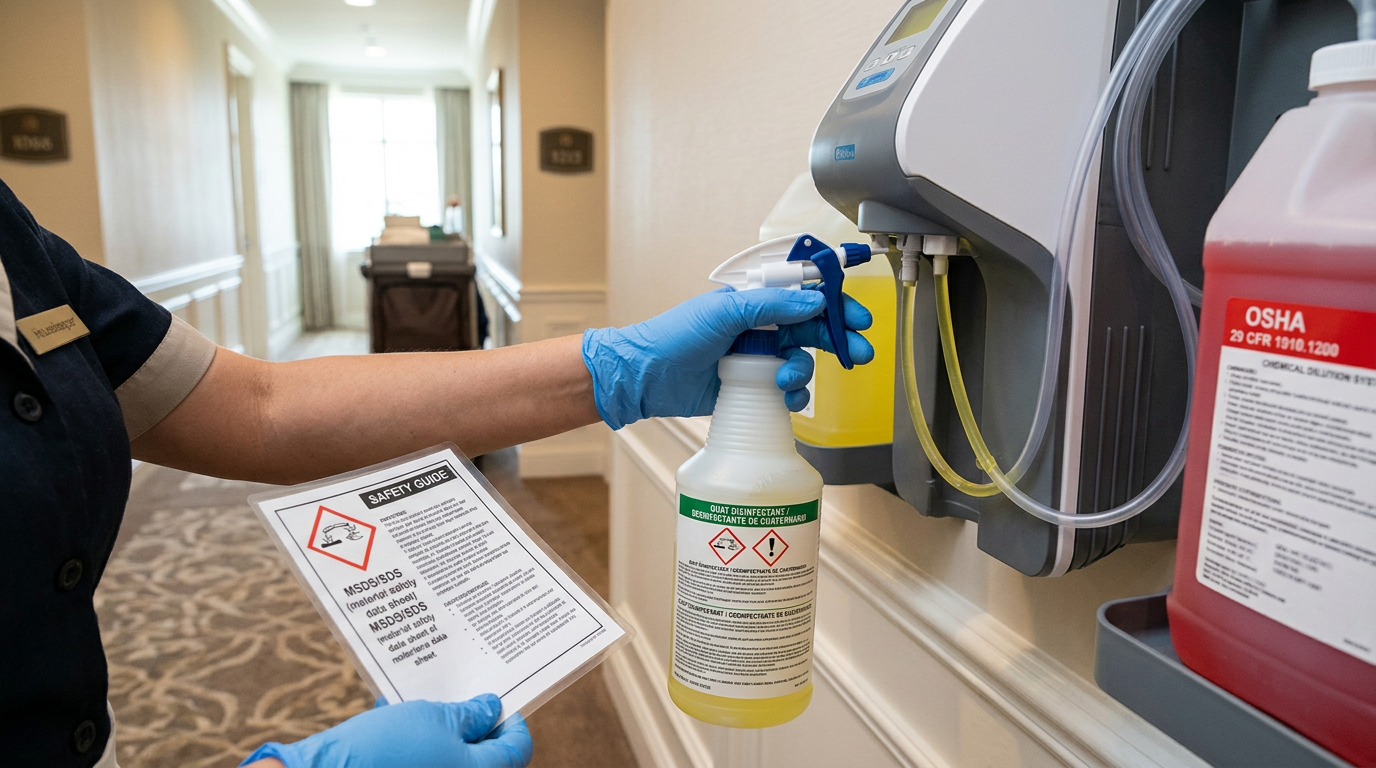
In the fast-paced commercial and hospitality sectors of Myrtle Beach and the Grand Strand, housekeeping and environmental services operate under intense time pressure, particularly during peak summer tourism. Managing complex chemical inventories safely requires strict adherence to federal safety regulations. The Occupational Safety and Health Administration (OSHA) Hazard Communication Standard, codified under 29 CFR 1910.1200, mandates that employers establish robust safety frameworks to protect workers from chemical hazards. Implementing these national standards not only ensures regulatory compliance but also protects valuable commercial property assets and elevates operational efficiency.
The Core Framework of OSHA 29 CFR 1910.1200 in Coastal Hospitality
The OSHA Hazard Communication Standard, often called the HazCom standard, establishes a comprehensive framework designed to identify and manage chemical hazards in the workplace. In the Grand Strand hospitality sector, where high-volume commercial cleaning and rapid vacation rental turnovers are daily realities, compliance is critical. Without a structured program, the rapid pace of weekend cleaning runs can lead to unlabelled spray bottles, improper chemical mixing, and inadequate personal protective equipment (PPE) utilization. Implementing these federal standards protects workers, minimizes liabilities, and prevents costly OSHA citations.
Under the Globally Harmonized System of Classification and Labeling of Chemicals (GHS), which aligns with the OSHA standard, the traditional 'Right to Know' has transitioned to the 'Right to Understand.' This means employers are legally responsible for ensuring that all cleaning technicians can interpret chemical hazards. From entry-level turn specialists to commercial floor technicians, every staff member must recognize chemical classifications. This understanding is particularly important in high-density commercial environments where multiple products are utilized daily.
Coastal environmental factors like high indoor temperatures and elevated relative humidity can accelerate the volatilization of volatile organic compounds (VOCs). In enclosed resort bathrooms or unconditioned utility spaces, this rapid chemical vaporization increases inhalation risks for housekeeping staff. A compliant HazCom program directly addresses these unique localized environmental interactions, ensuring that technicians use proper ventilation techniques and appropriate respiratory protection in high-humidity settings.
- Prevents OSHA citations and potential regulatory fines during unannounced facility inspections.
- Protects chemical-sensitive coastal interior finishes from improper chemical applications.
- Establishes a standardized safety culture that improves employee retention in a competitive labor market.
- Reduces workers' compensation claims related to chemical skin burns and inhalation injuries.
- Ensures consistent chemical handling across decentralized housekeeping routes and commercial sites.
Transitioning to Closed-Loop Chemical Dispensing Systems
Traditional cleaning operations often rely on manual chemical measurement, commonly referred to as the 'free-pour' method. Manual pouring introduces significant risks, including chemical splashes, skin burns, and respiratory irritation from concentrated fumes. Additionally, manual mixing leads to highly inconsistent chemical solutions. Over-concentrated solutions can damage expensive commercial flooring, while under-concentrated solutions fail to sanitize surfaces effectively, compromising guest health in high-occupancy Grand Strand resorts.
To mitigate these risks, leading commercial operators implement wall-mounted or portable closed-loop chemical dispensing systems. These systems utilize sealed, spill-proof chemical concentrate cartridges that connect directly to a calibrated proportioning unit. The proportioner draws water and concentrate simultaneously, mixing them at precise, factory-set dilution ratios. This closed design prevents employee contact with undiluted chemicals, engineering out a major source of workplace accidents and ensuring consistent cleaning solutions.
From an operational and financial perspective, closed-loop systems eliminate chemical waste and lower overall supply costs. Correctly diluted chemicals rinse away cleanly, preventing the buildup of surfactant residues on luxury vinyl plank or tile flooring. These sticky chemical residues attract dirt, dull the floor's appearance, and can create slippery surfaces when humid. This safety risk is particularly critical near sliding glass doors and coastal entryways where moisture levels are high.
- Eliminates manual pouring, chemical splashes, and skin or eye exposure to highly concentrated liquids.
- Guarantees precise dilution ratios for consistent sanitizing and disinfecting performance.
- Lowers chemical consumption costs by preventing over-use and accidental product waste.
- Prevents sticky surfactant residue buildup on commercial floor coverings, reducing slip-and-fall hazards.
- Simplifies inventory tracking by matching cartridge depletion rates with square footage cleaned.
GHS-Compliant Secondary Container Labeling Protocols
A common OSHA compliance failure in commercial housekeeping is the use of unlabeled or hand-labeled spray bottles. Whenever a chemical is transferred from a primary closed-loop dispenser to a secondary container, such as a spray bottle, bucket, or auto-scrubber tank, that secondary container must be properly labeled. Writing the product name on masking tape does not meet OSHA standards. Secondary containers must feature highly visible, durable labels that withstand damp, coastal working conditions.
Under the GHS framework, secondary labels must contain specific elements, including the product identifier, signal words like 'Danger' or 'Warning,' standardized hazard statements, precautionary statements, and GHS pictograms. These pictograms, such as the corrosion symbol for acidic bathroom cleaners or the exclamation mark for skin irritants, provide immediate, non-verbal warnings. This visual system ensures that technicians understand the immediate hazards of the chemical they are applying.
To maintain compliance, professional operators use color-coded, pre-printed secondary spray bottles supplied directly by the chemical manufacturer. These bottles correspond exactly to the color coding of the closed-loop system cartridges. If pre-printed bottles are not available, durable waterproof labels must be printed and applied immediately upon transferring any chemical. Standardizing this labeling protocol ensures that any supervisor, client, or OSHA inspector can quickly identify the contents of every bottle in use.
- Requires durable, waterproof secondary labels that survive damp coastal cleaning environments.
- Uses standardized GHS pictograms to communicate chemical hazards across language barriers.
- Replaces handwritten tape labels with professional, manufacturer-approved secondary bottles.
- Minimizes the risk of chemical cross-contamination in guest-facing areas and utility carts.
- Facilitates rapid, accurate chemical identification during daily quality control inspections.
Safety Data Sheet (SDS) Management in Mobile and On-Site Workplaces
Under 29 CFR 1910.1200, employers must ensure that Safety Data Sheets (SDSs) are readily accessible to employees for every chemical in the inventory. In a decentralized hospitality market like the Grand Strand, where housekeeping teams travel between vacation rental properties and commercial offices, maintaining accessible binders is a logistical challenge. Staff must have immediate access to these documents during their shifts, without having to return to a central office.
A practical approach combines digital accessibility with physical backups. Central commercial laundry facilities and supply hubs must maintain physical, yellow SDS binders in highly visible locations. For mobile crews, operators deploy digital SDS management systems. These platforms allow technicians to scan a QR code on their utility caddies or access a mobile app shortcut to view the complete SDS database on their phones, even in areas with limited cellular coverage.
Every technician must be trained to navigate the standardized 16-section SDS format. Training should focus on critical sections like Section 4 (First-Aid Measures), Section 5 (Fire-Fighting Measures), and Section 8 (Exposure Controls/Personal Protection). In the event of an accidental eye splash or chemical inhalation, technicians must be able to retrieve this information instantly, enabling them to provide correct first-aid instructions to emergency medical personnel.
- Provides immediate access to the 16-section SDS format for every chemical in use.
- Combines physical binders at central facilities with mobile digital SDS access for field staff.
- Trains technicians to locate critical first-aid and exposure control details instantly in an emergency.
- Requires immediate updates to the SDS repository whenever a chemical product is replaced or updated.
- Demonstrates a documented chain of compliance during routine or unannounced OSHA audits.
Designing Bilingual and Pictographic Safety Training Programs
The coastal hospitality cleaning workforce is linguistically diverse, often incorporating seasonal employees, international student workers, and native speakers of Spanish, Portuguese, and other languages. To comply with the OSHA 'Right to Understand' mandate, hazard communication training must be delivered in a language and manner that employees comprehend. Relying solely on English-written safety manuals is a major compliance risk that compromises employee safety.
Effective training programs use bilingual materials, pictographic guides, and hands-on demonstrations. Safety coordinators present training concepts visually, demonstrating the proper use of eye washes, the assembly of closed-loop dispensers, and the correct application of PPE. By showing rather than just telling, operators ensure that critical safety steps, such as wet-contact times for disinfectants and proper chemical disposal, are understood by all team members.
OSHA regulations require that HazCom training be fully documented and conducted upon initial hire, annually thereafter, and whenever a new chemical or hazard is introduced to the workplace. Signed attendance logs, written in the employee's preferred language, must be kept on file alongside a summary of the training topics covered. This documentation provides clear evidence of a proactive, compliant safety program during audits.
- Ensures compliance by delivering all safety training in the native languages of the cleaning staff.
- Uses visual, hands-on demonstration methods to reinforce correct chemical handling procedures.
- Requires documented, signed training logs for initial, annual, and product-specific training sessions.
- Integrates GHS pictograms into daily toolbox talks to keep chemical safety at the forefront.
- Supports international J-1 and seasonal H-2B visa workers with accessible, clear safety resources.
Mitigating Coastal Environmental Risks and Dangerous Chemical Mixes
The Grand Strand's unique coastal geography introduces specific chemical challenges, such as highly alkaline local municipal water and salt-crust buildup on fixtures. When diluting concentrated cleaners, local water chemistry can interfere with chemical performance, tempting technicians to manually increase concentration levels. Professionally calibrated closed-loop systems automatically adjust for local water hardness, ensuring that detergents and sanitizers perform correctly without requiring manual modifications.
The risk of chemical reactions is heightened on busy weekend turnaround days when multiple products are used in rapid succession. Mixing incompatible chemical classes, such as bleach-based mildew removers with acidic toilet bowl cleaners or ammonia-based glass cleaners, creates highly toxic gases like chlorine or chloramine. These gases can quickly overcome a technician in a small, unventilated bathroom, leading to respiratory injury and requiring a full building evacuation.
To prevent accidental mixing, professional operators enforce color-coded system designs and keyways on chemical dispensers. These dispensers are physically keyed so a bleach-based cartridge cannot be connected to an acidic dispenser line. Furthermore, technicians are trained to follow clear application sequences, ensuring that surfaces are thoroughly rinsed before applying a different chemical product. This system-based safety approach virtually eliminates the risk of dangerous, accidental chemical reactions.
- Calibrates dispensing systems to account for coastal water hardness and salt-air residues.
- Enforces strict separation of incompatible chemicals like bleach, ammonia, and acids.
- Implements color-coded and physically keyed dispensers to prevent cross-contamination.
- Trains technicians on proper surface rinsing steps to avoid dangerous chemical mixtures.
- Reduces VOC inhalation risks in small, humid bathrooms through mandatory ventilation protocols.
Implementing Internal Compliance Audits and Corrective Actions
A successful hazard communication program requires continuous verification to ensure compliance is maintained over time. Regular field audits help identify and resolve minor issues, such as faded secondary labels or missing PPE, before they lead to accidents or OSHA violations. Quality control inspectors should perform random checks on housekeeping closets, mobile cleaning caddies, and vehicle storage areas.
Auditors use a structured checklist to inspect the pressure, calibration, and hose integrity of closed-loop dispensing stations. They also verify that all secondary bottles are properly labeled, that PPE is in good condition, and that technicians can quickly access SDS databases on their phones. If a deficiency is found, the inspector initiates a Corrective Action Plan (CAP) to address the issue immediately.
The CAP outlines the specific issue, names the responsible supervisor, and sets a deadline for correction, which is typically within 24 to 48 hours depending on the severity of the risk. Once resolved, the supervisor documents the fix with photos or physical signatures. Keeping these completed audit logs shows a clear commitment to maintaining a safe, professional, and compliant cleaning operation.
- Conducts unannounced safety audits of utility closets, service vehicles, and mobile caddies.
- Utilizes a standardized compliance checklist focusing on labels, SDS access, and PPE availability.
- Tracks and documents corrective actions to resolve safety hazards within 24 to 48 hours.
- Ensures dispensing equipment remains properly calibrated through regular technical inspections.
- Builds trust with commercial clients by demonstrating a proactive approach to safety and compliance.
Key takeaway
Maintaining compliance with the OSHA Hazard Communication Standard is essential for protecting housekeeping staff and preserving property assets in the Grand Strand's commercial and hospitality sectors. By implementing closed-loop chemical dispensing systems, GHS-compliant secondary labeling, and bilingual training programs, operators can prevent workplace injuries and costly regulatory fines. Partnering with a professional service provider like A2Z Cleaning & Linen Services, reachable at 843.800.2788, ensures that your facilities are maintained using the highest industry safety standards.
Keep Reading
Commercial & Hospitality
The OSHA Hazard Communication Standard and Closed-Loop Chemical Dilution Systems: Implementing GHS Compliance, Secondary Container Labeling, and Chemical-Contact Mitigation in Grand Strand Hospitality Operations
ReadCommercial & Hospitality
The OSHA Bloodborne Pathogen Standard for Coastal Hospitality and Commercial Facilities: Implementing Exposure Control Plans, EPA List Q Disinfectants, and Post-Incident Workflows in Myrtle Beach
ReadCommercial & Hospitality
The National Color-Coded Zone Cleaning Standard: Cross-Contamination Mitigation and Microfiber Chemistry in Myrtle Beach Commercial Facilities
ReadReady for a spotless property?
Call 843.800.2788 or request a free quote from A2Z Cleaning & Linen Services.