Commercial & Hospitality
The National Color-Coded Zone Cleaning Standard: Cross-Contamination Mitigation and Microfiber Chemistry in Myrtle Beach Commercial Facilities
Discover how national color-coding standards, microfiber split-fiber chemistry, and objective ATP testing elevate sanitation and protect commercial facilities on the Grand Strand.
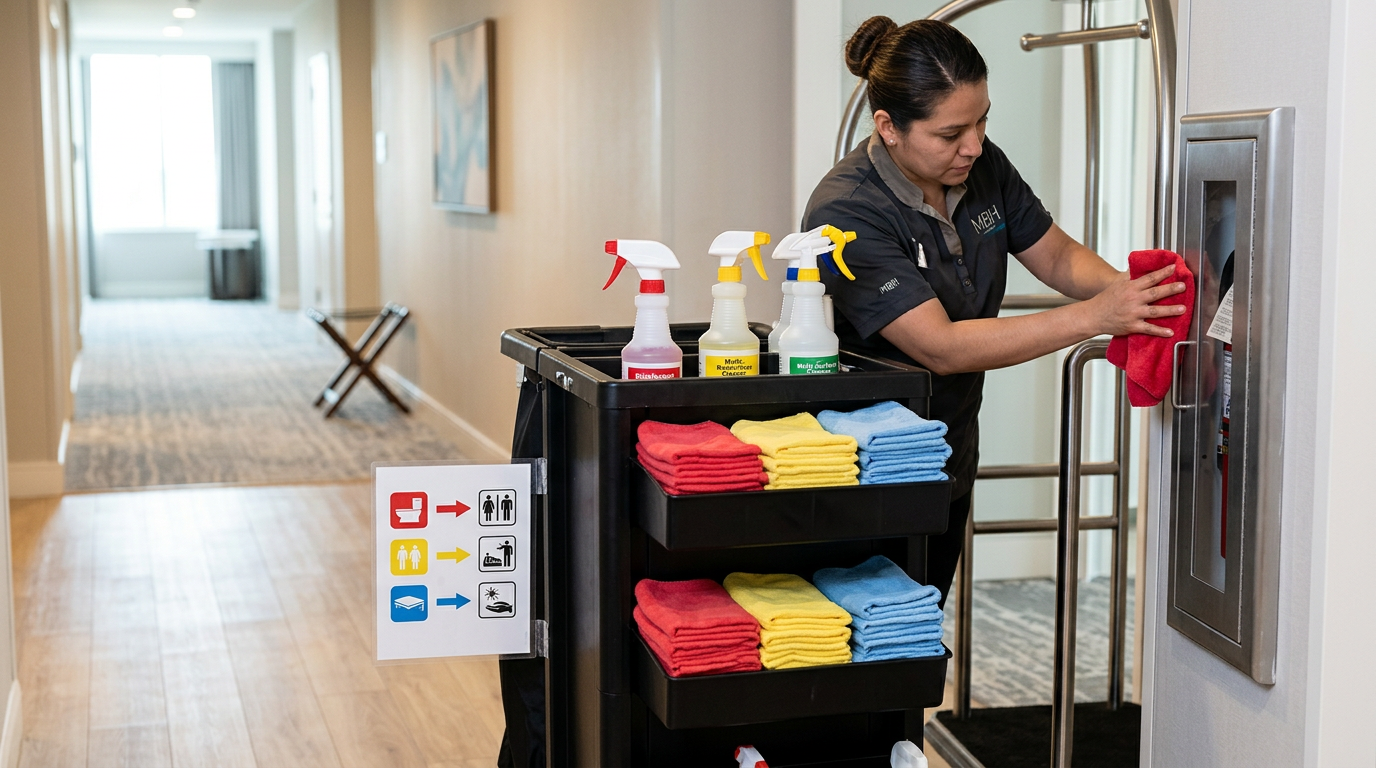
In high-traffic commercial environments across the Grand Strand, maintaining a clean facility is no longer just about visual appeal; it is a matter of public health and operational risk management. Leading national cleaning operators have abandoned traditional cleaning methods in favor of scientifically backed, highly structured zoning protocols designed to stop cross-contamination before it starts. By understanding the mechanical physics of modern textiles and the strict operational standards established by national sanitization bodies, local business owners can better protect their staff, guests, and bottom line. Implementing these rigorous standards ensures that pathogens from high-risk zones never migrate into public or food-preparation areas.
The Physics and Chemistry of Split-Fiber Microfiber Technology
Traditional cotton string mops and cellulose sponges have long been retired by elite environmental services teams due to their tendency to spread pathogens rather than remove them. Cotton fibers are round and organic, which allows bacteria to cling to the outer surface and easily transfer to the next floor or counter. In contrast, professional-grade microfiber is an engineered blend of polyester and polyamide, split down to a fraction of a human hair. This splitting process creates millions of microscopic wedge-shaped hooks that mechanically grab, lift, and lock away grease, dust, and microbial soils deep within the fiber channels.
The mechanical efficiency of split-fiber microfiber relies heavily on electrostatic physics. Polyester carries a natural positive charge, which acts like a magnet to attract negatively charged dust, dander, and bacterial cell walls. This allows cleaning technicians to remove up to 99% of surface bacteria using nothing more than water, though professional disinfection protocols incorporate EPA-registered disinfectants for complete pathogen destruction. By trapping soils inside the fiber matrix, the material prevents the redeposition of contaminants onto adjacent surfaces, a common failure point when using standard cotton rags.
To maintain this level of cleaning efficacy, commercial facilities must ensure their cleaning partners use high-density microfiber with a denier rating below 0.1. A lower denier indicates a finer fiber split, which increases the total surface area available for soil capture. In high-volume commercial properties along the Grand Strand, where coastal salt-air and heavy pedestrian tracking introduce complex soil mixtures daily, utilizing high-density split microfiber is the baseline requirement for achieving true sanitization rather than superficial cleanliness.
The Four-Color Coding System: National Standards for Cross-Contamination Prevention
To eliminate human error during high-intensity cleanings, the international cleaning industry established a standardized, color-coded zoning system. This protocol assigns specific colored tools—including microfiber cloths, flat mops, and bucket systems—to distinct areas of a facility. By training technicians to strictly adhere to this color system, commercial facilities prevent the catastrophic transfer of bacteria like E. coli or salmonella from high-risk restroom environments into public lobbies, offices, or food preparation areas.
Under this national standard, red is strictly reserved for high-risk restroom areas, specifically toilets, urinals, and the floor space immediately surrounding them. This visually alerts technicians that red tools must never leave the restroom envelope. Yellow is allocated for lower-risk restroom surfaces, such as sinks, mirrors, soap dispensers, and tiled walls. Isolating yellow from red ensures that biological matter from the toilet bowl is never wiped onto the vanity faucet where employees and guests wash their hands.
Blue is designated for low-risk, general-purpose cleaning, which includes office dusting, glass partitions, window sills, and common-area furniture. Finally, green is assigned exclusively to kitchens, break rooms, and food-handling surfaces. This clear division ensures that a cloth used to wipe down a computer monitor or a lobby handrail is never introduced to an area where food is prepared or consumed, significantly reducing the risk of viral outbreaks within a business.
Laundry Processing Rules for Color-Coded Textile Maintenance
The integrity of a color-coded zoning program is only as strong as the laundry process behind it. If red, yellow, blue, and green microfiber cloths are tossed into the same washing machine and processed with standard domestic laundry detergent, cross-contamination occurs before the tools ever return to the field. Leading operators process each color group in entirely separate wash cycles, preventing the microscopic transfer of restroom pathogens onto kitchen-bound textiles during the agitation and rinse phases.
Furthermore, microfiber chemistry demands highly specialized laundering protocols to prevent damage to the delicate split fibers. Commercial laundries must avoid chlorine bleach, which chemically burns the polyamide core and destroys the positive static charge of the polyester. Fabric softeners are also strictly forbidden; they coat the microscopic wedge-like channels of the microfiber with a silicone-based residue, rendering the cloth incapable of trapping moisture and soils. Instead, professional processors utilize pH-neutral liquid detergents and precise thermal disinfection cycles.
Drying temperatures must be carefully regulated, typically staying below 140 degrees Fahrenheit. Because microfiber is composed of synthetic polymers, excessive heat can melt the ultra-fine tips of the fibers, fusing them together and transforming a high-performance cleaning tool into a non-absorbent rag that scratches delicate surfaces. Adhering to these strict processing standards guarantees that microfiber retains its structural integrity, mechanical lift capability, and color-coded distinction for hundreds of commercial wash cycles.
OSHA HazCom and GHS Compliance in Commercial Chemical Dispersal
Implementing a color-coded zone system requires a highly disciplined approach to chemical safety and regulatory compliance. Under the Occupational Safety and Health Administration (OSHA) Hazard Communication Standard, aligned with the Globally Harmonized System of Classification and Labelling of Chemicals (GHS), every commercial cleaning operation must maintain strict chemical safety controls. This begins with secondary container labeling, a frequent point of inspection failure for businesses that mix cleaning concentrates manually.
When concentrated cleaning chemicals are diluted into secondary spray bottles or buckets, those containers must feature GHS-compliant labels detailing the product identifier, signal words, hazard statements, and pictograms. To mitigate this risk, modern commercial operators install automated, closed-loop chemical dispensing stations. These systems automatically dilute concentrated chemicals to the exact manufacturer-specified ratio, eliminating chemical waste, ensuring peak disinfectant efficacy, and preventing chemical chemical burns or respiratory irritation among the cleaning staff.
An automated dispensing setup also ensures that Safety Data Sheets (SDS) are easily matched to the exact chemicals present on-site. When technicians use pre-measured, closed-loop systems, they avoid the dangerous practice of 'glug-glug' mixing, which often results in overly concentrated solutions that leave sticky, soil-attracting residues on floors or, conversely, highly diluted mixtures that fail to sanitize. This structured approach to chemical management protects facility flooring, reduces liability, and guarantees compliance with federal workplace safety standards.
Labor Efficiencies and Ergonomic Training in Zone Cleaning
Transitioning to a color-coded zone cleaning program significantly improves labor efficiency and reduces physical strain on cleaning personnel. When technicians are trained in structured zone paths, they waste less time walking back and forth to supply closets for different tools. By organizing utility carts with dedicated color-coded bins, technicians have the exact tool needed for each surface right at their fingertips, streamlining the workflow and minimizing fatigue during long commercial shifts.
National cleaning standards also emphasize the 'eight-sided fold' technique for microfiber cloths. By folding a standard 16x16-inch cloth in half and then in half again, the technician creates eight distinct, flat cleaning faces. As one face becomes soiled, the technician simply flips the cloth to a clean face, avoiding the common habit of crumpling the rag. This technique ensures maximum chemical contact with the surface, eliminates the re-deposition of soil, and reduces the frequency of trips to the cart to swap out dirty cloths.
Ergonomics play a vital role in keeping commercial cleaning crews healthy and productive. Traditional mop buckets require heavy lifting and repetitive twisting to wring out water, leading to lower back and shoulder injuries. Modern zone-cleaning programs replace these heavy systems with lightweight microfiber flat-mop frames and pre-treated charging buckets. This change reduces the weight of the equipment by up to 70%, completely eliminates the twisting motion associated with string mops, and keeps technicians safe from long-term repetitive strain injuries.
Measuring Cleanliness: ATP Bioluminescence Testing as an Industry Benchmark
In the modern commercial landscape, 'looks clean' is no longer an acceptable metric for success. High-performing operators utilize scientific testing to objectively measure surface sanitization. The national industry standard for this verification is ATP (Adenosine Triphosphate) bioluminescence testing. ATP is an energy molecule found in all organic matter, including bacteria, mold, food residue, and human biological fluids; its presence on a surface indicates that cleaning was incomplete.
To perform the test, a technician sweeps a specialized swab across a designated surface, inserts it into a handheld luminometer, and reads the results in Relative Light Units (RLUs). A high RLU reading indicates a high concentration of organic debris, signaling that the surface requires immediate re-cleaning and re-testing. This real-time feedback loop removes subjectivity from quality control, allowing facility managers and cleaning supervisors to audit performance with hard, unalterable data.
By implementing regular ATP audits on high-touch surfaces such as door handles, elevator buttons, and reception desks, commercial facilities can track their sanitation trends over time. If a specific zone consistently shows elevated RLU levels, it alerts management to review the dilution of the disinfectant, the training of the specific technician, or the frequency of the cleaning cycle. This data-driven approach builds immense trust with corporate clients, healthcare facilities, and high-occupancy resorts.
- Instantly quantifies surface cleanliness using objective, digital metrics.
- Identifies microscopic biological residues that are invisible to the naked eye.
- Validates the efficacy of specific disinfectants and dwell-time compliance.
- Pinpoints high-traffic areas requiring increased daily sanitization frequencies.
- Provides verifiable compliance documentation for corporate health audits.
Coastal Challenges: Adapting National Standards to the Myrtle Beach Climate
Applying national cleaning and sanitization standards to Myrtle Beach and the wider Grand Strand requires deep knowledge of the local coastal environment. Our region faces unique atmospheric challenges, specifically high ambient relative humidity, airborne salt-spray, and constant sand intrusion. When salt-mist settles on interior surfaces, it creates a sticky, hygroscopic film that actively traps airborne dust and pollen, requiring specialized cleaning chemistry to neutralize and remove.
High humidity also dramatically extends the drying time of wet-mopped floors, creating slipping hazards and providing an ideal breeding ground for mold and mildew spores. Traditional wet-mopped floors can take up to twenty minutes to dry in coastal summer conditions. By deploying low-moisture microfiber flat-mop systems, professional operators drastically reduce water usage, allowing floors to dry in under two minutes while completely eliminating the risk of water pooling in baseboards or grout lines.
Furthermore, sand behaves like a microscopic abrasive, grinding away at commercial vinyl composition tile (VCT) and luxury vinyl plank (LVP) finishes under heavy foot traffic. If sand is not completely removed via high-performance HEPA-filter vacuums before damp mopping, the dragging motion of a mop will scratch and dull the floor's protective wear layer. Adhering to a strict, multi-step soil extraction protocol preserves expensive commercial flooring assets and prevents the costly need for frequent stripping and waxing.
Choosing a Certified Commercial Partner in Myrtle Beach
When vetting commercial cleaning providers on the Grand Strand, business owners must look beyond basic hourly rates and ask detailed questions about operational infrastructure, staff training, and compliance with national standards. A professional cleaning partner should be able to clearly outline their color-coded cross-contamination protocols, demonstrate how they maintain their microfiber inventory, and provide proof of structured OSHA GHS compliance.
At A2Z Cleaning & Linen Services, we build our commercial programs upon these exact national standards, adapted specifically for the intense environmental demands of our coastal region. Our professionally trained, year-round field technicians utilize advanced closed-loop chemical dispensing, color-coded zoning systems, and low-moisture split-fiber microfiber technology to deliver flawless results. We back our work with rigorous internal audits to ensure your facility remains safe, compliant, and pristine.
Investing in a scientifically grounded cleaning program protects your brand reputation, reduces employee absenteeism, and provides your guests with peace of mind. To discuss a customized commercial sanitization program, color-coded zone implementation, or high-volume laundry solutions for your Grand Strand business, contact the experts at A2Z Cleaning & Linen Services today at 843.800.2788. Let us help you elevate your facility maintenance to a national professional standard.
Key takeaway
Adopting national color-coded zone cleaning standards and advanced microfiber chemistry is crucial for preventing cross-contamination in busy commercial facilities. Partnering with a professional team that understands these scientific principles, OSHA guidelines, and coastal challenges ensures a safe, compliant, and healthy environment for your staff and guests.
Keep Reading
Commercial & Hospitality
The OSHA Bloodborne Pathogen Standard for Coastal Hospitality and Commercial Facilities: Implementing Exposure Control Plans, EPA List Q Disinfectants, and Post-Incident Workflows in Myrtle Beach
ReadCommercial & Hospitality
The Grand Strand Commercial Disinfection Specialist Career Pathway: Class-A Office Standards, Biohazard Mitigation Certifications, and Local Retention Models
ReadCommercial & Hospitality
The ISSA CIMS-GB Commercial Custodial Standard: Transitioning Grand Strand Facilities to High-Performance, Low-Emission Sustainable Cleaning Systems
ReadReady for a spotless property?
Call 843.800.2788 or request a free quote from A2Z Cleaning & Linen Services.