Commercial & Hospitality
The ISSA Cleaning Industry Management Standard (CIMS-GB) for Grand Strand Commercial Facilities: Aligning Green Cleaning Chemistry, Quality Systems, and Seasonal Labor Benchmarks
Discover how implementing ISSA CIMS-GB standards helps Grand Strand commercial properties optimize seasonal labor, standardize green chemistry, and maintain elite sanitation standards.
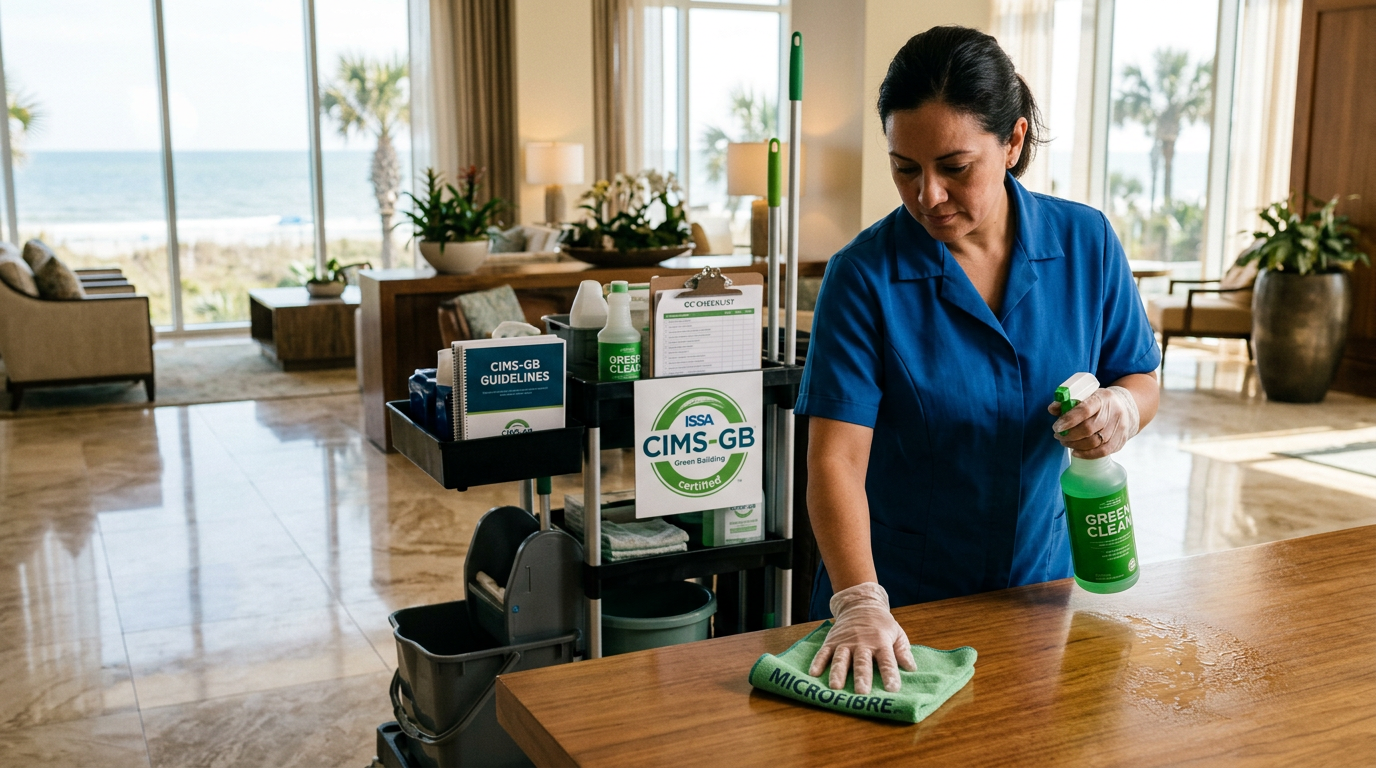
As commercial facilities and high-traffic resorts across the Grand Strand face escalating guest expectations and shifting labor markets, professional cleaning operations must move beyond basic transactional janitorial services. Implementing the ISSA Cleaning Industry Management Standard (CIMS) and its Green Building (GB) criteria provides a rigorous, nationally recognized framework for operational excellence. This comprehensive guide details how Grand Strand property managers and commercial clients can leverage CIMS-GB principles to establish robust quality systems, manage seasonal staffing fluctuations, and execute green cleaning chemistry that preserves both indoor air quality and coastal ecosystems. By understanding these structural standards, facility owners can ensure consistent, verifiable sanitation while optimizing their total cost of ownership.
The Architecture of ISSA CIMS-GB: A National Standard for Local Operations
The International Sanitary Supply Association (ISSA) developed the Cleaning Industry Management Standard (CIMS) to establish a clear set of management criteria for cleaning organizations. Rather than focusing on how a single technician cleans a surface, CIMS evaluates the entire operational infrastructure. The standard is divided into five core operational areas: quality systems, service delivery, human resources, health, safety, environmental stewardship, and management commitment, with a sixth section dedicated specifically to Green Building (GB) criteria.
To achieve CIMS certification, an organization must undergo a comprehensive, independent third-party assessment. An expert auditor reviews documented policies, interviews management personnel, and visits active client sites to verify compliance with every section of the standard. This rigorous process ensures that when a Grand Strand resort or office building hires a CIMS-certified operator, they are partnering with a business that manages its quality, safety, and labor resources under strict, internationally validated frameworks.
Applying this national framework to our local coastal market addresses unique regional challenges. Grand Strand commercial facilities experience extreme seasonal wear, sand intrusion, and high relative humidity that accelerates mildew growth. Standardizing operations under CIMS ensures that cleaning protocols scale up seamlessly during the peak summer tourist season and maintain structured conservation during winter dormancy. This structural stability provides commercial clients with predictable performance, regardless of seasonal occupancy spikes.
Defining Quality Systems: Verifiable Inspections and ATP Cleanliness Verification
Quality control under CIMS-GB cannot rely on subjective visual walk-throughs or casual checklists. Certified organizations must establish a documented, proactive quality management system. In Grand Strand commercial spaces, this means implementing randomized, structured quality audits of high-traffic zones—such as hotel lobbies, elevator cabs, restrooms, and fitness centers. Each area is graded on a standardized scoring system that tracks cleanliness trends over time.
To elevate quality assurance beyond simple visual inspections, leading operators utilize scientific verification tools, such as ATP (adenosine triphosphate) bioluminescence testing. ATP meters detect organic residue left behind on surfaces, providing an immediate numerical readout of microbial activity. In coastal environments, where high humidity levels foster rapid bacterial colonization on shared touchpoints, ATP testing offers objective proof that sanitization protocols are working. This data-driven approach allows managers to refine cleaning frequencies and techniques based on real-world evidence.
The CIMS standard also mandates a formal feedback loop to address service deficiencies immediately. When an inspection or ATP test reveals a failure, a documented corrective action plan is triggered. This plan identifies the root cause of the breakdown—whether it is an outdated chemical formulation, worn equipment, or a need for technician retraining. By treating quality as an ongoing engineering process, certified operators ensure that minor issues are resolved long before they affect guest experiences or result in negative online reviews.
Service Delivery and Workloading: Applying Science to Labor Benchmarking
Service delivery under CIMS is governed by the principles of professional workloading, which is the mathematical calculation of the labor hours required to clean a facility. Instead of estimating labor based on guesswork, certified organizations use established industry standards, such as the ISSA 612 Cleaning Times. These benchmarks calculate exact production rates by factoring in the square footage of specific flooring types, the number of restroom fixtures, and the density of vertical surfaces.
In our coastal market, labor models must adapt to seasonal occupancy curves. During the busy summer months, heavy sand tracking, sunscreen overspray, and elevated humidity can nearly double the time required to maintain hard floors and carpets compared to the quiet winter season. Proper workloading calculations account for these environmental variables, ensuring that cleaning technicians are allocated sufficient labor hours to perform deep cleaning and sanitization without experiencing burnout or cutting corners on safety.
A critical component of CIMS-compliant service delivery is the implementation of bilateral Service Level Agreements (SLAs) and detailed scopes of work. These documents clearly define the tasks, frequencies, and performance expectations for every area of the property. For commercial clients and property managers, this level of operational transparency guarantees that billing rates align directly with actual service outcomes, eliminating the risk of service drift and ensuring complete financial accountability.
Human Resources under CIMS: Standardizing Recruitment, Training, and Retention
The professional cleaning industry is highly labor-intensive, and seasonal markets like the Grand Strand present a challenging labor environment. CIMS addresses these challenges by requiring a standardized approach to the entire human resources lifecycle. Certified operations must demonstrate structured, non-discriminatory recruitment practices, thorough background screening, and standardized onboarding protocols. This ensures that every cleaning technician deployed to a commercial site is fully vetted, insured, and qualified.
Training under CIMS is continuous, documented, and aligned with national safety standards. Before entering a facility, technicians receive comprehensive instruction in Hazard Communication (OSHA GHS), Bloodborne Pathogens, and personal protective equipment (PPE) protocols. For coastal operators, this training also includes specialized safe-lifting techniques for heavy wet linens and slip-and-fall prevention strategies on wet, sandy tile surfaces, which are common hazards in resort environments.
Retention is managed through structured career paths and ongoing professional development. Leading operators utilize technical education pathways to certify team members in specialized disciplines, such as upholstery extraction, hard-floor restoration, and green cleaning chemistry. By investing in the professional growth of their workforce, cleaning organizations foster higher job satisfaction, reduce costly seasonal turnover, and maintain a dedicated, highly skilled team that delivers consistent quality year-round.
The CIMS-GB Green Cleaning Policy: Chemistry Selection and Indoor Air Quality
To achieve the Green Building (GB) designation, a cleaning organization must implement a comprehensive Green Cleaning Policy that prioritizes environmental sustainability and indoor air quality. This policy requires that the majority of cleaning chemicals used on-site carry third-party certifications from independent organizations such as Green Seal (GS-37, GS-53) or UL Ecologo. These certifications verify that the products perform effectively while minimizing toxicity to humans and aquatic life.
In our coastal climate, where air-conditioned buildings run continuously to combat high relative humidity, avoiding high-VOC (Volatile Organic Compound) cleaning agents is critical. Standard chemical solvents and synthetic fragrances can become trapped in HVAC systems, degrading indoor air quality and triggering respiratory issues for building occupants. Green-certified chemistries leverage biological surfactants, hydrogen peroxide, and natural acids to lift dirt, salt crust, and oil safely, degrading rapidly to protect our sensitive local watershed.
Implementing a CIMS-GB policy also requires strict control over chemical dilution. Manual pouring of concentrated chemicals often leads to over-concentration, which wastes product, presents safety hazards for technicians, and leaves sticky residues on surfaces that attract sand and dirt. Utilizing automated, closed-loop chemical dispensing stations ensures that every bottle and bucket is mixed with the exact ratio of chemical to water, optimizing chemical efficacy and ensuring a safe, consistent clean.
Equipping for Efficiency: Ergonomic, High-Filtration HEPA Equipment Standards
Standardizing commercial cleaning equipment is a central pillar of the CIMS-GB framework. Leading operators select vacuum cleaners that carry the Carpet and Rug Institute (CRI) Seal of Approval. To safeguard indoor air quality, these vacuums must be equipped with multi-stage HEPA filtration capable of capturing 99.97% of particulates down to 0.3 microns. This is essential for trapping fine sand-dust, pollen, and airborne mold spores that thrive in coastal air.
Ergonomics are also prioritized to protect technician health and maximize efficiency. CIMS encourages the use of lightweight, backpack vacuum systems rather than heavy, traditional upright units. Research indicates that backpack vacuums reduce strain on the operator's back and shoulders while allowing them to clean up to twice as many square feet per hour. This increase in productivity is vital for meeting tight scheduling windows during high-volume resort turnaround days.
In addition to advanced filtration vacuums, standard equipment packages include commercial-grade microfiber cleaning systems. Color-coded microfiber cloths and flat mops capture organic soils and pathogens far more effectively than traditional cotton strings or paper towels. By assigning specific colors to specific zones—such as red for restroom fixtures and blue for glass—operators virtually eliminate the risk of cross-contamination, ensuring a sanitary environment across the entire property.
Supply Chain Management and Closed-Loop Chemical Dilution Systems
Managing supply chains under CIMS-GB requires partnering with reliable distributors and manufacturers who provide transparent safety data sheets (SDS) and consistent product availability. In our fluctuating coastal market, supply disruptions can easily compromise operational readiness. Certified organizations mitigate this risk by maintaining strategic par levels of critical consumables—such as trash liners, paper products, and hand soap—preventing out-of-stock emergencies during peak tourist holidays.
Closed-loop chemical dilution systems represent a major operational advancement in modern cleaning. These wall-mounted dispensers draw concentrated product through tamper-proof caps and blend it automatically with incoming water. This technology eliminates direct chemical exposure for technicians, reduces shipping costs and carbon emissions by transporting concentrated product rather than water, and ensures consistent product performance regardless of municipal water hardness variations across the Grand Strand.
Furthermore, leading operators audit their supply chains for environmental sustainability. This involves purchasing paper goods with high percentages of post-consumer recycled content, sourcing biodegradable trash liners, and utilizing ultra-concentrated chemicals packaged in minimal, recyclable containers. This comprehensive approach to supply chain stewardship significantly reduces the environmental footprint of large-scale commercial cleaning operations, helping local businesses meet their sustainability goals.
Documenting Environmental Stewardship: Supporting LEED and Green Building Initiatives
For commercial properties pursuing LEED (Leadership in Energy and Environmental Design) certification or maintaining sustainable business practices, partnering with a CIMS-GB certified cleaning provider is highly advantageous. The CIMS-GB standard is specifically aligned with the LEED for Existing Buildings: Operations and Maintenance (EB: O+M) green cleaning criteria, directly contributing points toward a building's overall sustainability score.
To support LEED audits, certified operators maintain meticulous documentation. This includes chemical logs verifying Green Seal compliance, equipment purchase records showing CRI vacuum certifications, and training registries confirming that all personnel are well-versed in green cleaning procedures. This administrative transparency removes the burden of tracking, verifying, and reporting environmental compliance from the building owner or property manager.
Beyond regulatory compliance, environmental stewardship enhances brand equity. Today’s consumers and corporate clients actively seek out businesses that demonstrate genuine environmental responsibility. By displaying a commitment to CIMS-GB principles, Grand Strand hotels, retail centers, and medical facilities can confidently market their green cleaning initiatives, attracting eco-conscious travelers and local patrons who value health, safety, and coastal preservation.
Key takeaway
Adhering to national cleaning industry standards like ISSA CIMS-GB ensures that commercial properties on the Grand Strand receive consistent, scientifically validated sanitation. By implementing these structured systems, property managers can protect their physical assets, improve labor efficiency, and support environmental sustainability. To learn more about how our structured, professional cleaning systems can benefit your facility, contact A2Z Cleaning & Linen Services at 843.800.2788.
Keep Reading
Commercial & Hospitality
The ISSA CIMS-GB Commercial Custodial Standard: Transitioning Grand Strand Facilities to High-Performance, Low-Emission Sustainable Cleaning Systems
ReadCommercial & Hospitality
The Grand Strand Multi-Family Community and Apartment Turn Housekeeping Specialist Career Pathway: Technical Turnover Chemistry, Move-Out Damage Assessment, and High-Retention Compensation Models
ReadCommercial & Hospitality
The ISSA CIMS-GB Standard for Commercial Facility Operations: Aligning National Labor-Production Metrics, Green Seal Chemistries, and Quality-Assurance Audits in Grand Strand Resorts and Office Parks
ReadReady for a spotless property?
Call 843.800.2788 or request a free quote from A2Z Cleaning & Linen Services.