Commercial & Hospitality
The ISSA CIMS-GB Commercial Custodial Standard: Transitioning Grand Strand Facilities to High-Performance, Low-Emission Sustainable Cleaning Systems
Discover how national ISSA CIMS-GB green cleaning standards preserve assets, protect indoor air quality, and streamline commercial facilities in Myrtle Beach.
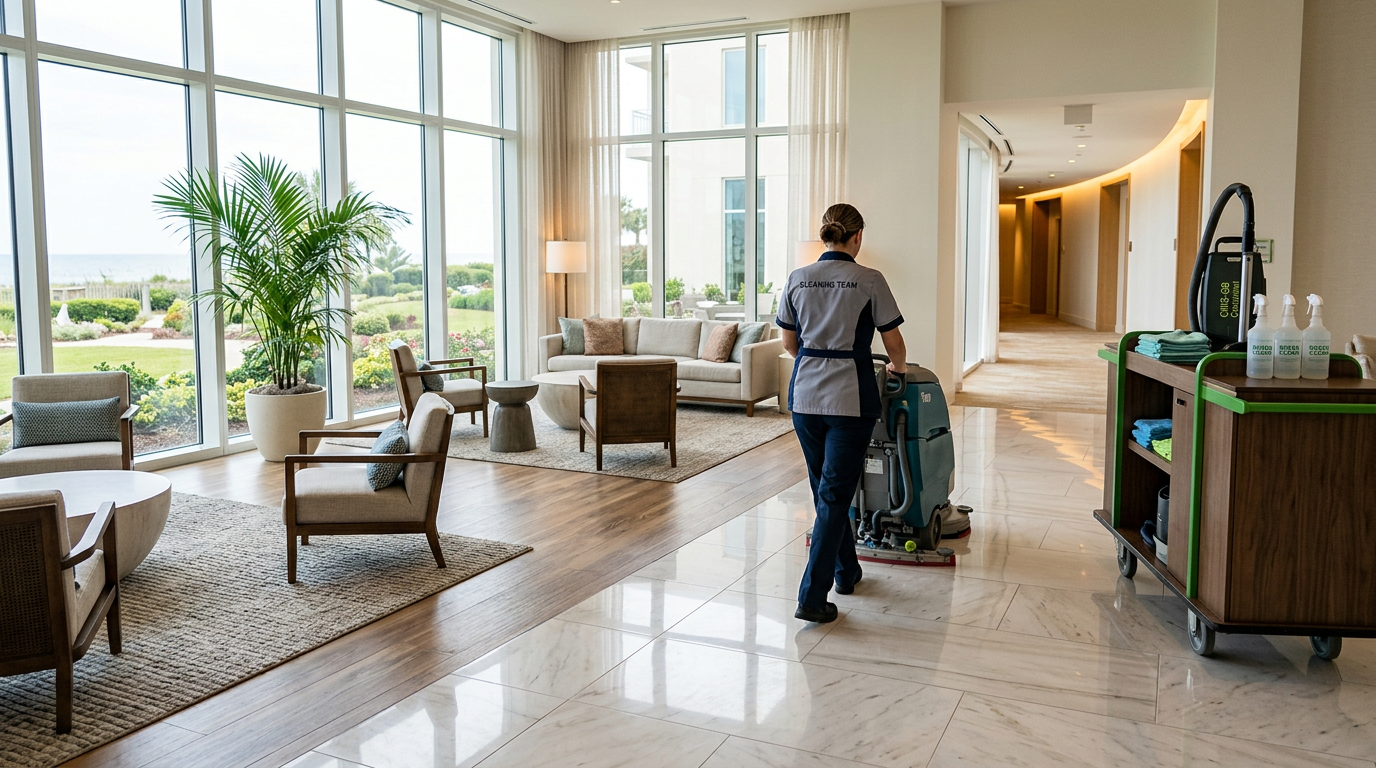
Commercial facility management in the Grand Strand is undergoing a quiet but significant transformation. No longer is a chemical, bleach-heavy odor accepted as the universal benchmark for a clean indoor space. As national standards like the ISSA Cleaning Industry Management Standard for Green Buildings (CIMS-GB) gain traction, local operators are realizing that high-performance cleaning must protect both human health and delicate coastal ecosystems. This comprehensive guide outlines how integrating these rigorous, sustainable frameworks safeguards commercial real estate investments along our coast.
Decoding the CIMS-GB Framework for Coastal Facilities
The Cleaning Industry Management Standard (CIMS) established by ISSA, the worldwide cleaning industry association, is the premier framework for assessing commercial cleaning organizations. Its green building component, CIMS-GB, focuses specifically on sustainable operations, resource conservation, and indoor environmental quality. In a high-humidity coastal environment like Myrtle Beach, commercial facilities face unique physical demands, from salt-air corrosion to heavy foot traffic carrying sand and organic moisture. Applying this national framework moves facility maintenance from a reactive, chaotic workflow to a standardized, highly structured discipline.
National leaders in custodial operations use CIMS-GB as a blueprint to build operational resilience. By focusing on core areas such as quality systems, service delivery, human resources, and health and safety, commercial managers can ensure consistent results regardless of seasonal labor fluctuations. This systematic approach is especially valuable in our local market, where tourist surges place immense pressure on building infrastructure and cleaning personnel during the summer months.
For Grand Strand property managers, partnering with a commercial cleaning provider that aligns with these national guidelines means less operational friction. Standardized workflows ensure that public spaces, offices, and medical facilities receive a uniform level of care every single day. Ultimately, this structural discipline extends the functional life of expensive interior finishes and reduces liability risks associated with slip-and-fall hazards or poor indoor hygiene.
Chemical Stewardship: Deploying Green Seal and EcoLogo Formulations
Traditional commercial cleaning has historically relied on aggressive, high-VOC (volatile organic compound) chemical agents. While these harsh solvents may remove surface dirt quickly, they degrade indoor air quality, trigger respiratory distress in sensitive occupants, and eventually corrode interior materials. The CIMS-GB standard mandates that a significant percentage of chemical purchases meet stringent environmental certifications, such as Green Seal (GS-37) or UL EcoLogo. This ensures that the products used are biodegradable, non-toxic, and free from endocrine-disrupting ingredients.
There is a lingering misconception among facility managers that green cleaning products lack the strength to tackle tough coastal soils. In reality, modern bio-enzymatic cleaners and hydrogen-peroxide-based green formulations excel at breaking down the organic binders in sand, coastal soils, and salt crusts. Unlike traditional detergents, which often leave a sticky surfactant residue that acts as a magnet for more dirt, green certified chemistry rinses completely clean without leaving a film.
By transitioning to these certified green chemical systems, Myrtle Beach businesses protect both their indoor environments and the surrounding coastal watershed. Runoff from cleaning operations eventually makes its way into local storm drains and delicate coastal marshes. Using biodegradable, low-aquatic-toxicity chemistry prevents environmental damage while ensuring that indoor spaces remain clean, safe, and free from irritating chemical residues.
Particulate Control and Advanced HEPA Filtration for Indoor Air Quality
Coastal air naturally carries a heavy load of moisture, airborne mold spores, sand dust, and seasonal pollens. When custodial teams use low-grade, non-regulated vacuum cleaners, they often do more harm than good by exhausting fine particulates back into the air. CIMS-GB and the Carpet and Rug Institute (CRI) Seal of Approval program address this issue by requiring the use of high-efficiency particulate air (HEPA) vacuum filtration systems that capture 99.97% of particles down to 0.3 microns.
Leading national operators deploy commercial backpack vacuums equipped with multi-stage HEPA filtration to strip fine dust and allergens directly from the floor and air. This practice is vital for maintaining healthy indoor air quality in high-occupancy commercial properties, schools, and healthcare offices along the Grand Strand. By capturing these microscopic allergens rather than redistributing them, facilities see a noticeable reduction in dust accumulation on hard surfaces, light fixtures, and vents.
Furthermore, keeping particulate matter out of the indoor air stream directly protects expensive commercial HVAC systems. In humid coastal regions, air conditioning units run constantly, and a high dust load quickly clogs filtration media and coats evaporator coils. By removing fine soils at the carpet level with HEPA-certified equipment, commercial managers can prevent premature HVAC failures, reduce energy consumption, and lower seasonal maintenance costs.
Closed-Loop Dilution Control and Resource Conservation
The manual mixing of cleaning chemicals, often colloquially called 'free-pouring,' is a major source of waste, chemical exposure, and surface damage in the cleaning industry. Over-concentrated solutions leave heavy chemical residues on floors, dulling the finish and trapping abrasive sand grit that scratches the surface. To meet modern sustainability and safety standards, professional cleaning operations utilize automated, closed-loop dilution control systems.
These wall-mounted or portable dispensing units mix concentrated green chemistry with water at precise, factory-calibrated ratios. This eliminates human error, ensures consistent chemical performance, and prevents chemical waste. It also ensures that the cleaning team is never exposed to raw chemical concentrates, drastically reducing the risk of accidental splashes or respiratory irritation during preparation.
Resource conservation is another major tenet of the CIMS-GB framework, especially regarding water usage. Modern microfiber mopping systems, combined with precise dilution dispensers, use up to 90% less water than traditional string mops and buckets. By minimizing water usage, cleaning teams prevent the pooling of moisture in grout lines and baseboards, which is a primary catalyst for mold growth in our humid southern climate.
Quantitative Quality Audits and ATP Disinfection Verification
A truly professional commercial cleaning program does not rely on subjective, visual assessments to confirm cleanliness. Historically, a surface was deemed clean if it looked shiny and smelled heavily of fragrance. Today's industry standards demand quantitative, objective data to verify sanitation. Leading commercial providers use ATP (adenosine triphosphate) bioluminescence testing to measure active biological residue on high-touch surfaces in real time.
ATP testing involves swabbing a surface—such as a reception desk, door handle, or elevator button—and inserting the swab into a handheld luminometer. Within seconds, the device provides a numerical reading of biological activity. This quantitative data allows supervisors to verify that disinfection protocols are working and identify areas that require additional staff training or a change in chemical application.
By implementing these quantitative auditing loops, facility managers receive verifiable proof that their building is being maintained to national health and safety standards. This data-driven approach is particularly valuable for Grand Strand medical facilities, professional offices, and shared amenity spaces where tenant safety and infection control are paramount. It transforms quality control from an occasional visual check into a rigorous, scientific discipline.
Workforce Training, Safety, and the OSHA Hazard Communication Standard
High-performance cleaning requires a highly trained, professionalized workforce. Under the CIMS-GB standard, comprehensive employee training is not a one-time onboarding event, but an ongoing operational commitment. Technicians must be thoroughly trained in the OSHA Hazard Communication Standard (GHS), understanding how to read Safety Data Sheets (SDS), identify chemical hazards, and select the appropriate personal protective equipment (PPE) for every task.
Beyond safety compliance, modern custodial training focuses heavily on ergonomic tool design and physical safety. Repetitive motion injuries and back strain are common in the cleaning industry, often leading to high staff turnover and lost workdays. Equipping technicians with lightweight telescoping microfiber poles, balanced backpack vacuums, and color-coded tools reduces physical fatigue and improves overall operational efficiency.
When commercial cleaning technicians are provided with professional-grade training and ergonomic equipment, they feel valued and respected in their roles. This investment in the workforce directly addresses the seasonal labor shortages common to the Myrtle Beach area by reducing turnover and building a stable team of experienced professionals. Ultimately, a well-trained technician delivers a higher, more consistent standard of care for your facility.
Asset Preservation: The Financial Return of Sustainable Maintenance
There is a persistent misconception that transitioning to a green, standardized commercial cleaning program carries a premium price tag that outpaces traditional cleaning budgets. In reality, the financial returns of a CIMS-aligned program are realized quickly through extended building asset lifespans. Aggressive acid-based cleaners, high-alkaline strippers, and abrasive tools degrade expensive commercial finishes, forcing premature and costly replacements.
For example, harsh chemicals strip the protective factory coatings off luxury vinyl tile (LVT) and resilient flooring, leaving them vulnerable to deep scratching from coastal sand. A sustainable cleaning protocol uses neutral-pH green chemistry and non-abrasive mechanical agitation to lift dirt without compromising the floor's defensive barrier. This simple adjustment can extend the life of commercial flooring by several years, saving tens of thousands of dollars in capital replacement costs.
Similarly, gentle green carpet care systems preserve the integrity of carpet fibers and backing materials. By avoiding overwet extraction methods and aggressive solvents, carpets maintain their texture and soil-resistance ratings far longer. When you look at the total cost of facility ownership, sustainable cleaning is not an added expense—it is a critical strategy for protecting your physical real estate investment.
Vetting Your Commercial Cleaning Partner along the Grand Strand
Selecting a commercial cleaning provider requires looking beyond the lowest bid to examine their operational systems and commitment to national standards. Property managers should ask prospective vendors detailed questions about their chemical choices, equipment certifications, and employee safety programs. A professional partner should be able to produce documented proof of training logs, OSHA SDS compliance, and quality verification workflows.
Ensure your provider utilizes certified green chemistry, HEPA-filtered vacuums, and standardized dilution control systems as part of their daily routine. They should also demonstrate a clear understanding of the unique physical challenges of coastal buildings, from salt residue management to high-humidity mold prevention. A provider that invests in these advanced operational standards will deliver a safer, cleaner, and more sustainable indoor environment.
At A2Z Cleaning & Linen Services, we build our commercial programs around these national performance standards to protect your staff, your guests, and your physical property. Our structured training, advanced green equipment, and meticulous quality management systems ensure consistent, high-caliber results for facilities across Myrtle Beach. Contact us at 843.800.2788 to discuss how we can elevate your commercial maintenance program.
Key takeaway
Adopting national ISSA CIMS-GB cleaning standards is a vital strategy for protecting commercial real estate, occupant health, and the coastal environment along the Grand Strand. By transitioning to certified green chemistry, HEPA-filtered equipment, and structured quality audits, facility managers can optimize operational costs while extending the lifespan of their physical assets.
Keep Reading
Commercial & Hospitality
The Commercial Restroom Touchless Sanitation Standard: Transitioning from Manual Mopping to ISSA-Standard Spray-and-Vac Systems in Grand Strand Facilities
ReadCommercial & Hospitality
The Grand Strand Commercial Disinfection Specialist Career Pathway: Class-A Office Standards, Biohazard Mitigation Certifications, and Local Retention Models
ReadCommercial & Hospitality
The OSHA Bloodborne Pathogen Standard for Coastal Hospitality and Commercial Facilities: Implementing Exposure Control Plans, EPA List Q Disinfectants, and Post-Incident Workflows in Myrtle Beach
ReadReady for a spotless property?
Call 843.800.2788 or request a free quote from A2Z Cleaning & Linen Services.