Commercial & Hospitality
The ATP Bioluminescence Sanitation Verification Standard: Implementing Objective Soil Audits, ISSA Measure Clean Guidelines, and High-Performance Surface Management in Grand Strand Commercial Facilities
Discover how national ATP bioluminescence standards elevate Grand Strand commercial cleaning, replacing visual guesswork with precise, scientific sanitization verification.
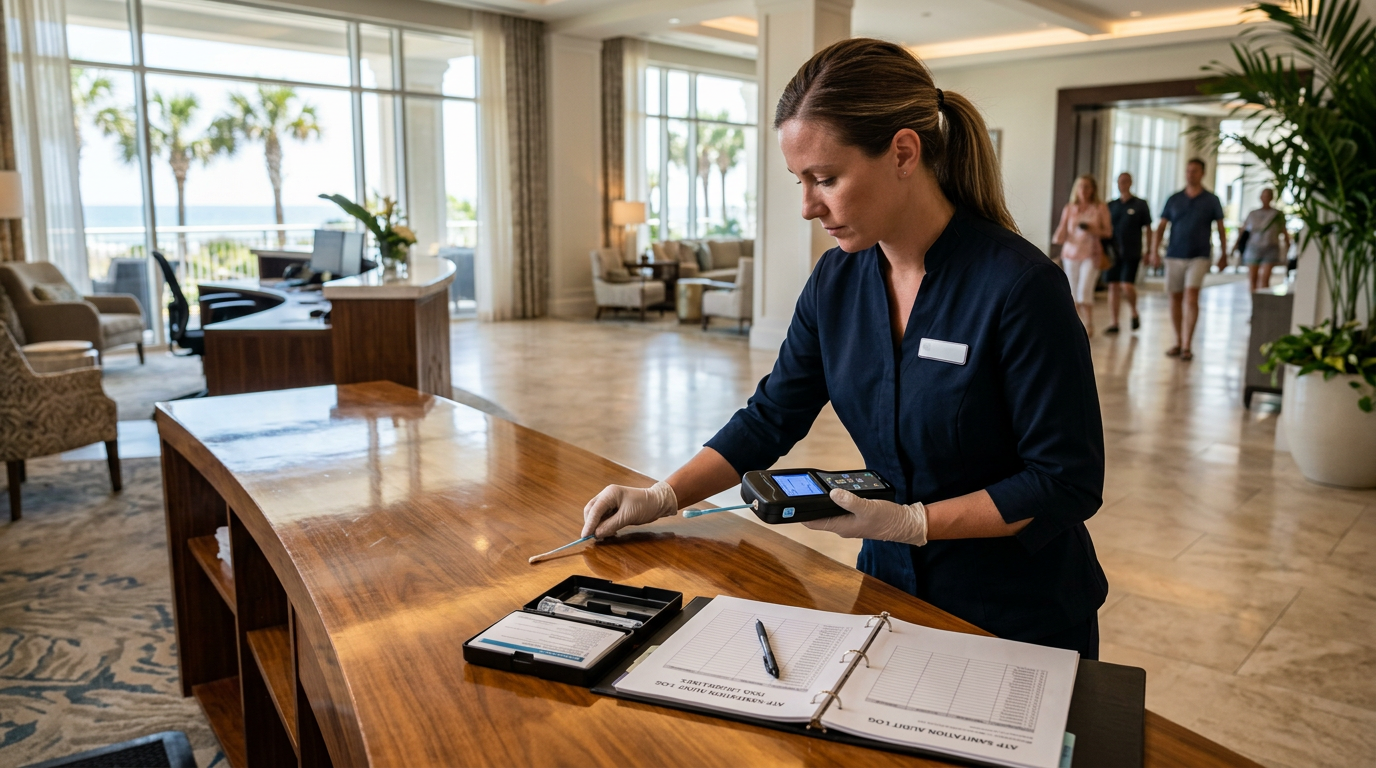
In the commercial cleaning and hospitality sectors, the traditional standard for a successful clean has long been visual inspection. However, modern environmental hygiene standards have moved past simple appearance, recognizing that microscopic soils, bacterial biofilms, and invisible chemical residues can persist on surfaces that look completely clean to the naked eye. Leading national operators now utilize ATP bioluminescence testing to replace subjective assessments with rapid, quantitative data. For Grand Strand commercial facilities, high-traffic resorts, and professional offices, adopting this scientific verification standard ensures consistent sanitation, validates cleaning labor investments, and provides undeniable proof of facility health.
The Shift from Visual Inspection to Quantitative Verification
For decades, the standard protocol for auditing a commercial cleaning crew's work was the 'white glove' test or a simple walk-through by a building manager. While these visual audits are effective at identifying visible trash, dust buildup, and large spills, they are entirely incapable of assessing biological soil loads or sanitization efficacy. Microorganisms, skin oils, and microscopic contaminants reside in the small pores of surfaces, acting as breeding grounds for pathogens while remaining invisible under standard facility lighting.
To address this gap, the national facility management industry has shifted toward objective, data-driven verification systems. This evolution is driven by both tenant expectations for healthier work environments and the regulatory need for verified infection control protocols. Rather than relying on subjective opinions about whether a conference table or reception desk 'looks clean,' professional facility managers now require empirical evidence that biological soils have been physically removed during the cleaning process.
Adopting a quantitative verification model transforms how cleaning services are managed and valued. It establishes a clear, measurable baseline of cleanliness that protects building occupants and reduces the spread of seasonal illnesses. For high-occupancy environments along the Grand Strand, this scientific approach elevates property management standards, aligning local commercial facilities with national corporate real estate requirements.
Deciphering the Science of Adenosine Triphosphate (ATP) in Commercial Settings
Adenosine triphosphate, or ATP, is the primary energy carrier molecule found in all living or once-living cells. This includes human skin cells, bacteria, mold, yeast, and food residues. Because all organic material contains ATP, its presence on a commercial surface is a direct indicator of biological residue. If a surface has been thoroughly cleaned and sanitized, the level of ATP should drop to near-zero, leaving no biological soil to support microbial colonization.
ATP verification relies on a simple biochemical reaction. A technician sweeps a specialized, pre-moistened swab across a designated surface area. This swab is then inserted into a handheld luminometer containing the enzyme luciferase, which is the same biological compound that allows fireflies to glow. When luciferase reacts with any ATP collected on the swab, it produces a reaction that emits light, which the luminometer measures instantly.
The output of this measurement is expressed in Relative Light Units, or RLUs. It is important to understand that an RLU reading does not count specific bacteria or identify viral pathogens; instead, it measures the overall volume of organic soil remaining on a surface. A high RLU reading indicates that biological matter is present, meaning the surface was either poorly cleaned or that the sanitization process failed to break down and lift away organic biofilms.
The ISSA Measure Clean Framework and RLU Thresholds
To prevent arbitrary interpretations of ATP scores, the International Sanitary Supply Association (ISSA) developed the 'Measure Clean' framework, establishing clear, standardized RLU benchmarks across different facility surfaces. This national standard provides a systematic blueprint for cleaning departments to set realistic, scientifically backed goals for surface cleanliness. Without these standardized limits, raw RLU numbers provide little actionable value to facility supervisors.
Under the standard ISSA guidelines, surfaces are classified by risk level and high-touch frequency to determine their acceptable RLU thresholds. Ultra-critical high-touch surfaces, such as door handles, keypad entries, elevator buttons, and water fountains, require strict control and should ideally register below 30 RLUs. General work surfaces, such as individual office desks, filing cabinets, and conference tables, are considered clean if they register under 100 RLUs.
When an ATP test exceeds these established thresholds, it triggers an immediate corrective action protocol. The area must be recleaned, sanitized, and retested before the space can be certified as ready for occupant use. By adhering to these national thresholds, Grand Strand facility managers can ensure that their cleaning protocols consistently deliver a hygienic environment rather than a superficial polish.
- Critical Touchpoints (Handles, Keypads, Touchscreens): Target under 30 RLUs for verified disinfection.
- General Working Surfaces (Desktops, Countertops, Podiums): Target under 100 RLUs for standard occupancy.
- Low-Touch Vertical Surfaces (Partitions, Cabinet Fronts): Target under 250 RLUs to prevent dust and soil accumulation.
- Immediate Recleaning Threshold: Any high-touch surface registering above 100 RLUs requires immediate re-intervention.
- Baseline Testing: Conducted post-cleaning but pre-disinfection to evaluate the physical soil-removal efficiency of microfiber systems.
Implementing ATP Auditing in Coastal Grand Strand Environments
Applying national ATP standards in the Grand Strand region requires an understanding of our unique coastal environment. Our high relative humidity, airborne salt spray, and heavy seasonal tourist traffic create distinct surface conditions. High humidity keeps surfaces slightly damp, which accelerates the degradation of organic matter and allows airborne pollens and dust to stick more readily to exterior-facing entryway surfaces.
Furthermore, wind-blown ocean salts and fine sand can deposit on entrance-door handles and lobby counters, forming a gritty film that can trap skin oils and other organic residues. If an auditor swabs a salty, humid surface without accounting for these environmental factors, the physical grit can interfere with the swabbing action, while residual salt deposits may occasionally affect the enzyme chemistry in the testing vial. Local operators must adjust their baseline testing protocols to account for these coastal elements.
To achieve accurate and reliable RLU readings in our coastal climate, testing should focus heavily on indoor, climate-controlled zones where moisture levels are stabilized. Entrance vestibules and transitional spaces must be audited with specialized attention, ensuring that salt residues are completely wiped clear using clean microfiber and neutral detergents before sanitizers are applied, preventing chemical binding and inaccurate test results.
Standard Operating Procedures for Surface Swabbing
Executing an ATP test requires strict adherence to standard operating procedures to ensure consistent and reproducible results. The technician must first wash and dry their hands, then don clean, powder-free gloves to prevent transferring any personal skin cells or natural sweat oils onto the sterile testing swab. Any accidental contact with the swab tip or the interior of the testing chamber will immediately contaminate the sample and invalidate the test.
Using a standardized physical motion, the technician must sweep the swab across a flat 4-inch by 4-inch (10cm x 10cm) grid on the target surface. The swab must be rotated while being pressed firmly against the substrate, ensuring that all sides of the swab tip make complete contact with the surface. For irregular or non-flat items like door handles or telephone receivers, the technician should cover the entire primary touchpoint using the same rotating, firm pressure.
Once the sample is collected, the swab is inserted back into its protective plastic sleeve and the chemical reagent chamber is activated by snapping the plastic valve at the top of the device. This releases the luciferase liquid down into the tube, where it mixes with the sample. The tube must be shaken gently side-to-side for five seconds to ensure thorough mixing, then placed immediately into the handheld luminometer. The device must be held perfectly vertical while taking the reading, and the numerical RLU result should be logged immediately into the facility's tracking software.
Labor Gamification, Training Validation, and Workforce Retention
The national cleaning industry faces ongoing challenges with labor recruitment and employee turnover. In many operations, quality control audits are viewed negatively by the frontline cleaning staff, who often feel that inspections are only used to find mistakes and hand out reprimands. Leading national operators have flipped this dynamic by using ATP data as an objective training tool and a platform for gamifying cleaning performance.
By presenting ATP scores as a clear, unbiased metric of cleanliness, managers can remove personal conflict from the quality assurance process. Frontline cleaners can see exactly how their specific physical actions, such as changing their microfiber cloths frequently or using correct wiping patterns, directly impact the scientific cleanliness of a room. This real-time visual feedback bridges the gap between abstract instruction and concrete, measurable success.
To boost morale and improve retention, progressive Grand Strand facility managers use these scores to reward outstanding work. Crews that consistently maintain average RLU scores below target limits are recognized publicly and rewarded through performance bonuses or structured incentives. This gamification strategy elevates cleaning from an overlooked, entry-level task to a skilled, tech-driven profession where staff take visible pride in their performance.
Calibrating Chemical Dilution and Disinfection Cycles Based on Quantitative Audits
An unexpected benefit of integrating ATP auditing into commercial cleaning operations is the ability to monitor the effectiveness of your chemical management systems. If an audit reveals consistently high RLU readings on surfaces that have been thoroughly wiped, the issue is rarely a lack of effort by the cleaner. Instead, it typically points to an issue with chemical dilution ratios, expired disinfectant solutions, or incorrect dwell times.
Many facility departments use automatic chemical dispensing walls to mix concentrated cleaning chemicals with water. If these dispensers are not regularly calibrated, they can under-dilute the mixture, resulting in a cleaning solution that lacks the chemical strength to break down greasy biofilms. Conversely, over-diluted solutions can leave behind a tacky chemical residue that actually attracts and traps organic soils, leading to high RLU spikes just hours after the cleaning shift ends.
ATP auditing also serves as a critical check on disinfectant dwell time. Every commercial disinfectant is EPA-registered to kill specific pathogens, but only if it remains wet on the target surface for a designated period, typically ranging from two to ten minutes. If a cleaning crew wipes a surface dry immediately after spraying it, the ATP test will reveal that the biological soils and protective biofilms remain largely undisturbed, demonstrating the need for proper chemical dwell-time training.
- Detergent Efficacy: Use ATP pre-tests to verify that surfactants are physically lifting and removing organic soil from surfaces.
- Disinfectant Verification: Ensure disinfectants are applied to clean surfaces, as organic soil can neutralize active sanitizing ingredients.
- Dilution Accuracy: Check dispenser calibration when RLU scores fail to drop, pointing to improper water-to-chemical ratios.
- Dwell-Time Audits: Use post-clean RLU readings to train staff on the necessity of letting solutions air-dry for the full EPA-contact window.
- Residue Management: Identify sticky chemical films left behind by excessive product use, which harbor soil and drive up RLU scores.
Cost-Benefit Analysis and Client Reporting for Grand Strand Property Managers
Integrating scientific ATP auditing into a commercial service agreement involves an upfront investment in testing units and disposable swab kits. However, a detailed cost-benefit analysis demonstrates that these hard costs are quickly offset by significant operational savings. By identifying and resolving cleaning failures before building occupants or guests notice them, facility managers can prevent tenant complaints and avoid costly contract re-negotiations.
In the competitive Grand Strand vacation rental and commercial leasing markets, providing prospective tenants or corporate clients with verified sanitation reports is a powerful differentiator. Sharing monthly or quarterly ATP quality reports demonstrates a level of professional transparency that traditional cleaning providers cannot match. This data-driven approach builds deep client trust, justifying premium lease rates and securing long-term tenant retention.
Ultimately, transition to an ATP-verified cleaning program shifts the relationship between property managers and cleaning teams from a subjective checklist of tasks to a collaborative partnership based on shared performance data. By investing in scientific validation, A2Z Cleaning & Linen Services ensures that local businesses and hospitality venues receive consistent, high-performance cleaning that stands up to national standards and protects our Grand Strand community.
Key takeaway
Transitioning to an ATP bioluminescence standard removes the guesswork from commercial cleaning audits, replacing visual assumptions with objective, scientific metrics. By aligning with national ISSA frameworks, Grand Strand facility managers and resort operators can guarantee consistent sanitation, optimize chemical use, and build verifiable trust with tenants and guests. To elevate your commercial cleaning standards and implement a data-backed quality control program for your property, call the team at A2Z Cleaning & Linen Services at 843.800.2788.
Keep Reading

Commercial & Hospitality
The ISSA CIMS-GB Commercial Custodial Standard: Transitioning Grand Strand Facilities to High-Performance, Low-Emission Sustainable Cleaning Systems
ReadCommercial & Hospitality
The Commercial Restroom Touchless Sanitation Standard: Transitioning from Manual Mopping to ISSA-Standard Spray-and-Vac Systems in Grand Strand Facilities
ReadCommercial & Hospitality
The ATP Bioluminescence Testing Standard for Coastal Commercial Facilities: Quantitative Disinfection Validation, National Hygiene Benchmarks, and Crew Training Protocols in Myrtle Beach
ReadReady for a spotless property?
Call 843.800.2788 or request a free quote from A2Z Cleaning & Linen Services.