Commercial & Hospitality
The IICRC S400 Standard for Professional Cleaning of the Built Environment: Implementing Science-Based Soil Removal, ATP Validation, and Labor-Efficiency Metrics in Grand Strand Commercial Facilities
Discover how Myrtle Beach commercial facility managers implement the IICRC S400 standard to transition from visual cleaning to science-based, ATP-validated soil extraction under modern labor constraints.
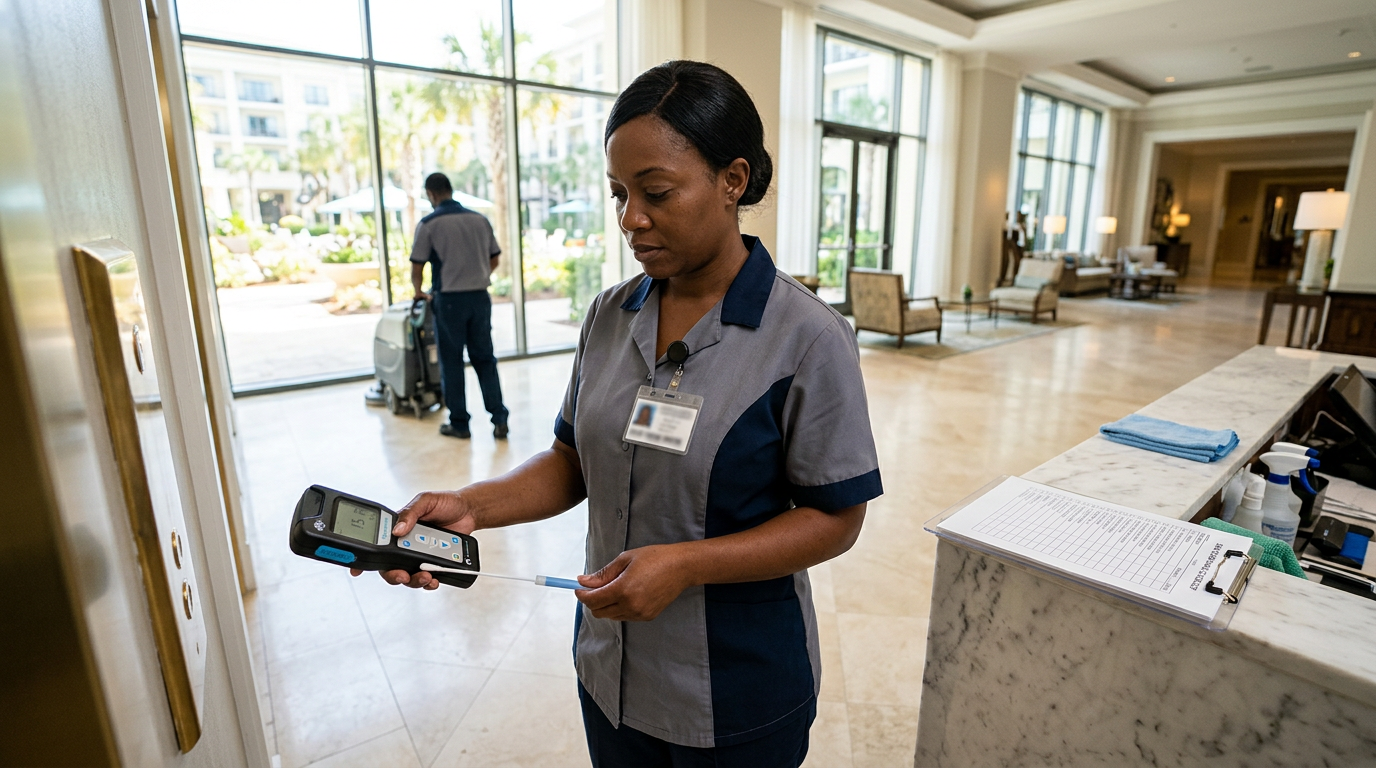
In high-traffic commercial environments across Myrtle Beach and the Grand Strand, the historical definition of clean is undergoing a major scientific shift. For years, facility managers relied on a visual sniff-and-shine test to evaluate their housekeeping partners. Today, the Institute of Inspection, Cleaning and Restoration Certification (IICRC) S400 standard provides a rigorous, science-based framework that shifts the focus from aesthetic appearance to measurable soil removal and bioload reduction. For local resorts, medical offices, and HOA common areas, implementing this standard is the key to maintaining guest trust, protecting indoor air quality, and optimizing labor budgets.
The Foundations of the IICRC S400 Standard: Defining Health-First Cleaning
The IICRC S400 standard represents a paradigm shift in commercial facility maintenance. Historically, commercial cleaning was viewed as an aesthetic service designed to empty wastebaskets, vacuum visible paths, and leave behind a fragrance that masked underlying organic residues. The S400 standard reframes cleaning as an environmental health science, defining it as the process of locating, identifying, containing, removing, and properly disposing of unwanted substances from the built environment. This health-first approach is critical in commercial spaces where high-volume foot traffic introduces complex biological contaminants daily.
In the coastal Grand Strand, where relative humidity levels regularly exceed eighty percent, the physical properties of dirt change. Airborne salt-drift mixes with fine sand and organic moisture to create a sticky film that binds to surfaces. Under the S400 framework, simply wiping these surfaces with a dry or lightly dampened cloth is insufficient. The standard mandates extraction over spreading, requiring cleaning technicians to use methods that physically lift and remove soils rather than moving them from one surface to another. This prevents the buildup of sticky soil matrices that harbor bacteria and mold spores.
Implementing the S400 standard requires a systematic understanding of the cleaning environment. The standard classifies surfaces into specific risk zones based on frequency of touch, proximity to moisture, and vulnerability of the occupants. By categorizing a Grand Strand resort lobby, a commercial kitchen, or a medical waiting area into distinct exposure risk categories, facility managers can allocate resources where they will have the greatest impact on occupant health, moving away from flat-rate, unscientific cleaning schedules that waste labor.
Transitioning from Visual Inspections to ATP Bioluminescence Validation
One of the core tenants of the IICRC S400 standard is the validation of cleaning efficacy through objective, quantitative testing. Visual inspections are notoriously subjective and cannot detect microscopic biological soils. To bridge this gap, modern commercial operators utilize Adenosine Triphosphate (ATP) bioluminescence monitoring. ATP is an energy molecule found in all animal, plant, bacterial, yeast, and mold cells. By swabbing a high-touch surface and inserting the swab into a luminometer, technicians receive an immediate readout in Relative Light Units (RLUs), providing an indisputable measure of organic surface contamination.
In Grand Strand commercial facilities, high-touch zones like check-in counters, elevator buttons, and stairwell handrails are prone to rapid biofilm accumulation. When salt-damp coastal air interacts with skin lipids left behind by hundreds of daily visitors, it forms an ideal breeding ground for microbes. By implementing ATP testing protocols, facility managers can establish objective cleanliness benchmarks. For instance, a clean surface should typically register under 100 RLUs, while critical healthcare or dining surfaces are held to stricter thresholds under 50 RLUs.
Leading commercial cleaning operators do not use ATP monitoring as a punitive tool, but rather as a quality assurance mechanism and training aid. Swabbing surfaces before and after a cleaning sequence demonstrates the real-world efficiency of the techniques and chemistries being deployed. This data-driven feedback loops directly into staff training, allowing team members to see exactly how minor adjustments in technique, such as microfiber folding or dwell-time management, directly impact the biological cleanliness of the surfaces they maintain.
- Baseline RLU Targeting: Establishing facility-wide biological cleanliness thresholds for high-touch surfaces.
- Data-Driven Training: Utilizing real-time test results to refine technician wiping and soil-extraction techniques.
- Verification Audits: Generating digital compliance reports for property managers, boards, and insurance reviews.
- Outbreak Prevention: Identifying hidden biological hot spots before they lead to community health challenges.
Designing Soil-Extraction Workflows: Capturing vs. Redistributing Particulates
Traditional cleaning practices often rely on materials that fail to capture fine particulates. Feather dusters, cotton string mops, and single-ply paper towels are primary culprits in redistributing soil. The IICRC S400 standard emphasizes the deployment of high-efficiency capture technologies. Chief among these is split-fiber microfiber. Unlike round cotton fibers that merely push dirt along a surface, split microfiber features a star-like structure with microscopic channels that physically grab, lock in, and hold dust, moisture, and microbes.
In our coastal environment, sand-dust is highly abrasive and can quickly ruin expensive commercial floor finishes if not properly captured. When vacuuming carpets and hard surfaces, S400-compliant workflows require the use of multi-stage, sealed HEPA filtration systems. Standard utility vacuums often exhaust fine dust and pollen back into the breathing zone, aggravating indoor allergies. Certified HEPA vacuums ensure that 99.97% of particulates down to 0.3 microns are permanently captured, protecting both the indoor air quality and the longevity of HVAC filtration systems.
To prevent cross-contamination across large resort properties and office complexes, a strict color-coded zone system must be enforced. Red microfiber is reserved exclusively for high-risk restroom fixtures, yellow for low-risk restroom surfaces, blue for general dusting, and green for food-preparation areas. Combined with the 'eight-sided fold' wiping technique—where a microfiber cloth is folded twice to create eight clean, distinct surfaces—technicians ensure that soils lifted from one area are never transferred to another, aligning fully with the S400 decontamination mandate.
The Chemical Selection Matrix: Balancing Efficacy, Dwell Times, and Indoor Air Quality
Selecting the correct chemistry under the IICRC S400 standard requires a delicate balance between cleaning power, surface compatibility, and indoor air quality. In the sealed, air-conditioned environments of modern Grand Strand buildings, the over-use of harsh, volatile organic compounds (VOCs) can lead to respiratory irritation and chemical buildup. S400 advocates for a precise chemical selection process, favoring products that are registered with the EPA and carry third-party green certifications, while remaining highly effective against targeted pathogens.
Every disinfectant has a specific, manufacturer-mandated dwell time—the duration a chemical must remain visibly wet on a surface to kill the targeted organisms. In hot, humid coastal climates, rapid evaporation can cause disinfectants to dry before they achieve full sanitization. S400-certified technicians are trained to monitor environmental conditions, adjusting their application methods to ensure the surface remains wet for the full required duration, which typically ranges from sixty seconds to ten minutes depending on the chemistry used.
Furthermore, cheap cleaning formulations often leave behind sticky surfactant residues that act as magnets for incoming beach sand and airborne pollen. This creates a recurring cycle of rapid re-soiling. S400-aligned operators utilize free-rinsing, low-residue detergents and neutral pH cleaners. These formulations lift the soil suspension cleanly from the substrate, leaving behind a bare, pristine surface that resists soil adhesion and stays clean significantly longer, preserving the aesthetic and structural integrity of expensive commercial surfaces.
Labor-Efficiency Metrics and Standard Operating Procedures
In today's challenging labor market, commercial facility managers must balance strict operational budgets with the need for high-quality cleaning. The IICRC S400 standard addresses this by integrating standard operating procedures (SOPs) with recognized labor-production rates, such as the ISSA 612 Cleaning Times. By calculating the exact square footage of various floor types, touchpoints, and fixtures, operators can design highly efficient cleaning routes that eliminate wasted motion and optimize every labor hour.
During the peak Grand Strand summer season, vacation rentals and resort common areas face intense weekend turnover windows. Under these compressed timelines, unscientific 'zone cleaning' where one cleaner handles an entire area often leads to fatigue, missed details, and physical burnout. The S400 standard encourages 'specialist cleaning' or team cleaning models. In this setup, individual technicians focus on specific, highly repetitive tasks—such as a utility specialist handling vacuuming and trash, while a detail specialist focuses on high-touch sanitization and chemical dwell times.
This assembly-line approach to facility cleaning significantly reduces the physical strain on workers while increasing speed and consistency. By utilizing standardized tools, like lightweight backpack HEPA vacuums and pre-loaded ergonomic microfiber charging buckets, operators can safely increase their square-footage-per-hour output without sacrificing cleaning quality or biological safety. This structured approach helps stabilize labor costs and reduce turnover in high-demand coastal markets.
- Task-Time Standardization: Utilizing ISSA 612 metrics to assign realistic, data-backed cleaning quotas.
- Specialist Cleaning Models: Dividing labor into distinct functional roles to improve focus, speed, and quality.
- Ergonomic Tool Integration: Supplying lightweight, modern equipment to reduce worker strain and prevent injuries.
- Predictable Cost Structuring: Aligning labor allocation directly with seasonal facility occupancy trends.
Touchless Disinfection and Electrostatic Technologies in High-Traffic Corridors
In the wake of heightened public health awareness, touchless disinfection technologies—particularly electrostatic sprayers—have become standard in many commercial facilities. However, the IICRC S400 standard warns that these technologies are not a substitute for physical soil removal. Applying a disinfectant spray directly onto a dusty, soiled surface merely sanitizes the top layer of dirt, leaving the underlying organic matter untouched. True decontamination requires a two-step process: physical cleaning followed by targeted disinfection.
Electrostatic sprayers work by applying a positive electrical charge to the disinfectant droplets as they leave the nozzle. Because most environmental surfaces carry a negative charge, the atomized droplets are naturally attracted to target areas, wrapping around curved surfaces, pipework, and hard-to-reach crevices that traditional wipes miss. In Myrtle Beach resorts, this technology is highly effective for rapid coverage of locker rooms, fitness centers, and pool cabanas where irregular surfaces make manual wiping incredibly labor-intensive.
To implement touchless disinfection safely under S400 guidelines, operators must carefully manage chemical dilution ratios and personal protective equipment (PPE). Technicians must wear appropriate respiratory protection to avoid inhaling atomized mist, and spaces must be temporarily cleared of occupants during application. By integrating touchless spraying as a secondary barrier in high-traffic corridors, facilities can maintain incredibly low biological counts on complex architectural elements without exceeding their daily labor budgets.
Commercial Restroom Biofilm and Organic Soil Decontamination
Commercial restrooms are the most challenging environments to maintain in coastal facilities. The combination of high organic soil loads, constant moisture, and humid outdoor air creates the perfect storm for biofilm development. Biofilms are complex, sticky matrices of bacteria that cling to grout lines, floor drains, and the undersides of fixtures. Traditional mopping is highly ineffective against biofilms, as string mops simply glide over the top of these microscopic structures, occasionally feeding them with dirty mop water.
To combat biofilm under the S400 standard, operators deploy mechanical agitation and soil extraction. This involves using cylindrical brush floor scrubbers that physically break the bond between the biofilm and the textured tile or grout. Once loosened, the slurry is immediately vacuumed away by an onboard recovery tank, leaving the floor dry and biologically clean. This process not only eliminates slippery conditions but also removes the organic food sources that attract pests and cause persistent restroom odors.
Odor control in commercial restrooms must be resolved at the molecular level, rather than masked with heavy synthetic perfumes. S400-compliant protocols utilize enzyme-active cleaners and bio-enzymatic digesters that target organic waste, uric acid crystals, and mold spores. By breaking down these compounds into harmless carbon dioxide and water, operators permanently eliminate the source of the odor, resulting in a clean, fresh-smelling environment that reflects professional hygiene and meticulous property management.
Partnering with Certified Commercial Operators: Structuring Performance-Based SLAs
For Grand Strand commercial property managers and HOA boards, the key to successful facility maintenance lies in transitioning from vague cleaning contracts to structured, performance-based Service Level Agreements (SLAs). An S400-aligned SLA replaces ambiguous phrases like 'clean to satisfaction' with specific, measurable outcomes. Contracts should explicitly detail the frequency of cleaning, the specific tools and chemistries to be used, and the target ATP benchmarks that must be maintained across various zones.
By structuring agreements around measurable standards, property managers can ensure that their cleaning investments are directly contributing to asset preservation. This is especially critical for coastal properties, where premature wear of carpets, tile grout, and metal finishes can cost tens of thousands of dollars in premature capital replacement. Regular performance audits, validated by digital ATP logs and physical checklist verifications, hold service providers accountable and build transparent, long-term partnerships.
Partnering with a professional, family-owned commercial cleaning service like A2Z Cleaning & Linen Services ensures your property is cared for using these advanced industry standards. Our certified technicians understand the unique environmental pressures of the Myrtle Beach area and are equipped with the science-based workflows, high-performance equipment, and validated testing protocols required to protect your guests, staff, and real estate investments. Contact our Grand Strand office at 843.800.2788 to schedule a comprehensive facility walkthrough and customize a high-performance cleaning program for your property.
Key takeaway
Transitioning commercial cleaning programs to the IICRC S400 standard protects building occupants and preserves valuable real estate assets in our unique coastal environment. By replacing visual, subjective cleaning checks with quantitative ATP testing, structured labor metrics, and high-performance soil-extraction equipment, facility managers can achieve measurable biological cleanliness while maximizing their operational budgets.
Keep Reading
Commercial & Hospitality
The ATP Bioluminescence Sanitation Verification Standard: Implementing Objective Soil Audits, ISSA Measure Clean Guidelines, and High-Performance Surface Management in Grand Strand Commercial Facilities
ReadCommercial & Hospitality
The ISSA CIMS-GB Commercial Custodial Standard: Transitioning Grand Strand Facilities to High-Performance, Low-Emission Sustainable Cleaning Systems
ReadCommercial & Hospitality
The ATP Bioluminescence Testing Standard for Coastal Commercial Facilities: Quantitative Disinfection Validation, National Hygiene Benchmarks, and Crew Training Protocols in Myrtle Beach
ReadReady for a spotless property?
Call 843.800.2788 or request a free quote from A2Z Cleaning & Linen Services.