Commercial & Hospitality
The Commercial Restroom Touchless Sanitation Standard: Transitioning from Manual Mopping to ISSA-Standard Spray-and-Vac Systems in Grand Strand Facilities
Discover how leading commercial operators are replacing manual mopping with ISSA-standard touchless spray-and-vac systems to elevate hygiene, reduce labor costs, and protect staff.
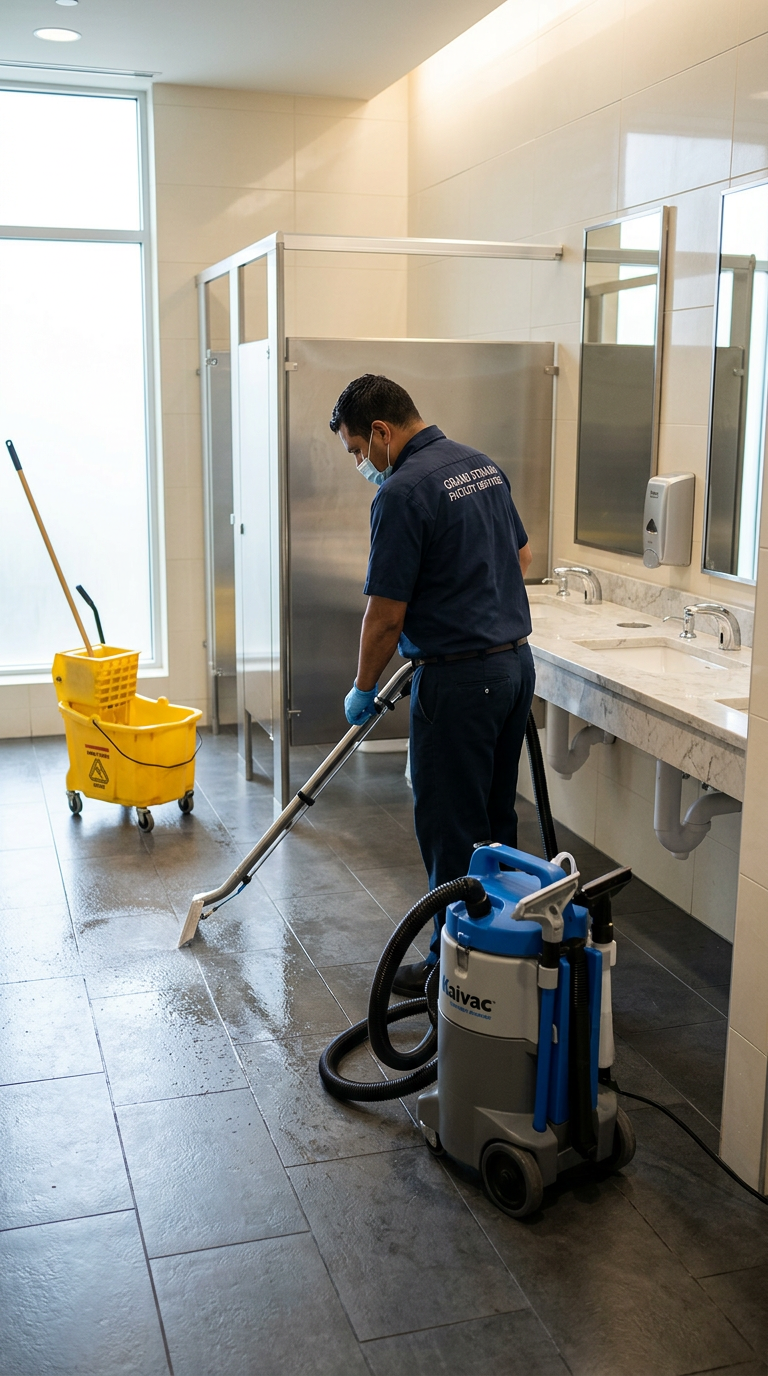
Restrooms represent only a small percentage of a commercial facility's footprint, yet they account for over eighty percent of cleanliness complaints and the highest concentration of biological hazards. In high-traffic Myrtle Beach environments, traditional cleaning methods like manual mopping fail to extract deep-seated soils, instead redistributing contaminants across tile and grout surfaces. Leading national operators are shifting to touchless spray-and-vacuum systems that align with the International Sanitary Supply Association (ISSA) Clean Standards. This guide outlines how Grand Strand facility managers can execute this technical transition to protect indoor air quality, optimize labor hours, and elevate sanitation metrics.
The Mechanical Limitations of Traditional Mopping in Coastal Commercial Spaces
Traditional mop-and-bucket systems rely on dilution and manual friction, which inherently limits their soil-removal capacity. As a cotton or microfiber mop head passes over highly textured commercial tile, it acts as a squeegee, deposits dirty water into porous grout joints, and leaves behind chemical residues that attract new soil. In coastal areas like the Grand Strand, wind-blown sand and high humidity accelerate this buildup, turning grout lines into dark, moisture-rich breeding grounds for odor-causing bacteria and mold.
Furthermore, the physical process of dipping a soiled mop back into a single-compartment bucket rapidly contaminates the cleaning solution. Within minutes of starting a shift, environmental services technicians are washing floors with a compromised slurry of grey water, suspended solids, and biological pathogens. This cross-contamination vector often transfers bacteria from high-risk urinal surrounds to high-touch vanity bases and entryway floors, compromising overall facility safety.
ATP bioluminescence testing regularly confirms that mopped commercial restrooms harbor high levels of organic matter even immediately after cleaning. Traditional cleaning fails to achieve the soil extraction necessary to break down resilient bio-films. To meet modern public health expectations, commercial operators must transition from soil redistribution to true mechanical extraction.
- Soil redistribution: Mopping pushes fine sand and organic matter deep into porous grout joints.
- Cross-contamination risk: Single-bucket systems spread biological pathogens across clean zones.
- Chemical accumulation: Dried soap residues create sticky films that rapidly attract sand and hair.
- Aesthetic degradation: Grout lines darken and discolor due to trapped organic slurry and hard water.
The Anatomy of Touchless Spray-and-Vacuum Engineering
Touchless spray-and-vacuum sanitation systems represent a major leap forward in environmental service technology, integrating pressurized chemical delivery, rinsing, and high-performance extraction into a single mobile footprint. Technicians apply a metered, low-pressure sanitizing solution directly to fixtures, partitions, and floors, allowing the chemistry to dwell and break down organic binders. Unlike manual scrubbing, this pressurized application penetrates hard-to-reach areas, such as behind toilet hinges and under-counter plumbing.
Following the dwell phase, the system applies a high-pressure fresh-water rinse of roughly 500 to 600 PSI to blast loosened soil and bio-films from non-porous surfaces. The key to the process is the integrated wet-vacuum recovery system, which utilizes a high-airflow floor squeegee to extract the dirty water, suspended sand, and dissolved chemicals directly into a dedicated recovery tank. This leave-dry extraction ensures that surfaces are immediately safe for use, significantly reducing slip-and-fall hazards on commercial tile.
Because the system utilizes only clean water and fresh chemical mixtures from separate tanks, the risk of cross-contamination is virtually eliminated. Soil is drawn out of the restroom environment rather than being spread across it, achieving sanitation metrics that consistently meet or exceed ISSA commercial cleanliness guidelines. The mechanical extraction of sand is particularly critical in Myrtle Beach, where abrasive silica particles can quickly degrade protective tile sealants.
- Pressurized application: Reaches recessed crevices, hinge points, and under-fixtures without manual contact.
- High-pressure rinsing: Blasts away stubborn sand, organic bio-films, and dried mineral deposits.
- Mechanical extraction: High-volume wet vacuum removes polluted slurry directly into a waste tank.
- Rapid drying times: Eliminates standing pools of water, preventing slip hazards and immediate re-soiling.
Aligning with ISSA Clean Standards and Quantitative ATP Auditing
National facility management standards are increasingly shifting toward quantitative validation, using ATP monitoring to verify cleanliness instead of relying solely on subjective visual inspections. Under ISSA cleaning guidelines, a clean surface typically registers below 30 to 50 relative light units on an ATP luminometer. Traditional manual mopping rarely achieves these levels in public restrooms, often yielding scores well into the hundreds due to persistent bacterial bio-films.
Incorporating touchless spray-and-vacuum systems into standard operating procedures allows Grand Strand facilities to consistently meet these rigorous national performance metrics. The continuous soil extraction and targeted chemistry break down the cellular matrices of pathogens, resulting in ATP readings that match healthcare-grade standards. Facility managers can leverage this verifiable data to assure tenants, guests, and corporate stakeholders of a superior level of environmental safety.
Establishing a structured ATP auditing protocol also provides valuable feedback for training programs. By testing designated hot spots—such as flush handles, partition latches, and the grout lines adjacent to floor drains—supervisors can identify specific operational gaps, monitor equipment wear, and track technician performance over time. This data-driven approach removes guesswork and builds a culture of professional accountability within the environmental services team.
Mitigating the Labor Crunch: Ergonomics, Speed, and Technician Retention
The physical toll of traditional commercial cleaning contributes significantly to the industry-wide labor shortages and high turnover rates observed across the Grand Strand. Repetitive manual mopping, heavy bucket lifting, and prolonged kneeling to scrub under fixtures lead to musculoskeletal strain, fatigue, and occupational injuries. Transitioning to ergonomic, touchless equipment dramatically reduces the physical demands placed on environmental services staff.
Touchless spray-and-vacuum systems allow technicians to remain upright throughout the entire cleaning process, using lightweight wands to apply chemistry, rinse, and vacuum-dry surfaces. By eliminating the need to manually bend, scrub, or wring out heavy mops, facilities can significantly decrease worker fatigue and lower workers' compensation claims related to repetitive strain. This shift to modern, tech-enabled equipment also enhances the professional status of the cleaning role, driving higher job satisfaction and employee retention.
Beyond physical relief, these systems offer remarkable gains in operational efficiency. Standard restroom cleaning times can be reduced by up to sixty percent compared to traditional manual methods. This rapid turnaround is invaluable for high-volume commercial spaces, shopping centers, and busy beachfront venues, allowing staff to reallocate saved labor hours toward detailing, preventative maintenance, or high-touch surface disinfection.
Chemical Dilution Control and Chemical Management Systems
Achieving reliable sanitation requires precise chemical dilution, yet manual mixing remains one of the most common points of failure in commercial cleaning operations. Under-diluted chemicals lack the active ingredient concentration needed to neutralize pathogens and dissolve greasy soils, while over-diluted mixtures leave sticky, dulling residues that attract dirt and cause chemical off-gassing. Modern touchless sanitation units resolve this issue through integrated, lockable chemical dilution control systems.
These built-in systems draw concentrated product directly through calibrated metering tips, blending the chemical with water at the exact ratio specified by the manufacturer. This automation prevents costly product waste, protects workers from direct chemical exposure, and ensures that every cleaning cycle uses chemistry optimized for maximum efficacy. For coastal facilities dealing with both salt-air minerals and organic soils, utilizing the precise dilution of dual-action disinfectant-cleaners is critical.
In addition to improving performance, automated dilution systems simplify OSHA Hazard Communication compliance. Lockable chemical compartments prevent unauthorized tampering or accidental mixing of incompatible products, such as bleach and ammonia-based cleaners. Cleaners can work safely with clear, color-coded chemical cartridges, reducing training times and ensuring a standardized, predictable sanitation process across the entire property portfolio.
Mitigating Coastal Humidity, Mold, and Deep-Tissue Grout Odors
The unique coastal climate of Myrtle Beach, characterized by sustained high humidity and salt-laden air, presents unique challenges for indoor environmental control. In commercial restrooms, this excess moisture combines with organic soils, skin cells, and uric acid to create an ideal habitat for mold colonization and deep-tissue grout odors. Traditional mopping introduces excessive water into the environment without a recovery mechanism, worsening indoor air quality and extending drying times.
Touchless spray-and-vac systems address this microclimate vulnerability by extracting moisture and airborne contaminants directly from the space. The powerful vacuum motor draws moisture out of the porous grout lines and from behind wall-mounted fixtures, dropping the local relative humidity and starving mold spores of the water required for germination. Removing this trapped organic material eliminates persistent, deep-seated odors rather than merely masking them with heavy synthetic fragrances.
Additionally, extracting airborne overspray during the wet-vacuuming phase helps protect HVAC systems from recirculating fine particulate matter and chemical mists. This proactive moisture and contaminant management creates a cleaner, fresher indoor environment that supports healthy indoor air quality. For oceanfront hotels, high-occupancy retail plazas, and public venues, maintaining an odor-free, mold-resistant restroom is essential to preserving brand reputation and protecting physical assets.
Financial ROI: Capital Equipment Expenditures vs. Reduced Labor Hours
While acquiring professional touchless spray-and-vacuum equipment requires an upfront capital investment, the long-term return on investment is highly favorable for commercial operators. The primary driver of this return is the substantial reduction in labor hours, which typically account for eighty to ninety percent of a commercial cleaning budget. By slashing restroom cleaning times by up to sixty percent, facilities can recoup their initial equipment costs within the first six to twelve months of operation.
Further financial savings are realized through optimized chemical consumption and reduced accessory replacement costs. Traditional cleaning programs require a constant cycle of purchasing replacement mop heads, bucket assemblies, and specialized scrub brushes, alongside high chemical waste due to manual pouring. In contrast, touchless systems utilize highly concentrated chemical cartridges and automated dilution, maximizing the mileage of every ounce of product and extending the operational lifespan of the cleaning hardware.
Finally, the preventative protection these systems offer to tile, grout, and metal fixtures minimizes the need for expensive restoration services, such as specialized grout recoloring, commercial tile replacement, or metal partition refinishing. Preventing salt-air corrosion, moisture rot, and deep-seated soil staining preserves the structural integrity of restroom finishes, extending the capital depreciation cycle of the entire restroom facility and lowering the total cost of ownership.
Designing the Operational Transition: Staff Training and Implementation
Successfully transitioning to touchless spray-and-vacuum sanitation requires a structured change-management strategy that addresses technician habits, equipment training, and quality assurance. Simply placing new machinery in a supply closet often leads to underutilization or improper operation. Managers must establish clear, multi-step training protocols that cover machine setup, chemical connection, safety precautions, and preventative maintenance schedules.
Training should begin with hands-on demonstrations highlighting the ergonomic benefits of the equipment to build immediate technician buy-in. Demonstrating how the technology reduces physical strain and speeds up tasks helps overcome initial resistance to changing long-standing manual habits. Supervisors should visually map out the specific cleaning sequence—moving systematically from high-to-low zones and from the back of the restroom toward the exit door—to maximize efficiency and safety.
Finally, establishing daily and weekly maintenance routines for the equipment is crucial for long-term operational success. Technicians must be trained to thoroughly rinse the recovery tank, clean the intake filters, and wipe down the squeegee blades after every shift to prevent odor buildup and preserve vacuum suction. By combining high-performance technology with professional training and consistent equipment care, Grand Strand facility managers can build a highly resilient, modern environmental services department.
Key takeaway
Transitioning from manual mopping to ISSA-standard touchless spray-and-vac systems elevates restroom hygiene, protects staff from injury, and delivers a measurable return on investment. For Myrtle Beach and Grand Strand commercial facilities, adopting these advanced soil-extraction protocols is the key to maintaining spotless, odor-free spaces that withstand the demands of coastal tourism and high-volume daily use. A2Z Cleaning & Linen Services can help you optimize your cleaning standards; contact our team at 843.800.2788 to learn more.
Keep Reading
Commercial & Hospitality
The ISSA CIMS-GB Commercial Custodial Standard: Transitioning Grand Strand Facilities to High-Performance, Low-Emission Sustainable Cleaning Systems
ReadCommercial & Hospitality
The Grand Strand Commercial Disinfection Specialist Career Pathway: Class-A Office Standards, Biohazard Mitigation Certifications, and Local Retention Models
ReadCommercial & Hospitality
The OSHA Bloodborne Pathogen Standard for Coastal Hospitality and Commercial Facilities: Implementing Exposure Control Plans, EPA List Q Disinfectants, and Post-Incident Workflows in Myrtle Beach
ReadReady for a spotless property?
Call 843.800.2788 or request a free quote from A2Z Cleaning & Linen Services.