Vacation Rentals
The Mid-Turn Lock and Dispatch Protocol: Integrating Smart-Lock APIs, Real-Time Geo-Fencing, and Cleaning Vendor Handoffs in Myrtle Beach Portfolios
Streamline your vacation rental operations with an automated dispatch and access protocol designed to handle the tightest turnover windows on the Grand Strand.
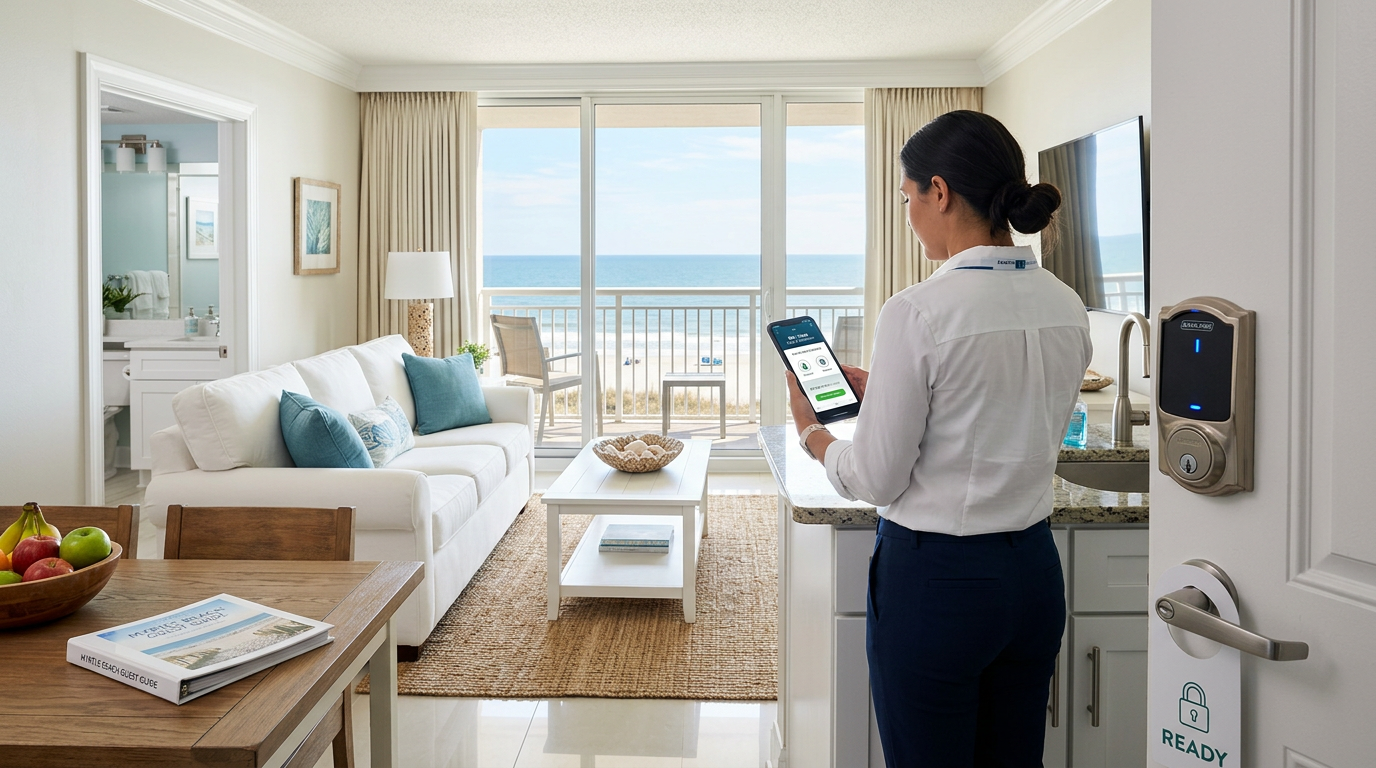
Managing a vacation rental portfolio along the Grand Strand requires absolute operational precision, particularly during the high-occupancy summer season. When properties are scattered from Cherry Grove down to Surfside Beach, even minor coordination delays can disrupt check-in schedules. Establishing an automated dispatch and access system is the most effective way to eliminate communication gaps between property managers, guests, and cleaning teams. By integrating smart technology with clear operational handoffs, you can protect your reviews, reduce labor costs, and ensure consistent property readiness.
The High-Stakes Turn-Window Access Gap on the Grand Strand
In the Myrtle Beach vacation rental market, the window between a guest's 10:00 AM departure and the next arrival at 4:00 PM is incredibly tight. During peak summer weekends, traffic along Ocean Boulevard and the bypass can add significant travel time for cleaning crews, making every minute on-site critical. When a cleaning team arrives at a property only to find the guest has not yet vacated, or if they are locked out due to an inactive door code, the entire daily schedule collapses. This friction quickly translates into delayed check-ins, frustrated guests, and increased administrative stress for your staff.
Relying on manual text messages or phone calls to coordinate turnovers across dozens of non-contiguous properties is a recipe for operational failure. A single missed communication can leave a cleaning team sitting idle, driving up labor costs while other units remain unserviced. To scale a rental portfolio successfully, managers must close this access gap by implementing automated systems that track exactly when guests leave and when cleaning crews arrive. This level of operational visibility is no longer a luxury; it is a necessity for maintaining high guest satisfaction scores.
By establishing a standardized turn-window protocol, you protect both your cleaning staff and your property assets. Real-time updates allow you to dynamically reroute crews based on actual vacancy status rather than estimated times. This proactive approach reduces downtime, prevents unnecessary property visits, and ensures that cleaners have a full, uninterrupted block of time to execute their tasks. Overcoming these logistical challenges requires a combination of integrated property management software and reliable on-the-ground execution.
- Uncoordinated check-out times that lead to costly cleaning crew idle time.
- Increased carbon emissions and fuel costs from driving back and forth between delayed properties.
- Elevated risk of missed cleaning details due to rushed, compressed turn windows.
- Negative guest reviews resulting from delayed check-ins or unready properties.
Smart Lock API Integration: Beyond Basic Code Generation
The foundation of a modern turnover protocol is the integration of your Property Management Software (PMS) with your smart lock hardware. Modern platforms connect directly with commercial-grade locks via secure application programming interfaces (APIs). This connection allows the system to automatically generate unique, time-sensitive access codes for every individual who enters the property, including guests, housekeepers, inspectors, and maintenance technicians. This eliminates the security risks associated with sharing master physical keys or using static keypad codes that can be easily shared.
For cleaning operations, the PMS should automatically activate the housekeeper's access code precisely at check-out time and deactivate it once the clean is marked complete. This precise control prevents unauthorized entry outside of designated work hours, protecting the property owner's liability and securing guest belongings. Furthermore, the smart lock API provides an digital audit trail, showing exactly who entered the property and at what time, which is invaluable if any security or damage disputes arise.
Coastal environments present unique challenges for digital hardware, as salt air and high humidity can degrade battery contacts and wireless connections. When selecting smart locks for oceanfront high-rises or beach homes, prioritize commercial-grade keypads with physical buttons and robust weather-stripping. Additionally, choose locks that store access codes locally on the device rather than relying entirely on a live Wi-Fi connection, ensuring that cleaning crews can still gain entry even during localized internet or power outages.
- Automated generation of unique, time-bound access codes for every reservation and service call.
- Real-time digital audit logs tracking exact entry and exit times of all personnel.
- Integration with software platforms like RemoteLock or BeHome247 to unify hardware across different brands.
- Selection of salt-air-resistant, commercial-grade hardware to prevent environmental lock failures.
Geo-Fencing and Real-Time Check-Ins: Verifying On-Site Arrival
While smart lock integrations confirm when a door is unlocked, geo-fencing software verifies that your service teams are physically present at the property location. Mobile applications used by modern cleaning providers can utilize GPS coordinates to restrict check-ins until the technician is within a predefined radius of the rental unit. This technology prevents remote or premature check-ins, ensuring that labor hours are tracked accurately and that cleaners are on-site when they claim to be.
Once a cleaner checks in via the geo-fenced app, an automated update is sent directly back to your central PMS. This instant data flow gives your dispatch team a live look at operations across the entire Grand Strand, allowing them to monitor progress without constantly calling field workers. If a property is scheduled for a turn but the crew has not checked in by a specific time, the system can automatically trigger an alert, prompting dispatchers to investigate the delay before it impacts the guest check-in window.
In addition to tracking attendance, geo-fenced check-ins help gather valuable data on property-specific clean times over the course of a season. If a specific floor plan or location consistently takes 20% longer to clean than estimated, this data allows you to adjust your scheduling algorithms and labor allocations. This continuous feedback loop optimizes your operations, making your portfolio more efficient and your service delivery more predictable.
The Automated Delay Protocol: Managing Early Check-Ins and Late Departures
Late departures are one of the most common disruptions to a smooth Saturday changeover. To mitigate this, your PMS should be configured to send automated, friendly text reminders to guests at 8:00 AM on their day of departure, reminding them of the 10:00 AM check-out time. If a guest requests a late check-out, the system should instantly check the cleaning schedule to determine if the property is on a tight turn or if a buffer exists, automatically approving or denying the request based on real-time operational capacity.
When a guest overstays their check-out time without authorization, a structured protocol must be initiated immediately. At 10:15 AM, the guest's smart lock code should automatically expire, preventing re-entry and signaling that the vacancy window has begun. If the cleaning crew arrives to find the guests still inside, the cleaner uses their mobile app to report a 'late departure delay,' which instantly alerts the property manager and automatically shifts that property to the end of the cleaning queue to keep the crew moving.
Managing early check-in requests requires a similarly automated approach. When a unit is marked as 'clean and inspected' by the supervisor, the PMS should immediately trigger an automated email or SMS to the incoming guest, letting them know their property is ready ahead of schedule. This seamless transition delights guests while reducing the volume of inbound phone inquiries to your front desk, allowing your team to focus on active field operations.
- Automated SMS reminders sent to guests on departure morning with clear check-out instructions.
- Automatic expiration of guest codes at designated check-out times to prevent unauthorized holdovers.
- One-touch delay reporting via the cleaner's mobile app to instantly alert property management.
- Automated notifications sent to incoming guests as soon as a property passes final inspection.
In-Field Issue Documentation: PMS Integration for Damage and Maintenance Triaging
A professional turnover cleaning crew serves as the eyes and ears of a property manager. When a team enters a unit, their first task is to perform a quick walkthrough to identify any obvious damage, missing items, or maintenance concerns left by the departing guests. By utilizing mobile inspection software integrated directly with your PMS, cleaners can document these issues on the spot, uploading geotagged, time-stamped photographs and brief descriptions of the problem.
This real-time documentation is crucial for protecting the property owner's investment and securing security deposits. If a broken sliding glass door lock or a damaged piece of furniture is discovered, the cleaner's submission instantly creates a maintenance ticket within the PMS. The system can then automatically dispatch an on-duty maintenance technician to the property while the cleaning crew continues their work in other areas of the home, saving valuable hours in the turn window.
Furthermore, this integrated approach prevents communication breakdowns where damages are reported verbally but forgotten in the rush of a busy weekend. Having a centralized, digital record of all in-field findings ensures that every issue is tracked from discovery to resolution. This organized workflow guarantees that guests never walk into a property with unresolved maintenance issues, preserving your brand reputation and guest reviews.
Secondary Clean Triggers and Quality Assurance Auditing
Even with experienced cleaning professionals, a high-quality turnover strategy requires a separate layer of quality assurance. Once the primary cleaning team completes their checklist and checks out of the property, a dedicated supervisor or inspector should be dispatched to conduct a final audit. This audit should guide the inspector through a digital checklist focused on high-touch surfaces, linen presentation, and overall guest readiness, ensuring that no details are missed.
If the inspector identifies a deficiency during their walkthrough—such as sand remaining on a balcony tile or a dusty ceiling fan—they do not simply clean it themselves if it requires significant effort. Instead, they flag the item in the mobile app, which can trigger a 'secondary clean' order. Depending on the severity, this order is routed back to the primary cleaner to return and correct the issue, or dispatched to a dedicated touch-up specialist who handles rapid-response corrections.
By separating the cleaning process from the inspection process, you build a system of accountability that ensures consistent quality across your entire portfolio. These digital audits generate performance metrics for each cleaning technician, allowing you to identify top performers and target retraining efforts where they are needed most. This structured, data-driven approach is the key to scaling your operations without sacrificing quality.
- Independent inspection walkthroughs utilizing digital checklists with required photo uploads.
- Automated dispatch of touch-up specialists to resolve highlighted inspection failures quickly.
- Performance tracking metrics for cleaning teams to maintain high service standards.
- Comprehensive photo documentation of the guest-ready property prior to every check-in.
Operational Redundancy: Physical Keys, Backup Lockboxes, and Emergency Access
Despite the reliability of modern smart locks, a robust operational protocol must always include a plan for physical redundancy. Dead batteries, network outages, or localized hardware failures can occasionally lock out guests and cleaners alike. To prevent these technical glitches from derailing your operations, every property should be equipped with a secure, heavy-duty mechanical lockbox located in an inconspicuous but accessible spot on the exterior of the building.
This backup lockbox should contain a physical master key that can override the electronic deadbolt in an emergency. The combination to this lockbox must be kept secure, shared only with authorized personnel, and changed periodically to maintain property security. During each weekly turnover, the inspector should verify that the backup key is present inside the lockbox and that the mechanical combination lock operates smoothly without sticking.
In addition to on-site backups, your dispatch office should maintain a centralized master key vault for all managed properties. If a smart lock suffers a total electronic failure, having a physical key readily available for dispatch ensures that your teams can regain entry without waiting for a locksmith. This layers-of-protection approach minimizes down-time, protects your schedules, and keeps your operations running smoothly regardless of technical challenges.
Choosing the Right Local Operations and Cleaning Partner
Scaling a vacation rental portfolio along the Grand Strand is impossible without a highly organized, tech-savvy cleaning partner. You need a team that does not just clean properties, but actively integrates into your operational workflow. The right partner understands the importance of smart locks, utilizes integrated mobile software, and respects the strict turn windows required in our competitive coastal tourism market.
At A2Z Cleaning & Linen Services, we specialize in supporting property managers and hosts with professional, tech-enabled turnover services. Our team is fully trained in modern PMS integrations, digital inspections, and real-time field reporting, ensuring that you always have complete visibility into the status of your rentals. We provide the operational muscle and reliability required to keep your properties guest-ready, week after week.
Whether you manage a handful of oceanfront condos in Myrtle Beach or a large portfolio of luxury beach homes in Cherry Grove, we have the infrastructure and experience to streamline your turnovers. Let us help you eliminate scheduling headaches and elevate your guest experience. Contact us today at 843.800.2788 to discuss how we can integrate our professional cleaning and linen workflows into your property management systems.
Key takeaway
An efficient turnover operation relies on integrating smart technology with clear, automated communication between your PMS, smart locks, and cleaning crews. By eliminating manual steps and establishing clear protocols for delays and damages, you can scale your Grand Strand vacation rental portfolio with confidence. Partnering with a tech-forward cleaning specialist ensures your properties remain guest-ready and your operations run seamlessly.
Keep Reading
Vacation Rentals
The Grand Strand Vacation Rental Onboarding and Property-Profile Standardization Protocol: Syncing PMS Hardware Maps, Housekeeping Checklist Blueprints, and Vendor Supply Loops for Scaling Portfolios
ReadVacation Rentals
The Grand Strand Same-Day Turn Triage Protocol: Managing Peak-Season PMS Scheduling Overrides, Real-Time Clean-Status Gates, and Vendor Logistics
ReadVacation Rentals
The Sixty-Mile Turn: Tech Integrations, Inventory Hubs, and Vendor SLAs for Grand Strand Rental Portfolios
ReadReady for a spotless property?
Call 843.800.2788 or request a free quote from A2Z Cleaning & Linen Services.