Vacation Rentals
The Oceanfront Threshold Turn: Preventing Sand-Track Failures, Lockset Corrosion, and Entryway Slips in Grand Strand Rentals
Master the critical transition zones of your Myrtle Beach vacation rental. Learn how to manage sand, salt-air corrosion, and high-traffic entryway thresholds to protect your property and guest reviews.
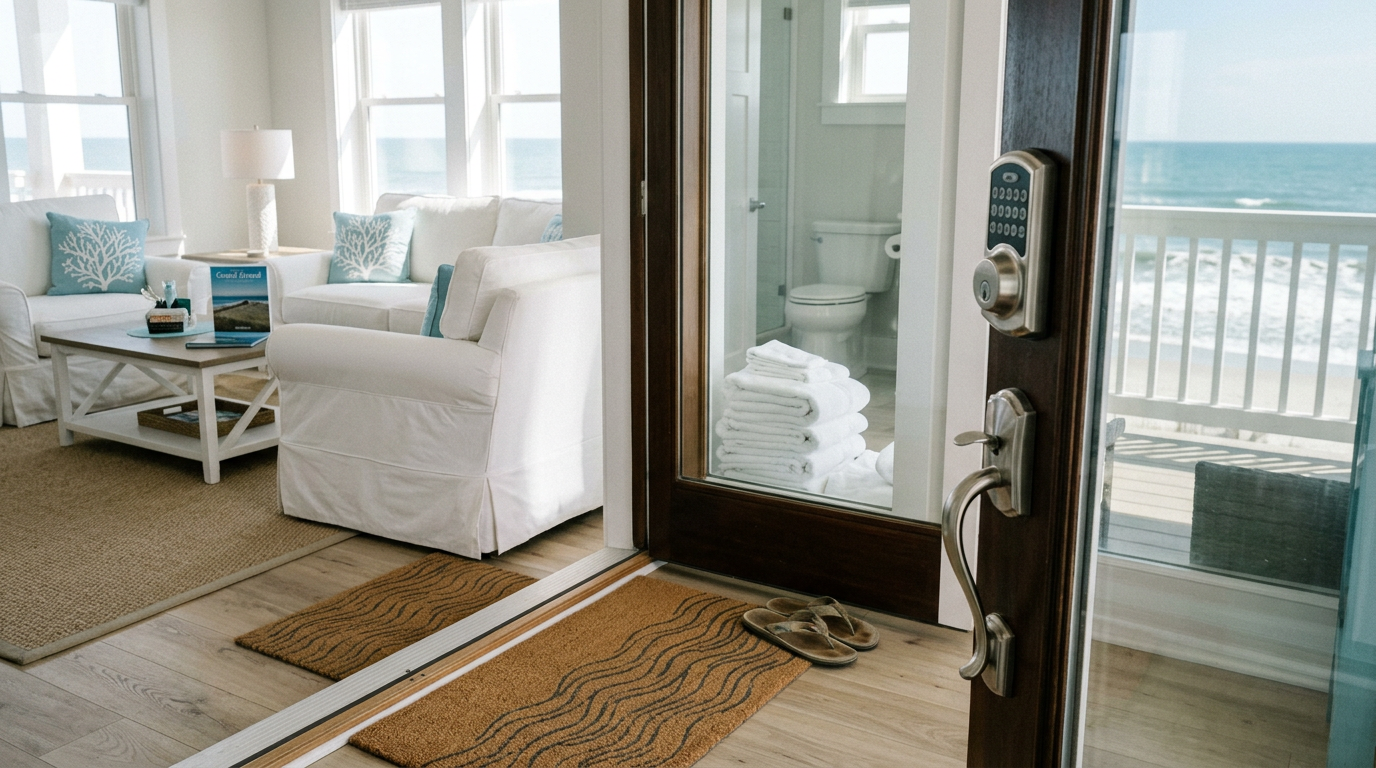
When guests arrive at a Grand Strand vacation rental, their first physical touchpoint with the property is the entryway. The transition from the humid, salty outdoor air to a cool, air-conditioned interior is a high-traffic zone that sets the tone for the entire stay. If a guest encounters a sticky smart lock, walks onto a gritty floor, or struggles to open a sliding glass door, their initial impression is compromised. Mastering these oceanfront thresholds during turnover cleanings is essential for preventing guest complaints, protecting expensive hardware, and securing five-star reviews.
The Entryway First Impression: Why Thresholds Dictate Guest Review Sentiment
When guests first arrive at a Myrtle Beach rental, their sensory experience begins before they even unpack their bags. The physical transition from the humid, salt-laden outdoor air to the cool comfort of an air-conditioned interior is marked by the entryway. If a guest struggles to turn a sticky key, steps onto a gritty foyer floor, or notices salt film on the door handle, their confidence in the property drops. These initial touchpoints set the tone for the entire stay and directly influence the guest's likelihood of leaving a positive review.
Neglecting these high-traffic transition zones often triggers immediate complaints to property managers. Sand tracked into the entry foyer during the first five minutes will quickly spread throughout the entire property, leading guests to believe the entire unit was poorly cleaned. Professional turnover protocols must prioritize these thresholds as high-risk areas. By addressing entryways with the same rigorous standards applied to kitchens and bathrooms, hosts can prevent early-arrival complaints and preserve their hard-earned platform ratings.
Furthermore, entryways are highly vulnerable to Grand Strand environmental factors. High relative humidity causes salt air to settle on surfaces, leaving a sticky, microscopic film that traps dust and sand. Over time, this mixture grinds into flooring surfaces and dulls the finish of hardware. A structured entryway cleaning process during every turn ensures that these coastal elements are stripped away before they can cause lasting physical damage or prompt negative guest feedback.
The Sliding Glass Door Crisis: Clearing Tracks of Sand and Salt Crust
Sliding glass doors leading to oceanfront balconies are a major selling point for Grand Strand rentals, but they are also operational magnets for sand and salt. Fine coastal sand blows into the tracks, where it mixes with salt-air moisture to form a heavy, abrasive paste. If left unchecked, this debris grinds down the brass or nylon rollers beneath the door. Guests will find the door nearly impossible to slide open, often leading to broken handles, strained muscles, and frustrated maintenance calls.
Cleaning these tracks requires more than a quick pass with a standard broom or dustpan. Turn teams must use a high-suction shop vacuum with a narrow crevice tool to extract dry sand from the tightest corners of the track. Once the loose particles are removed, the track should be scrubbed with a stiff-bristled brush and a neutral, non-attracting cleaner to dissolve stubborn salt crust. This prevents the abrasive buildup from acting like sandpaper against the door's mechanical rollers.
The final step in sliding door maintenance is proper lubrication, which must be handled with care. Standard wet lubricants should never be sprayed into sliding door tracks, as they act as adhesives that trap future sand and dust. Instead, clean turners should apply a dry-silicone spray lubricant to the tracks. This dry barrier allows the rollers to glide effortlessly while repelling sand, keeping the doors fully operational throughout the high-demand summer season.
Smart Locks and Smart Entry: Defending Electronic Hardware Against Salt-Air Corrosion
Keyless entry systems and smart locks have streamlined the check-in process for Myrtle Beach hosts, but they are highly sensitive to the coastal environment. Salt-laden air continuously attacks the metal housing and internal electronic components of these locks. A corroded lockset can fail without warning, locking guests out of the property after a long day of travel. Regular preventative cleaning during every turnover is the only way to avoid these costly emergency locksmith dispatches.
During the turn cleaning, technicians should wipe down the entire lockset exterior with a microfiber cloth damp with clean water to remove salt residue. Avoid spraying liquid cleaners or water directly onto electronic keypads, as moisture can penetrate the seals and short-circuit the board. Pay special attention to the battery compartment during monthly deep cleans, checking for signs of corrosion or leakage caused by the high heat and humidity of the Grand Strand summer.
For locks that utilize physical key overrides, the keyway itself must be protected from the elements. A quick puff of dry graphite powder into the keyway every few weeks keeps the internal pins moving smoothly without attracting grime. Standard household oils should be avoided here as well, as they gum up with dust and sand. Ensuring that the smart lock is clean, responsive, and free of salt crust provides guests with a seamless, modern entry experience.
The Outdoor Shower to Indoor Transition: Managing Wet Footprints and Grout Mildew
Beachfront homes in Garden City and Surfside Beach often feature outdoor showers to help guests rinse off sand. However, the path from the outdoor shower to the indoor living area is a frequent source of water damage and slip hazards. Guests walking inside with damp feet and wet swimsuits quickly saturate entry flooring. If the flooring is tile or luxury vinyl plank, this creates a slick surface that poses a severe safety liability for families.
To manage this transition, turn cleaners must pay close attention to the grout lines and baseboards near these high-moisture entryways. Standing water that seeps into grout can foster black mold and mildew, especially in the warm, humid Grand Strand climate. Cleaners should dry-vacuum the area thoroughly, then sanitize the flooring with a fast-evaporating, neutral floor cleaner. Grout lines should be inspected for dark discoloration, which indicates moisture retention and requires targeted sanitization.
Property managers can mitigate this risk by strategic placement of commercial-grade, moisture-wicking walk-off mats both inside and outside the threshold. These mats must be vacuumed and rotated during every turnover. A damp or sandy mat must be swapped out immediately for a fresh, dry one. Ensuring that the threshold is dry and slip-free protects the property's structural integrity while protecting guests from dangerous, vacation-ruining slips and falls.
Balcony Threshold Sanitization: Evicting Oceanfront Spiders, Salt Grime, and Pollen
Oceanfront balconies offer stunning views of the Atlantic, but they are also exposed to wind, salt spray, and nesting pests. Spiders, wasps, and dirt daubers frequently build nests around balcony sliding door frames and exterior light fixtures. Furthermore, salt grime and seasonal pollen build up on balcony railings, glass panels, and exterior thresholds. If a guest steps out to enjoy the sunrise and encounters sticky webs or dirty railings, their perception of the rental's cleanliness instantly drops.
Turnover cleaning must extend past the interior sliding door glass. Cleaners must step onto the balcony to wipe down both sides of the glass doors and the frames. A telescoping duster should be used to clear away spiderwebs and insect nests from the corners of the balcony ceiling and door frames. Wiping down the top rail of the balcony balustrade is also critical, as guests will naturally rest their hands there while looking at the beach.
Outdoor furniture on the balcony should be wiped free of salt crust and pollen during every turn. Salt spray leaves a white, foggy residue on surfaces that makes even clean furniture look neglected. Using a damp microfiber cloth to remove this film ensures that the outdoor living space feels as pristine as the interior. This attention to detail transforms the balcony from a dusty afterthought into a premium extension of the rental space.
Operational Training for the Turn Team: Standardizing the Entry-Point Inspection
Maintaining high threshold standards across a large portfolio of Grand Strand rentals requires structured training and clear operational checklists. Cleaning teams working under tight turnover windows may overlook the subtle details of entryways in their rush to finish kitchens and linens. By standardizing the entry-point inspection as a distinct step in the turnover process, property managers can ensure that no sandy track or sticky lock slips through the cracks.
Training should emphasize the 'foot-glide' test. After cleaning the foyer, the technician should walk across the area barefoot or in clean socks to feel for any remaining grit. If even a single grain of sand is detected underfoot, the area must be vacuumed and mopped again. Additionally, supervisors should audit sliding doors to verify that they open with minimal physical effort. If a door sticks or squeaks, it must be flagged immediately for maintenance.
Standardizing these inspections builds accountability among the turn staff and elevates the quality of the service. A visual checklist, complete with photos of pristine thresholds, helps staff understand the precise level of cleanliness expected. This systematic approach reduces the reliance on luck and ensures consistent, top-tier results that protect the rental's online reputation on platforms like Airbnb and VRBO.
Sourcing and Managing High-Traffic Entryway Mats: The Defense Line Against Coastal Soil
The most effective way to keep sand out of a vacation rental is to stop it at the door. High-quality, commercial-grade entryway mats act as the first line of defense against coastal soil. Cheap, thin residential mats quickly become saturated with sand and water, losing their effectiveness within a few rental cycles. Property managers should invest in heavy-duty mats with raised rubber borders and scraping surfaces designed to trap sand deep within the pile.
During turnovers, these mats require specific cleaning techniques to release trapped sand. Simply vacuuming the top of a heavy-duty mat is often insufficient, as sand settles deep into the fibers. Cleaners should flip the mat upside down and run a vacuum over the back to shake the sand loose onto the floor, then lift the mat, sweep up the released sand, and vacuum the top of the mat. This deep-cleaning technique extends the lifespan of the mat.
For properties with high occupancy limits, keeping spare entryway mats in the owner's supply closet is a wise operational strategy. If a mat becomes heavily soiled, stained, or thoroughly soaked during a rainy check-in day, the cleaning team can quickly swap it for a clean, dry replacement. This seamless rotation prevents wet sand from being tracked onto hardwood or carpeted floors, preserving the interior finishes and maintaining a clean look for incoming guests.
Integrating Threshold Care into the Standard Turnover Schedule
Time management is the greatest challenge during the peak Myrtle Beach summer turnover season, where check-out is often at 10:00 AM and check-in is at 4:00 PM. Cleaners must execute an intense workload in a very limited window. To ensure that threshold care is not sacrificed under time pressure, it must be integrated into the sequential flow of the cleaning routine, rather than being left as an afterthought at the end of the job.
The recommended workflow is to address exterior thresholds, sliding doors, and smart locks during the middle phase of the turn, after the heavy trash-out and linens are removed, but before the final floor mopping. This prevents dust and sand from exterior cleaning from blowing back onto freshly cleaned floors. By treating the entryways as a transition zone that is progressively sealed off as the cleaner backs out of the property, the team avoids re-contaminating clean areas.
Finally, clear communication between cleaning crews and property managers is essential when threshold issues are discovered. If a cleaning technician notices a failing door roller, a damaged weatherstrip, or a flashing low-battery light on a smart lock, they must have a direct line to report it. Having a reliable partner like A2Z Cleaning & Linen Services ensures that these small operational details are caught and resolved before they impact the guest experience. Contact us at 843.800.2788 to learn how we can protect your Grand Strand rental properties.
Key takeaway
An immaculate rental entryway is the gatekeeper of a positive guest experience in Myrtle Beach. By implementing strict protocols for sand removal, hardware protection, and sliding door maintenance during every turnover, hosts can prevent complaints and secure better reviews. Partner with A2Z Cleaning & Linen Services at 843.800.2788 to keep your coastal thresholds pristine year-round.
Keep Reading
Vacation Rentals
The Coastal Ceiling Fan and Vent Dust-Release Protocol: Mitigating Humid Grey Lint, Static-Cling Dander, and Airflow Failures in Grand Strand Rental Turnovers
ReadVacation Rentals
The Under-Bed and Hidden-Zone Clearout Protocol: Preventing Leftover-Item Disputes and Cleanliness Failures in Myrtle Beach Vacation Rentals
ReadVacation Rentals
The Coastal High-Chair and Pack-and-Play Sanitization Protocol: Preventing Organic Biofilms, Sand-Grit Accumulation, and Mold Spores in Grand Strand Family Rentals
ReadReady for a spotless property?
Call 843.800.2788 or request a free quote from A2Z Cleaning & Linen Services.