Commercial & Hospitality
The Professional Cleaning Crew Hiring and Onboarding Standard: Structuring Practical Skill Audits, Localized Compensation Scales, and Interview Matrices for Grand Strand Teams
Discover how to recruit, vet, and retain top-tier professional cleaning talent on the Grand Strand with hands-on skills tests, competitive local pay structures, and structured training.
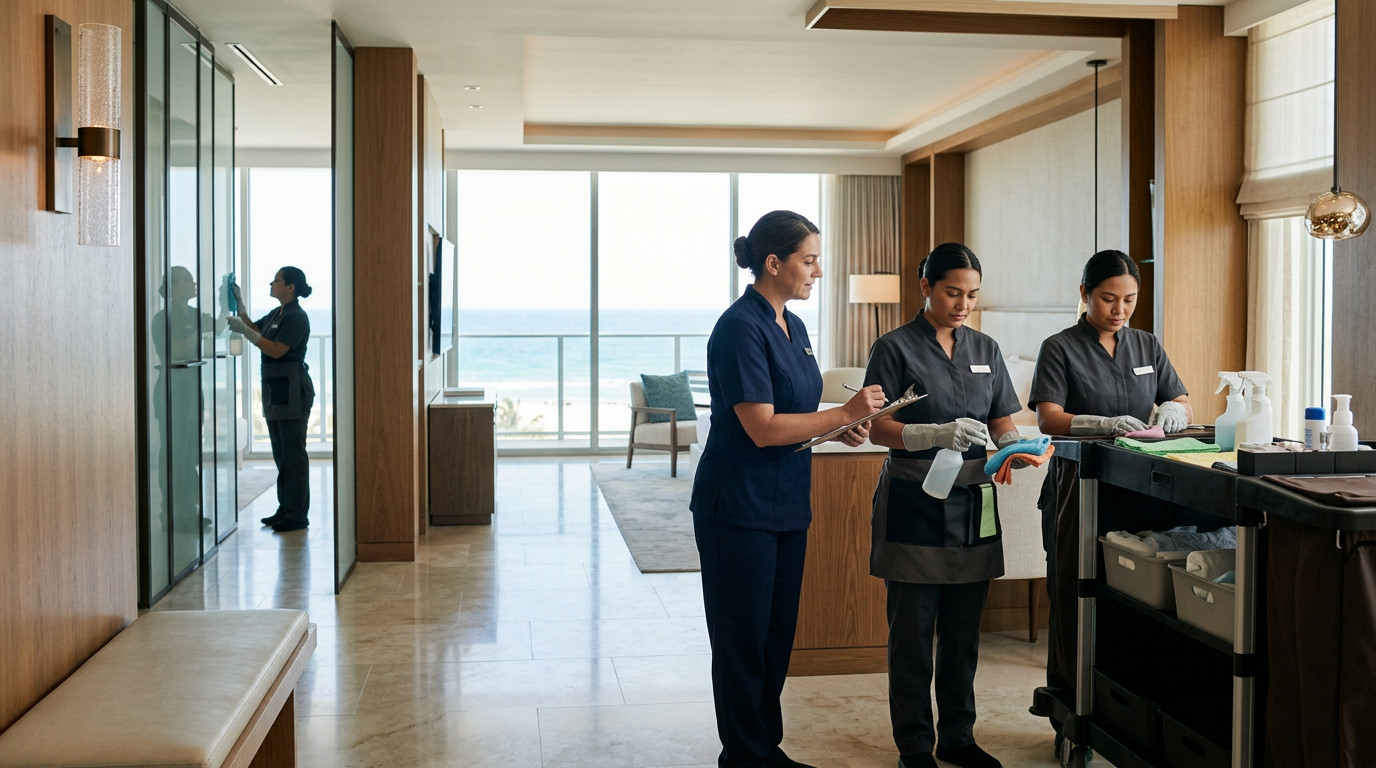
In a high-intensity coastal market like the Grand Strand, a cleaning company is only as strong as its field technicians. Finding, hiring, and retaining professional cleaners requires a deliberate strategy that looks past simple resumes to evaluate physical endurance, technical aptitude, and core integrity. This guide provides a practical blueprint for structuring interview loops, hands-on skills tests, and competitive localized compensation plans. By building a structured career path, operators can transition seasonal labor into a highly reliable, professional team.
The Core DNA of a Grand Strand Professional Cleaner
In the coastal environment of Myrtle Beach, professional cleaning is a demanding physical trade that requires unique psychological and physical traits. Unlike standard maintenance roles, a premier field technician must possess high physical stamina to combat the oppressive summer heat and humidity, especially when navigating multi-story walk-ups or deep oceanfront high-rises. Beyond pure endurance, a top-tier cleaner demonstrates an innate sense of spatial awareness and micro-detail visibility, spotting a single stray hair, sand-grit accumulation in a sliding track, or a subtle smudge on an high-gloss cabinet in seconds.
Reliability and high-level integrity form the foundation of a successful technician. Because professional cleaners work largely unsupervised inside private residential properties, commercial offices, or luxury vacation rentals, they must be self-motivated and deeply honest. A great cleaner treats every property with extreme care, respecting guest privacy and protecting high-value fixtures. They also possess an adaptive problem-solving mindset, capable of managing unexpected property damage, plumbing issues, or short-notice scheduling shifts without losing their professional focus.
Finally, effective communication skills are essential for modern field crews. Technicians must document their work, log inventory shortages, and flag maintenance issues using mobile property management applications. A candidate who communicates clearly and remains calm under tight deadlines will always outperform a technician who lacks cooperative skills. At A2Z Cleaning & Linen Services, we look for these core personality traits during our initial vetting phases, recognizing that while technical cleaning skills can be taught, fundamental work ethic and focus must be present from day one.
The Practical Skills Assessment: Implementing a Live-Fire Cleaning Test
Verbal interviews alone cannot accurately measure a candidate’s mechanical cleaning abilities, pace, or safety habits. A structured hiring process must include a practical, hands-on skills assessment in a controlled environment, such as a designated mock testing room. During this evaluation, candidates are asked to execute basic cleaning tasks while an evaluator observes their technique, speed, and safety protocols. This real-world test quickly separates experienced, professional cleaners from those who simply claim experience on paper.
The practical test should focus heavily on chemical safety and product dilution accuracy. Evaluators must observe whether the candidate reads chemical labels, selects the correct product for different surfaces, and understands the critical distinction between sanitizing and disinfecting. Watching a candidate handle a stone countertop, a glass surface, and a stainless steel appliance reveals their familiarity with material safety. Mistreating a delicate surface with an abrasive cleaner during a test is a clear indicator that the candidate requires intensive remedial training before being dispatched to client properties.
Additionally, the assessment should evaluate physical ergonomics and motion efficiency. Evaluators look for safe lifting techniques, correct vacuuming posture, and methodical room navigation, such as cleaning from high-to-low and left-to-right. Observing these habits helps identify candidates who are prone to early fatigue or repetitive strain injuries. A technician who works systematically and prioritizes safety will deliver consistent results and enjoy a longer, healthier career in the commercial and residential cleaning industry.
- Chemical Selection: Observe if the candidate matches the correct pH-neutral cleaner to delicate natural stone and tile surfaces.
- Color-Coded Microfiber: Verify the candidate understands cross-contamination prevention by using distinct towel colors for bathrooms and kitchens.
- Equipment Handling: Test the candidate’s ability to safely operate, empty, and inspect commercial vacuum cleaners and microfiber flat mops.
- Detail Awareness: Seed the testing area with subtle anomalies, such as a hidden piece of debris or a slightly askew picture frame, to test observation skills.
- Time Management: Track how long the candidate takes to complete a standard three-fixture bathroom sweep without sacrificing detail.
Designing the Behavioral Interview Matrix
Traditional, open-ended interview questions often result in rehearsed answers that fail to reveal a candidate's true work ethic. To build a highly reliable field team, hiring managers should utilize a structured behavioral interview matrix. This method presents candidates with specific, real-world scenarios designed to reveal their problem-solving skills, accountability, and ability to handle high-pressure situations. Every question should target a key competency, allowing the interviewer to grade responses on a standardized scorecard.
Questions should target the logistical realities of working along the sixty-mile stretch of the Grand Strand. Candidates must explain how they manage transportation challenges, navigate seasonal traffic patterns on Highway 17, and maintain strict punctuality. By asking candidates to describe a time they encountered an unexpected delay and how they communicated that delay, managers can gauge their proactive planning habits. A reliable technician understands that punctuality directly impacts the entire team's daily schedule.
Furthermore, behavioral questions should delve into interpersonal dynamics and conflict resolution. In our high-volume operational environment, technicians often work in pairs or teams under tight deadlines. Asking candidates to recount a time they disagreed with a coworker's cleaning method or had to address a teammate's missed detail reveals their capacity for constructive, professional communication. Teams built on mutual accountability and respectful feedback consistently maintain higher quality standards and suffer far less internal friction.
- Punctuality and Logistics: Ask: 'Can you describe a time when severe seasonal traffic threatened your arrival time, and how did you resolve the situation?'
- Problem-Solving under Pressure: Ask: 'What steps do you take when you enter a property and find a major maintenance issue, like a water leak, that threatens your timeline?'
- Feedback and Quality Control: Ask: 'How do you handle a situation where an inspector points out a missed detail in your completed zone?'
- Managing Physical Demands: Ask: 'Describe a day when you felt physically exhausted but still had one more property to clean. How did you maintain your standards?'
Localized Grand Strand Compensation and Benefit Trends
To attract and retain premier cleaning professionals in Myrtle Beach, companies must move away from flat, minimum-wage structures. The local hospitality market is highly competitive, and top-tier talent will naturally migrate to organizations that offer stable, family-sustaining wages and transparent compensation growth. Standardizing starting hourly rates above local retail and fast-food baselines is crucial, but true retention is driven by structured pay-scale models that reward certifications, tenure, and field performance.
In a highly seasonal market, year-round income stability is one of the most powerful retention tools available. Many local operators lay off crews or slash hours during the winter shoulder season, leading to severe talent drain by spring. Offering year-round work guarantees or winter maintenance and deep-cleaning programs keeps core technicians employed and loyal. Additionally, providing clear travel policies, including competitive mileage reimbursement for travel between jobs on the Grand Strand, helps offset the high fuel and maintenance costs faced by field crews.
Modern benefit packages are also becoming standard expectations for professional cleaners. Leading organizations offer health, dental, and vision insurance options, paid time off, and retirement savings matches. During the intense heat of the summer season, providing practical benefits like physical therapy access, ergonomic support, and heat-fatigue relief packages (including high-quality hydration supplies and cooling gear) demonstrates a genuine commitment to worker safety. At A2Z Cleaning & Linen Services, we find that investing in comprehensive compensation directly correlates with lower turnover and higher client satisfaction.
Structured Training Paths and Professional Certifications
An exceptional cleaning team is built on continuous education and structured skill building. Transitioning seasonal laborers into professional environmental service specialists requires a clear, multi-phase training curriculum. New hires should not simply be handed a mop and bucket; they must go through a formalized classroom and field-training program that covers chemical safety, pathogen control, fabric care, and advanced cleaning technologies. This training builds professional pride and ensures consistent execution across every property.
Earning industry-recognized certifications, such as the ISSA Clean Standard, GBAC Technician credentials, or OSHA HazCom training, elevates the status of the cleaning profession. When a company funds and facilitates these certifications, technicians realize that their role is a respected career path, not just a temporary job. Training should include detailed modules on microfiber technology, high-efficiency particulate air (HEPA) vacuum filtration, and the science of sanitizing high-touch points. This specialized knowledge directly impacts indoor air quality and surface safety.
Moreover, structured career tracks give technicians a clear path for advancement within the organization. A field technician should understand exactly what skills, certifications, and tenure are required to advance to Senior Specialist, Crew Lead, Field Inspector, or Operations Manager. By linking clear wage increases to the mastery of specific technical milestones, companies create an internal talent pipeline. This transparent pathway keeps motivated employees engaged and reduces the need to recruit external management talent.
Building Team Cohesion and Mitigating Seasonal Burnout
The physical toll of cleaning multiple oceanfront properties or high-volume commercial facilities during the peak Myrtle Beach summer can lead to rapid burnout if left unmanaged. To prevent physical exhaustion and maintain moral, operations managers must design supportive scheduling protocols. This includes limiting consecutive work days, establishing sensible daily square-footage limits per cleaner, and scheduling regular breaks. Placing technicians in balanced pairs or small teams helps share the physical load and fosters a collaborative working environment.
A supportive team culture relies on immediate, positive feedback and peer recognition. When field inspectors find outstanding work, those successes should be highlighted and celebrated during team huddles or through digital messaging channels. Implementing performance-based reward systems, such as bonuses tied to flawless inspection reports or positive guest reviews, gives technicians a direct stake in the company's success. Recognizing hard work openly builds a sense of pride and community that helps carry teams through the demanding peak season.
Mental and physical recovery protocols must be integrated into daily operations when the heat index climbs. Companies should supply crews with insulated water containers, electrolyte replacement packs, and scheduled cooling breaks in air-conditioned environments. Managers must actively check in on their teams’ physical well-being rather than focusing solely on production speeds. By treating field technicians as industrial athletes who require rest, hydration, and proper recovery, companies can maintain high quality standards and build a loyal, long-term workforce.
The Thirty-Day Integration Loop: Securing Early Success
The first thirty days of a new cleaner’s employment are critical to their long-term retention and success. During this initial phase, bad habits must be gently corrected and positive techniques reinforced through a structured feedback loop. Weekly milestone check-ins between the new hire, their crew lead, and the operations manager provide a formal space to discuss challenges, clarify procedures, and celebrate early wins. This open channel of communication prevents minor frustrations from escalating into early resignation.
During the first week, a new technician should always work alongside an experienced mentor or field trainer. This shadowing process allows the new hire to absorb the company's workflows, pace, and detailing standards without the stress of working alone. By week two, the technician can begin leading simple zones while their mentor provides real-time coaching and support. This gradual transition builds operational confidence and ensures that safety and quality standards are fully mastered before independent dispatch.
By the end of the first month, the technician undergoes a formal thirty-day performance review. This review evaluates their technical accuracy, speed, punctuality, and teamwork against the initial training benchmarks. Successful completion of this integration phase should be celebrated as a significant milestone, often accompanied by a wage adjustment or a transition to independent status. Investing time and care into the onboarding process ensures that every field technician is fully equipped to deliver the high standards of cleanliness our Grand Strand clients expect.
Key takeaway
Building a reliable, high-performing cleaning crew on the Grand Strand requires a structured approach to hiring, fair compensation, and professional development. By implementing practical skills tests, clear behavioral interviews, and supportive training tracks, you can cultivate a team of dedicated environmental specialists. If you want to experience the difference that a professional, highly trained, and fully certified cleaning team can make for your commercial property or vacation rental, contact A2Z Cleaning & Linen Services at 843.800.2788.
Keep Reading
Commercial & Hospitality
The Grand Strand Commercial Disinfection Specialist Career Pathway: Class-A Office Standards, Biohazard Mitigation Certifications, and Local Retention Models
ReadCommercial & Hospitality
The Grand Strand Post-Construction Cleaning Specialist: Technical Dust-Extraction Certifications, Silica-Safety Audits, and Competitive Compensation Structures for New-Build Handover Teams
ReadCommercial & Hospitality
The Hospitality Environmental Services Skill-Validation Rubric: Practical Field-Testing, Behavioral Vetting, and Local Wage Benchmarks
ReadReady for a spotless property?
Call 843.800.2788 or request a free quote from A2Z Cleaning & Linen Services.