Vacation Rentals
Implementing OSHA and ISSA Standards in Grand Strand Vacation Rentals: A Guide to Professional Hospitality Compliance
Discover how applying national cleaning industry standards like OSHA safety guidelines and ISSA frameworks elevates local Grand Strand vacation rental operations.
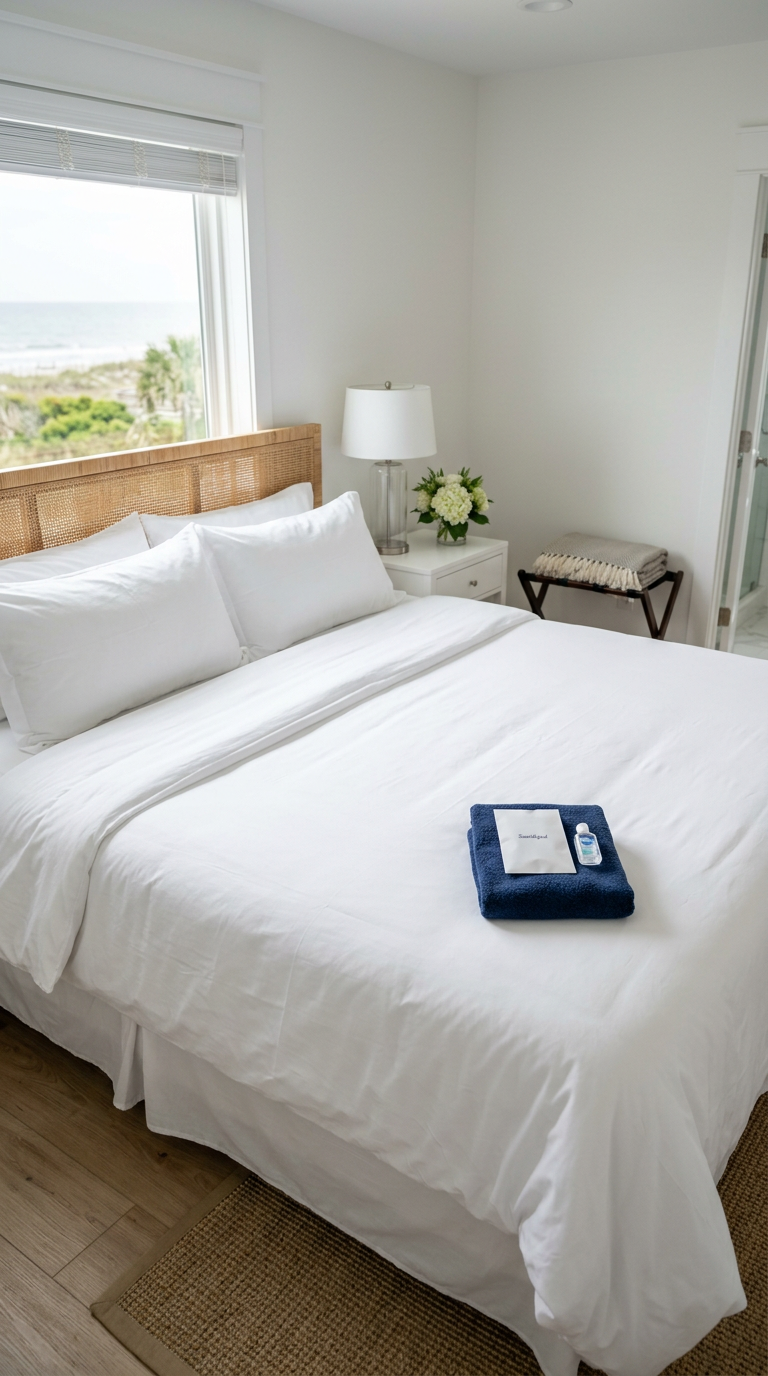
The professional vacation rental industry is undergoing a structural shift toward standardized, auditable cleaning frameworks. For property managers and hosts along the Grand Strand, transitioning from basic housekeeping to rigorous industry-backed protocols is essential for protecting guests, staff, and property values. At A2Z Cleaning & Linen Services, we implement high-level national practices to elevate local hospitality cleaning standards. By integrating these scientific practices, we help local operations run smoothly, safely, and predictably.
The Evolution of Professional Hospitality Cleaning
In recent years, the national cleaning industry has transitioned from residential-style housekeeping to highly technical environmental services. In a busy market like Myrtle Beach, where vacation rentals face rapid back-to-back guest turnovers, visual neatness is no longer the sole metric of success. Modern operations must align with the ISSA Cleaning Industry Management Standard (CIMS), which emphasizes quality systems, service delivery, and human resources. This paradigm shift means evaluating cleaning teams not just by how fast they work, but by their adherence to standardized sanitary protocols.
Adopting these national standards changes how a cleaning business operates daily. Instead of relying on subjective assessments of cleanliness, professional operators utilize objective performance metrics. This is especially critical in our coastal environment, where high humidity and salt-laden air accelerate the degradation of surfaces and foster microbial growth. By treating vacation rentals with the same clinical discipline as commercial healthcare environments, we can systematically eliminate pathogens rather than merely redistributing them across surfaces.
Furthermore, professionalizing the workforce through industry-backed standards helps stabilize the local labor market. When cleaners are trained under standardized frameworks, they view their roles as specialized trade professions rather than low-skilled temporary work. This professional pride directly translates into lower turnover rates, more consistent outcomes on peak Saturday changeovers, and a higher level of care for your Grand Strand property.
Mastering OSHA Hazard Communication and SDS Compliance
Under Federal OSHA guidelines, specifically the Hazard Communication Standard (29 CFR 1910.1200), any business handling commercial-grade cleaning agents must maintain strict safety compliance. For Grand Strand property managers, this means any cleaning vendor entering their properties must carry readily accessible Safety Data Sheets (SDS) for every chemical used. This protects both the service technicians and the guests who occupy the home immediately after a turn.
Proper chemical management also prevents dangerous chemical reactions on-site, such as the accidental mixing of bleach-based and ammonia-based products. Our technicians are trained to identify chemical hazards, wear appropriate Personal Protective Equipment (PPE), and utilize properly labeled secondary containers. This level of technical oversight prevents chemical damage to expensive rental finishes, such as natural stone countertops, luxury vinyl plank flooring, and custom cabinetry.
In addition to worker safety, compliance with OSHA standards reduces liability for property owners. If an accident or chemical exposure occurs on a rental property, undocumented or untrained cleaning crews can expose the property management company to significant legal and financial risks. Ensuring your cleaning partner adheres to rigorous federal guidelines is a vital step in risk mitigation for your real estate portfolio.
- Mandatory on-site access to Safety Data Sheets (SDS) for all cleaning formulations.
- Secondary container labeling compliant with the Globally Harmonized System (GHS).
- Strict adherence to OSHA-mandated Personal Protective Equipment (PPE) protocols.
- Rigorous training on chemical compatibility to prevent hazardous gas emissions.
The Science of Sanitization: Dwell Times and EPA Registration
Nationally, the distinction between cleaning, sanitizing, and disinfecting is legally defined by the Environmental Protection Agency (EPA). Cleaning removes visible dirt and organic matter, while sanitizing reduces bacteria to safe levels, and disinfecting kills specific viruses and pathogens. Leading operators in the Grand Strand do not use off-the-shelf retail products; instead, they utilize EPA-registered, hospital-grade disinfectants designed to neutralize pathogens on high-touch surfaces.
A critical element often missed by amateur cleaners is dwell time—the precise duration a surface must remain wet with a disinfectant to kill target organisms. Many common pathogens found in high-turnover rental environments require a dwell time of three to ten minutes to be fully neutralized. Spraying and immediately wiping a surface only spreads contaminants around, failing to achieve true sanitization and leaving guests vulnerable to cross-contamination.
Managing these chemical realities requires professional training and specialized equipment. For instance, high-touch areas like remote controls, door handles, light switches, and thermostat controls require meticulous application to prevent liquid damage while still achieving the required contact time. By systematically applying EPA-registered disinfectants with verified dwell times, professional teams establish a verifiable baseline of hygiene in every rental.
Cross-Contamination Control through Color-Coded Systems
One of the most critical national industry standards is the implementation of a color-coded cleaning system. In vacation rentals, where multiple bathrooms and kitchens are cleaned rapidly, preventing cross-contamination is paramount. Without a strict, color-coded protocol, a microfiber cloth used to clean a toilet could easily end up wiping down a kitchen food-preparation surface, transferring dangerous enteric bacteria.
The standard color-coding matrix used by leading hospitality operations assigns specific colors to distinct zones. Red or pink microfiber cloths are reserved strictly for high-risk sanitary fixtures like toilets and urinals. Yellow cloths are designated for sinks, showers, and bathroom tiles. Blue cloths are used for general dusting and glass cleaning, while green cloths are utilized exclusively in kitchens and food preparation areas.
This system is simple enough to be executed quickly during high-pressure Saturday turnarounds, yet scientifically rigorous enough to block the spread of pathogens. When property managers partner with an organization that enforces these strict visual boundaries, they protect their guests from preventable foodborne illnesses and norovirus outbreaks, securing the property’s reputation and review scores.
- Red/Pink: High-risk areas, including toilet bowls, seats, and immediate surrounds.
- Yellow: Moderate-risk bathroom surfaces, such as sinks, showers, and bathtubs.
- Green: Food preparation zones, kitchen countertops, and dining surfaces.
- Blue: Low-risk general surfaces, mirrors, windows, and dust-prone furniture.
Ergonomic Standards and Safe Labor Practices
The physical toll of cleaning coastal vacation rentals is immense. From hauling heavy loads of sandy linens to scrubbing hard water deposits off bathroom tile, cleaning technicians face high rates of musculoskeletal strain. National safety standards, such as those published by the National Institute for Occupational Safety and Health (NIOSH), emphasize ergonomics to prevent workplace injuries and maintain a reliable workforce.
Professional operations invest heavily in ergonomic equipment to protect their teams. This includes utilizing lightweight backpack vacuums with HEPA filtration, which distribute weight evenly across the operator's hips rather than straining the lower back. It also involves using long-handled scrubbing tools to minimize prolonged kneeling and bending, reducing joint fatigue and maintaining energy levels throughout long shifts.
By prioritizing ergonomic standards, professional cleaning services ensure consistent quality even at the end of a demanding twelve-hour turnaround shift. When technicians are physically supported, they are far less likely to cut corners or miss details. For property owners, this means the tenth property cleaned on a busy Saturday receives the same meticulous attention to detail as the first one of the day.
Closed-Loop Chemical Systems and Environmental Sustainability
The national trend in commercial cleaning has moved away from purchasing ready-to-use plastic spray bottles to implementing closed-loop chemical dilution systems. These systems automatically mix highly concentrated, eco-friendly chemical formulas with water at precise, factory-calibrated ratios. This ensures the product is always mixed at the correct strength to kill pathogens without leaving behind sticky, toxic residues.
Closed-loop systems also drastically reduce plastic waste, aligning rental operations with modern environmental standards. Instead of discarding hundreds of single-use plastic bottles into Grand Strand landfills each season, professional teams reuse heavy-duty, color-coded spray bottles refilled from central dispensing stations. This practice not only protects the delicate coastal ecosystem of Myrtle Beach but also ensures chemical consistency across all serviced properties.
Over-concentration of chemicals is a common issue with untrained cleaners who believe more is better. Excessive chemical application leaves a microscopic film on floors and countertops that actually attracts sand, pet hair, and dirt, making the property look dirty faster. Controlled dilution prevents this sticky residue buildup, keeping rental surfaces clean, slip-resistant, and visually appealing for longer periods.
Microfiber Technology vs. Traditional Cotton Tools
The cleaning performance of modern microfiber technology far surpasses traditional cotton rags and mops, making it the industry standard for commercial operations. On a microscopic level, split microfiber strands contain millions of tiny hooks that physically grab, lift, and trap dirt, grease, and microbes. Traditional cotton fibers, conversely, are round and smooth, meaning they merely push dirt and moisture across the surface rather than removing it.
Microfiber's electrostatic properties also make it highly effective at trapping dry allergens like coastal dust, pollen, and pet dander. When used dry, the fibers generate a static charge that pulls particles out of hard-to-reach crevices. When damp, they penetrate the microscopic pores of surfaces to remove up to 99 percent of bacteria without requiring excessive chemical assistance, which is crucial for maintaining indoor air quality in closed coastal environments.
Furthermore, the laundering process of professional microfiber is highly regulated. To maintain their structural integrity and static charge, microfiber cloths must be washed separately from cotton linens, using specialized detergents and low-temperature drying cycles. Our dedicated commercial laundry facility manages these protocols meticulously, ensuring that every cloth arriving at your Myrtle Beach rental is fully sanitized and operating at peak performance.
Implementing Auditable Inspection Frameworks
Quality assurance is the cornerstone of national cleaning standards. Leading operators do not rely on a cleaner's self-assessment; instead, they implement independent, auditable inspection frameworks. This involves utilizing digital inspection applications that track key performance indicators (KPIs) in real-time, complete with geo-stamped photos and time-tracked checklists to verify compliance with cleaning standards.
These digital audits cover everything from the sanitization of high-touch surfaces to the precise presentation of linens and guest amenities. If an inspector identifies an area that does not meet established standards, the technician is immediately recalled to rectify the issue before the property is cleared for guest arrival. This systematic approach eliminates the guesswork and ensures a predictable, hotel-grade experience for every incoming guest.
For Grand Strand property managers, having access to these audit trails provides invaluable peace of mind. It allows you to prove to property owners that their investments are being maintained to the highest standards, while also providing a solid defense in the rare event of a guest complaint. Professionalized operations treat cleaning as a transparent, data-driven service that adds measurable value to your business.
Key takeaway
Adopting national standards like OSHA safety guidelines and ISSA protocols elevates Grand Strand vacation rentals from basic cleaning to professional hospitality management. Partnering with a compliant service provider like A2Z Cleaning & Linen Services protects your guests, mitigates liability, and preserves your rental property's long-term value.
Keep Reading
Vacation Rentals
The Grand Strand Vacation Rental Onboarding and Property-Profile Standardization Protocol: Syncing PMS Hardware Maps, Housekeeping Checklist Blueprints, and Vendor Supply Loops for Scaling Portfolios
ReadVacation Rentals
The Coastal Oceanfront Balcony and Balustrade Turnover Protocol: Mitigating Salt-Atmosphere Etching, Sticky Beverage Residues, and Guest First-Impression Failures in Grand Strand Vacation Rentals
ReadVacation Rentals
The Coastal Bunk Bed and Multi-Tier Sleeper Turnover Protocol: Mitigating Sand-Grit Cavities, Structural Bolt Failures, and Top-Bunk Linen Hazards in Grand Strand Vacation Rentals
ReadReady for a spotless property?
Call 843.800.2788 or request a free quote from A2Z Cleaning & Linen Services.