Vacation Rentals
The Coastal Vacation Rental Smart Lock, Keypad, and Entryway Threshold Turnover Protocol: Mitigating Salt-Spray Lockout Risks, Code Wear-Patterns, and First-Impression Sand Drift under Grand Strand Saturday Turn Pressures
Discover how to protect your property's first impression and prevent guest lockout reviews with our professional smart lock and entryway turnover protocol for Grand Strand rental properties.
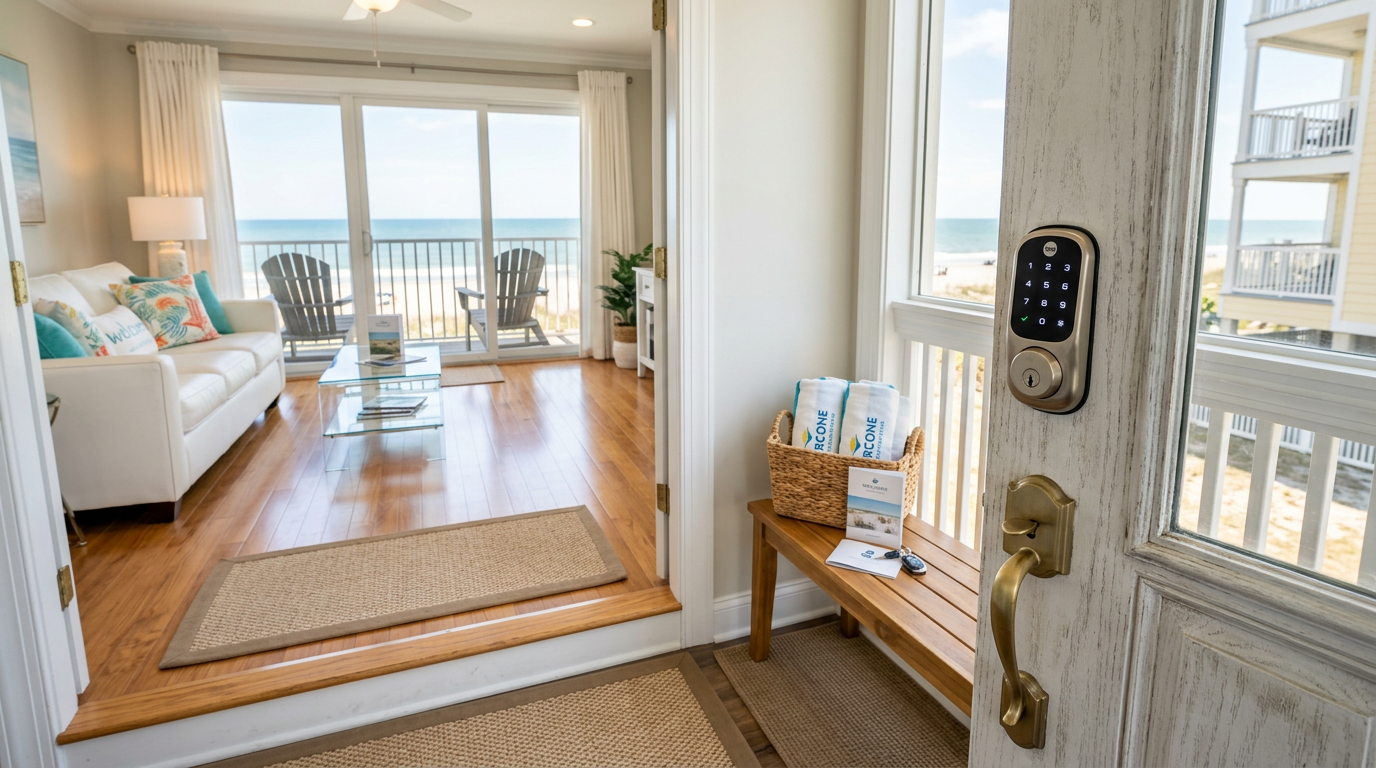
Nothing derails a highly anticipated Grand Strand vacation faster than a guest arriving at their rental after a long, exhausting drive only to face a malfunctioning smart lock, a sticky door, or a sand-drifted entryway. In our humid coastal climate, salt air and shifting sands work around the clock to degrade lock hardware, deplete batteries, and clog door thresholds. For vacation rental hosts and property managers along Myrtle Beach, Cherry Grove, and Garden City, entryway maintenance is not just a security measure; it is a critical driver of five-star reviews and operational efficiency. Implementing a rigorous, standardized turnover protocol for your entry zones ensures that your guests enjoy seamless, secure access while protecting your physical assets from coastal wear.
The Anatomy of Coastal Entryway Failure: Salt-Air Corrosion and Sand Drift
The microclimates of the Grand Strand present a hostile environment for electronic security hardware. High-salinity ocean air combined with persistent relative humidity creates a corrosive film that settles on metal surfaces, accelerating the oxidation of brass, chrome, and internal electrical components. When moisture condenses inside the lock casing, it triggers galvanic corrosion on the battery contacts and electronic terminals, leading to premature battery drainage, communication failures with property management systems, and complete mechanical lockouts.
Simultaneously, windblown quartz sand acts as an abrasive grit that migrates into the smallest crevices of lock assemblies. Sand particles lodge within the deadbolt cylinders, strike plates, and physical keyway paths, as well as behind the silicone membranes of push-button keypads. This grit creates mechanical friction, forcing the lock motor to draw more current to throw the bolt, which rapidly depletes the batteries and causes the system to jam mid-cycle.
When these physical stressors are left unchecked during busy seasonal turnovers, they culminate in guest frustration. A door that requires lifting, pulling, or pushing to lock or unlock signals poor property maintenance from the moment of arrival. By understanding these coastal mechanisms of wear, vacation rental operators can shift from reactive troubleshooting to a proactive, preventative maintenance schedule that protects both the hardware and the guest experience.
Keypad Code Wear-Pattern Auditing: Preventing Security Compromise and Ghost Marks
Over time, the repeated entry of specific access codes leaves visible wear patterns on physical buttons, particularly those made of silicone or low-grade plastics. Oils from guests' skin, mixed with sunscreen residues and salt dust, transfer to the keys, gradually eroding the matte finish or paint on frequently used numbers. This localized wear creates highly visible 'ghost marks' that can allow unauthorized individuals to easily deduce the digits of active entry codes, compromising property security.
During every Saturday turn, housekeeping staff must inspect the keypad buttons under direct light to identify any physical degradation or uneven gloss levels. Cleaners must use a 70% isopropyl alcohol solution on a lint-free microfiber cloth to gently dissolve skin oils and sunscreen binders without stripping the protective UV coatings. Solvents containing acetone, ammonia, or heavy abrasives should never be used, as they accelerate the degradation of the button faces and cloud the protective screens.
To systematically prevent wear patterns, property managers should integrate their Property Management Software (PMS) with smart locks to generate unique, randomized guest codes for every reservation. Avoiding repetitive codes like the last four digits of a phone number or sequential patterns distributes the physical keystrokes across the entire pad. If physical button wear is detected, the lock faceplate should be replaced immediately to restore the appearance and security of the entryway.
The Electronic Lock Battery Diagnostics Protocol: Mitigating Peak-Season Lockouts
Battery health is highly sensitive to the temperature and humidity fluctuations characteristic of the Grand Strand. Alkaline batteries are prone to outgassing and leaking potassium carbonate in hot, humid climates, which can ruin internal contacts and destroy the lock's circuit board. While lithium batteries offer more stable voltage outputs and longer lifespans under extreme conditions, they require scheduled testing rather than waiting for automated low-battery alerts.
Relying solely on property management software or smart home hubs for low-battery warnings is a high-risk operational strategy during the peak summer season. High Wi-Fi polling rates caused by frequent lock-state changes, guest network congestion, and continuous connectivity checks can drain a battery from 30% to zero in a single weekend. A physical battery diagnostic must be integrated directly into the turnover checklist to prevent unexpected lockouts on busy check-in days.
During the cleaning window, the turnover specialist must check the battery housing for any signs of swelling, white powdery corrosion, or loose connections. Cleaners should wipe battery contacts with a dry contact cleaner or use a small brass brush to clear any mild oxidation before installing fresh, high-quality industrial batteries. Applying a thin film of non-conductive dielectric grease to the terminals helps seal out humid, salty air, ensuring stable voltage transmission and preventing future corrosion.
Deadbolt and Strike Plate Alignment Calibration under Building-Shift Conditions
Coastal buildings, particularly wood-framed beach homes and multi-story oceanfront condominiums, experience continuous shifting due to seasonal humidity changes, high winds, and foundation settling. This structural movement directly impacts door frame alignment, shifting the strike plate relative to the deadbolt. When a door shifts even a fraction of an inch, the deadbolt will rub against the strike plate, creating friction that prevents the lock from throwing smoothly.
When an electronic deadbolt experiences resistance, the motor stalls, sending a jam signal to the smart home hub or failing to complete the locking sequence entirely. This often leaves the door unsecured while reporting a 'locked' status to the PMS, or conversely, locks the guest out because the automated mechanism cannot retract the bolt. Testing the physical alignment of the door and strike plate is a critical step that must be performed at every single turnover.
To calibrate the alignment, the turnover specialist must close the door and observe if the deadbolt extends and retracts smoothly without requiring the operator to push, pull, or lift the door handle. If friction is detected, the strike plate must be adjusted or filed down to widen the opening. Ensuring a 'friction-free throw' not only guarantees reliable operation for the guest but also extends the battery life of the smart lock by reducing the workload on the motor.
- Verify that the deadbolt fully extends into the door jamb pocket without hitting the back of the recess.
- Inspect the door hinges for loose screws that cause the door to sag or tilt within the frame.
- Check that the weatherstripping does not exert excessive back-pressure on the latch, which forces the deadbolt to bind.
- File down strike plate margins if wood swelling from high humidity has narrowed the deadbolt clearance.
- Confirm that the manual thumb-turn on the interior operates smoothly with minimal resistance.
Threshold Sand-Grit Extraction and Weatherstripping Integrity Sweeps
The entryway threshold is the primary barrier preventing the ingress of windblown sand, insects, and hot, humid air into the air-conditioned interior. Sand tracked in from Myrtle Beach shorelines quickly settles into the grooves of the threshold sweep and the base of the door frame. As the door opens and closes, this sand acts as a heavy abrasive, cutting into the rubber sweeps and tearing the weatherstripping along the bottom of the door.
Compromised weatherstripping allows humid, salt-laden air to seep into the property, which can cause condensation on luxury vinyl plank flooring and strain the HVAC system. During the turnover, cleaners must use a high-powered HEPA vacuum fitted with a narrow crevice tool to extract sand and salt grit from the threshold track, corners, and side seals. Simply sweeping the area is insufficient, as it pushes fine grit deeper into the door jamb crevices.
Following vacuuming, the door sweep and perimeter weatherstripping must be wiped down with a damp microfiber cloth to remove salt crust and fine dust. Staff should perform a visual inspection of the rubber seals, looking for tears, flattened spots, or gaps that let light pass through when the door is closed. Damaged sweeps must be documented in the maintenance log and replaced promptly to maintain the envelope seal and keep sand outside where it belongs.
Chemical-Safe Sanitization of Keypads and Touchscreens: Avoiding Circuit Board Damage
Saturating smart lock keypads with liquid disinfectants is a common cause of electronic component failure in vacation rentals. Spraying sanitizing chemicals directly onto a lock face allows liquid to run down the housing, seep past the rubber weather seals, and pool on the internal circuit boards. This moisture causes immediate short circuits, rapid corrosion of copper traces, and button failure that requires a complete replacement of the unit.
To clean and sanitize these surfaces safely, turnover specialists must apply disinfectants to a clean microfiber cloth first, ensuring it is damp but not dripping, before wiping the lock face. Alternatively, pre-moistened disinfectant wipes formulated for electronics can be used. For touchscreen models, using a non-conductive, fast-evaporating isopropyl alcohol solution helps remove greasy fingerprint smudges and sunscreen film without leaving streaks or damaging the capacitive sensors.
Special attention must be paid to the edges of physical buttons, where fine sand and body oils can form a sticky paste. Cleaning staff should use a soft-bristled, dry detailing brush to gently sweep away dried salt and sand from the gaps around the buttons before wiping them down. Ensuring the keypad is clean and dry prevents sticky keys and maintains a responsive interface that functions reliably for every guest.
First-Impression Entryway Lighting and Aesthetic Audits: Driving Five-Star Reviews
The physical appearance of a rental property's entrance sets the tone for the entire guest stay. When guests arrive after dark, a dark porch, a light fixture filled with dead insects, or a door frame covered in spider webs and salt haze immediately lowers their confidence in the property's cleanliness. The entryway serves as the first visual cue of the care and attention to detail provided by the host.
The turnover cleaning routine must extend past the interior of the threshold to include the immediate exterior entryway. Cleaners must wipe down the exterior door face, trim, and siding to remove salt haze and windblown dust. Light fixtures must be dusted, cleared of cobwebs, and checked to ensure the bulbs are functioning. Glass panels in the door or sidelights must be cleaned on both sides with a streak-free glass cleaner to remove salt-spray film.
If the property utilizes automated smart lighting or photocell sensors for the entryway, the functionality of these systems must be verified. Ensuring the porch light illuminates automatically at dusk provides a welcoming environment and helps guests see the keypad clearly. A clean, bright, and secure entryway builds immediate trust, laying the foundation for a positive stay and helping to secure five-star reviews on booking platforms.
The Emergency Lockout Contingency and Backup Key Management Workflow
Despite a rigorous maintenance routine, hardware failures can still occur due to unexpected mechanical breakages, network outages, or electrical surges. A robust operational protocol must include a reliable backup system that bypasses the electronic smart lock during emergencies. Relying on a single point of entry without a physical fail-safe is a common cause of late-night lockout calls and negative guest reviews.
A highly effective backup solution is a secure, mechanical lockbox installed in a discreet location on the property. This lockbox should contain a physical master key that can open the door manually if the electronic system fails. Like the main smart lock, the lockbox is subject to salt-spray corrosion and must be checked, lubricated with dry graphite spray, and cleared of sand during every turnover to ensure it remains easy to open.
Property managers should also establish a clear communication protocol with guests regarding emergency access. Detailed instructions on how to locate and use the backup lockbox should be readily available, and on-site staff must be trained to respond quickly to lockout calls. Having a proactive, reliable backup system in place minimizes guest stress, avoids expensive emergency locksmith calls, and protects your property's reputation.
By treating the entryway as a critical operational zone and following a structured turnover protocol, Grand Strand vacation rental hosts can deliver a secure, seamless, and welcoming arrival experience that keeps guests coming back year after year.
Key takeaway
A reliable, clean, and functioning entryway is essential for securing five-star guest reviews and protecting your Grand Strand rental property. Partnering with A2Z Cleaning & Linen Services ensures that your smart locks, keypads, and thresholds are systematically inspected, cleaned, and maintained during every turnover. Contact our expert team at 843.800.2788 to protect your property's first impression and prevent seasonal operational headaches.
Keep Reading
Vacation Rentals
The Coastal Oceanfront Balcony and Balustrade Turnover Protocol: Mitigating Salt-Atmosphere Etching, Sticky Beverage Residues, and Guest First-Impression Failures in Grand Strand Vacation Rentals
ReadVacation Rentals
Implementing OSHA and ISSA Standards in Grand Strand Vacation Rentals: A Guide to Professional Hospitality Compliance
ReadVacation Rentals
The Grand Strand Multi-Unit PMS API Integration and Housekeeping Work Order Dispatch Standard: Automating Checklist Audits, Inventory Pulls, and Vendor Service-Level Agreements (SLAs) for Scaling Grand Strand Vacation Rental Portfolios
ReadReady for a spotless property?
Call 843.800.2788 or request a free quote from A2Z Cleaning & Linen Services.