Vacation Rentals
The Coastal Vacation Rental Bathroom Vanity Drawer and Under-Sink Cabinet Turnover Protocol: Mitigating Stray Hair Contamination, Cosmetic Residues, and Damp Water-Pipe Mold under Grand Strand Saturday Turn Pressures
A deep operational guide to mastering bathroom vanity drawer and cabinet turns in Grand Strand vacation rentals to eliminate stray hair, makeup stains, and moisture mold.
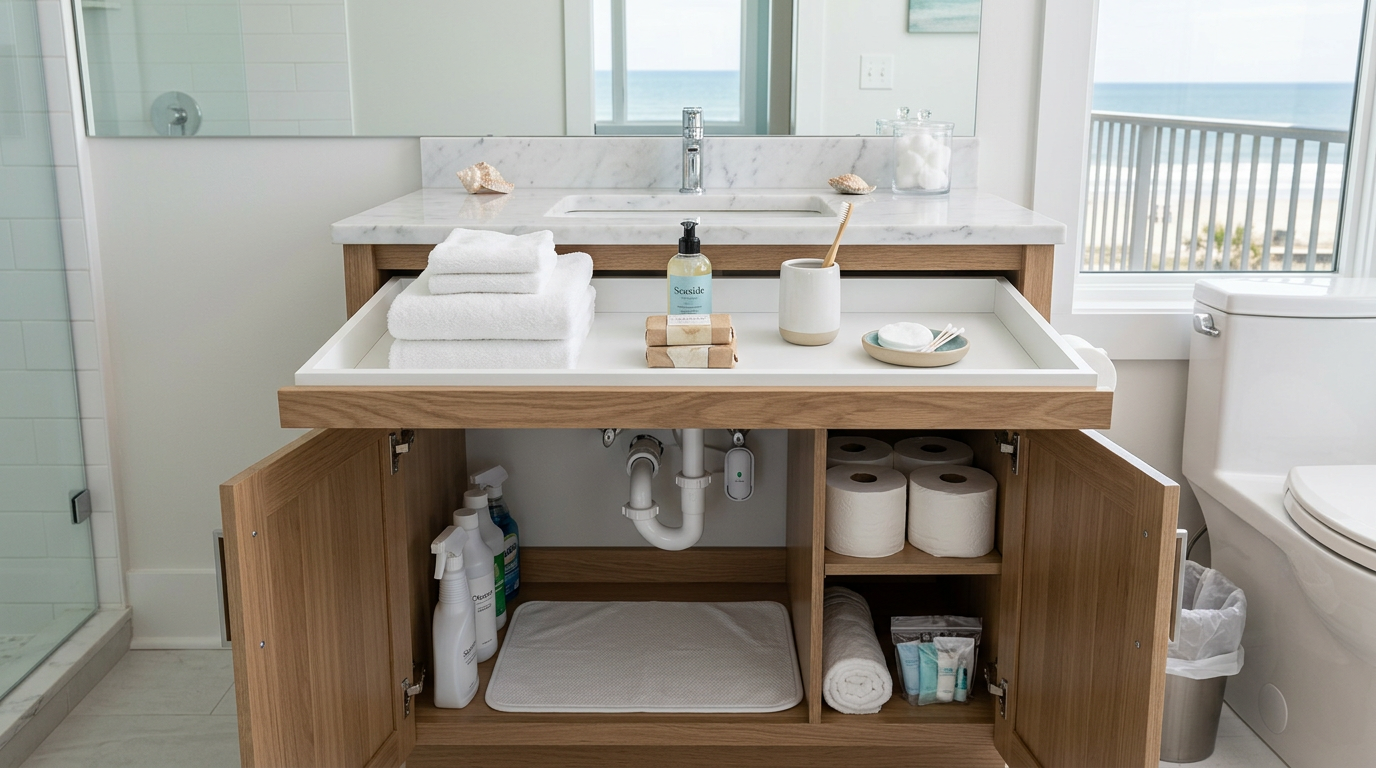
For vacation rental owners and property managers along the Grand Strand, a spotless bathroom is the absolute baseline of guest satisfaction. While major features like pristine bed linens and sparkling kitchen countertops grab attention, guests pay microscopic attention to intimate spaces. Opening a bathroom vanity drawer only to find a stray hair, a dust ring, or sticky cosmetic residue can instantly trigger a negative review. At A2Z Cleaning & Linen Services, we understand that under-sink cabinets and vanity drawers are the ultimate litmus test of a professional turn, requiring a highly structured cleaning process to withstand the relentless pace of Saturday checkout pressures.
The Psychology of Bathroom Drawer Cleanliness in Coastal Rentals
When families check into a Myrtle Beach oceanfront condo or a spacious beach home in North Myrtle Beach, they carry a high expectation of total hygiene. Unlike living rooms or outdoor patios where a trace of sand is casually tolerated, the bathroom is treated as a highly personal sanctuary. A guest expects to unpack their toothbrush, skincare products, and shaving kits into drawers and cabinets that are completely free of any trace of previous occupants. If a traveler opens a drawer and discovers hair strands or cosmetic powder, they immediately perceive the entire property as unsanitary, sparking anxiety that leads to critical platform reviews.
Online booking channels like Airbnb and VRBO have made the cleanliness sub-score a make-or-break metric for rental performance. A single dip in your cleanliness rating can suppress your listing in search results and directly impact peak-season occupancy rates. Vanity drawers and under-sink cabinets are frequent targets for these low scores because they are easily overlooked during rushed turnover windows. Housekeepers operating without a strict checklist often prioritize visible surfaces, leaving hidden drawers as a major liability for owners who rely on premium rates.
The unique climate of the Grand Strand compounds these challenges. High relative humidity and salt air work together to bind loose dust, hair, and lint to interior cabinet surfaces, turning dry debris into sticky, stubborn grime. Traditional dry dusting is completely ineffective in these coastal conditions, as it simply relocates the particles instead of removing them. To combat this sticky bond, turnover teams must implement a wet-clean extraction method designed to lift organic matter away from drawer corners and shelving boards.
The Microfiber and Static-Charge Hair Extraction Method
The primary challenge in clearing vanity drawers is overcoming static cling. Plastic drawer organizer trays, acrylic cosmetic dividers, and painted wood cabinet interiors naturally accumulate a static charge as drawers slide back and forth. This charge attracts hair, fine lint, and skin flakes like a magnet, locking them into the tight inside corners. To break this static bond, housekeeping staff cannot rely on sweeping motions alone; they must use a combination of physical vacuum lift and chemical neutralizing wipes.
The protocol begins with a specialized, narrow-crevice vacuum nozzle attachment. Our cleaning specialists run the vacuum along all inner seams and joints of the drawer box to pull out loose hair and dry sand particles before introducing any moisture. Attempting to wipe a drawer containing loose sand and hair without vacuuming first creates an abrasive paste that can scratch delicate drawer liners and smear dark pigments across the wood grain, making the cleanup process twice as long.
Once the loose dry matter is safely evacuated, technicians apply a damp split-fiber microfiber cloth lightly misted with a neutral pH botanical cleaner. Microfiber carries a natural positive charge that attracts negatively charged dust and hair, pulling them off the drawer substrate and locking them deep within the cloth's weave. The technician must wipe the drawer starting from the rear top corners, pulling the cloth forward in a single, continuous sweep to ensure no hair is pushed back into the rear structural crevice.
Addressing Cosmetic Powders and Self-Tanner Residue in Drawer Tracks
Grand Strand vacationers frequently travel with cosmetic powders, liquid foundations, bronzers, and self-tanning lotions. Because these containers are regularly packed, unpacked, and squeezed, they frequently leak inside vanity drawers during a guest's stay. When mixed with the bathroom's natural steam and humidity, these fine pigments dissolve and settle into drawer joints, leaving unsightly yellow, orange, or brown stains that resemble mold or rust.
To break down the lipid binders found in modern waterproof makeup and self-tanners, a targeted chemical approach is necessary. Cleaners should never use aggressive bleach formulas, which can chemically yellow white melamine drawers and strip protective lacquer coatings from real wood drawers. Instead, a mild, high-surfactant neutral cleanser is applied directly to the stain. This emulsifies the synthetic oils and pigments, allowing the cleaner to wipe the residue clean without degrading the underlying cabinetry material.
Furthermore, fine beach sand blown from open balconies frequently settles into the metal drawer slides and roller mechanisms. This sand mixes with the factory lubricant on the metal tracks, forming a dark, grinding sludge that impedes smooth drawer travel and makes a loud squeaking noise when opened. Cleaners must wipe the metal slides during every turnover, removing this sandy buildup and checking that the drawer glides quietly and safely before the next guests arrive.
- Vacuum all drawer corners and slides with a narrow crevice tool before applying wet cleaners.
- Emulsify cosmetic oils and self-tanners with high-surfactant neutral cleaners, avoiding harsh bleach.
- Wipe down metal drawer tracks to clear out abrasive sand and grease sludge.
- Ensure drawer organizer trays are removed, washed under hot water, dried, and reset.
Under-Sink Cabinet Inspection and Moisture Control
The dark, enclosed space beneath a bathroom vanity is highly susceptible to mold and mildew. In our humid coastal environment, the temperature differential between air-conditioned indoor spaces and warm outdoor air causes condensation to form on cold-water copper supply lines. This moisture drips onto the cabinet floor, where it pools under guest supplies. If left unchecked, this dampness breeds wood rot, structural sag, and a distinct musty odor that immediately ruins a guest's first impression.
Slow leaks from plastic P-traps, loose slip-joint nuts, or failing faucet gaskets are also common in high-use rentals. Because guests often pack these cabinets with backup toilet paper, beach towels, and hair styling tools, minor drips can remain hidden for weeks until major water damage occurs. Cleaners must conduct a physical touch-test of all plumbing connections during every Saturday turn, checking for active dampness, warped floorboards, and green copper corrosion.
Sanitizing this cabinet requires clearing out all stored items to expose the entire floor and back wall. Technicians mist the interior surfaces with an EPA-registered botanical sanitizer to neutralize mold spores and eliminate musty odors without releasing harsh chemical fumes into tight, unventilated bathroom spaces. Once the floor is wiped completely dry, any backup supplies—such as wrapped toilet paper rolls and trash bags—are organized neatly in clear, moisture-resistant storage bins.
Sanitizing In-Unit Hair Dryers and Styling Tools
In-unit hair dryers are highly appreciated amenities, but they are notorious hotbeds for hair, dust, and sticky residue. Guests handle these appliances with hands coated in hairspray, sunscreen, moisturizing lotions, and salt water, transferring these oils directly to the plastic handle and power cord. Over a few turn cycles, these oils oxidize, turning the hair dryer into a tacky, gray-dust-magnet that is highly unhygienic to touch.
The sanitization protocol requires wiping down the entire body of the hair dryer, including the power cord and plug, with an isopropyl-alcohol-based sanitizing wipe. This dissolves stubborn styling polymers and sebum oils instantly, restoring the clean, smooth texture of the plastic. Special attention must be paid to the rear air intake grille, which frequently clogs with fine grey carpet lint and hair strands, choking airflow and posing a serious fire hazard when the motor overheats.
To clear the air intake grille, the housekeeper uses a small, stiff-bristled detail brush to sweep away trapped lint, vacuuming the loose debris clean. After the dryer is thoroughly sanitized and dried, the cord must be wrapped neatly—never tightly wound around the body, which damages internal copper wiring—and placed in a dedicated, labeled canvas bag. This clean, deliberate presentation shows guests that even the small details have been professionally managed.
The Dedicated Makeup Towel and Vanity Countertop Setup
A major operational challenge for Myrtle Beach rental owners is the rapid ruin of premium white bath towels. When guests use white washcloths and hand towels to wipe off heavy makeup, bronzers, and waterproof mascara, the high-heat washing cycles in industrial laundries can bake these pigments into the fibers, permanently staining them. To protect your linen investment, owners should establish a dedicated makeup towel program as part of their vanity setup.
We recommend placing a dark navy or black microfiber washcloth, clearly embroidered with the word 'Makeup,' directly on the vanity countertop. This towel should be presented folded neatly beside a small, printed card requesting that guests use it for cosmetic removal. This simple operational cue gently redirects guest behavior, dramatically reducing chemical salvage wash costs and preventing premium white linen inventory from being downgraded to cleaning rags.
The final presentation of the vanity countertop must be absolute perfection. After deep cleaning the mirrors and polishing the chrome faucet fixtures with a streak-free glass cloth, keep decorative items to a minimum. Align soap dispensers, amenity trays, and cotton swab containers neatly on a dry tray. A clutter-free countertop with zero water spots or dust particles reassures the arriving traveler that their health and hygiene are the property's top priority.
- Provide dedicated dark makeup washcloths to protect white bath linen inventory.
- Sanitize hair dryer handles and power cords with isopropyl alcohol wipes during every turn.
- Clear lint and hair clogs from hair dryer intake vents with a stiff brush to prevent fire hazards.
- Polish chrome fixtures and glass mirrors to a streak-free finish using specialized microfiber.
A Standardized Saturday Turn Checklist for Scaling Success
During the chaotic peak season, when cleaning teams have only a few hours to turn dozens of units across the Grand Strand, details can easily slip without a repeatable system. To maintain consistency, every cleaning technician must follow a strict, physical sequence of motions. By standardizing the order of operations, the housekeeper naturally builds muscle memory, ensuring that drawers and cabinets are never missed, even under intense Saturday checkout pressures.
The standard sequence begins with a complete clear-out of the vanity, followed by vacuuming, chemical spot cleaning, sanitizing wipes, plumbing leak checks, and final cosmetic staging. Once a cabinet zone is finalized, it is marked as 'complete' on our digital quality management app. Cleaning caddies, damp cloths, and dirty trash bags should never be placed back onto the clean vanity deck or inside sanitized drawers, keeping the newly prepared areas completely sterile.
Investing in these hidden details pays massive dividends in the form of glowing guest reviews, repeat bookings, and lower long-term maintenance costs. When you partner with A2Z Cleaning & Linen Services, your property benefits from systematic, meticulous turnover protocols that protect your brand and preserve your investment. To discuss establishing a customized housekeeping program for your Grand Strand vacation rental portfolio, contact our office today at 843.800.2788.
Key takeaway
Achieving five-star cleanliness reviews requires looking beyond highly visible surfaces to sanitize hidden touchpoints like vanity drawers and under-sink cabinets. By implementing a standardized extraction protocol for hair, makeup residues, and coastal moisture, property managers can eliminate the primary drivers of guest hygiene complaints. Partnering with a professional, detail-driven service like A2Z Cleaning & Linen Services ensures your property remains pristine and competitive through every peak-season turnover.
Keep Reading

Vacation Rentals
The Coastal Vacation Rental Small Kitchen Appliance and Coffee Station Turnover Protocol: Mitigating Hard-Water Scale, Sticky Residues, and Moldy Reservoirs under Grand Strand Saturday Turn Pressures
ReadVacation Rentals
The Coastal Oceanfront Balcony and Balustrade Turnover Protocol: Mitigating Salt-Atmosphere Etching, Sticky Beverage Residues, and Guest First-Impression Failures in Grand Strand Vacation Rentals
ReadVacation Rentals
The Coastal Coffee Station and Beverage Center Turnover Protocol: Mitigating Hard-Water Scale, Yeast Biofilms, and Sticky Syrups in Grand Strand Vacation Rentals
ReadReady for a spotless property?
Call 843.800.2788 or request a free quote from A2Z Cleaning & Linen Services.