Vacation Rentals
The Coastal Oceanfront Balcony and Balustrade Turnover Protocol: Mitigating Salt-Atmosphere Etching, Sticky Beverage Residues, and Guest First-Impression Failures in Grand Strand Vacation Rentals
A step-by-step cleaning and maintenance guide to protecting vacation rental balconies from salt crust, sticky spills, and sand accumulation to ensure flawless guest check-ins.
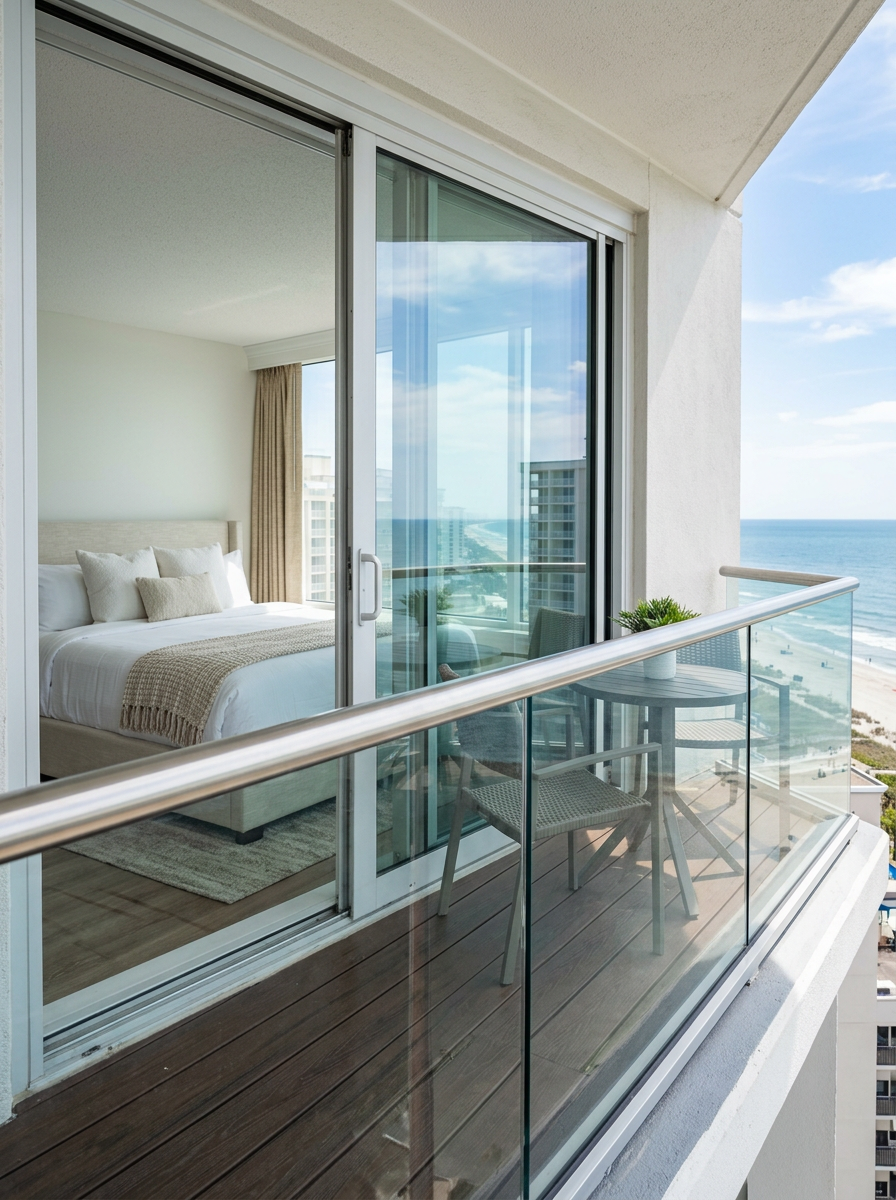
For vacation rentals along the Grand Strand, the oceanfront balcony is the primary selling point that draws guests to book. The very first action most travelers take upon unlocking the door is walking straight across the living room to step outside and look at the ocean. If their first steps reveal a sticky deck, sand-crusted railings, or a salt-filmed glass balustrade that obscures the sunrise, their vacation experience is instantly diminished. To secure five-star reviews and prevent immediate housekeeping complaints, property managers must implement a rigorous balcony decontamination protocol during every guest turnover.
The Psychology of the First Step: Why Balconies Dictate Guest Reviews
The balcony functions as the emotional centerpiece of an oceanfront vacation rental. When a family checks into a property in Myrtle Beach or North Myrtle Beach, they have likely traveled for hours with the anticipation of enjoying panoramic views of the Atlantic. The outdoor living space is not merely an amenity; it is a direct extension of the indoor living area, and guests hold it to the same strict standards of cleanliness as the kitchen or master bedroom.
When online reviews mention poor housekeeping, the complaints often trace back to outdoor zones that were overlooked during a rushed peak-season turnover. A glass balustrade coated in a thick layer of dried sea spray, or a handrail sticky with sunscreen residue, signals to the guest that the entire property has been cleaned with a lack of attention to detail. This initial disappointment can set a negative tone for the rest of their stay, prompting them to scrutinize minor indoor imperfections they might have otherwise ignored.
Implementing a standardized balcony turnover protocol ensures that this critical high-impact zone is consistently pristine. By treating the balcony as a core room rather than an outdoor afterthought, hosts and property managers can protect their listing ratings, reduce mid-stay touch-up calls, and establish an immediate sense of luxury the moment guests step through the door.
The Chemistry of Salt Spray: Why Standard Glass Cleaners Fail
The marine environment along the Grand Strand is highly corrosive, carrying a constant mist of water, sodium chloride, calcium, and magnesium. As wind-driven sea spray lands on balcony glass, the water evaporates, leaving behind a hard, crystalline mineral crust. This crust does not simply sit on the surface; it chemically bonds with the silica in the glass, and if left untreated, it can cause permanent mineral etching that ruins the clarity of the pane.
Standard blue household glass cleaners are formulated to remove light dust and fingerprints, but they lack the chemistry required to dissolve sea salt. When sprayed onto a salt-crusted balustrade, these ammonia-based products simply smear the salt crystals across the pane, creating a cloudy, white haze that becomes highly visible and distracting when the direct morning sun hits the glass.
To successfully break the bond between the salt crystals and the glass, cleaning teams must use specialized chemistry. An effective protocol requires a mild acid wash or a non-ionic surfactant solution that chemically neutralizes the alkaline minerals, liquefying the crust so it can be completely lifted from the glass surface without scratching.
The Multi-Step Glass Balustrade Decontamination Sequence
A proper glass balustrade cleaning sequence must begin with a thorough low-pressure rinse using fresh water. This step is critical because windblown sand particles act like sandpaper; wiping the glass before removing these loose abrasives will result in fine micro-scratches that permanently dull the glass over time.
After rinsing away the loose sand, technicians apply a specialized surfactant solution using a professional strip washer. This tool allows the cleaner to agitate the surface gently, breaking down dried salt crust, bird droppings, and sunscreen smudges without scratching the glass. The solution must dwell on the glass for one to two minutes to fully dissolve the mineral bonds, but it should not be allowed to dry in the direct sun.
Once the salt crust has been dissolved, a professional brass-channel squeegee is used to clear the pane in smooth, overlapping strokes. Technicians must wipe the squeegee blade with a clean lint-free microfiber towel after every single pass. Finally, a dry waffle-weave microfiber cloth is used to detail the perimeter of the frame, removing any trapped water from the rubber gaskets to prevent the growth of black mold in the humid coastal air.
Handrail and Baluster Sebum and Sunscreen Extraction
Balcony handrails and vertical balusters are primary contact points that accumulate a buildup of human skin oils (sebum), sticky beverage residues, and synthetic sunscreen ingredients. These substances combine with airborne sand and salt to create a dark, sticky grime that clings to the underside of the rail where guests naturally grip.
Because sunscreen formulas are designed to resist water, simple soap and water will not easily remove them from powder-coated aluminum or vinyl railings. Cleaning teams must use an alkaline detergent or a specialized heavy-duty surfactant spray that is safe for exterior finishes. This cleaner must be sprayed directly onto the rail and allowed to dwell to break the chemical bonds of the water-resistant oils.
Using a high-density, color-coded microfiber cloth, the technician must scrub the entire surface of the railing, paying close attention to the joints and the undersides of the top rail. After scrubbing, the railing is wiped down with a clean, damp cloth to remove any chemical residue, leaving a smooth, clean handhold that is completely free of grit and sticky spots.
Floor Decking and Drainage Clearing: Mitigating Sand Silting and Bio-Sludge
Balcony floors, whether made of poured concrete, outdoor tile, or composite decking, are natural collection points for heavy sand blown from the beaches of Surfside or Garden City. During periods of high humidity and rain, this sand settles into corners, along baseboards, and inside drainage weep holes, forming a dense, concrete-like silt.
If the weep holes along the edge of the balcony become blocked by sand and organic debris, rainwater and air conditioning condensation cannot drain properly. This trapped water pools on the deck, creating a breeding ground for slick, green algae and a smelly organic bio-sludge. This standing water is not only an eyesore but also a slipping hazard for guests.
During every turnover, cleaning crews must thoroughly sweep out all loose sand from the deck, pulling it out of corners and away from sliding door tracks. A stiff-bristled brush should be used to clear any blockages from the drainage channels. The floor is then damp-mopped using a neutral, residue-free cleaner that sanitizes the surface and dries quickly without leaving a slippery film.
Balcony Furniture Alignment and Cushion Inspections
Outdoor patio furniture is subjected to some of the harshest conditions on the property. Salty air, baking sun, and occasional storms can cause plastic chairs to become brittle, metal frames to rust, and cushions to develop mold. During a turnover, every piece of furniture must be inspected, cleaned, and arranged according to the property's staging standards.
Technicians must wipe down all chair frames, table surfaces, and especially cup holders, which often collect sticky drink residues, sand, and dead insects. Cushions must be checked for dampness and flipped to inspect for hidden mold or mildew underneath. Any damp or stained cushions must be pulled for laundering or spot-treated with a fabric sanitizer.
Once clean, the furniture must be arranged to perfectly match the listing's marketing photos. Chairs should be neatly tucked, tables centered, and chaise lounges aligned parallel to the railing. This precise layout signals to guests that the property is professionally managed and ready for their immediate enjoyment.
Operational Logistics: Managing Wind and Sun in High-Rise Turnovers
Cleaning balconies in high-rise condominium buildings along Ocean Boulevard presents unique operational challenges. High winds can carry aerosolized cleaning chemicals away from the target glass, drifting onto lower balconies or into the eyes of passersby below. Additionally, hot afternoon sun can cause cleaning solutions to dry instantly on the glass, leaving behind stubborn chemical streaks.
To mitigate wind drift and chemical evaporation, turnover teams should schedule balcony cleaning for early morning when temperatures are cooler and wind speeds are generally lower. Technicians should use trigger-spray foamers or direct-application pads instead of standard spray bottles, applying the cleaning solution directly to the applicator to keep the chemistry contained to the work surface.
Safety is paramount when working on elevated balconies. Technicians must never lean over the railing or use unstable step stools to reach the top of glass panes. Extending poles must be used for hard-to-reach areas, ensuring that the worker's center of gravity remains safely on the balcony floor at all times.
- Utilize foam applicators instead of spray bottles to prevent wind drift on high-rise units.
- Perform balcony cleaning early in the morning to avoid direct sun-baking and chemical streaking.
- Never use metal scrapers on glass; rely on specialized non-scratch nylon pads for stubborn debris.
- Ensure technicians use telescoping extension poles to clean high glass safely from the deck floor.
- Check local weather alerts for high-wind warnings before attempting exterior high-rise window work.
The Five-Point Visual Verification Gate for Supervisors
Before a turnover is finalized and the unit is marked ready for guest check-in, the field supervisor must perform a final quality audit of the balcony area. This audit acts as a quality gate, ensuring that no details were missed during the rush of the turn and that the balcony matches the high standard of the interior spaces.
The supervisor should stand inside the living room and look through the sliding glass door to verify that there is no haze, streaking, or sand residue on either side of the glass. They must then step onto the balcony and slide their hand along the handrail to ensure there is no sticky residue or gritty sand left behind.
By enforcing a strict verification process, property managers can eliminate one of the most common causes of negative check-in reviews. For property owners looking to elevate their guest experience and protect their investments, A2Z Cleaning & Linen Services provides professional, systematized turnover services across the Grand Strand. Contact us at 843.800.2788 to learn more about our comprehensive cleaning programs.
- Visual Clarity Check: Look through the sliding door and glass balustrade from a standing position inside the room.
- Tactile Railing Test: Slide a hand along the top and underside of the handrail to check for grease, sunscreen, or grit.
- Drainage Inspection: Verify that weep holes are clear of sand and that there is no standing water or bio-sludge on the deck.
- Furniture Staging Verification: Ensure all chairs, tables, and cushions are dry, clean, and styled according to listing photos.
- Threshold Sand Check: Confirm that the sliding door tracks are vacuumed and free of accumulated sand that could jam the door.
Key takeaway
An oceanfront balcony is a premium feature that can either secure five-star reviews or trigger immediate guest complaints. By implementing a systematic turnover protocol that addresses salt-crust chemistry, handrail sebum, and sand silting, Grand Strand hosts can deliver a flawless first impression. For professional, reliable turnover cleaning that keeps your rental properties pristine, contact A2Z Cleaning & Linen Services at 843.800.2788.
Keep Reading
Vacation Rentals
The Guest Arrival Audit: Minimizing First-Hour Complaints and Host Refund Requests in Grand Strand Rentals
ReadVacation Rentals
The Grand Strand Vacation Rental Onboarding and Property-Profile Standardization Protocol: Syncing PMS Hardware Maps, Housekeeping Checklist Blueprints, and Vendor Supply Loops for Scaling Portfolios
ReadVacation Rentals
The Grand Strand Same-Day Turn Triage Protocol: Managing Peak-Season PMS Scheduling Overrides, Real-Time Clean-Status Gates, and Vendor Logistics
ReadReady for a spotless property?
Call 843.800.2788 or request a free quote from A2Z Cleaning & Linen Services.