Home Cleaning
Post-Construction Cleaning in Myrtle Beach: Costs, Safety Standards, and How to Vet Local Services
Learn the true costs, safety hazards, and surface-safe chemistries involved in post-construction cleaning for your Grand Strand home remodel.
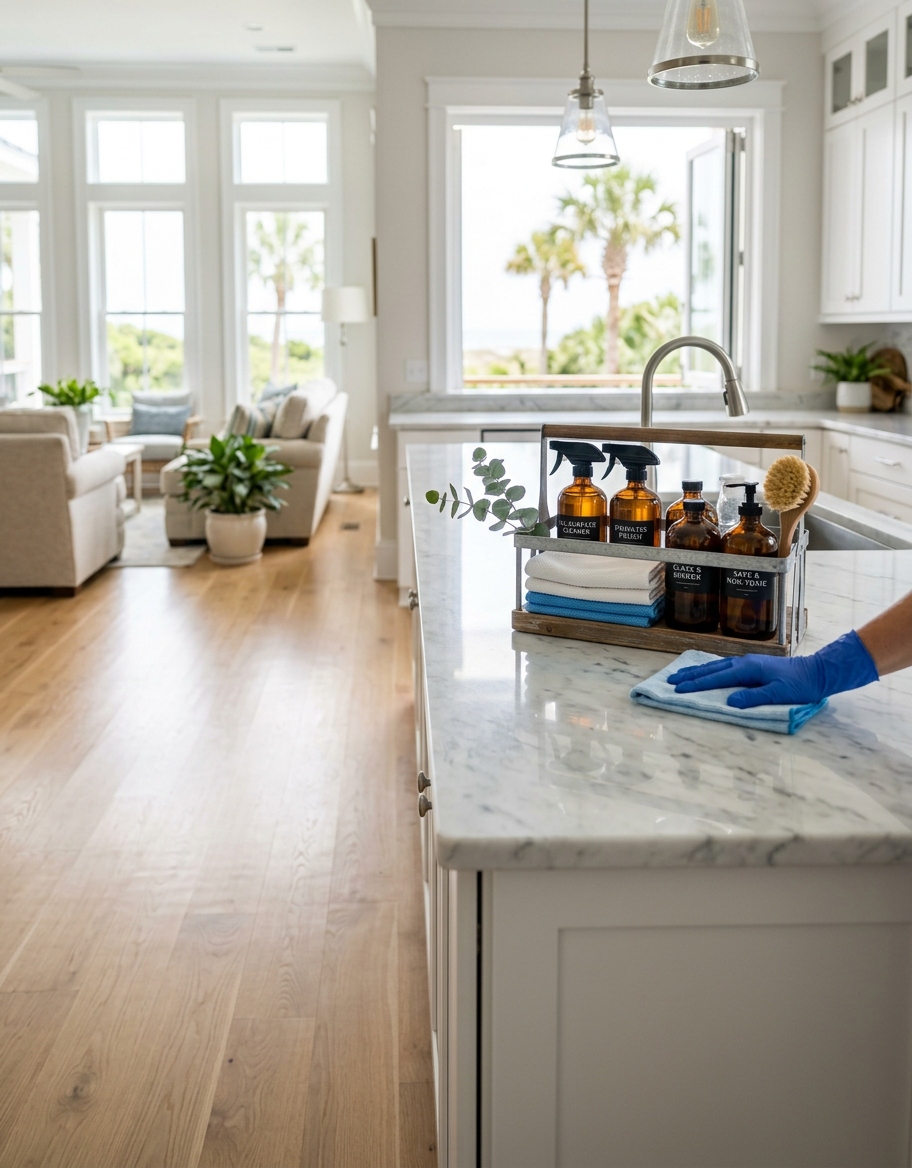
Completing a home renovation or addition in the Grand Strand is an exciting milestone, but the dust left behind can quickly overshadow the beautiful results. Unlike standard household dust, post-construction residue is a complex mix of abrasive silica, drywall particles, and sawdust that clings to every surface. Attempting to clean this up yourself—or hiring an unequipped provider—can permanently damage new finishes and compromise your indoor air quality. This guide breaks down the true costs, safety hazards, and critical questions you must ask to safely restore your home.
The Invisible Hazard: Understanding Construction Dust in High-Humidity Environments
When drywall is sanded, grout is applied, and timber is cut, it generates a massive volume of microscopic dust. In the high-humidity coastal climate of Myrtle Beach, this dust quickly absorbs airborne moisture, causing it to cling to walls, ceilings, and trim like a stubborn, electrostatic paste. Attempting to sweep or dry-wipe these particles often just smears the residue, leaving behind unsightly white streaks and potentially scratching delicate, newly installed paint, wood, or glass finishes.
Beyond cosmetic issues, post-renovation dust poses a significant risk to your home's mechanical systems. These fine particles easily bypass standard residential HVAC filters, settling on the sensitive evaporator coils and inside ductwork. If you run your air conditioning system while this dust is still present, the system will continuously recirculate the debris throughout your home. This can lead to premature system failure, poor indoor air quality, and could potentially void your manufacturer's HVAC warranty.
There is also a serious respiratory safety aspect to consider. Drywall and concrete dust contain crystalline silica, which is highly abrasive and irritating to the lungs. Cleaning these materials safely requires industrial-grade HEPA-filtered vacuums and proper personal protective equipment. Professional crews are trained to contain and systematically extract these microscopic particles from the living space rather than simply blowing them back into the air through standard domestic vacuum exhaust ports.
DIY vs. Professional Post-Construction Cleaning: Assessing the Risks
Many homeowners consider tackling the post-remodel cleanup as a DIY project to save on the tail end of their renovation budget. However, without industrial extraction equipment, a homeowner will typically spend days vacuuming and wiping surfaces, only to find a fresh layer of white dust has settled overnight. This cycle of frustration occurs because standard household vacuums lack the filtration capacity to trap microscopic drywall particles, letting them escape back into the room's atmosphere.
The risk of permanent surface damage during a DIY clean is exceptionally high on modern coastal materials. Newly installed luxury vinyl plank flooring, engineered quartz countertops, and matte-finish cabinetry are highly vulnerable to scratching from abrasive dust if rubbed too hard. Professional technicians use specialized non-abrasive microfiber systems and dust-lifting chemical agents that suspend the particles away from the surface, allowing them to be safely wiped away without causing micro-scratches.
Time is another critical factor to weigh before choosing the DIY route. A thorough post-construction clean-up is physically grueling work that requires a methodical, multi-step process from the ceilings down to the floors. For a standard three-bedroom home, an inexperienced homeowner can easily spend 30 to 40 hours of intensive labor trying to reach every hidden ledge, cabinet interior, and light fixture, whereas a trained local team can complete the task efficiently in a single day.
The Three Crucial Phases of a True Post-Construction Clean
A professional cleanup cannot be completed in a single pass; it requires a systematic, three-phase approach to ensure no lingering dust remains. The first phase is the Rough Clean, which occurs immediately after the contractors finish their work. This involves removing all leftover building materials, adhesive stickers from windows and fixtures, and sweeping up large debris so that the detail work can safely begin without physical obstructions.
The second phase is the Detail Clean, which is the most intensive and precise stage of the process. Crews clean every vertical and horizontal surface in the home, including ceiling fans, light fixtures, the interiors and exteriors of all cabinetry, baseboards, and window tracks. High-filtration HEPA vacuums are used to extract dust from deep within drawers, floor vents, and closet corners where fine particles naturally migrate and settle.
The final phase is the Touch-Up or Polish Clean, which is typically scheduled a few days after the detail clean. This delay is intentional, allowing any microscopic dust still suspended in the air to fully settle onto flat surfaces. The team returns to perform a final wipe-down of all mirrors, windows, countertops, and hard floors, ensuring a streak-free, immaculate finish that makes the home truly move-in ready.
Grand Strand Cost Breakdown: What You Should Expect to Pay
In the Myrtle Beach and Grand Strand area, professional post-construction cleaning is typically priced by the square foot, ranging from $0.30 to $0.65 per square foot. The exact rate depends on several local factors, including the height of your ceilings, the volume of built-in cabinetry, and the overall complexity of your home's layout. A historic home remodel in Georgetown or a luxury oceanfront condo in North Myrtle Beach will vary in cleaning complexity.
While some independent cleaners might offer low hourly rates, these can quickly become unpredictable if the workers lack the specialized equipment to clean efficiently. Established, professional cleaning agencies generally provide a comprehensive, transparent flat-rate quote based on an on-site walkthrough. This flat rate guarantees that the team will stay until every speck of dust is successfully remediated, regardless of how many hours the process ultimately takes.
When reviewing quotes, always check which services are included in the baseline price and which are considered add-ons. Common add-on services include exterior window washing, pressure washing of newly dusty porches or driveways, and inside-appliance cleaning if new appliances were installed. Be sure your quote clearly defines the scope of work so there are no unexpected charges on your final invoice once the job is completed.
Crucial Questions to Ask When Vetting a Local Cleaning Company
Before hiring any company to step onto your newly renovated property, you must verify their operational credentials. Ask if the company carries active General Liability insurance and Workers' Compensation specifically covering post-construction environments. If an uninsured cleaner slips on drywall dust or accidentally damages an expensive new quartz countertop, you could be left facing significant financial and legal liabilities as the homeowner.
You should also ask detailed questions about their equipment and filtration standards. A reputable company should be able to confirm that their teams use commercial-grade vacuums equipped with certified HEPA filters. If a company plans to use standard residential vacuums or basic shop-vacs, they will simply disperse the fine silica dust back into your living space, compromising your indoor air quality and leaving a chalky residue on your walls.
Finally, ask about their staff's training regarding delicate finishes. Modern building materials require specific care; using the wrong chemical or tool on natural stone, brass plumbing fixtures, or luxury vinyl plank can ruin them instantly. A professional local provider will have a structured training program that ensures their cleaners know how to handle and protect expensive coastal home finishes without causing chemical or physical damage.
- Can you provide a current certificate of insurance and proof of workers' compensation?
- Do your teams use certified HEPA-filtration vacuums for fine dust extraction?
- Is your post-construction pricing a guaranteed flat rate based on an on-site walkthrough?
- What specific surfaces, such as window tracks and inside cabinets, are included in your standard checklist?
- How do you train your staff to clean delicate finishes like engineered quartz and luxury vinyl floors?
Product Safety: Surface-Safe Chemistries for Coastal Materials
The chemistry used during a post-construction clean is just as important as the physical technique. Many well-meaning DIYers and untrained cleaners reach for harsh solvents, bleach, or acidic solutions to quickly dissolve adhesive residues and grout haze. On high-end coastal materials like quartz, marble, and luxury vinyl plank, these aggressive chemicals can strip the factory sealants, leave permanent chemical burns, or cause unsightly yellow discoloration.
Removing grout haze from newly tiled bathrooms or backsplashes requires specialized, pH-neutral or mild, buffered acidic rinses. These professional-grade formulations break down the cementitious binders in the grout residue without attacking the delicate tile glaze or eroding the surrounding grout lines. Using standard household acids like vinegar can etch natural stone tile and dull the polished finish permanently.
To lift stubborn fine dust from walls and trim without removing the fresh paint, professionals rely on neutral, pH-balanced solutions paired with electrostatic microfiber cloths. This combination neutralizes the static charge holding the dust to the wall, trapping the particles inside the fibers rather than smearing them. This safe, non-toxic approach protects your home's air quality and ensures your brand-new paint job remains pristine.
Protecting Your HVAC Investment During and After the Cleanup
Your home's heating and cooling system is highly vulnerable during a renovation and the subsequent cleanup. Ideally, your HVAC system should remain turned completely off during the dustiest phases of the remodel to prevent pulling airborne particles into the return vents. If the system must run due to Myrtle Beach's intense heat and humidity, ensure that temporary, high-MERV construction filters are installed and swapped out daily.
Once the heavy construction is finished and the detail cleaning begins, the HVAC registers and return grills must be carefully vacuumed and wiped down. This prevents any settled dust inside the vents from blowing back out into the freshly cleaned rooms. A professional cleaning crew will make sure these intake areas are completely free of debris before the final polish phase is completed.
After the deep cleaning is done, it is absolutely essential to discard the temporary construction filters and install brand-new, high-quality residential filters. Running your system with dusty, clogged filters restricts airflow, increases your energy bills, and strains your compressor. Taking these simple preventive steps during and after the clean protects your HVAC investment and ensures your indoor air remains fresh and healthy.
Why Family-Owned, Local Expertise Matters for Grand Strand Remodels
Grand Strand homes, from classic raised beach cottages in Cherry Grove to custom luxury estates in Grande Dunes, present unique ventilation and moisture challenges. A local, family-owned cleaning service understands how our high coastal humidity interacts with construction materials. We know exactly how to manage dust extraction without trapping moisture in your wall cavities or leaving sticky chemical residues behind.
Unlike nationwide franchise operations that rely on rigid, one-size-fits-all cleaning templates, a local family business offers personalized service and direct accountability. We take the time to conduct thorough on-site walkthroughs, listen to your concerns, and customize our cleaning checklists to match the specific materials used in your home remodel. Our reputation in the Myrtle Beach community is built on delivering meticulous, high-quality results.
At A2Z Cleaning & Linen Services, we bring years of local expertise, professional-grade HEPA equipment, and surface-safe chemistries to every post-construction job. We coordinate seamlessly with your general contractor to ensure our cleaning team arrives at the optimal time, helping you transition smoothly from a dusty construction zone to a beautifully finished home. Contact us today at 843.800.2788 to schedule your post-remodel consultation.
Key takeaway
Post-construction dust is an abrasive, moisture-absorbing hazard that requires specialized HEPA extraction and surface-safe chemistries to clean safely. By understanding the true costs, choosing professional-grade equipment, and vetting your cleaning provider's insurance and safety training, you can protect your investment and enjoy your newly renovated Grand Strand home with complete peace of mind.
Keep Reading
Commercial & Hospitality
The Grand Strand Post-Construction Cleaning Specialist: Technical Dust-Extraction Certifications, Silica-Safety Audits, and Competitive Compensation Structures for New-Build Handover Teams
ReadHome Cleaning
The Coastal Low-Level Window and Glass Viewing Zone Decontamination Protocol: Mitigating Toddler Handprints, Dog-Nose Sebum Slurry, and Humid Pollen-Sand Adhesion in Grand Strand Family Homes
ReadHome Cleaning
The Coastal Pet-Crate and Indoor Dog-Bed Restoration Protocol: Mitigating Humid Yeast Biofilms, Dander Reservoirs, and Urine-Ammonia Interactions in Grand Strand Homes
ReadReady for a spotless property?
Call 843.800.2788 or request a free quote from A2Z Cleaning & Linen Services.