Home Cleaning
The Grand Strand Private Estate and Luxury Home Housekeeping Specialist Career Pathway: Fine Material Training, Behavior-Based Interviewing, and Year-Round Retention Strategies
Discover how to recruit, train, and retain top-tier housekeeping professionals for Myrtle Beach’s luxury private estates, featuring technical pathways, interview guides, and local pay trends.
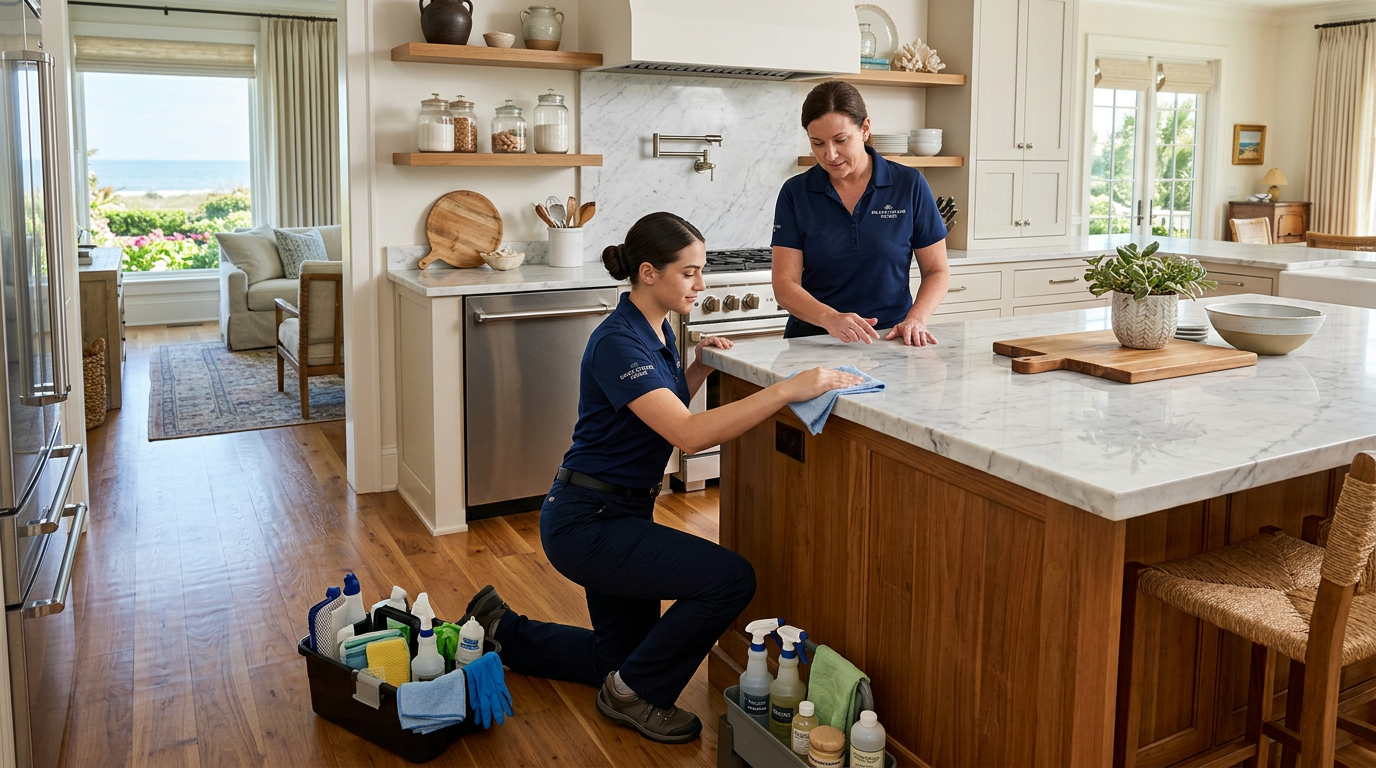
Homeowners in premier Grand Strand communities like the Grande Dunes, Debordieu Colony, and Dunes Club demand a level of residential care that transcends standard domestic cleaning. Managing multimillion-dollar private estates requires specialized technical knowledge of delicate surfaces, museum-grade finishes, and advanced coastal indoor environmental management. For cleaning business owners, estate managers, and homeowners alike, building a reliable, highly skilled cleaning team is the foundation of asset preservation. This guide outlines the professional pathway for estate housekeeping specialists, from hiring profiles and behavioral interviewing to compensation benchmarks and technical certifications.
The Anatomy of an Estate Housekeeping Specialist
Private estate cleaning along the Grand Strand requires a completely different mindset than standard commercial custodial work or rapid vacation rental turns. An estate housekeeping specialist must possess deep technical knowledge combined with high emotional intelligence and absolute discretion. These professionals are entrusted with entering private, high-value residences in exclusive enclaves like Dunes Club or Debordieu. A great candidate understands that they are not just cleaning surfaces; they are acting as stewards of multi-million-dollar structural assets, requiring acute spatial awareness and a quiet, respectful presence.
Beyond trust, an elite cleaner possesses an analytical eye that spots micro-changes in the residential environment. They notice a hairline fracture in a marble vanity, a failing seal on a custom window, or early signs of humidity-driven mildew on a leather headboard. This proactive observation allows homeowners to address maintenance concerns before they escalate into costly restoration projects. Cultivating this level of care requires individuals who view housekeeping as a skilled trade rather than a transitional gig, demonstrating pride in systematic execution.
Physical stamina and ergonomic intelligence are also vital parts of the profile. Cleaning expansive custom homes with soaring ceilings, winding staircases, and heavy custom furniture requires physical resilience and safe lifting practices. Specialists must be trained in body mechanics to prevent fatigue and injury while maintaining a high pace of detailed work over a long shift. When hiring, look for candidates who demonstrate a structured approach to physical labor, understanding the pacing required to deliver flawless results without burning out.
- Absolute discretion and respect for homeowner privacy in high-security communities.
- Sharp diagnostic skills to detect subtle changes in home finishes and structural materials.
- Mastery of professional body mechanics to ensure safety during long, detailed shifts.
- Pride in professional presentation, showing up in clean, professional uniforms with organized kits.
Technical Training and High-End Substrate Certifications
Standard house cleaning often relies on multipurpose chemical sprays that can slowly degrade delicate architectural finishes over time. An estate housekeeping specialist must understand the chemistry of cleaning, matching the pH of the cleaning solution to the specific substrate. This technical pathway includes formal training on the differences between acidic, neutral, and alkaline cleaners, as well as when to use solvent-based vs. water-based products. Misapplying a generic bathroom cleaner to a natural travertine shower can etch the stone permanently, resulting in thousands of dollars in restoration costs.
Formal certifications elevate housekeeping from a low-skill job to a technical specialty. Programs through organizations like the IICRC (Institute of Inspection Cleaning and Restoration Certification) offer pathways in hard-surface cleaning, upholstery care, and indoor air quality management. For coastal homes, training must also cover the mitigation of salt-air corrosion, humid mold colonization, and sand-grit abrasion. Technicians trained in these disciplines know how to safely clean delicate brass, copper, and wrought-iron fixtures without stripping their protective clear-coats or natural patinas.
In addition to stone and metal, advanced textile care is a critical component of the curriculum. High-end Grand Strand homes frequently feature natural fiber rugs, silk-blend draperies, and custom linen slipcovers. A certified specialist understands fiber identification, dye-stability testing, and wet-to-dry extraction ratios to prevent browning, shrinking, or color bleeding. By investing in systematic training and certification pathways, cleaning companies can guarantee their staff can handle the most sensitive materials with total confidence.
Designing the Selection Process: Behavior-Based Interview Questions
Recruiting the right talent begins with a highly intentional, behavior-based interview process that filters for alignment, problem-solving, and professional maturity. Generic questions like 'Do you mind cleaning toilets?' fail to reveal how a candidate handles high-pressure situations or unexpected challenges on-site. Instead, interviewers should ask open-ended questions that require candidates to describe past scenarios where they had to make critical decisions. This approach helps identify individuals who possess strong critical thinking skills and a natural orientation toward customer service.
Behavior-based interviewing also uncovers how a candidate manages mistakes, which is a critical factor when working around fragile valuables. A candidate who admits to past errors and explains the corrective steps they took is far more valuable than one who claims to have never broken an item. It reveals their integrity and willingness to communicate transparently, both of which are essential traits for staff working unsupervised in luxury homes. Evaluating these responses allows you to build a team built on mutual trust and open communication.
Finally, interviews must assess a candidate’s compatibility with the unique dynamics of the Grand Strand market, including seasonal shifts and coastal driving distances. Ask questions that reveal their reliability, self-management, and ability to maintain consistent energy levels during both the busy summer season and the quieter winter months. This ensures you hire individuals who are looking for long-term career growth rather than a quick seasonal job, laying the groundwork for a stable, high-performance team.
- "Tell me about a time you discovered you accidentally damaged a client's property; what did you do?"
- "Describe a situation where a homeowner gave you vague instructions, and how you resolved the ambiguity."
- "How do you organize your workflow when faced with a massive, multi-level estate within a limited time?"
- "Tell me about a time you noticed an overlooked maintenance issue in a home; how did you handle it?"
- "Describe your process for testing a new, unfamiliar surface before applying a cleaning product."
Technical Practical Assessments: The In-Field Skills Test
While verbal interviews are revealing, a practical, hands-on skills assessment is the ultimate test of a candidate's actual competence. A structured, paid audition in a controlled environment allows you to watch how a candidate interacts with various surfaces and cleaning tools. Set up a testing station featuring common luxury materials, such as a marble slab, a stainless steel panel, a glass cabinet, and a piece of natural wood furniture. Observe their selection of cleaning cloths, chemistry, and application methods without providing step-by-step guidance.
Pay close attention to their attention to detail and organizational habits during the practical assessment. A high-caliber candidate will naturally organize their cleaning caddy, keep their cloths folded to maximize clean surfaces, and avoid cross-contaminating microfibers between different areas. They will also demonstrate proper safety habits, such as testing a cleaner on an inconspicuous area first and reading chemical labels carefully. This practical evaluation quickly highlights the difference between an experienced professional and someone who simply cleans by instinct.
Finally, observe their pace, efficiency, and physical safety during the trial. A skilled estate cleaner works methodically but briskly, utilizing systematic patterns (such as top-to-bottom and left-to-right) to ensure no spot is missed. Watch for safe lifting techniques, correct posture while vacuuming, and careful handling of delicate decorative items. This step not only validates their technical skills but also ensures they can safely meet the physical demands of estate cleaning without risk of injury or property damage.
Compensation Benchmarks and Benefits Trends in the Grand Strand Market
The Grand Strand has historically seen high turnover in hospitality roles due to seasonal hiring patterns and low baseline wages. To build a reliable team for luxury residential estates, employers must offer compensation that reflects the highly technical nature of the work. This means moving away from minimum wage or entry-level rates toward premium hourly pay or salary structures that attract career-minded professionals. Offering competitive wages ensures that your team feels valued, reducing the temptation to jump to other seasonal opportunities.
Beyond base pay, offering robust benefits is essential for long-term team stability in the Myrtle Beach area. High-performance teams benefit from paid time off, health insurance stipends, and retirement matching options that are rarely found in traditional cleaning roles. Additionally, providing paid travel time or mileage reimbursement is crucial for teams covering the expansive geography of the Grand Strand, from Little River down to Pawleys Island. These benefits demonstrate a real investment in the well-being and financial security of your employees.
Year-round guaranteed hours are perhaps the most powerful retention tool in a highly seasonal coastal market. Many cleaning operations lay off staff or drastically cut hours during the winter, forcing top talent to look for work elsewhere. By guaranteeing stable hours throughout the year, you build a loyal, experienced team that remains intact when the busy spring and summer seasons return. This stability translates directly to consistent quality and security for the homeowners who trust your team.
- Premium hourly wages that exceed local hospitality averages to attract top-tier professionals.
- Year-round guaranteed hours to prevent seasonal winter layoffs and retain skilled staff.
- Mileage reimbursement and travel pay for technicians traveling between expansive coastal properties.
- Paid professional development and technical certification fees to encourage career advancement.
Building a Reliable High-Performance Team Culture
Building a reliable, high-performance team requires a culture rooted in clear expectations, mutual respect, and structured accountability. This starts with comprehensive, written Standard Operating Procedures (SOPs) for every cleaning task, leaving no room for guesswork or variation. When team members understand exactly what is expected of them, they can perform their duties with confidence and pride. Clear standards also provide a fair, objective basis for performance evaluations, constructive feedback, and recognition of excellent work.
True reliability is fostered when team members feel supported and valued by their leadership and peers. Creating mentorship opportunities where experienced estate specialists guide newer apprentices helps pass down critical technical knowledge and team values. Regular team meetings should be used to celebrate successes, discuss challenging cleaning scenarios, and collaborate on workflow improvements. By involving your team in decision-making and valuing their insights, you foster a sense of ownership that naturally leads to higher quality and dedication.
Career advancement pathways are another vital component of a strong team culture. Housekeeping should not be a dead-end job; employees should see a clear path from entry-level apprentice to senior specialist, team lead, or quality assurance inspector. Providing clear milestones for wage increases and promotion keeps your team motivated to improve their skills and take on more responsibility. This structured approach to professional growth ensures your team remains engaged, loyal, and committed to delivering exceptional service.
Retention Strategies: Mitigating the Coastal Seasonal Attrition Trap
The high-end residential market along the Grand Strand experiences distinct seasonal fluctuations, with many homeowners using their properties primarily in the spring and summer. To maintain a reliable, year-round team, cleaning companies must develop a strategic off-season plan that shifts focus from routine upkeep to deep restoration. During the quieter fall and winter months, your highly trained crew can perform deep-cleaning projects that are impossible during busy summer weeks. This seasonal transition keeps your team fully employed while protecting the homeowner's property value.
Off-season projects include detailed structural care, such as washing and conditioning custom wood cabinetry, deep extraction of high-end area rugs, and detailed cleaning of HVAC registers and light fixtures. This is also the perfect time to address exterior elements like outdoor kitchens and coastal furniture that have been exposed to salt-air and humidity all summer. By presenting these seasonal packages to estate owners, you ensure a steady flow of work that supports your team’s year-round guaranteed hours.
Ultimately, a year-round operational model benefits everyone: the homeowner receives unparalleled, consistent care from a familiar team, and the cleaning professionals enjoy financial stability and career growth. At A2Z Cleaning & Linen Services, we understand that our people are our greatest asset, and we invest heavily in their training, safety, and long-term career satisfaction. If you are looking to partner with a highly trained, reliable team to care for your Grand Strand estate, contact us today at 843.800.2788.
Key takeaway
Building a premier home-cleaning team on the Grand Strand requires treating housekeeping as a highly skilled, technical career path rather than a seasonal job. By combining competitive year-round compensation with rigorous training in delicate surfaces, homeowners and companies can build teams that preserve valuable real estate for years to come.
Keep Reading

Home Cleaning
The Grand Strand Move-In/Move-Out Cleaning Specialist Career Pathway: Substrate-Specific Certifications, Practical Audits, and High-Retention Compensation Models
ReadHome Cleaning
The Luxury Coastal Estate Cleaning Specialist: Advanced Surface Certifications, Behavioral Interview Protocols, and Premium Compensation Architectures for Grand Strand Estates
ReadHome Cleaning
The Residential Cleaning Technician Professionalization Blueprint: Certification Tracks, Interview Standards, and Wage Structures for Grand Strand Teams
ReadReady for a spotless property?
Call 843.800.2788 or request a free quote from A2Z Cleaning & Linen Services.