Home Cleaning
The Luxury Coastal Estate Cleaning Specialist: Advanced Surface Certifications, Behavioral Interview Protocols, and Premium Compensation Architectures for Grand Strand Estates
Discover how to recruit, train, and retain elite cleaning professionals capable of protecting and maintaining the Grand Strand's most prestigious luxury homes and oceanfront estates.
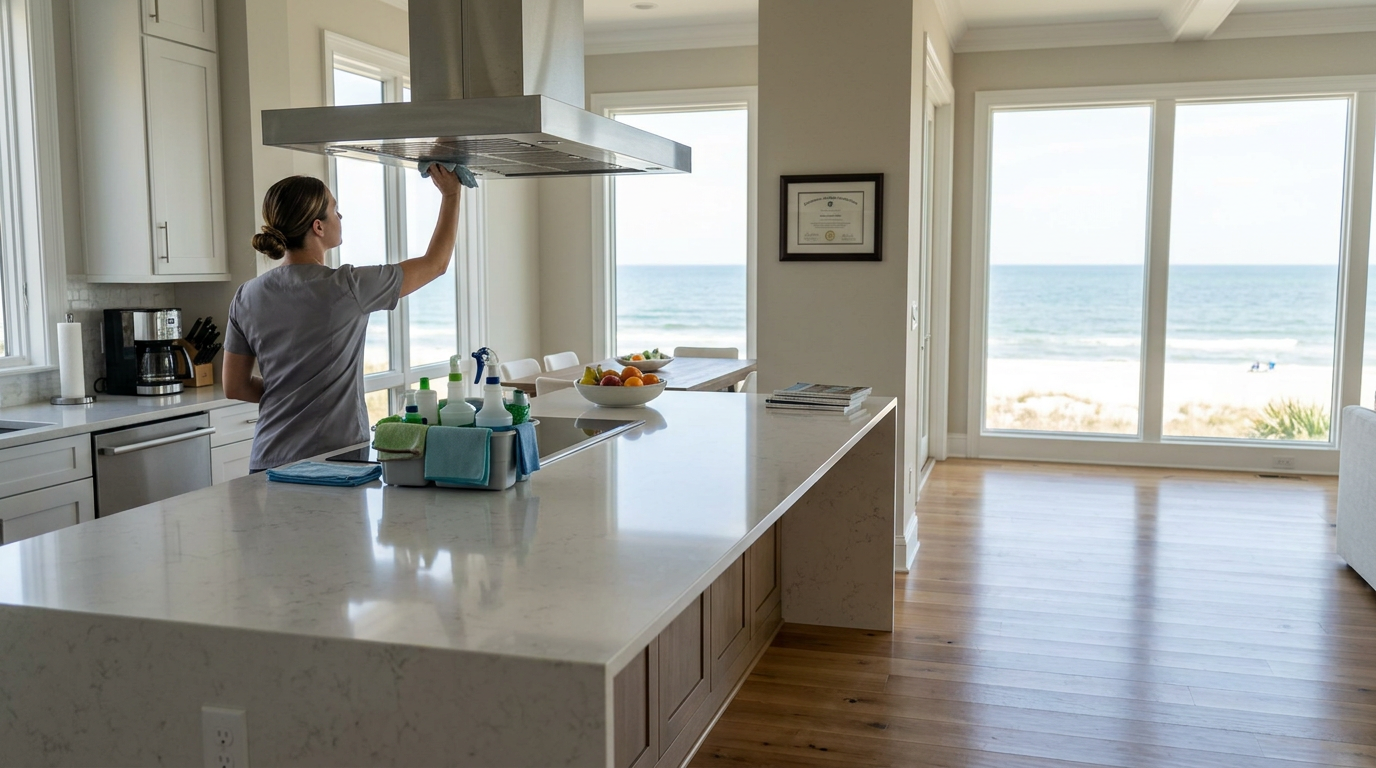
Maintaining a luxury oceanfront estate along the Grand Strand requires far more than basic custodial skills. Properties in exclusive coastal communities like Grande Dunes, DeBordieu, and Briarcliffe Acres feature high-end, delicate materials that are constantly subjected to abrasive sand, high humidity, and corrosive salt air. To protect these multi-million dollar investments, property owners and professional cleaning companies must employ elite-level Coastal Estate Cleaning Specialists. This comprehensive guide outlines the rigorous standards, advanced training pathways, and strategic compensation models required to recruit, train, and retain top-tier cleaning professionals on the Grand Strand. For expert cleaning services matching these exact standards, contact A2Z Cleaning & Linen Services at 843.800.2788.
The Core Competency Profile of an Estate Specialist
An elite luxury coastal estate specialist is not a generalist; they are a high-level preservationist of delicate architectural surfaces. Unlike standard cleaning roles that emphasize rapid speed, an estate specialist prioritizes careful observation, chemical literacy, and absolute procedural precision. In the humid Grand Strand climate, oceanfront properties are highly vulnerable to rapid mold colonization, metal oxidation, and salt-crust buildup. A great specialist knows how to identify these threats before they cause permanent degradation, showing a proactive mindset that protects the homeowner's valuable assets.
Beyond technical aptitude, what makes an estate specialist stand out is their exceptional situational awareness and emotional intelligence. They must navigate environments containing expensive custom artwork, antique furnishings, and sensitive personal spaces with the utmost discretion and care. These professionals possess a quiet, methodical working style, understanding that rushing through a multi-million dollar home inevitably leads to costly damage. They approach their work as an artisanal craft, taking personal pride in restoring clarity to salt-filmed glass and luster to premium wood finishes.
Finally, physical stamina combined with structural discipline is essential. Managing massive square footage, often distributed across multiple coastal levels, demands physical endurance. However, physical labor must never compromise intellectual focus. An estate specialist maintains a high level of mental alertness throughout an eight-hour shift, ensuring that the final room cleaned receives the exact same meticulous attention as the first. This rare combination of physical endurance, attention to detail, and professional integrity forms the foundation of a truly reliable estate care professional.
Technical Certifications and Advanced Training Pathways
Industry-standard training is the baseline, but luxury estate care demands specialized, accredited certifications. The most respected credential in this field is the Housekeeping Technician (HCT) certification from the Institute of Inspection Cleaning and Restoration Certification (IICRC). This program teaches technicians the science of cleaning, including the pH scale, fiber identification, and surface-safe chemistry. For properties on the Grand Strand, understanding how acidic salt air interacts with alkaline stone surfaces is crucial, and formal training prevents catastrophic cleaning errors.
In addition to the IICRC HCT, advanced specialists should pursue Stone, Masonry, and Tile Technician (SMT) training. Grand Strand luxury homes frequently feature imported travertine, carrara marble, and hand-cast encaustic tiles that can be permanently etched by common household acidic cleaners. Technical training ensures that specialists can safely identify these stones, test for seal integrity, and apply appropriate neutral cleaning agents. Without this knowledge, a well-meaning cleaner could cause thousands of dollars in property damage with a single bottle of basic bathroom cleaner.
Safety certifications are equally vital to a professional career path. An elite specialist should be certified in OSHA 10-Hour General Industry standards and have thorough training in the Globally Harmonized System (GHS) of chemical classification. This safety-first mindset ensures that high-strength disinfectants and restoration chemicals are handled, diluted, and applied without risking the health of the technician or the estate's occupants. Continuous education in VOC-free botanical sanitizers is also increasingly important for high-end clients who demand both sterile and allergen-free environments.
- IICRC Housekeeping Technician (HCT) Certification
- IICRC Stone, Masonry, and Tile Technician (SMT) Certification
- OSHA 10-Hour General Industry Safety Certification
- GHS Chemical Classification and Handling Training
The Behavioral and Technical Interview Matrix
Standard interview questions often fail to reveal whether a candidate possesses the meticulous nature required for estate-level cleaning. To build a highly reliable team, hiring managers must utilize behavioral interview matrices that target problem-solving, integrity, and technical adaptability. Questions must go beyond "Do you have cleaning experience?" and instead dive deep into specific scenarios. For instance, asking a candidate how they would clean a custom sea-grass wallcovering or handle discovering a pre-existing scratch on a valuable antique tests both their technical knowledge and professional communication.
A robust interview protocol should evaluate a candidate's self-management skills. Because estate cleaning is often performed with minimal direct supervision, technicians must demonstrate high levels of internal accountability. Ask candidates to describe a time they had to manage a massive task under tight time constraints, paying close attention to how they prioritized quality over speed. Their answers will reveal whether they have the mental framework to organize a complex multi-room estate systematically or if they are prone to taking shortcuts when unsupervised.
Finally, character and discretion must be thoroughly vetted. Estate specialists work in highly private, secure environments. Incorporating scenario-based questions regarding privacy boundaries—such as encountering sensitive documents or celebrity guests—is vital. Candidates should understand that maintaining absolute confidentiality is a non-negotiable term of employment. By vetting for these traits during the initial interview phase, cleaning companies can ensure they only onboard professionals who respect the high-trust environment of luxury home management.
- How do you safely clean imported oceanfront travertine without causing chemical etching?
- Describe a time you discovered pre-existing damage to a client's valuable asset and how you handled it.
- What steps do you take to prevent cross-contamination when moving from a master bathroom to a hardwood bedroom?
- How do you handle working around highly sensitive, private documents or valuable personal items?
The Practical Skills Audition: Assessing Surface Competency
No interview is complete without a practical, hands-on skills audition. Relying solely on verbal assurances is a significant risk when placing a technician in a high-end Grand Strand home. A structured, one-hour practical audition should be conducted in a controlled environment containing various high-risk surfaces, such as polished marble, marine-grade stainless steel, unsealed brass, and premium glass. This audition allows trainers to observe the candidate’s physical technique, tool selection, and overall systematic workflow in real time.
During the audition, assessors should look for subtle but critical habits. For example, does the candidate inspect a glass surface for abrasive sand-grit before wiping it down? Rushing to wipe a sandy window with a dry cloth will permanently scratch the glass, a common and expensive mistake in coastal environments. Analysts should also observe the candidate's ergonomics and posture, ensuring they use techniques that prevent personal injury and muscle strain, which are crucial indicators of long-term career viability.
Furthermore, the audition should test chemical dilution and microfiber color-coding discipline. A qualified specialist must demonstrate that they use separate, color-coded cloths for sanitizing restrooms versus dusting high-touch living room surfaces to prevent cross-contamination. They must also correctly identify which microfiber texture is appropriate for delicate wood versus heavy-duty sanitizing. This level of practical testing separates amateur cleaners from true environmental specialists, ensuring that only highly competent individuals represent your brand on-site.
Compensation Architectures and Benefit Trends on the Grand Strand
To attract and keep elite cleaning talent in the competitive Myrtle Beach labor market, employers must move away from minimum-wage models. The Grand Strand's seasonal economy often forces workers into unstable, low-paying summer contracts, leading to high turnover and poor quality control. Offering premium, stable compensation architectures—such as guaranteed year-round salaries or high-tier hourly rates coupled with performance bonuses—is essential. When specialists are compensated as skilled tradespeople, their commitment to operational excellence rises dramatically, reducing turnover costs.
In addition to competitive base wages, comprehensive benefit packages are becoming the standard for top-tier cleaning operations. Offering paid time off, health insurance stipends, and retirement matching programs builds a sense of career security that is rare in the cleaning industry. For mobile teams covering sprawling Grand Strand routes from Little River down to Pawleys Island, fair mileage reimbursement and company-provided vehicles are also critical benefits that directly impact employee satisfaction and operational reliability.
Performance incentives should reward quality, consistency, and client satisfaction rather than speed. Speed-based bonuses encourage cutting corners, which is catastrophic in luxury estate cleaning. Instead, base bonuses on clean post-turn inspection reports, zero-damage records, and long-term client retention. By aligning the technician's financial success with the quality of their work, you foster a culture where attention to detail is celebrated and financially rewarded, creating a highly motivated, elite team.
- Guaranteed year-round stable compensation to counter Grand Strand seasonality
- Comprehensive health stipends and retirement matching programs
- Fair mileage reimbursement or company-provided fleet vehicles for distant routes
- Quality-based performance bonuses tied to strict post-turn inspection metrics
Building and Scaling a Reliable Luxury Field Team
Scaling a luxury cleaning service without sacrificing quality requires a meticulous, systematic approach to team building. Rather than deploying solo cleaners to tackle massive oceanfront estates, implement a "lead-and-support" duo structure. This system pairs an experienced, certified Lead Specialist with an apprentice technician. The Lead Specialist takes responsibility for high-risk surfaces and final quality assurance, while the support technician manages high-volume, lower-risk tasks. This division of labor reduces physical fatigue and ensures double-layered oversight on every job.
Reliable scheduling and routing technologies are also vital when managing a premium field team. Grand Strand traffic can be unpredictable, especially during peak tourist seasons. Using real-time dispatch systems that optimize driving routes ensures technicians arrive calm, focused, and on time. Furthermore, providing digital, cloud-based checklists tailored to each specific estate allows technicians to document their work with before-and-after photos, creating an indisputable record of quality that protects both the client and the technician.
To maintain team reliability, hold regular, short stand-up meetings to review safety protocols, discuss unique property challenges, and celebrate outstanding performance. Creating open lines of communication allows field technicians to report safety hazards, such as faulty electrical outlets or structural degradation, which are common in older coastal properties. When technicians feel their professional observations are valued by management, they take greater ownership of their roles, transforming from simple service providers into trusted property stewards.
Retaining Elite Talent and Designing Career Pathways
Retaining elite cleaning professionals in a highly competitive coastal market requires offering clear, upward career pathways. Many talented individuals leave the cleaning industry because they view it as a dead-end job with no room for personal growth. By structuring clear advancement tiers—such as Junior Specialist, Certified Estate Specialist, Senior Trainer, and Area Quality Manager—you give employees a roadmap for their professional future. Each tier should require specific technical milestones, such as advanced certifications, and offer corresponding wage increases.
Professional respect and recognition are powerful, often overlooked retention tools. Cleaning luxury estates is a physically demanding, highly skilled trade that deserves the same respect as carpentry, plumbing, or electrical work. Providing high-quality, professional uniforms, top-tier ergonomic equipment, and regular public recognition of technical excellence helps build a sense of professional dignity. When technicians feel respected and valued, they are far more likely to remain with your organization long-term, providing the stable consistency that luxury homeowners expect.
Finally, investing in year-round professional development keeps your team engaged and intellectually stimulated. Offer fully funded opportunities to attend industry conferences, participate in advanced stone restoration workshops, or complete green-cleaning certification programs. By continuously feeding your team's desire to learn, you build a highly knowledgeable, loyal workforce capable of adapting to new architectural materials and advanced cleaning technologies, ensuring your services remain at the absolute cutting edge of the luxury Grand Strand market.
Key takeaway
Building an elite luxury cleaning team requires a commitment to rigorous technical training, structured behavioral vetting, and professional compensation models. By treating coastal estate care as an advanced, highly respected trade, cleaning providers can ensure absolute protection for the Grand Strand's finest homes. For a cleaning service built entirely on these professional standards, contact A2Z Cleaning & Linen Services at 843.800.2788.
Keep Reading
Home Cleaning
The Residential Cleaning Technician Professionalization Blueprint: Certification Tracks, Interview Standards, and Wage Structures for Grand Strand Teams
ReadHome Cleaning
Demystifying Deep Cleaning Costs: A Grand Strand Guide to Rates, Product Safety, and Hiring Pros
ReadHome Cleaning
12 Questions to Ask Before Hiring a Cleaning Company
ReadReady for a spotless property?
Call 843.800.2788 or request a free quote from A2Z Cleaning & Linen Services.