Home Cleaning
The Grand Strand Move-In/Move-Out Cleaning Specialist Career Pathway: Substrate-Specific Certifications, Practical Audits, and High-Retention Compensation Models
Discover how to recruit, train, and retain elite real estate transition cleaning specialists in the Grand Strand using structured career pathways, technical audits, and local pay standards.
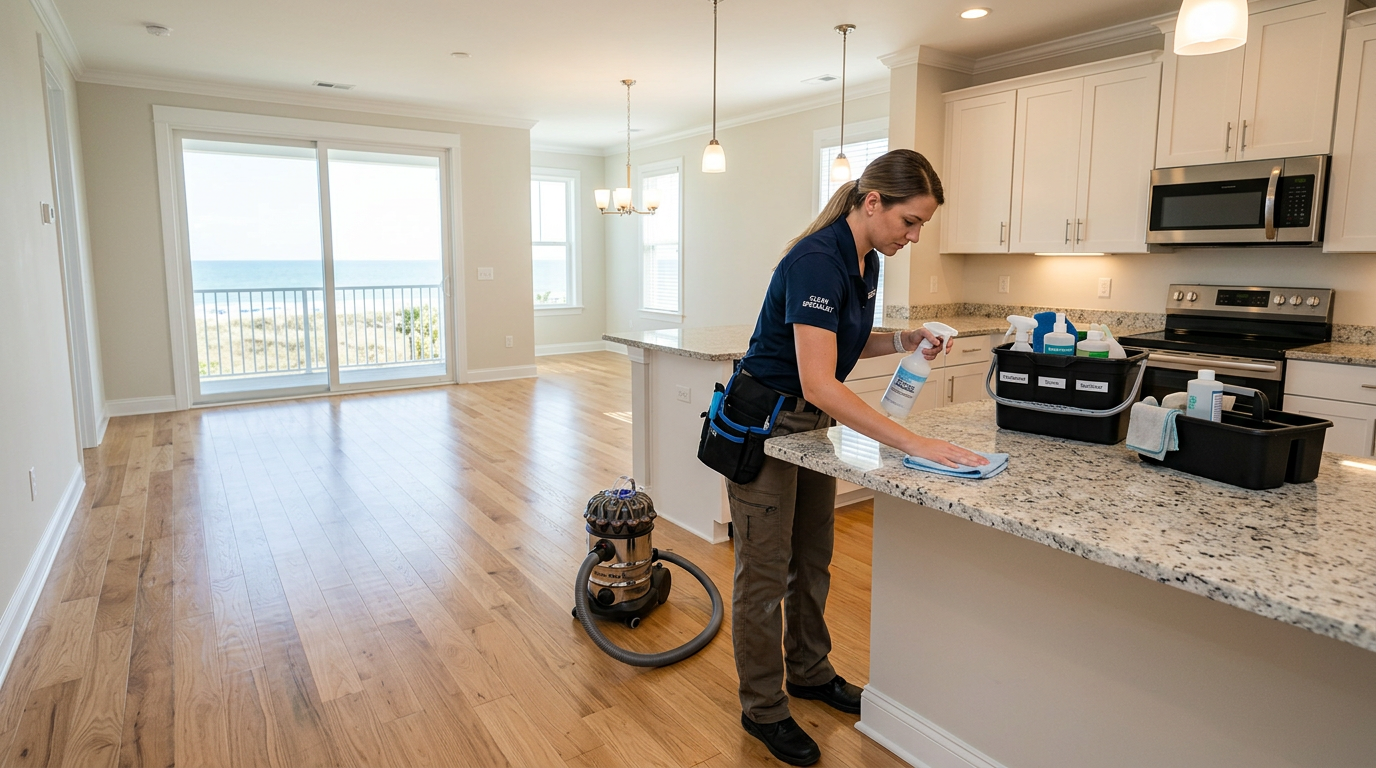
Real estate transactions and tenancy transitions along the Grand Strand demand far more than a superficial sweeping and wiping. Property managers, buyers, and sellers require a level of deep cleaning that restores a home to its original baseline, which is a highly technical task given our humid coastal environment. At A2Z Cleaning & Linen Services, reachable at 843.800.2788, we have developed a structured career pathway to recruit, train, and retain elite specialists who understand the science of residential restoration. Elevating the role of the move-in/move-out technician from a basic laborer to a certified substrate specialist is the key to delivering consistent, high-tier results across Horry and Georgetown counties.
The Rigorous Demands of Real Estate Transition Cleaning
A standard residential maintenance clean focuses on preserving a baseline of dust control and surface hygiene, but a move-in or move-out clean is fundamentally restorative. Technicians must confront years of accumulated residue, hidden pet dander, and cooking grease that has polymerized with humid, salt-laden coastal air. In Myrtle Beach, this work occurs under tight transaction deadlines, where delayed handovers can jeopardize home sales, lease agreements, or property management transitions.
The environmental factors of the Grand Strand accelerate the degradation of neglected interior surfaces, making the transition cleaning process highly complex. High indoor humidity can turn simple dust into a stubborn paste in hard-to-reach areas, while hard water from coastal municipal systems leaves thick calcium and magnesium deposits on glass, porcelain, and chrome fixtures. Specialists must know how to safely remove these layers without scratching or etching the underlying materials.
Furthermore, a transition clean requires a systematic, wall-to-wall approach that covers areas typically skipped during routine weekly cleans. This includes the interiors of empty cabinetry, deep-cleaning oven cavities, pulling out large appliances to clear fire-hazard lint and grease, and wiping down high-contact baseboards, doors, and trim. This level of thoroughness demands a worker who is not only detail-oriented but also understands chemical safety, dwell times, and efficient spatial workflows.
- Restoring long-neglected appliances to showroom standards, including coil vacuuming and gasket preservation.
- Eliminating stubborn salt-air film and mineral scale from bathroom glazing, shower enclosures, and brass fixtures.
- Deep-cleaning empty cabinetry tracks, drawer slides, and built-in shelving units using HEPA-filtration vacuums.
- Remediating hidden dust reservoirs behind heavy appliances, inside HVAC return registers, and along high ledges.
Defining the Profile of an Elite Deep-Cleaning Specialist
An elite move-in/move-out technician possesses a unique blend of physical stamina, spatial intelligence, and chemical literacy. Unlike office cleaning or light vacation rental turns, real estate transition cleaning is physically demanding, requiring repetitive bending, reaching, and kneeling for six to eight hours at a time. The ideal candidate must view cleaning not as a simple domestic chore, but as a technical trade that directly protects and restores valuable property assets.
Spatial intelligence is critical because these technicians must work systematically through empty, echoey spaces where mistakes and missed spots are highly visible. A professional cleaner approaches a room with a clear, visual plan, moving from top to bottom and left to right to prevent re-soiling cleaned zones. They must also have a sharp eye for pre-existing damage, documenting scratches, water stains, and hardware issues before applying any chemicals to protect both the homeowner and the agency.
Chemical literacy is another non-negotiable trait for modern transition specialists. An elite cleaner understands how pH levels affect different surfaces, knowing that an acidic cleaner will easily dissolve mineral scale but can ruin a natural marble countertop, while highly alkaline solutions are perfect for grease but can dull and damage wood finishes. This scientific approach ensures that valuable household fixtures are restored safely without costly surface damage.
- Demonstrated understanding of the pH scale and its application to different household soils and stains.
- Strong spatial organization skills to execute systematic top-to-bottom, left-to-right room cleaning workflows.
- Stamina and physical conditioning required for deep scrubbing, lifting appliances, and detailed high-low wiping.
- Meticulous documentation habits to identify and report pre-existing damage prior to starting work.
Essential Certifications and Substrate-Specific Training Tracks
To build a truly professional workforce, cleaning companies must invest in structured certification tracks that move past simple on-the-job shadowing. National credentials, such as the ISSA's Certified Professional Technology (CPT) program or the Association of Residential Cleaning Services International (ARCSI) certifications, provide a solid foundation in sanitation science, green cleaning methods, and workplace safety.
In our coastal environment, specialized training must focus on substrate preservation. For instance, luxury vinyl plank (LVP) flooring, which is very common in Grand Strand homes, requires specific pH-neutral cleaning agents and micro-mopping to prevent water pooling between planks. Similarly, training must cover the care of engineered quartz, stainless steel appliances, and delicate natural stone tiles like slate and travertine, which are easily ruined by improper scrubbers or harsh acids.
Our training pathway also covers advanced equipment operation, ensuring that every team member is proficient with commercial-grade tools. Technicians are trained on the safe use of dry-vapor steamers, floor burnishers, orbital scrubbers, and high-efficiency particulate air (HEPA) backpack vacuums. This equipment speeds up the cleaning process and ensures a level of indoor air quality and deep sanitation that standard household tools simply cannot achieve.
- Structured training in ISSA and ARCSI standards for residential sanitation and cross-contamination prevention.
- Specialized modules on coastal substrate care, including luxury vinyl plank, engineered quartz, and natural stone.
- Hands-on certification for advanced equipment, such as commercial vapor steamers and HEPA backpack vacuums.
- In-depth hazard communication training covering OSHA safety data sheets (SDS) and chemical dilution systems.
Practical Skill Audits and the Behavioral Interview Process
Traditional verbal interviews often fail to reveal whether a candidate possesses the actual skills and work ethic needed for deep cleaning. To solve this, our recruitment process combines behavioral interviewing with a hands-on, paid practical audit. During the initial interview, we ask behavioral questions designed to evaluate problem-solving, attention to detail, and a candidate's response to physically demanding work under tight deadlines.
Once a candidate passes the initial screening, they complete a supervised, paid practical skill audit in a controlled test environment. This audit is not designed to trick the applicant, but rather to evaluate their natural cleaning habits, safety awareness, and technical potential. We observe how they organize their tools, whether they read chemical labels, how they handle fragile fixtures, and if they naturally notice hard-to-reach dust reservoirs.
This practical evaluation also helps us identify any bad habits early on, such as using the same microfibers for bathrooms and kitchens, or scrubbing delicate surfaces with abrasive pads. By analyzing how a candidate works in real time, we can determine if they have the coachability and basic physical coordination needed to succeed in our advanced training program, reducing turnover down the road.
- Behavioral questions target problem-solving under pressure and managing high-workload, tight-deadline scenarios.
- A paid, hands-on skill audit measures spatial planning, natural attention to detail, and tool organization.
- Direct observation of chemical safety practices, including correct dilution and proper personal protective equipment (PPE) use.
- Assessment of surface-safety awareness, ensuring candidates naturally select non-scratch pads for delicate materials.
Building a Reliable Team Through Mentorship and Onboarding
The first thirty days are critical for a new technician's long-term success and retention within a cleaning company. Rather than throwing new hires directly into solo jobs, a structured onboarding program should pair them with an experienced Field Mentor. This mentor-protégé system helps ease the physical transition into deep cleaning, provides immediate feedback, and builds a supportive, team-focused company culture.
The mentor’s job is to demonstrate efficient techniques, explain the 'why' behind our specific product choices, and help the new hire build their stamina safely. Daily check-ins allow the mentor to address any struggles early on, whether it is master-bathroom time management or perfecting streak-free window cleaning. This hands-on guidance builds confidence and prevents the frustration that often leads to early resignations.
To support this process, we use digital checklists that mirror our training modules, keeping expectations clear for everyone. New hires use these lists to verify their own work, which helps build self-reliance and teaches them to look at a room through the eyes of an inspector. By celebrating milestone completions during the onboarding period, we show our technicians that their professional growth is valued and supported by the company.
- A 30-day Field Mentor pairing program designed to build muscle memory, stamina, and cleaning efficiency.
- Daily micro-feedback loops that address performance questions and celebrate early technical milestones.
- Digital training checklists that match on-site standards to build clear, consistent quality habits.
- Structured feedback channels that allow new hires to share their onboarding experiences and suggest improvements.
Competitive Local Pay Scales and Sustainable Compensation Models
To attract and keep top talent in the Grand Strand's competitive job market, cleaning companies must move away from minimum-wage models. Professional technicians who handle complex move-in and move-out projects deserve competitive, living wages that reflect their specialized skills. Offering a clear, tiered hourly pay scale based on certifications and performance metrics shows employees a direct path to earning more money.
In addition to strong base pay, a sustainable compensation model should include performance bonuses linked to quality scores, punctuality, and positive client feedback. Providing paid travel time between jobs, mileage reimbursement, and company-provided uniforms and equipment helps reduce the out-of-pocket costs that often burden cleaning workers. These benefits show your team that they are treated as respected professionals, not disposable labor.
We also offer health care stipends, paid time off, and retirement savings options, which are still rare in the residential cleaning industry. By investing in these benefits, we build a more stable, reliable team and significantly reduce the costly turnover that hurts service quality. When workers feel financially secure and valued, they take greater pride in their work, delivering a much higher standard of clean for our clients.
- A certified, tiered hourly wage structure that rewards advanced training and consistent quality performance.
- Quality-assurance bonuses tied directly to post-clean inspection scores and positive client reviews.
- Comprehensive mileage reimbursement and paid travel time to cover all transportation costs.
- Professional benefits packages, including paid time off, health stipends, and retirement savings programs.
Retaining Top Talent Through Clear Career Progression
True professionalization of the cleaning industry means providing a clear, realistic career path for entry-level workers. A technician should never feel stuck in a dead-end job; instead, they should see a clear ladder rising from Junior Technician to Senior Specialist, Quality Trainer, and eventually Field Supervisor. Each step up this ladder should bring clear new responsibilities, higher pay, and more leadership opportunities.
Senior Specialists, for example, can take on specialized restoration work, such as high-end stone polishing, advanced tile sealing, or managing post-construction projects. Quality Trainers focus on running our practical audits and onboarding new hires, while Field Supervisors oversee scheduling, coordinate with real estate agents, and run quality checks. This structure keeps our best workers engaged and helps us promote talented people from within.
We support this career progression with regular, transparent performance reviews that focus on clear, measurable metrics rather than gut feelings. Technicians know exactly where they stand in terms of efficiency, quality scores, and reliability, and they are given clear steps to reach the next level. By showing a genuine interest in our employees' long-term professional growth, we have built a loyal, highly skilled team that consistently sets the standard for transition cleaning across Myrtle Beach.
- A transparent career ladder with clear requirements and pay raises for each technical level.
- Opportunities to specialize in high-value restoration techniques, such as stone and tile preservation.
- Leadership paths that transition experienced technicians into trainer, inspector, and supervisor roles.
- Data-driven performance reviews that provide constructive, actionable steps for career advancement.
Key takeaway
Building an elite team of move-in/move-out cleaning specialists requires shifting from a basic labor mindset to a structured, professional trade model. By investing in substrate-specific certifications, hands-on skill audits, competitive local pay, and clear career paths, A2Z Cleaning & Linen Services ensures our technicians are trained and motivated to protect your property. For reliable, high-tier real estate transition cleaning across the Grand Strand, contact our team today at 843.800.2788.
Keep Reading

Home Cleaning
The Luxury Coastal Estate Cleaning Specialist: Advanced Surface Certifications, Behavioral Interview Protocols, and Premium Compensation Architectures for Grand Strand Estates
ReadHome Cleaning
The Residential Cleaning Technician Professionalization Blueprint: Certification Tracks, Interview Standards, and Wage Structures for Grand Strand Teams
ReadHome Cleaning
Demystifying Deep Cleaning Costs: A Grand Strand Guide to Rates, Product Safety, and Hiring Pros
ReadReady for a spotless property?
Call 843.800.2788 or request a free quote from A2Z Cleaning & Linen Services.