Home Cleaning
The Coastal Carpet, Upholstery, and Textile Restoration Specialist Career Pathway: Advanced IICRC Certifications, Moisture-Extraction Audits, and Year-Round Compensation Models
Discover how to build, hire, and sustain a elite team of certified textile restoration professionals capable of combatting the Grand Strand's unique salt, sand, and humidity challenges.
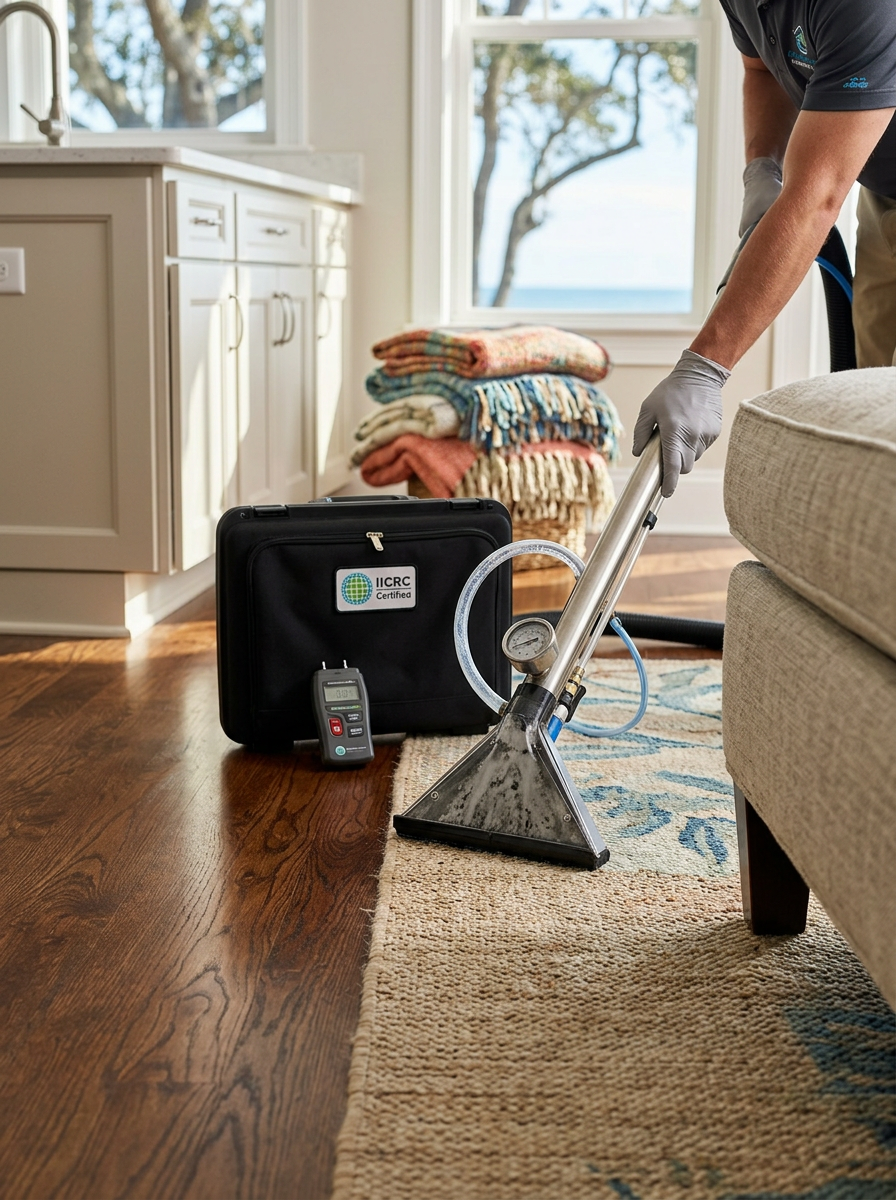
Maintaining fine carpets, delicate upholstery, and luxury textiles along the Grand Strand requires far more than basic cleaning knowledge. The combination of abrasive beach sand, humid salt-air, and heavy tourist traffic quickly degrades indoor fibers, demanding a highly technical level of care. To protect these valuable assets, property owners and hospitality managers must rely on certified, professional textile restoration specialists. Developing a career pathway in this specialized field is essential for retaining top-tier local talent and delivering exceptional, lasting results in our unique coastal environment.
The Critical Role of Coastal Textile Restoration in the Grand Strand
Grand Strand homes, luxury estates, and high-occupancy vacation rentals present environmental challenges that quickly ruin standard indoor textiles. Coarse beach sand acts like tiny glass shards, settling deep into carpet backings and cutting fibers under foot traffic. Salt air carries moisture that binds with airborne dust, creating a sticky, gray film that standard vacuums cannot lift. A true textile restoration specialist understands that their role is not just cosmetic; they are actively preserving high-value investments for homeowners and resort managers.
The economic impact of proper textile care is substantial in a coastal market like Myrtle Beach. Replacing wall-to-wall carpeting, custom area rugs, or luxury upholstered sofas due to premature wear can cost property owners thousands of dollars. Professional restoration specialists use advanced chemistry and precision extraction techniques to extend the lifespan of these materials. Their specialized service directly impacts a property's value, indoor air quality, and guest satisfaction ratings, making them indispensable professionals in the local economy.
This specialization also changes the nature of cleaning work from a seasonal gig into a stable, year-round career. While general turnover cleaning spikes dramatically during the hectic summer months, textile restoration continues steadily through the shoulder seasons. Fall and winter are prime times for deep-cleaning projects, structural repairs, and fiber protection treatments. Consequently, establishing a career pathway in textile restoration provides local technicians with stable income and professional respect throughout the entire year.
Core Competencies and Character Traits of High-Performing Technicians
A successful textile restoration specialist must possess a unique blend of physical stamina, technical aptitude, and analytical problem-solving skills. Unlike entry-level cleaning positions, restoration work requires an understanding of fiber chemistry, soil suspension, and moisture-extraction mechanics. Candidates must be able to identify fiber types, such as wool, nylon, polyester, and cotton blends, on sight. This knowledge is crucial because using the wrong pH solution can permanently ruin a delicate rug or discolor custom upholstery.
Physical endurance and spatial awareness are also vital competencies for technicians operating heavy extraction machinery. Navigating tight spaces, handling pressurized hoses, and maneuvering valuable truckmount or portable equipment around high-end furniture requires physical control and patience. A great specialist takes meticulous steps to protect the home during the process, utilizing corner guards and floor runners. They must possess the spatial judgment to work quickly without compromising the safety of the client's walls, baseboards, or delicate decor items.
Excellent communication skills and professional presentation round out the essential traits of a top-tier technician. Because these specialists work in private residences, luxury condos, and active commercial spaces, they represent the front line of customer service. They must explain complex cleaning processes to clients, set realistic expectations for stubborn stains, and offer proactive maintenance advice. A warm, plain-spoken demeanor builds immediate trust with Grand Strand property managers and homeowners, transforming a simple service call into a long-term professional relationship.
Essential Certifications and Technical Training Pathways
To build a truly professional career in textile restoration, technicians must pursue formal training through recognized industry bodies. The Institute of Inspection Cleaning and Restoration Certification (IICRC) is the gold standard for this industry. The journey begins with the Carpet Cleaning Technician (CCT) and Upholstery and Fabric Cleaning Technician (UFT) courses. These programs teach the science of fiber identification, soil characteristics, cleaning chemistry, and proper drying techniques to prevent mold growth in our humid climate.
As technicians progress, they should seek advanced certifications like the Odor Control Technician (OCT) and Commercial Carpet Maintenance Technician (CCMT). These specialized courses equip professionals to handle challenging coastal issues, such as pet odors, organic decay, and heavy commercial wear. Accumulating these certifications moves a technician from an apprentice role into a highly valued specialist. This structured learning pathway ensures that our team at A2Z Cleaning & Linen Services can handle any textile emergency with scientific precision.
Continuing education is critical because textile manufacturing and chemical engineering are constantly evolving. Modern stain-resistant treatments, synthetic fiber blends, and green cleaning solutions require updated knowledge to apply safely and effectively. Leading cleaning companies must invest in their team's growth by funding these certification courses and providing hands-on refresher sessions. This commitment to continuous learning keeps technicians engaged, raises service standards, and positions the company as a true market leader.
- IICRC Carpet Cleaning Technician (CCT) - Foundational fiber science and soil extraction.
- IICRC Upholstery and Fabric Cleaning Technician (UFT) - Delicate fiber and fabric construction training.
- IICRC Odor Control Technician (OCT) - Biological, chemical, and moisture-driven odor mitigation.
- OSHA 10-Hour General Industry Certification - Essential safety, chemical handling, and personal protective equipment standards.
Behavioral and Technical Interview Question Blueprints
Vetting candidates for a technical restoration role requires questions that go far beyond standard job interview pleasantries. Employers must assess both behavioral traits and actual technical problem-solving capabilities under pressure. A good interview process tests how a candidate handles unexpected challenges, chemical reactions, and client interactions. These questions help identify individuals who possess a genuine pride in their craft and a desire to learn the trade deeply.
Technical questions should focus on real-world scenarios that technicians encounter daily on the Grand Strand. Asking a candidate how they would determine the difference between a natural wool rug and a synthetic fiber rug tests their core training. Their answer should include burn testing or fiber touch analysis. Understanding pH scales and chemical compatibility is another non-negotiable area; candidates must demonstrate they know when to use acidic rinses versus alkaline pre-sprays to prevent fiber browning.
Behavioral questions should target customer service and problem-solving under tight deadlines. In our busy vacation rental market, technicians often work alongside other trades or under strict check-in pressures. Asking how they handled a situation where an equipment failure threatened a deadline reveals their resilience and resourcefulness. Look for answers that demonstrate clear communication, safety compliance, and a calm, systematic approach to solving the issue without cutting technical corners.
- How do you identify a delicate natural fiber like wool from synthetic nylon, and how does this change your choice of cleaning pH?
- Describe a time when you encountered a mystery stain. What steps did you take to identify it and safely extract it without damaging the backing?
- If your extraction machine suddenly loses pressure inside a multi-story oceanfront condo, what troubleshooting steps do you take first?
- Tell me about a time a client was unhappy with a permanent stain on their sofa. How did you explain the science of fiber damage to them?
- How do you manage physical fatigue during back-to-back deep-cleaning jobs on humid summer days?
Practical Field-Test Audits for Onboarding Candidates
No hiring process in the textile restoration industry is complete without a practical, hands-on field-test audit. Verifying a candidate's physical technique, safety practices, and machinery handling is essential before sending them to a client's property. This audit should be conducted in a controlled training facility or on a designated test patch of carpet and upholstery. It allows the evaluator to watch how the candidate prepares their workspace, executes the cleaning, and cleans up.
During the audit, supervisors must closely observe the technician's wand technique and moisture control. Beginners often make the mistake of over-wetting fibers, which leads to slow drying times, mildew odors, and carpet buckling in our high-humidity environment. A skilled technician uses precise wand strokes, dry-vacuum passes, and calculated extraction speeds to leave fibers damp but not saturated. They should also demonstrate how to set up high-velocity air movers to accelerate drying times.
Safety and property protection must be evaluated with equal weight. The candidate should automatically install corner guards to prevent hoses from scuffing baseboards and wear non-marking shoes to protect cleaned floors. They must show proficiency in mixing chemicals to exact dilutions and utilizing personal protective equipment correctly. This meticulous attention to detail is what separates a true professional restoration specialist from a basic, untrained cleaner.
Structuring Year-Round Compensation and Benefit Models
To attract and retain top-tier talent in the Grand Strand, cleaning companies must break away from low-wage, seasonal hiring models. Offering a highly competitive, year-round compensation structure is the only way to build a reliable team of certified specialists. Because this is a skilled trade, pay rates must reflect the technician's technical expertise and certification levels. Companies should establish clear wage tiers that reward technicians as they earn new IICRC credentials.
A highly effective model combines a strong, guaranteed base hourly rate with performance-based bonuses. These incentives can be tied to efficiency, quality audit scores, low callback rates, and positive client feedback. This structure keeps technicians motivated to perform thorough, high-quality work rather than rushing through jobs. Additionally, offering commissions on upsold services, like fabric protectors or specialized deodorizers, encourages technicians to act as helpful consultants for homeowners.
Comprehensive benefits are equally vital for building a stable, long-term workforce. Offering paid time off, contributions to health insurance, and paid holidays shows a genuine commitment to employee well-being. Furthermore, covering the costs of continuing education, IICRC course fees, and professional licensing fosters deep company loyalty. When technicians feel valued and see a stable, profitable career path, they remain dedicated to their company, resulting in consistent service quality for our clients.
Training on Coastal-Specific Soilage and Chemical Safety
Training programs must specifically address the unique soilage profiles found along the Myrtle Beach coastline. Sand is our primary enemy; its abrasive edges slice carpet fibers at the base, leading to premature wear paths. Technicians must be trained in thorough dry-soil extraction, utilizing dual-motor upright vacuums with pile lifters before any wet cleaning begins. Skipping this critical step turns deep sand into a thick, abrasive mud that is nearly impossible to extract.
Salt residue is another coastal challenge that requires specialized chemical knowledge. Salt deposits from beach air are hygroscopic, meaning they naturally attract moisture from our humid climate, keeping fibers damp and promoting mold growth. Specialists must learn to use acid-neutralizing rinses to break down these stubborn salt bonds and restore the fiber's natural softness. Standard alkaline cleaners alone cannot dissolve salt crust, often leaving sticky residues that attract dirt.
Sunscreen avobenzone stains are incredibly common in resort properties and require a precise chemical sequence to remove. When avobenzone reacts with hard water and standard cleaning heat, it creates bright pink or yellow iron-like stains that set permanently if treated incorrectly. Technicians must be trained to use specialized acidic chelating agents and low-heat extraction to suspend and remove these complex oils. This level of technical training protects expensive upholstery from being ruined by well-intentioned but improper cleaning methods.
Building a High-Retention Culture and Career Escalation Paths
Building a reliable team of textile restoration specialists requires cultivating a company culture rooted in mutual respect, professional pride, and clear career progression. Technicians should not feel like easily replaced labor; they must see themselves as skilled tradespeople executing high-level science. Establishing clear advancement paths from Apprentice to Junior Technician, Lead Specialist, and eventually Quality Assurance Inspector gives team members a clear vision of their future within the organization.
Promoting ownership of equipment and company vehicles is a powerful way to build this professional pride. Assigning a dedicated truckmount unit or specialty portable rig to a lead technician encourages them to maintain their tools meticulously. When a specialist is responsible for their own vehicle's organization, cleanliness, and maintenance, they take greater pride in their work. This sense of ownership reduces equipment downtime, lowers repair costs, and ensures our team arrives at every Grand Strand home fully prepared.
At A2Z Cleaning & Linen Services, we believe that treating our staff with the utmost professional respect is key to delivering superior service. As a family-owned company, we prioritize open communication, safety, and supportive leadership. By providing our team with premium tools, continuous training, and competitive compensation, we ensure our clients receive the highest standard of care. Our commitment to our employees directly translates into cleaner, healthier, and beautifully restored homes for our coastal community.
Key takeaway
Building a reliable, high-performing textile restoration team requires investing in formal IICRC certifications, structuring competitive year-round pay, and providing training tailored to coastal sand and humidity. When technicians are treated as skilled professionals and given clear career pathways, they deliver the meticulous, expert care that keeps Grand Strand homes looking their absolute best. For professional assistance with your home or property, call our dedicated team today at 843.800.2788.
Keep Reading
Home Cleaning
The Luxury Coastal Estate Cleaning Specialist: Advanced Surface Certifications, Behavioral Interview Protocols, and Premium Compensation Architectures for Grand Strand Estates
ReadHome Cleaning
The Grand Strand Move-In/Move-Out Cleaning Specialist Career Pathway: Substrate-Specific Certifications, Practical Audits, and High-Retention Compensation Models
ReadHome Cleaning
The Residential Cleaning Technician Professionalization Blueprint: Certification Tracks, Interview Standards, and Wage Structures for Grand Strand Teams
ReadReady for a spotless property?
Call 843.800.2788 or request a free quote from A2Z Cleaning & Linen Services.