Home Cleaning
The Coastal Sliding Glass Door Track and Low-Level Window Threshold Decontamination Protocol: Mitigating Pet Slobber, Sandy Sludge, and Allergen Build-Up in Grand Strand Family Homes
Discover a child-safe, pet-friendly protocol to clear sliding glass door tracks of abrasive sand, salt-crust, and dander, protecting your Grand Strand home's air quality.
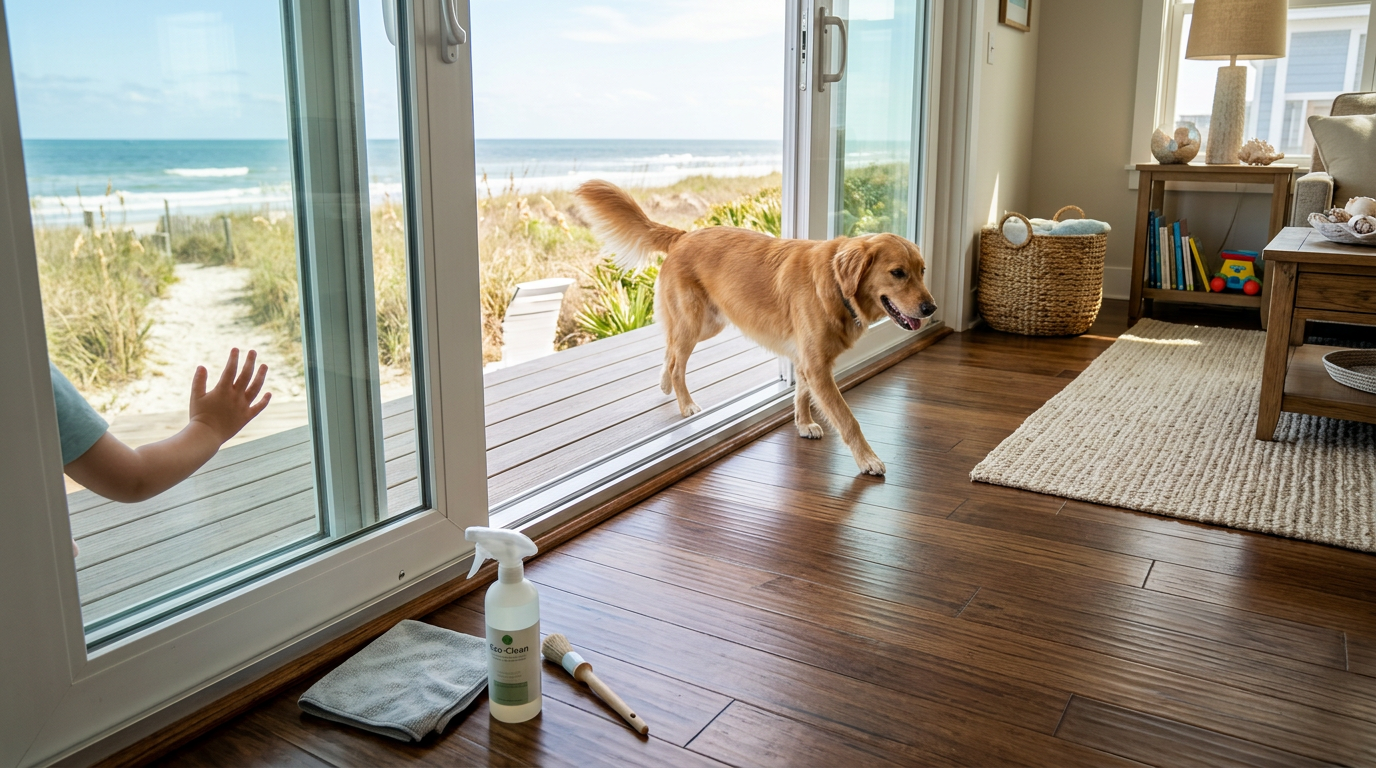
Living along the Grand Strand means welcoming the outdoors inside, but our beautiful coastal environment also brings unique challenges to our home entryways. Sliding glass doors and low-level window thresholds quickly become collection points for wind-driven beach sand, high humidity, pet hair, and toddler fingerprints. At A2Z Cleaning & Linen Services, we understand that maintaining these high-traffic transition zones requires a specialized approach. Our family-owned team has developed a practical, child-safe, and pet-friendly protocol to keep your tracks gliding smoothly and your indoor air free from coastal allergens.
The Coastal Threshold Anatomy: How Sand, Humidity, and Saliva Form "Sludge"
Coastal living on the Grand Strand brings beautiful views, but it also creates a unique cleaning challenge: sliding glass door tracks and low-level window thresholds. These zones act as funnels for wind-driven beach sand, salt-damp air, and outdoor allergens. When you add the daily traffic of a busy family, these tracks quickly accumulate a heavy mixture of pet hair, outdoor dirt, and lawn debris that blows indoors every time the door glides open.
This buildup is accelerated by Myrtle Beach's high humidity. The damp air binds fine silica sand and salt crystals into a sticky base. When pets brush against the door frame or rest their chins on the cool metal, they shed fur, dander, and oils directly into this damp mixture. Simultaneously, toddlers crawling across the threshold transfer sweat, food crumbs, and natural skin oils, compounding the buildup.
Left unaddressed, this mixture turns into a thick, abrasive paste. Every time the heavy glass door slides, this sand-slurry is ground into the metal rollers, causing premature wear and scratching the track. More importantly, this damp, dark, organic-rich crevice becomes a breeding ground for mold spores and dust mites, right where crawl-level family members and pets are most active and exposed.
The Toddler and Pet Exposure Zone: Why Traditional Chemical Cleaners Pose Risks
When cleaning areas at toddler and pet eye-level, chemical safety is paramount. Standard industrial solvents, chlorine bleaches, and synthetic fragrances present real exposure risks. Toddlers naturally explore by touching everything, including window sills and low-level door frames, and immediately putting their fingers in their mouths. Similarly, dogs and cats frequently lick condensation off the lower glass panes or use their paws and noses to nudge doors open.
Harsh chemical residues in these high-contact zones can cause localized skin irritations, respiratory triggers, or accidental ingestion. Many commercial cleaners rely on volatile organic compounds (VOCs) that linger in the tight spaces of door frames, triggering childhood asthma or irritating sensitive paws. To protect your family, the cleaning protocol must prioritize mechanical soil removal and benign, child-safe botanical chemistry that breaks down soil without leaving toxic residues.
Our family-owned approach at A2Z Cleaning & Linen Services emphasizes using EPA Safer Choice ingredients, food-grade citric acid, and pressurized steam. These methods neutralize salt crusts and break up tough biological proteins without resorting to toxic residues. By choosing safe, biodegradable solutions, you ensure that the threshold remains sanitary for crawling knees and curious noses while preserving the delicate balance of your home's indoor air quality.
Phase 1: Dry Soil Extraction and De-Bulking the Track
The most common mistake homeowners make when tackling dirty sliding door tracks is spraying a liquid cleaner directly onto the dry accumulation. Mixing liquid with dry sand, dander, and dog hair instantly creates a thick, cement-like mud that settles deep into the track's drainage channels, making extraction twice as difficult. To prevent this, the first phase of any effective cleaning protocol must be a rigorous dry soil extraction.
Begin by using a heavy-duty vacuum equipped with a sealed HEPA filtration system. A standard vacuum without a true HEPA filter will simply exhaust fine dander, pollen, and microscopic mold spores back into your living room air. Attach a narrow, hard-plastic crevice tool and run it slowly along the length of the track, paying close attention to the tight corners where sand packs tightly under the door's overlap.
To loosen stubborn sand wedged in the track's grooved channels, use a stiff-bristled detail brush or a clean, dry grout brush. Gently sweep the bristles back and forth to dislodge the grit while holding the vacuum nozzle directly adjacent to your brush. This immediate capture method ensures that no airborne dust or pet dander escapes into the home, leaving a dry, debris-free track ready for deep sanitization.
- High-efficiency HEPA vacuum with crevice attachment
- Stiff-bristled detail sweep brush or grout brush
- Dry microfiber cloth for initial frame dusting
- Stiff-bristle nylon pipe cleaners for tight corners
Phase 2: Breaking Down the Humid Salt-Slobber Bond
Once loose debris is extracted, you will likely find a stubborn, greyish crust bonded to the metal grooves. This crust is a combination of protein-rich pet saliva, toddler food residues, and airborne salt crystals that have recrystallized. Normal water and dish soap are rarely effective here, as they lack the chemical properties to break down organic proteins and often leave a sticky surfactant film that attracts new sand.
To dissolve this biological bond safely, you need a solution that targets both proteins and minerals. A mild, warm citric acid solution or an enzyme-based botanical cleaner is highly effective. Citric acid naturally breaks down alkaline salt crusts and dissolves the mineral bonds of hard-water spots, while natural enzymes digest the organic proteins found in pet slobber and finger grease, converting them into easily wipeable substances.
Spray your chosen child-safe solution generously along the track, ensuring it pools slightly in the lowest channels. Allow the formula to dwell for three to five minutes. This dwell time is crucial; it allows the chemistry to do the heavy lifting, softening the hardened crust so you do not have to resort to aggressive scrubbing with metal tools that can scrape away protective coatings.
Phase 3: Detail Scraper and Steam Sanitation Workflows
After the dwell time has softened the crust, it is time for detail extraction. Because sliding door tracks are narrow and filled with tight corners, standard rags are often too bulky to reach the grime. A highly effective technique is to wrap a thin, high-density microfiber cloth around a stiff tool, such as a wooden paint stirrer, a plastic putty knife, or a specialized track cleaning scraper, to slide along the grooves.
Press the cloth-covered edge firmly into the grooves and slide it from one end of the track to the other. The microfiber will grab and lock in the dissolved sludge rather than just pushing it around. If you encounter highly compacted areas, a handheld steam cleaner is an invaluable tool. Pressurized steam at over 200 degrees Fahrenheit instantly melts grease, sanitizes mold spores, and flushes compacted dirt out of tight corners.
While cleaning, pay special attention to the exterior weep holes. These small, rectangular drainage slots built into the outer frame allow rainwater to escape during heavy Myrtle Beach thunderstorms. If these holes become blocked by sand-slurry and dog hair, water will back up into the track and overflow into your home. Use a small pipe cleaner or a zip-tie to clear any obstructions from these drainage channels.
- Wrap microfiber around a plastic putty knife for corner access
- Use a handheld steam nozzle to melt salt-crust in hard tracks
- Clear outer weep holes with a flexible pipe cleaner
- Dry the entire track completely with a clean towel to prevent mold
Low-Level Glass Decontamination: Eliminating Pet Nose Prints and Toddler Smudges
Sliding glass doors are the ultimate viewing portal for children and pets, meaning the lower two feet of glass are constantly subjected to nose prints, tongue smudges, and sticky, oil-laden fingerprints. This buildup of sebaceous oils and saliva creates a foggy haze that distorts light and acts as a magnet for floating pet hair. Traditional blue glass cleaners often rely on ammonia, which can release strong fumes and leave a streaky residue.
To clean this low-level glass safely and prevent rapid dust re-deposition, use a simple mixture of clean water and high-purity isopropyl alcohol (70% concentration). Isopropyl alcohol acts as a rapid solvent that easily cuts through greasy finger oils and dried pet saliva without leaving any chemical residue or synthetic scent behind. Furthermore, it evaporates quickly, preventing water spots from forming under the direct coastal sun.
Spray the alcohol solution lightly over the soiled glass pane, then wipe it away using a clean, dry waffle-weave microfiber cloth. Waffle-weave microfiber has small pockets that trap oils and moisture, lifting them off the glass rather than spreading them around. Wipe in a consistent pattern—such as horizontal passes on the interior and vertical passes on the exterior—so you can easily identify and buff out any stubborn streaks.
The Allergy-Friendly Maintenance Schedule for Busy Families
Maintaining a clean, allergen-free threshold in a busy Grand Strand home does not require hours of daily labor. Instead, establishing a simple, structured routine will prevent sand and pet hair from ever reaching the "sludge" phase. This routine is especially critical for families with members who suffer from seasonal allergies, asthma, or pet dander sensitivities, as it keeps the entryways from acting as allergen funnels.
On a daily basis, take thirty seconds to sweep or vacuum the immediate indoor and outdoor mats surrounding your sliding doors. This simple step catches up to eighty percent of loose sand and pet hair before it ever has a chance to settle into the metal tracks. If you notice fresh wet slobber or finger prints on the glass, a quick wipe will prevent the oils from setting and attracting dust.
Every two weeks, perform a quick track sweep using your vacuum's crevice tool to extract dry grit. Once a month, dedicate ten minutes to a deep-cleaning protocol, including the citric acid spray, detailed wiping, and weep hole inspection. By integrating these steps into your regular household routine, you will protect your home's indoor air quality, keep allergens low, and ensure your sliding doors continue to operate smoothly.
- Daily: Quick shake of door mats and thirty-second entryway sweep
- Bi-Weekly: Vacuum tracks using a high-HEPA crevice tool
- Monthly: Safe chemical breakdown of crusts and weep hole check
- Quarterly: Dry silicone lubrication of glide hardware and rollers
Preserving the Hardware: Lubrication and Corrosion Prevention
Clean tracks are only half the battle; the moving parts of your sliding doors also require protection from the corrosive Grand Strand salt air. After deep-cleaning, the metal rollers and guide rails are stripped of dirt, but they are also exposed to oxygen and moisture, which can lead to oxidation and rust. However, applying the wrong type of lubricant can quickly undo all your hard cleaning work.
Never use heavy grease, WD-40, or oil-based wet lubricants on sliding door tracks. These products leave a wet, sticky film that acts as an immediate magnet for blowing sand, pet hair, and household dust. Within weeks, this mixture will combine with the wet lubricant to form an extremely abrasive grinding paste that will chew through the soft nylon or metal rollers, ruining the door's glide and requiring expensive replacement hardware.
Instead, use a dry silicone spray or a PTFE-based (Teflon) dry lubricant. These products spray on wet to penetrate the roller bearings but quickly dry into a slick, micro-thin protective barrier that repels water and salt air without attracting sand or pet fur. Spray the lubricant sparingly along the guide rails and directly onto the roller assemblies, then slide the door back and forth several times to distribute it evenly.
Key takeaway
By addressing the unique combination of Grand Strand sand, humidity, and pet dander with child-safe chemistry, you protect your family's health and preserve your home's sliding hardware. For professional support in keeping your coastal home perfectly detailed, clean, and healthy, contact A2Z Cleaning & Linen Services today at 843.800.2788.
Keep Reading
Home Cleaning
The Coastal Under-Table and Highchair Spill Zone Decontamination Protocol: Mitigating Humid Organic Crumb Rot, Pet Saliva Biofilms, and Child-Safe Allergen Control
ReadHome Cleaning
The Grand Strand Toddler and Pet Floor-Level Play Zone Decontamination Protocol: Mitigating Humid Sand-Grit, Dander Allergens, and Chemical-Residue Hazards in Busy Family Homes
ReadHome Cleaning
The Family Staircase and Safety Gate Decontamination Protocol: Mitigating Sunscreen-Grime Slurry, Pet-Hair Static, and Sticky Handprint Biofilms in Grand Strand Homes
ReadReady for a spotless property?
Call 843.800.2788 or request a free quote from A2Z Cleaning & Linen Services.