Home Cleaning
The Coastal Under-Table and Highchair Spill Zone Decontamination Protocol: Mitigating Humid Organic Crumb Rot, Pet Saliva Biofilms, and Child-Safe Allergen Control
A professional guide to neutralizing sticky organic residues, pet saliva, and allergens under family dining tables in the humid Grand Strand climate.
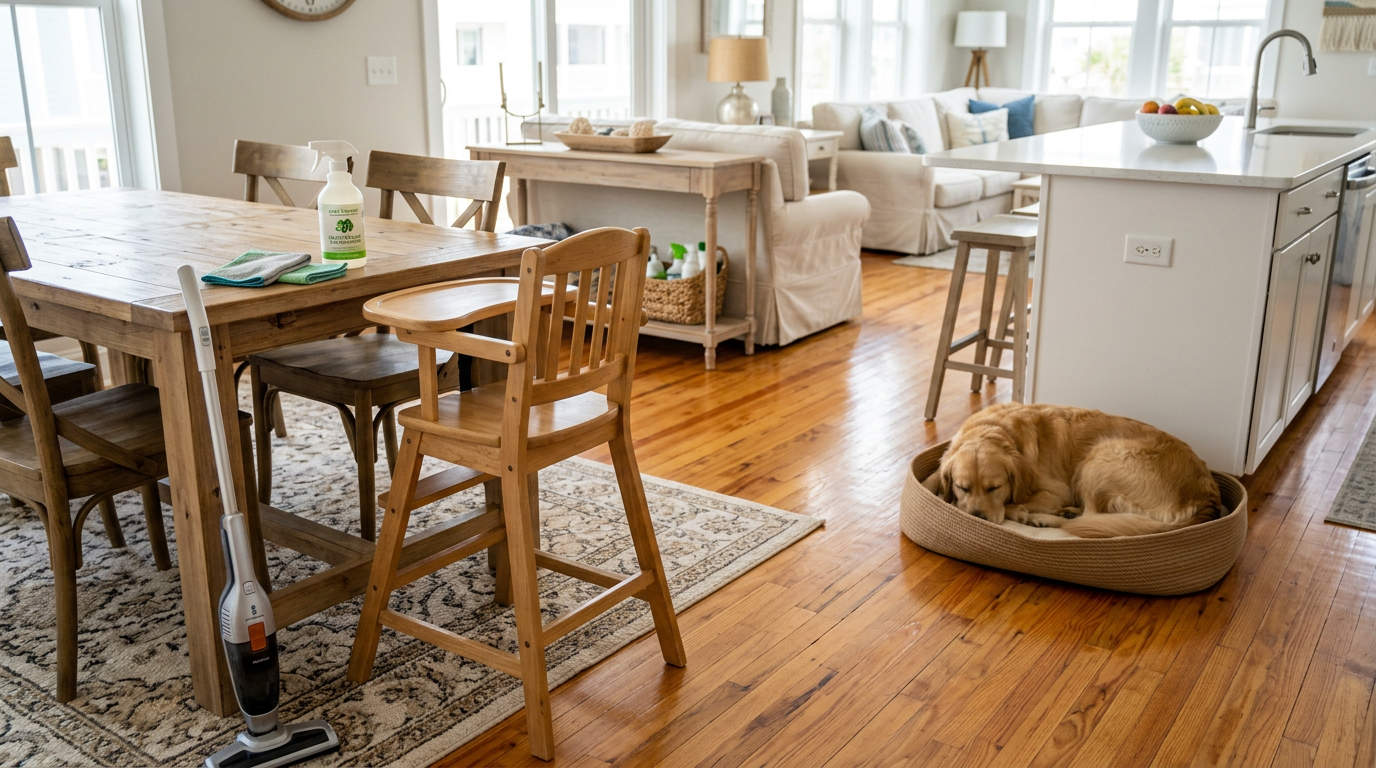
In the warm, salt-aired environment of the Grand Strand, the space beneath our dining tables and highchairs quickly becomes a complex micro-ecosystem. When toddler mealtime splatters mix with pet dander, dropped food, and canine saliva, our high coastal humidity rapidly accelerates organic decomposition and mold growth. Standard residential quick-sweeping is rarely enough to address the invisible biofilms that form where crawling babies play and family pets search for scraps. At A2Z Cleaning & Linen Services, we have developed a specialized, non-toxic protocol to neutralize these stubborn floor-level contaminants while keeping your home safe for every member of the family.
The Anatomy of the High-Traffic Spill Zone in Coastal Climates
The unique micro-climate of Myrtle Beach homes creates a challenging environment under the dining room table. High indoor relative humidity, which often hovers near sixty percent even with residential air conditioning running, initiates rapid fermentation of dropped organic matter. Unlike dry climates where a fallen piece of fruit or pasta quickly dehydrates and hardens, coastal humidity keeps organic spills soft and damp. This moisture supports rapid bacterial colonization on floor surfaces within just a few hours.
The physical interface between young children and pets in this dining zone further compounds the sanitation challenge. Toddlers frequently drop food, which pets immediately investigate, leaving behind saliva-coated flooring that is subsequently touched by crawling infants. This continuous loop transfers oral bacteria, yeast, and dander into a sticky, microscopic paste. Over days of neglect, this paste dries into a dark, stubborn film that clings tightly to floorboards, luxury vinyl plank joints, and grout lines.
Leaving this organic mixture untreated allows it to form a tough, water-resistant protein-lipid barrier. Coastal sand brought home from a afternoon at Surfside Beach embeds directly into this sticky residue, creating an abrasive, unsanitary surface that slowly grinds away at your floor's protective finish. To protect both your children's health and your flooring investment, this zone requires a specialized cleaning approach that targets the molecular bonds of these complex residues.
The Biological Hazard of Pet Saliva Biofilms and Yeast Intermingling
To properly clean the floor beneath a highchair, one must understand the adhesive nature of canine saliva. Dog saliva contains high concentrations of glycoproteins, enzymes, and oral bacteria designed to bind to surfaces. When a pet licks dropped purees or yogurt from the floor, they do not clean the surface; instead, they deposit a sticky, salivary matrix. As this matrix dries, it locks in airborne dust, pet hair, and microscopic sand particles, creating a highly resilient biofilm.
The warm, humid coastal air of the Grand Strand provides an ideal breeding ground for environmental yeasts and molds. When these airborne fungal spores land on a damp, saliva-coated patch of organic residue, they find an immediate nutrient source. This biological activity is the primary cause of the sour, stale-food odor that often lingers in family dining areas, an odor that conventional air fresheners can only temporarily mask rather than eliminate.
This dried-down protein matrix is also a potent source of indoor allergens. As family members walk past the dining table, the physical friction of foot traffic breaks these dry biofilms into microscopic particles. These allergen-laden dust particles are kicked back up into the room's breathing zone, posing a respiratory trigger for children, pets, and allergy sufferers. A2Z Cleaning & Linen Services addresses this issue by using advanced, non-toxic chemistry to completely dissolve these protein-lipid bonds.
Structural Floor Defenses: Moisture and pH Limits for Coastal Substrates
Different flooring materials under the family dining table require specific chemical and physical handling to prevent permanent damage. Luxury Vinyl Plank, or LVP, is widely popular in Myrtle Beach homes for its water resistance, but it remains highly vulnerable to micro-sand scratching and liquid seepage through its interlocking seams. If acidic baby foods or pet saliva sit on these seams, liquids can bypass the planks and pool on the subfloor, leading to hidden mold growth.
Ceramic and porcelain tile floors are exceptionally durable, but the cementitious grout between them is highly porous. Acidic spills like tomato sauce or fruit juices can chemically etch unsealed grout, while the damp indoor atmosphere allows dark mold to anchor deep within the grout's textured valleys. Cleaning these areas requires a careful balance of chemical extraction that does not strip away the grout's protective sealant.
Solid and engineered hardwoods are the most sensitive to moisture and physical scrubbing. Attempting to scrape dried food or hardened saliva from hardwood can easily scratch the protective polyurethane coating, leaving the raw wood exposed to humidity-driven warping and gray water-staining. Professional cleaning protocols focus on safely liquefying these hardened soils through targeted enzyme action rather than aggressive mechanical scraping.
- Avoid flooding LVP seams with excess water; use damp-extraction techniques to prevent subfloor mold.
- Ensure grout lines under the dining table are professionally sealed annually to block organic dye absorption.
- Restrict chemical dwell times on hardwood flooring to under three minutes to prevent grain swelling.
- Never use steel wool or highly abrasive scrub pads that create micro-scratches where future bacteria can hide.
Child-Safe and Pet-Safe Chemistry: Moving Beyond Harsh Chlorines
Many homeowners default to harsh household chemicals like chlorine bleach, ammonia, or heavy phenols to sanitize floor spills. While these chemicals do kill bacteria, they leave behind toxic residues that pose real health risks to crawling infants and pets who lick the floor. Furthermore, these volatile organic compounds degrade your home's indoor air quality, contributing to respiratory irritation and childhood asthma triggers.
A truly safe coastal home requires cleaning chemistry that targets organic proteins without toxic side effects. Vegetable-based surfactants, such as pure Castile soap, safely lift surface grease and sand without leaving a chemical residue. Plant-derived enzymes, specifically amylase and protease, are incredibly effective because they naturally digest starch and protein molecules—the core components of baby food and pet saliva.
To sanitize the area safely, we utilize food-grade hydrogen peroxide and isopropyl alcohol. Hydrogen peroxide oxidizes organic bacteria and lightens stubborn food stains, breaking down harmlessly into pure water and oxygen. Isopropyl alcohol provides rapid disinfection for hard-to-clean spots and evaporates completely, leaving zero sticky surfactant film behind to attract incoming beach sand.
- Avoid products containing synthetic fragrances or heavy limonene, which can irritate canine respiratory systems.
- Utilize active enzyme cleaners to naturally digest dried milk, pureed meats, and salivary biofilms.
- Select hydrogen peroxide-based solutions for non-toxic sanitization of toddler-contact floor zones.
- Steer clear of quaternary ammonium compounds that can cause skin irritation in crawling infants.
Step-by-Step Decontamination Protocol for Highchair Components
The highchair itself is a complex assembly of plastic joints, metal tubes, and porous nylon straps, all of which harbor hundreds of tiny seams where purees, milk, and crumbs accumulate. The nylon harness straps are particularly prone to absorbing body oils, food dyes, and humidity-driven bacteria. Over time, these straps become stiff, sticky, and unsanitary if they are not systematically deep-cleaned.
To properly clean the highchair, our team begins by dismantling all removable components. The main tray is washed with warm, soapy water and sanitized using a non-toxic sanitizer. The nylon harness straps are unthreaded from the frame and placed in a warm, enzymatic bath to digest embedded starch and protein stains. They are then hung to dry completely in a well-ventilated area to prevent mildew growth within the fabric weave.
Next, we focus on the highchair frame, paying close attention to the plastic joints, adjustment buttons, and wheel casters. Using a soft-bristled detail brush and a diluted botanical cleaner, we flush out these small crevices where dry crumbs settle. This step prevents the sweet-smelling organic decay that serves as an open invitation to local coastal pests.
- Wash and dry the highchair tray after every meal using a non-toxic, scent-free dish soap.
- Soak harness straps weekly in an enzyme and baking soda solution to digest embedded food proteins.
- Use a soft detail brush to clear dried crumbs from the folding hinges and sliding adjustments.
- Wipe down the underside of the seat shell where dripping food and liquids often pool undetected.
The Floor-Level Mechanical Scrub and Extraction Sequence
A professional floor-level clean under the dining table begins with dry soil removal. Before any liquid cleaners are applied, the area must be vacuumed using a HEPA-filtered vacuum equipped with a soft floor brush. This dry extraction step is vital; it removes loose sand, pet dander, and dry crumbs, preventing them from mixing with liquids to form an abrasive slurry during the wet cleaning process.
Once the dry debris is removed, a warm, enzyme-rich surfactant solution is misted over the sticky zones and allowed to dwell for three to five minutes. This dwell time is key to chemical cleaning, as it allows the enzymes to naturally break down the dried-on baby food and tough pet saliva biofilms. This step completely eliminates the need for aggressive scraping that could damage the underlying floor finish.
Following the dwell period, the softened residue is gently agitated using a non-abrasive microfiber scrub pad or a soft-bristled deck brush. The dirty slurry is then immediately extracted using a wet-vacuum or a dual-chamber microfiber mop system. This ensures that the suspended contaminants and dirty water are lifted off the floor rather than spread into the grout lines or flooring seams.
- HEPA vacuum the floor first to eliminate dry sand-grit that could scratch the floor during scrubbing.
- Apply a targeted, warm enzymatic mist to emulsify dried starches and pet saliva biofilms.
- Agitate gently with a non-abrasive microfiber scrub pad or soft-bristled deck brush.
- Extract the dirty liquid immediately to prevent subfloor seepage or cross-contamination.
Mitigating the Palmetto Bug and Sugar Ant Pest Corridor
The warm, coastal climate of the Grand Strand is home to highly active pests, including American cockroaches—locally known as palmetto bugs—and tiny sugar ants. These pests have highly developed olfactory senses and can detect microscopic food particles from far away. A dining room floor covered in dried food residues and sugary juices serves as an ideal food source for these pests, attracting them into your living areas.
Even a tiny smear of dried banana or a stray cereal crumb wedged in an LVP seam provides enough food to sustain an ant colony. Once scout ants establish a pheromone trail to your dining room floor, keeping them out becomes a continuous battle. Regular cleaning that removes these food sources is your first and most effective defense against indoor pest infestations.
By eliminating these organic food sources through thorough enzymatic cleaning, you naturally disrupt pest habits. Following your clean with a light mist of distilled water and pure peppermint oil along baseboards creates a natural, child-safe pest barrier. This simple step deters ants and palmetto bugs without introducing synthetic toxins into areas where your children and pets play.
- Address sweet spills immediately to prevent scout ants from establishing chemical trails.
- Ensure all perimeter baseboards under the dining table are kept free of sticky residues.
- Clean the trash can adjacent to the dining area to eliminate secondary pest attractants.
- Use natural repellents like peppermint or cedar oil along baseboards instead of chemical bug sprays.
Establishing a Sustainable Daily and Weekly Spill-Zone Cadence
Keeping a busy Grand Strand home clean with toddlers and pets does not require hours of daily work, but it does require consistency. Implementing a simple 'sweep-mist-wipe' routine after the final meal of the day ensures that organic matter never has the chance to ferment overnight in our humid air.
Keeping a dedicated spray bottle of diluted, child-safe enzyme cleaner and a flat microfiber mop near the kitchen allows for rapid cleanups. By addressing spills while they are still fresh, you prevent the formation of the tough saliva-protein biofilms that require heavy-duty scrubbing later.
While daily maintenance keeps the surface clear, professional cleanings from A2Z Cleaning & Linen Services ensure that deep-seated allergens, microscopic pet dander, and hidden sub-floor residues are completely extracted. For assistance with keeping your family home healthy, contact our expert team at 843.800.2788.
Key takeaway
Maintaining a clean and safe floor beneath your highchair and dining table requires a careful combination of dry extraction, enzyme-rich chemistry, and routine care. By avoiding harsh chemicals and treating sticky residues before our coastal humidity sets in, you can protect your flooring, deter local pests, and keep your home safe for crawling children and curious pets.
Keep Reading

Home Cleaning
The Grand Strand Toddler and Pet Floor-Level Play Zone Decontamination Protocol: Mitigating Humid Sand-Grit, Dander Allergens, and Chemical-Residue Hazards in Busy Family Homes
ReadHome Cleaning
The Coastal Modular Foam Play-Couch Decontamination Protocol: Managing Sand-Grit, Pet Dander, and Humidity-Trapped Spills in Grand Strand Homes
ReadHome Cleaning
The Coastal Pet-Crate and Indoor Dog-Bed Restoration Protocol: Mitigating Humid Yeast Biofilms, Dander Reservoirs, and Urine-Ammonia Interactions in Grand Strand Homes
ReadReady for a spotless property?
Call 843.800.2788 or request a free quote from A2Z Cleaning & Linen Services.