Coastal Living
The Coastal Family Canvas Play Teepee, Floor Pouf, and Reading Cushion Decontamination Protocol: Mitigating Humid Pet-Hair Felting, Ground-In Sand Grit, and Child-Safe Botanical Restoration in Grand Strand Homes
A deep-dive restoration guide for busy Grand Strand families to safely clean floor-level play textiles, removing tough pet hair, sand-grit, and odors using child-safe botanical methods.
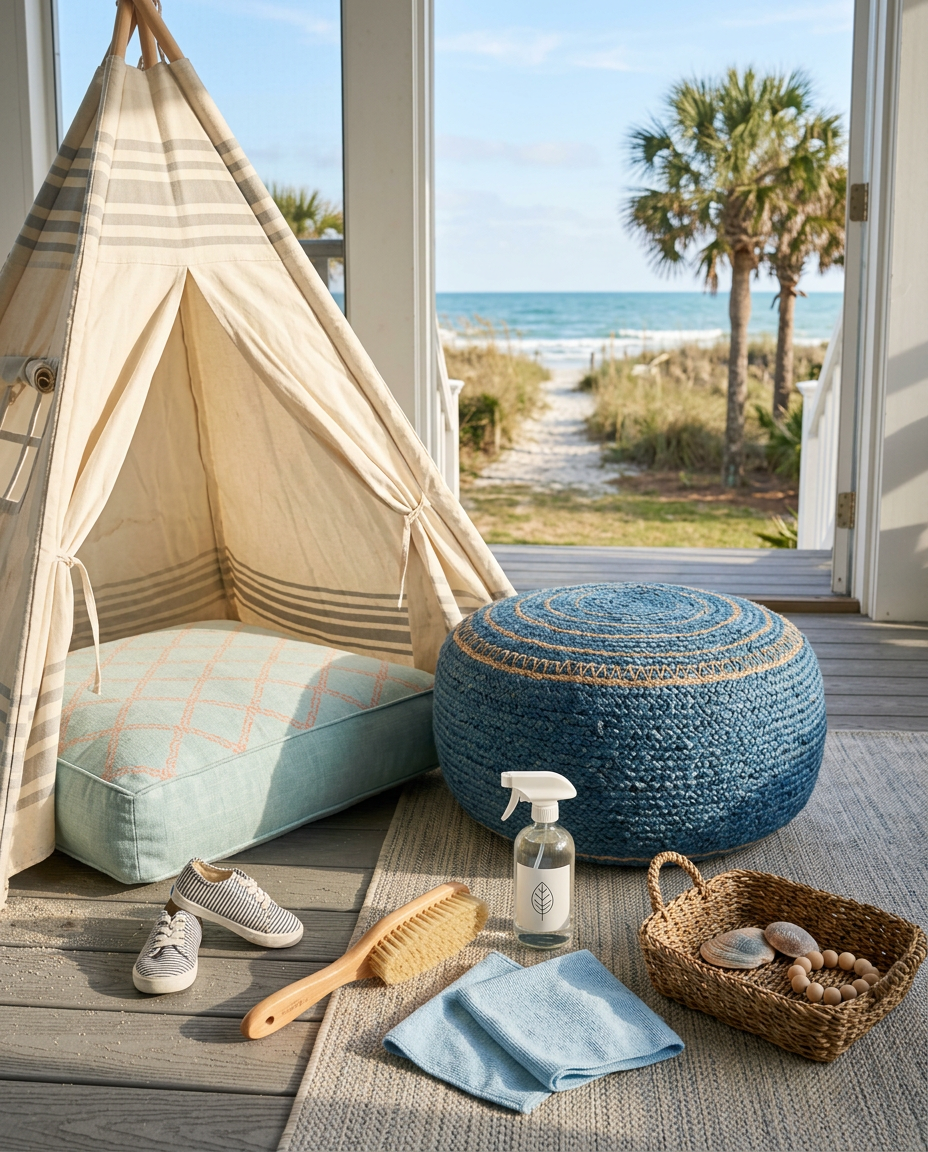
In our beautiful Grand Strand coastal homes, family life transitions seamlessly from sandy beaches to cozy indoor playrooms. However, the low-lying textiles where our children and pets lounge—canvas play teepees, woven floor poufs, and oversized reading cushions—rapidly become magnets for humid pet-hair felting, fine beach sand, and allergens. Maintaining these floor-level comfort zones requires specialized, non-toxic care that protects delicate respiratory systems and sensitive paws. At A2Z Cleaning & Linen Services, we understand that busy Grand Strand families need practical, highly effective solutions that do not rely on harsh chemical residues. For professional assistance with your home's deep-cleaning needs, you can always reach our local team at 843.800.2788.
The Anatomy of Low-Level Textile Contamination in Coastal Climates
Canvas play teepees, large floor poufs, and oversized reading cushions sit directly in the settling zone of Grand Strand homes. In this low-lying space, heavy salt-damp air naturally sinks, carrying fine beach sand, airborne pet dander, and household dust down to the floor level. Because children and pets spend hours rolling, reading, and playing on these textiles, they create a highly concentrated microenvironment where organic soils, ambient moisture, and friction constantly interact.
The high relative humidity of Myrtle Beach, which frequently climbs past 80% during the summer months, exacerbates this accumulation. When moisture mixes with organic matter like pet saliva, skin flakes, and outdoor allergens, it creates an ideal breeding ground for microscopic mold spores and dust mites. Standard superficial dusting or quick vacuuming fails to reach the deep-seated fibers of these low-lying textile arrangements, leaving hidden allergens behind.
Over time, this mixture of dampness and soil binds to the fabric fibers, creating a stiff, sticky residue that dulls colors and produces a persistent, musty pet-and-child odor. Because kids place their faces directly against these materials while resting or playing, maintaining a strict decontamination protocol is essential. Regular, deep-level extraction is the only way to safeguard indoor air quality and protect your family's pediatric health.
The Mechanics of Pet-Hair Felting and Sand-Grit Binding
Pet-hair felting is a mechanical process where individual animal hairs, coated in natural sebum oils, weave themselves deeply into the weave of heavy canvas, cotton duck, or woven wool. In Grand Strand homes, this process is accelerated by fine beach sand. The sharp, microscopic edges of silica sand act as tiny anchors, locking the pet hair into the textile matrix when pressure from children sitting or rolling on the cushions is applied.
Once hair and sand are locked together, they form a dense, abrasive mat deep within the fabric warp and weft. If left untreated, this abrasive slurry acts like sandpaper, grinding against the fabric fibers with every movement. This physical friction eventually leads to premature thinning, pilling, and tearing of your expensive play space textiles, ruining their cozy appearance and structural integrity.
Traditional vacuuming often slides right over these felted fibers because the static electricity generated by dry indoor air-conditioning and synthetic carpet fibers holds them fast. Removing this stubborn combination requires breaking the physical bond using specialized mechanical tools before attempting any moisture-based cleaning or botanical sanitization steps.
- Use a natural rubber squeegee or a specialized pet-hair rake in short, firm strokes to pull felted hair to the surface.
- Gently tap the undersides of cushions to loosen deep-seated silica sand before vacuuming.
- Avoid using stiff plastic bristle brushes that can fray delicate natural fibers like jute or cotton weave.
- Vacuum in a cross-hatch pattern (North-South, then East-West) to lift fibers and release trapped grit.
Child-Safe and Pet-Friendly Chemical Selection
When decontaminating family play spaces, chemical safety is paramount. Conventional commercial carpet cleaners and upholstery shampoos often rely on heavy quaternary ammonium compounds, optical brighteners, and synthetic fragrances that leave behind chemical residues. These residues can easily transfer to a child's skin or be inhaled when they lie face-down on a play cushion.
To protect developing respiratory systems and sensitive pet paws, we advocate for botanical surfactants derived from coconut and palm, combined with natural food-grade sanitizers. Isopropyl alcohol-based formulas (diluted safely to 70%) and natural lactic or citric acid solutions provide exceptional antimicrobial action without leaving toxic, sensitizing chemical films on the canvas or upholstery.
For odor neutralization, synthetic maskers should be replaced with zinc ricinoleate or active enzyme solutions that chemically bind to and digest organic odor molecules. These green chemistry solutions ensure that when your children return to their play teepee or cozy floor pouf, they are breathing clean, chemical-free air.
Deep-Cleaning Canvas Play Teepees and Fabric Structures
Canvas play teepees are delightful additions to Grand Strand playrooms, but their vertical and diagonal fabric panels act as dust-catchers. To begin the deep-clean, carefully strip the canvas cover from its wooden or plastic support poles. Wipe the support poles down with a damp microfiber cloth dipped in a mild botanical sanitizing solution, checking for any splintering or structural wear.
Check the care label on the canvas cover. Most high-quality canvas play structures can be machine-washed on a cold, gentle cycle using a dye-free, fragrance-free laundry detergent. To prevent shrinkage, which can make reassembly onto the frame impossible, never put the canvas in a high-heat dryer; instead, hang-dry it until it is slightly damp, then reassemble it on the frame to stretch it back to its original dimensions.
For spot-treating stubborn stains like juice spills or pet accident marks, use a soft-bristled brush and a natural enzyme spotter. Work from the outside of the stain inward to prevent spreading, then blot dry with a clean, white microfiber towel. Ensure the teepee structure dries in a well-ventilated room with a ceiling fan running to prevent mildew.
Decontaminating Floor Poufs (Jute, Cotton, and Wool Blends)
Floor poufs are exceptionally vulnerable to deep-seated contamination because they lack removable covers and are often filled with dense polystyrene beads or recycled cotton batting. Jute and seagrass poufs require a low-moisture cleaning approach, as excessive water will cause these natural plant fibers to swell, rot, and release a sour, earthy smell that is incredibly difficult to eliminate.
For woven cotton and wool poufs, begin by thoroughly dry-vacuuming all sides using a high-efficiency particulate air (HEPA) vacuum with an upholstery brush attachment. Once the loose dry soil is extracted, apply a fine mist of a botanical cleaning solution, taking care not to saturate the internal filling. Use a soft tampico brush to gently agitate the fibers, releasing trapped dander.
Extraction of the cleaning solution is critical. Use a low-moisture upholstery extraction machine or a powerful wet-dry vacuum to pull out all moisture and suspended soils. If the pouf's filling becomes damp, place it near a dehumidifier or out in the warm Carolina sun for several hours to guarantee that no internal mold or yeast colonization takes place.
Restoring Reading Cushions and Floor Pillows
Reading cushions and floor pillows take a beating from daily use, absorbing sweat, body oils, and spilled snacks. If the cushions feature removable zippered covers, unzip them and wash the covers inside-out on a delicate cycle. This protects the outer fabric face while allowing the wash water and botanical sanitizers to thoroughly cleanse the high-wear areas near the zipper lines.
For the inner foam inserts, inspect them for yellowing, water stains, or mildew spots. Foam acts like a sponge for airborne humidity and odors; if the foam smells musty, spray it lightly with a diluted isopropyl alcohol solution or a pet-safe botanical deodorizer. Allow the foam to air-dry completely in a high-airflow area before slipping the clean cover back on.
If the cushions do not have removable covers, treat them as upholstered furniture. Apply a light application of an enzyme-based fabric cleaner to break down organic proteins from sweat and saliva, agitate gently with a microfiber cloth, and extract the moisture completely. This method preserves the structural integrity of the inner cushioning while removing surface-level allergens.
- Wash zippered covers in cool water with an extra rinse cycle to remove all detergent traces.
- Avoid using liquid fabric softeners, which coat fibers and attract sand-grit like a magnet.
- Dry foam inserts flat in a well-ventilated space, never in a mechanical dryer.
- Apply a kid-safe fabric protector to help repel future spills and pet-saliva spots.
Allergen-Reducing Maintenance and Airway Protection Routines
Maintaining a healthy Grand Strand home with kids and pets requires a structured weekly maintenance routine. Set a schedule to vacuum all low-level play textiles at least twice a week using a certified HEPA vacuum. Pay special attention to the seams, tufts, and crevices of floor poufs and cushions where sand and pet dander naturally settle and hide.
Incorporate a weekly sun bath for your family's play textiles. Placing canvas teepee covers, floor poufs, and cushions out in the direct Carolina sunlight for two hours utilizes natural ultraviolet light to sanitize the fabrics, kill dust mites, and naturally fade organic stains. Ensure the items are dry and sand-free before bringing them back indoors.
Implement a strict no-shoes policy in the playroom and play spaces. Outdoor footwear tracks in toxic lawn chemicals, asphalt dust, coastal sand-slurry, and biological contaminants that quickly transfer onto the low-level play textiles where your children lie. A simple basket for shoes near the entryway can drastically cut down on floor-level soil accumulation.
Proactive Barrier Management and Placement Strategies
Strategic placement of your children's play elements can significantly reduce how quickly they accumulate dirt. Avoid placing canvas teepees or reading cushions directly in the path of heavy foot traffic or near exterior doors, especially sliding glass doors leading to sandy backyard play areas. Keep them away from high-humidity zones like bathrooms or under-performing HVAC vents.
Utilize lightweight, machine-washable cotton rugs or throw blankets underneath your floor poufs and play structures. These washables serve as a protective barrier, intercepting sand and pet hair before they reach the less-washable canvas or wool fibers of your play set. Washing these barriers weekly is much easier than deep-cleaning a large teepee or heavy floor cushion.
For households with multiple pets, consider rotating play toys and textiles out of service periodically. Storing half of the cushions or plush play accessories in a sealed plastic storage bin in a climate-controlled closet preserves their freshness, reduces the cumulative dust-mite load in the playroom, and makes your deep-cleaning schedule much more manageable.
Key takeaway
Keeping low-level play textiles clean in a busy Grand Strand home requires a careful balance of regular HEPA vacuuming, low-moisture cleaning, and child-safe botanical sanitizers. By managing pet hair and sand-grit proactively, you protect both your investment in high-quality play structures and your family's respiratory health. For comprehensive deep-cleaning and allergen-control services tailored to coastal homes, contact A2Z Cleaning & Linen Services at 843.800.2788.
Keep Reading

Coastal Living
The Coastal Wicker, Rattan, and Woven Reed Furniture Decontamination Protocol: Mitigating Humid Mold Colonization, Allergen-Binding Crevices, and Fiber-Safe Botanical Restoration in Grand Strand Homes
ReadCoastal Living
The Coastal Louvered Door and Airflow Closet Decontamination Protocol: Mitigating Damp Dust Slats, Mold Spores, and Eco-Friendly Airway Protection in Grand Strand Homes
ReadCoastal Living
The Coastal Bathroom Exhaust Fan and Ducted Ventilation Decontamination Protocol: Mitigating Humid Mold Spores, Lint-Cement Build-Up, and Botanical Airway Protection in Grand Strand Homes
ReadReady for a spotless property?
Call 843.800.2788 or request a free quote from A2Z Cleaning & Linen Services.