Home Cleaning
The Coastal Family High Chair, Booster Seat, and Plastic Playpen Decontamination Protocol: Mitigating Humid Food-Grease Yeast, Pet-Hair Static Cling, and Child-Safe Botanical Restoration in Grand Strand Homes
A deep-dive cleaning guide for coastal families to safely remove pet dander, food yeast, and sand grit from high chairs and baby gear without using toxic chemical residues.
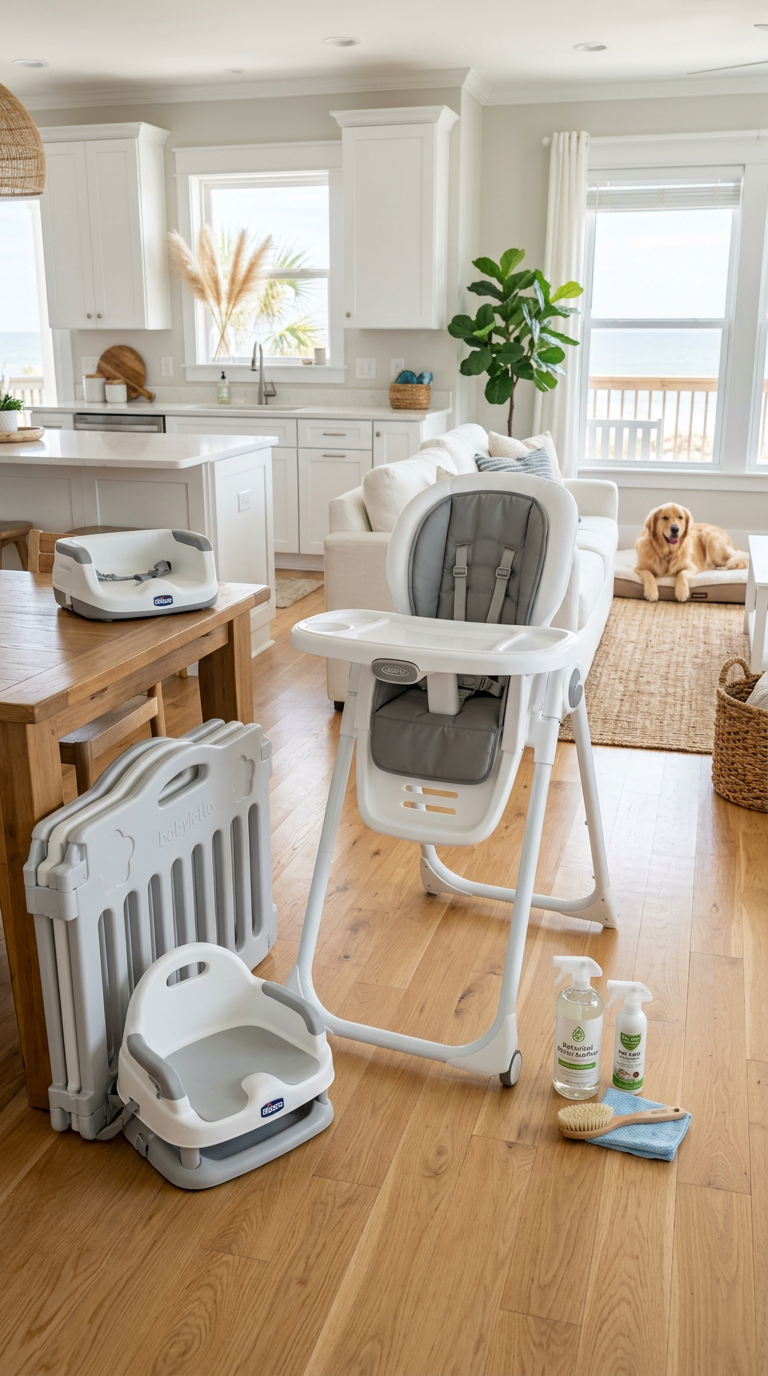
In the warm, humid climate of the Grand Strand, keeping infant and toddler gear sanitary is a constant battle against nature. When coastal humidity mixes with spilled baby food, fine sand grit, and floating pet hair, it creates a stubborn, sticky film on high chairs, booster seats, and plastic playpens. Standard household wipes often leave behind harsh chemical residues that are unsafe for direct hand-to-mouth contact. This protocol provides busy Myrtle Beach families with a practical, science-backed approach to sanitizing plastic and fabric baby gear using botanical, non-toxic methods.
The Coastal Fusion: How High Humidity, Sand Grit, and Food Lipids Create Safe Havens for Biofilms
In our coastal Grand Strand environment, indoor relative humidity levels frequently fluctuate, accelerating the breakdown of organic materials left on high chair frames. When pureed baby food, milk sugars, and fruit lipids are dropped onto plastic surfaces, they do not merely dry out; they absorb ambient moisture from the air. This moisture allows active yeasts and common molds to colonize the surface within forty-eight hours. The problem worsens when fine sand grit tracked in from local beaches mixes with these sticky food residues, forming a hard, abrasive paste that settles deep into plastic joins and seams.
To make matters more complex, electrostatic charges naturally build up on large plastic items like booster seats and plastic playpen panels. This static electricity acts as a magnet for floating pet dander, airborne dust, and shedding fur from household cats and dogs. Once pet hair contacts a greasy food spill, the proteins bind together, creating a tough biofilm that resists casual wiping. Simply spraying the surface with a standard commercial cleaner often spreads this film around rather than breaking the molecular bonds holding it to the plastic.
Over time, this accumulation of sand, pet allergens, and decaying food proteins can trigger respiratory irritation and skin sensitivities in young children. Standard cleaning methods that rely on quick dry-dusting or water-only wipes are insufficient for breaking down these complex, humid bindings. Grand Strand households need a structured decontamination method that addresses the physical chemistry of these coastal soils while prioritizing the delicate developing immune systems of young children.
- Humid air prevents organic baby food spills from drying fully, accelerating yeast and mold growth.
- Electrostatic plastic panels actively pull shedding pet hair and dander from the room's air current.
- Sand grit binds with food oils, forming an abrasive paste that scratches protective plastic finishes.
- Incomplete cleaning allows microscopic food biofilms to harbor bacteria directly on eating surfaces.
The Danger of Chemical Residues: Why Conventional Disinfectants Fail the Toddler Hand-to-Mouth Test
Many busy parents instinctively reach for industrial-grade disinfectant wipes or chlorine bleach solutions to sanitize high chairs and plastic play yards. However, these traditional sanitizers often rely on quaternary ammonium compounds, commonly known as quats, which leave behind persistent chemical residues on non-porous surfaces. Because infants and toddlers frequently touch these surfaces and then place their hands, toys, or dropped food in their mouths, they risk ingesting these active chemical residues. This can lead to chemical dermal irritation or disruption of sensitive gut microbiomes.
Chlorine bleach is another popular choice that presents distinct challenges in a tightly sealed, air-conditioned coastal home. Bleach fumes can irritate developing airways, exacerbating pediatric asthma and allergy symptoms in homes already dealing with high seasonal pollen and humidity. Furthermore, chlorine reacts poorly with certain plastics over time, causing yellowing, brittleness, and microscopic surface pitting. These tiny pits then become permanent reservoirs where bacteria and sand can hide, making future cleaning cycles increasingly difficult.
An allergy-friendly routine must substitute these aggressive synthetic chemicals with EPA-registered botanical sanitizers. Thymol, a natural active ingredient derived from thyme oil, is highly effective against common household pathogens while carrying a category IV safety rating—the lowest toxicity level assigned by the EPA. This allows parents to achieve hospital-grade disinfection on high chair trays and booster seats without the need for a secondary freshwater rinse, saving valuable time in a busy household.
- Quaternary ammonium compounds leave toxic surface residues that kids easily ingest.
- Chlorine bleach off-gasses harmful fumes that aggravate pediatric asthma and respiratory tracts.
- Harsh chemical sanitizers degrade plastic polymers, creating microscopic pockets that trap bacteria.
- Botanical thymol-based sanitizers provide high-level disinfection without requiring a clean water rinse.
High Chair Harness and Strap Deep-Cleaning: Stripping Ground-In Lipids and Saliva Yeast
The nylon and polyester webbing used for high chair safety straps is notoriously difficult to clean because of its porous weave. Spilled purees, saliva, and milk soak directly into the fibers, where they are trapped away from surface contact. Over time, these organic materials sour in the Grand Strand heat, creating stubborn sour odors and encouraging yeast colonization. Washing these straps with standard laundry detergent often fails to strip the deep-seated fats, and drying them in high-humidity areas can lead to mildew growth before they dry completely.
To properly decontaminate these straps, they must be detached from the high chair frame entirely. If the harness cannot be removed, a specialized in-place extraction process is required. Begin by soaking the detached straps in a warm water solution mixed with an enzyme-based, dye-free laundry detergent. Enzymes are critical here; they actively break down the proteins and lipids from baby food and formula that standard soaps leave behind. Avoid using liquid fabric softeners, as they coat the synthetic fibers in a waxy layer that actually seals in trapped odors and attracts pet hair.
After a twenty-minute soak, use a stiff-bristled utility brush to scrub the length of each strap, paying close attention to the plastic buckle housings where food slurry tends to dry hard. Rinse the straps thoroughly in warm, clean water to remove all emulsified soils and soap residues. To prevent mildew formation during damp Grand Strand summer days, press the straps flat between two clean microfiber towels to extract excess moisture, then hang them to dry in a well-ventilated room with an active dehumidifier.
- Porous nylon straps absorb liquids, trapping organic food sugars deep within the woven fibers.
- Enzymatic formulas are necessary to break down stubborn proteins from milk and baby food purees.
- Avoid fabric softeners, which leave a sticky coating that attracts pet dander and locks in sour odors.
- Accelerate drying with microfiber towels and dehumidifiers to prevent coastal mildew from developing.
Decontaminating Booster Seat Nooks and Crannies: Mitigating Sticky Spill Runoff and Sand Settlement
Booster seats strapped directly to dining room chairs are subject to unique spills that run down the sides and pool underneath the seat base. This hidden runoff zone quickly becomes a dark, humid microenvironment where mold can grow undetected. Because these seats are moved frequently, they also collect loose sand grit from children's clothing and pet hair that drifts along the floorboards. When these elements mix under the booster, they can permanently scratch and damage the finish of your wood or upholstered dining chairs.
To clear these hidden reservoirs, uninstall the booster seat weekly. Vacuum the dining chair beneath it using a HEPA-filtered vacuum cleaner fitted with a soft brush attachment to remove loose sand and pet dander. For the booster seat itself, pay close attention to the underside grid system designed for structural stability. These molded plastic squares trap crumb debris and spilled liquids easily. Use a botanical surfactant spray and a soft-bristled detailing brush to agitate and lift the dried-on residues from these deep recesses.
For stubborn, hardened food deposits in adjustment buckles and strap paths, utilize a low-moisture hand-held steam extractor. Dry steam quickly melts caramelized sugars and greasy food residues without saturating the plastic or requiring excess chemical cleaners. Wipe the dislodged debris away immediately with a clean microfiber cloth. Ensure all parts of the booster seat and the dining chair are completely dry before reassembling to prevent trapping moisture between the two surfaces.
- Weekly uninstallation reveals hidden spill runoff zones and trapped sand beneath the seat base.
- Dry sand grit under the booster seat acts like sandpaper, destroying dining chair finishes.
- Molded plastic support grids on the underside require detail brushes to reach trapped crumbs.
- Low-moisture dry steam melts hard sugars instantly without leaving behind chemical residues.
Plastic Playpen and Activity Center Panel Sanitization: Eradicating Pet Hair Static and Fingerprint Smudges
Plastic playpens and multi-panel activity yards are exceptional at keeping toddlers safe, but their sheer surface area makes them major collectors of household dust and pet hair. Because plastic is a poor conductor of electricity, friction from children crawling and playing builds up a static charge on the panels. This static charge continuously pulls floating pet hair, dander, and outdoor allergens out of the air, gluing them to the panels alongside sticky finger smudges, baby drool, and teething oils.
To combat this static cling, avoid dry-wiping the panels, which only increases the static charge and redistributes the allergens. Instead, use a damp-cleaning method with an anti-static botanical surfactant. Spray a mild, plant-based soap solution directly onto a high-density microfiber cloth rather than onto the plastic itself. Microfiber has a natural positive charge that attracts and holds the negatively charged dust, dander, and hair, pulling them off the plastic instead of letting them slide around.
Wipe each panel from top to bottom, paying extra attention to built-in toys, spinning gears, and interactive mirrors where saliva and hand oils accumulate. Once clean, mist the panels lightly with an EPA-registered botanical disinfectant and let it air-dry according to the manufacturer's contact time instructions. This process leaves a microscopically clean, dust-repelling surface that is completely safe for direct skin contact and subsequent playtime sessions.
- Dry-wiping plastic surfaces generates static charges that pull pet hair and dust back onto the panels.
- Damp-cleaning with high-density microfiber lifts and locks away dander instead of spreading it.
- Interactive toys built into panels collect drool and hand oils, requiring focused sanitization.
- Botanical disinfectants leave a clean, safe finish that repels dust without toxic chemical films.
The Weekly Allergy-Friendly Maintenance Cycle: Streamlining Protocols for Busy Grand Strand Families
Managing a busy coastal household with children and pets requires a systematic cleaning routine that fits into a packed schedule without causing burnout. Trying to deep-clean every piece of baby gear daily is unrealistic for most families. Instead, establish a clear division between daily high-touch surface maintenance and a thorough weekly decontamination cycle. This structured approach keeps allergen levels low and prevents organic soils from hardening into challenging, mold-harboring biofilms.
For daily care, focus solely on food-contact areas immediately after meals. Wipe down high chair trays and seat pads using a damp microfiber cloth and a mild, baby-safe dish soap solution. This simple step removes the immediate food source for yeasts and bacteria before the coastal humidity can act on it. Keep a dedicated spray bottle of botanical sanitizer nearby for a quick post-meal mist on the tray, allowing it to air-dry naturally without requiring a tedious wipe-and-rinse routine.
Reserve the weekly cycle for deep-cleaning strap harnesses, sanitizing the underside of booster seats, and wipedown of playpen panels. By scheduling this task on a specific day, you can prep your laundry and cleaning supplies in advance. This consistency prevents the gradual buildup of sand, pet hair, and food oils, ensuring your child's immediate environment remains healthy, fresh, and free from persistent coastal odors.
- Divide tasks into quick daily post-meal wipe-downs and a dedicated weekly deep sanitization.
- Immediate post-meal cleanup deprives bacteria and yeasts of the damp food sources they need to grow.
- Keep dedicated botanical sanitizers handy for quick, rinse-free treatment of high-touch trays.
- A consistent weekly routine prevents sand and pet dander from accumulating in hard-to-clean seams.
Professional-Grade Deep Cleaning: When to Partner with A2Z Cleaning & Linen Services
Despite a parent's best efforts, busy family life on the Grand Strand can leave little time for the intensive detailing that complex baby gear requires. Sand grit can migrate deep into the mechanical joints of high chair folding mechanisms, and pet odors can saturate fabric inserts beyond the reach of standard home washing machines. When baby gear becomes heavily soiled, or when seasonal allergies begin to spike, partnering with a professional cleaning service can restore your home’s high-traffic zones to a truly hygienic standard.
At A2Z Cleaning & Linen Services, we understand the delicate balance of maintaining a clean home while keeping it safe for pets and children. Our professional technicians are trained in advanced soil extraction, utilizing low-moisture hot water extraction and EPA-registered botanical sanitizing agents. We systematically target the hidden crevices, fabric straps, and textured plastics of your family's gear, lifting away ground-in sand, pet dander, and food biofilms without introducing harsh chemical residues into your living spaces.
By trusting your home's deep-cleaning needs to our expert team, you save valuable time and gain peace of mind knowing your children are playing and eating in a truly sanitized environment. We bring professional-grade equipment and specialized knowledge to every home we serve across Myrtle Beach and the Grand Strand. Contact A2Z Cleaning & Linen Services today at 843.800.2788 to schedule a comprehensive home deep clean tailored to your family's busy lifestyle.
- Professional extraction removes deep-seated sand grit from mechanical gears and folding joints.
- A2Z uses advanced botanical sanitizers that are highly effective yet safe for pets and children.
- Professional-grade hot water extraction lifts stubborn allergens and organic odors from fabrics.
- Partnering with A2Z frees up valuable family time while ensuring a healthy, allergen-free indoor environment.
Key takeaway
Maintaining sanitary baby and toddler gear in our humid Grand Strand environment requires moving away from harsh synthetic chemicals that leave residues. By using botanical sanitizers, microfibers, and structured weekly routines, you can effectively eliminate pet dander, sand grit, and food biofilms. For a thorough, worry-free deep clean of your home, contact A2Z Cleaning & Linen Services at 843.800.2788.
Keep Reading

Home Cleaning
The Coastal Sliding Glass Door Track and Low-Level Window Threshold Decontamination Protocol: Mitigating Pet Slobber, Sandy Sludge, and Allergen Build-Up in Grand Strand Family Homes
ReadHome Cleaning
The Grand Strand Private Estate and Luxury Home Housekeeping Specialist Career Pathway: Fine Material Training, Behavior-Based Interviewing, and Year-Round Retention Strategies
ReadHome Cleaning
The Grand Strand Move-In/Move-Out and Real Estate Turn Specialist Career Pathway: Deep-Cleaning Substrate Chemistry, Tenant Security Deposit Preservation, and Year-Round Compensation Models
ReadReady for a spotless property?
Call 843.800.2788 or request a free quote from A2Z Cleaning & Linen Services.