Vacation Rentals
The Coastal High-Chair and Pack-and-Play Sanitization Protocol: Preventing Organic Biofilms, Sand-Grit Accumulation, and Mold Spores in Grand Strand Family Rentals
A detailed operational blueprint for cleaning, sanitizing, and inspecting shared baby gear to eliminate physical debris, mold, and odor in Myrtle Beach vacation rental turnovers.
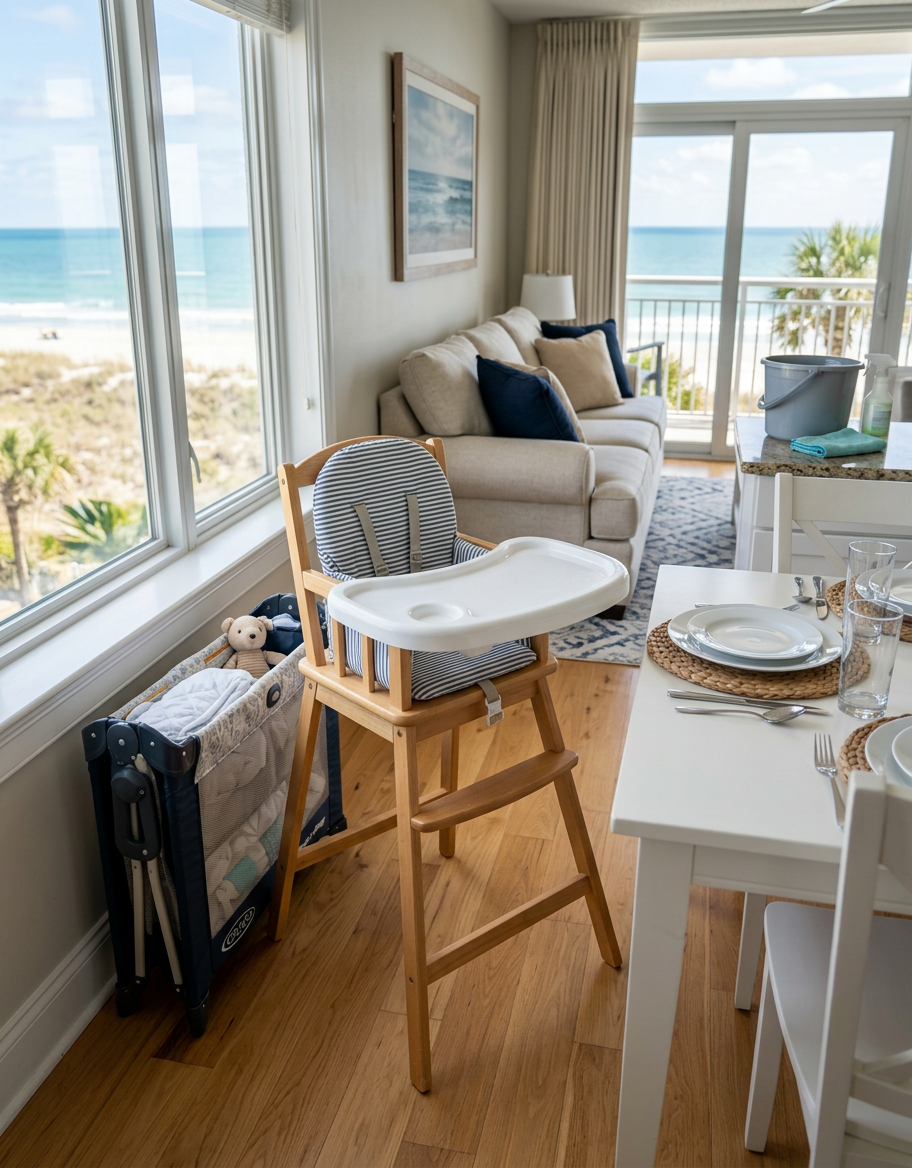
Families traveling to the Grand Strand expect their infant amenities to be as clean as a hospital nursery, yet high-chairs and pack-and-plays are frequently overlooked during high-volume summer turnovers. These items are hotbeds for organic food biofilms, beach sand, and mold spores fueled by coastal humidity. A single sticky strap or sandy mattress pad can trigger an immediate one-star cleanliness review and platform escalation. This operational guide provides property managers and hosts with a rigorous, step-by-step sanitization protocol designed specifically for high-turnover coastal environments.
The High-Stakes Sanitation Gap in Family Amenities
Family-friendly travel is the cornerstone of the Myrtle Beach summer economy. When parents book a Grand Strand vacation rental listing a pack-and-play or high-chair, they trust these high-touch amenities are clinically clean. However, during rapid Saturday rental turnovers, these items are frequently overlooked by hasty cleaning crews. When baby gear is skipped, residual milk, organic baby food, and saliva quickly decompose, turning these conveniences into health hazards and triggering immediate 1-star reviews.
The physical design of infant gear naturally traps microscopic biological soils. High-chair trays develop fine micro-scratches from utensils, while the polyester mesh of travel cribs filters airborne beach sand, skin dander, and liquid spills. When exposed to the high humidity of coastal South Carolina, these trapped organic matters sour, producing stubborn, musty odors. Vacation rental managers must treat baby-gear sanitation as a high-liability touchpoint requiring a standardized decontamination protocol.
Neglecting these items also invites pest vectors into vacation properties. Ants, roaches, and flies are highly attracted to dried fruit purees, formula spills, and cracker crumbs hidden in high-chair seat creases. By establishing a rigorous, mandatory cleaning protocol for every checkout, property managers protect their guests' health, prevent pest infestations, and safeguard their property listings from damaging online reviews.
The High-Chair Deep Clean: Addressing Crevices, Trays, and Harness Straps
High-chairs require a meticulous dismantling process to remove hidden food reservoirs. Begin by releasing the plastic tray insert and soaking it in warm water mixed with a neutral-pH, plant-derived dish soap. Avoid using heavy chlorine bleach on these food-contact trays, as bleach can degrade the plastic over time and leave toxic chemical residues. Use a non-scratch nylon scrub pad to remove dried-on purees from the underside locking mechanisms where children's fingers grip.
Next, detach the seat cushion to reveal the debris that pools in the chair's structural well. Use a HEPA-filter vacuum with a crevice tool to extract crumbs, sand, and pet hair before applying any liquid cleaning solutions. Once vacuumed, wipe the entire plastic frame with an EPA-registered, food-safe sanitizer, ensuring you reach the leg adjustment joints and the underside of the seat shell where dripping juices accumulate.
The harness straps represent the most challenging part of high-chair sanitation. Because chlorine bleach weakens nylon fibers and creates a mechanical safety hazard, never submerge straps in bleach solutions. Instead, scrub the nylon straps with a soft-bristled detail brush dipped in an enzyme-based fabric cleaner to digest milk proteins and starches. Wipe the straps clean with a damp microfiber cloth and allow them to air-dry completely before reassembling the unit.
The Pack-and-Play Decontamination Loop: Eliminating Sand-Grit and Odors
Pack-and-plays are notorious sand traps, collecting fine Grand Strand silt deep within their folding frames and mesh panels. To begin decontamination, transport the unit to an uncarpeted area or outdoor balcony to avoid transferring sand onto indoor floors. Use a high-lift HEPA vacuum with an upholstery brush tool to thoroughly agitate and extract dry sand-grit from the outer polyester fabric, corner joints, and inner mesh siding.
Shake the frame upside down over a protective drop cloth to release trapped sand from the bottom hinges and telescoping leg joints. Failing to remove this grit causes the locking mechanisms to grind and eventually jam, rendering the unit unusable. Once the dry sand is extracted, spray the mesh panels and outer fabric with a fast-acting hydrogen-peroxide-based cleaner, wiping the entire surface with clean microfiber cloths.
The removable folding mattress pad contains a structural core of compressed wood or fiberboard panels, meaning it must never be submerged in water. Instead, lay the mattress pad flat and scrub the textured vinyl wrap with a damp cloth saturated in a botanical disinfectant. Clean both sides of the pad, as the underside accumulates floor dust and sand. Stand the mattress pad upright in an active airflow zone to dry completely.
Mitigating Humidity-Induced Mold and Spore Colonization
In coastal South Carolina, storing damp baby gear inside dark, unventilated owner closets creates a high-risk microclimate for mold growth. Aspergillus and Cladosporium spores thrive in warm, humid spaces when moisture is trapped. If a housekeeper wipes down a travel crib and packs it away while still damp, the next guest will find a mold-spotted, musty-smelling hazard. This immediately disrupts their check-in and requires an expensive, emergency equipment replacement.
To prevent mold colonization, cleaning technicians must prioritize strict drying times during the turnover window. After sanitizing, place all baby gear directly beneath an active PTAC unit, ceiling fan, or portable air mover. If drying space is limited, physically extract all remaining moisture from fabric seams, plastic crevices, and under-seat recesses using dry, highly absorbent microfiber towels.
Never store folding playards inside their zippered travel bags unless they are completely dry to the touch. If the turnover window is too tight to guarantee complete drying, leave the pack-and-play assembled in the living room with an air mover running, instructing the inspector to pack it away last. This operational adjustment ensures mold spores never have the stagnant moisture required to colonize.
EPA-Registered, Child-Safe Chemistry Selections
Choosing the right sanitizing chemistry for infant amenities requires a balance of high-level pathogen control and pediatric safety. Standard commercial disinfectants can leave harsh chemical residues that irritate a baby's sensitive skin or cause toxicity if ingested. Housekeeping teams should avoid products containing heavy quaternary ammonium compounds or synthetic fragrances. Instead, select EPA-registered botanical disinfectants containing thymol or hydrogen peroxide, which break down into harmless water and oxygen.
For organic stain removal, such as formula spit-up or diaper leaks, utilize a targeted enzymatic spot cleaner. Enzymes chemically break down and digest complex proteins, starches, and lipids without damaging the fabric fibers. Spray the enzyme solution directly onto the stain, agitate gently with a soft brush, and let it dwell for ten minutes before blotting it clean. This eliminates organic odors at their source rather than masking them.
When cleaning plastic trays, use only food-contact sanitizers that require no rinsing, or perform a thorough freshwater rinse after using any cleaning agent. This step is critical because infants often eat food directly off the high-chair tray surface. By utilizing safe, green chemistry, your rental company protects young guests from chemical exposure while maintaining flawless sanitation standards.
- Botanical Thymol Sanitizers: Eliminates pathogens without leaving toxic synthetic chemical residues.
- Hydrogen-Peroxide-Based Cleaners: Breaks down into harmless oxygen and water, ideal for sensitive skin contact.
- Enzymatic Spot Cleaners: Formulated to digest organic milk proteins, saliva, and stubborn food starches.
- Neutral-pH Dish Soap: Safe for soaking food-contact high-chair trays without degrading plastic polymers.
The Structural Integrity and Safety Inspection Loop
Cleanliness is secondary to physical safety when dealing with infant equipment in vacation rentals. Every turnover cleaning cycle must include a standardized mechanical safety check. Technicians must verify that the folding joints of the pack-and-play click and lock securely into place. A faulty lock can cause the playard to collapse under a sleeping child, creating a severe physical hazard and a catastrophic liability for the property owner.
Inspect the high-chair legs and feet to ensure the non-slip rubber caps are present and undamaged. Missing caps make the high-chair unstable on LVP or tile floors, increasing tipping risks. Additionally, examine all plastic buckles, adjustment slides, and retaining clips for cracks or stress fractures. If any safety buckle fails to snap securely or a strap is frayed, red-flag the item and remove it from service.
Finally, confirm that all manufacturer safety warning labels remain attached and legible. These labels contain crucial weight and age limits that protect guests from misuse. Keep a digital log of these inspections within your property management software, noting the date, the inspector's name, and the physical state of each amenity. This documentation proves your proactive commitment to safety and limits liability.
- Hinge and Joint Locks: Verify that all four top rails and the center hub click securely into place.
- Harness Webbing: Check nylon straps for fraying, tearing, or broken plastic retention clips.
- Stability Feet: Confirm all rubberized, non-slip floor protectors are present and intact.
- Warning Decals: Ensure federally mandated weight limits and usage safety warning labels remain legible.
Storage, Protective Bagging, and Guest-Facing Quality Seals
First impressions dictate guest satisfaction, and how you present clean baby gear directly impacts your property's reviews. Once the high-chair and pack-and-play are sanitized, dried, and inspected, store them in a manner that proves your commitment to cleanliness. Placing a folded pack-and-play inside a clean, breathable canvas bag protects it from floor dust and sand-grit inside the closet.
To elevate the guest experience, apply a printed paper band or adhesive security seal around the folded frame or wrapped mattress pad that reads "Sanitized and Sealed for Your Child's Safety." When tired parents arrive and see this professional visual confirmation, it provides immediate peace of mind. This simple, thoughtful touch transforms a standard amenity into a premium hospitality highlight, earning trust and positive feedback.
Avoid storing these clean items in high-traffic, humid utility closets next to dirty mops, chemical bottles, or vacuum cleaners. Instead, dedicate a specific shelf or closet zone for sanitized baby gear, keeping them elevated and away from potential contamination. This disciplined storage practice ensures the items remain pristine from the moment they are cleaned until the guest unpacks them.
The Pre-Arrival Quality Control Audit for Rental Managers
Even with trained housekeepers, a secondary quality control audit by a property inspector is essential to maintain zero-defect standards. Inspectors must visually check the high-chair strap crevices and the bottom of the playard mesh during their walk-through. A quick inspection ensures that no lingering sand or sticky residue was missed during the initial clean, preventing guest complaints before they occur.
Inspectors should also verify that the correct bedding is provided for the travel crib. Traditional household blankets and thick pillows present a suffocation hazard for infants. Ensure that only a tight-fitting, clean mattress sheet designed specifically for the pack-and-play model is left with the unit. Providing the correct, snug sheet demonstrates your adherence to safe sleep standards and reassures cautious parents.
In the event of an audit failure, the inspector must have immediate access to a backup supply of sanitized baby gear or a rapid-response cleaning kit. Maintaining a small inventory of sanitized, wrapped replacement units at your central Myrtle Beach operations office ensures that a compromised item can be swapped out instantly. This operational redundancy guarantees a flawless guest check-in experience every single time.
Key takeaway
Providing safe, clinically clean infant amenities is an operational necessity that directly impacts your Grand Strand rental's reputation and review scores. By implementing this high-chair and pack-and-play sanitization protocol, property hosts can ensure maximum safety for their youngest guests while earning five-star cleanliness marks. To learn how our expert teams can streamline your property turnovers, contact A2Z Cleaning & Linen Services in Myrtle Beach at 843.800.2788.
Keep Reading
Vacation Rentals
The Pull-Out Sleeper Sofa Turnover Protocol: Preventing Sand-Grit Accumulation, Fabric Sanitation Failures, and Mechanical Rust in Grand Strand Rentals
ReadVacation Rentals
The Guest-Ready Operations Protocol: Integrating Tech-Enabled Inspections and Quality Audits in Grand Strand Vacation Rentals
ReadVacation Rentals
Managing the Saturday Changeover: Peak Season Cleaning Strategies for Grand Strand Hosts
ReadReady for a spotless property?
Call 843.800.2788 or request a free quote from A2Z Cleaning & Linen Services.