Home Cleaning
The Coastal Low-Level Window and Glass Viewing Zone Decontamination Protocol: Mitigating Toddler Handprints, Dog-Nose Sebum Slurry, and Humid Pollen-Sand Adhesion in Grand Strand Family Homes
A family-safe, allergen-reducing protocol to clear stubborn dog-nose prints, toddler handprints, and humid salt-sand crusts from low windows and sliding glass doors in Grand Strand homes.
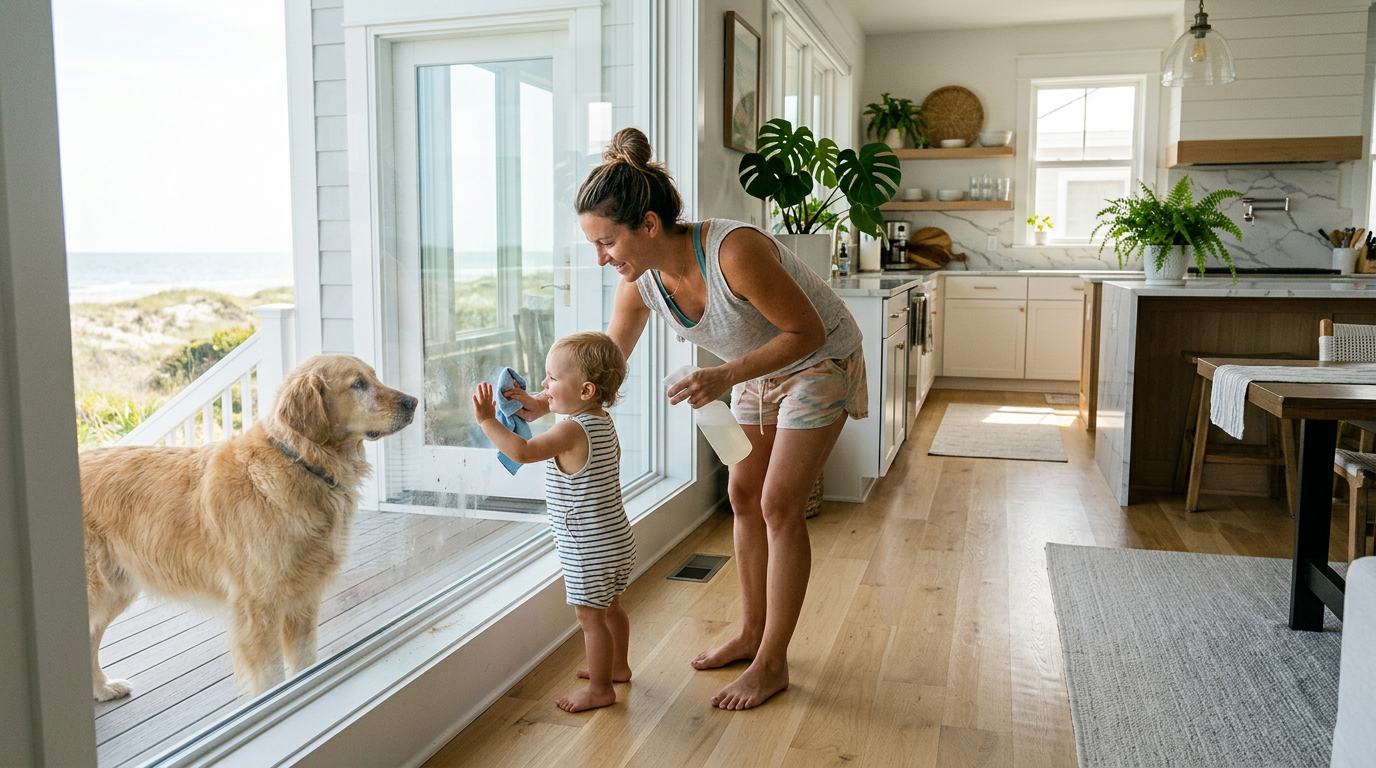
In beautiful Grand Strand homes, expansive windows and sliding glass doors serve as our connection to coastal sunshine and ocean breezes. However, the lower two feet of these glass panes quickly become a highly active zone where crawling toddlers and family pets constantly press their hands, faces, and wet noses. This contact deposits a stubborn, organic film of skin oils, saliva, and sunscreen that acts as an adhesive, trapping humid sea salt, airborne sand, and seasonal Grand Strand pollens. Establishing a safe, non-toxic cleaning routine for this specific low-level perimeter is essential to protect delicate respiratory systems and keep your home's viewing points pristine.
The Anatomy of the Low-Level Window Slurry
In Myrtle Beach and surrounding coastal areas, the bottom two feet of sliding glass doors, low-set windows, and French doors represent a distinct, high-traffic biological zone. Toddlers pulling themselves up to look outside leave behind skin lipids, sweat, and residues of zinc-based sunscreens. Concurrently, family dogs press their wet noses and paws against the glass to track outdoor activity, depositing a persistent layer of glandular sebum and saliva. This complex organic mixture does not simply evaporate; instead, it leaves behind a tacky, invisible adhesive layer on the glass surface.
The high humidity of the Grand Strand actively worsens this organic film. Atmospheric moisture prevents these oily deposits from drying completely, allowing them to capture windblown silica sand, maritime forest dust, and coarse salt crystals. During regional pollen seasons, when live oak and loblolly pine pollens saturate the air, this sticky glass zone becomes a highly concentrated allergen trap. The resulting gray, cloudy slurry compromises the aesthetic of your living space and creates a direct contact hazard for your family.
Standard household dust quickly binds to this moist, oily layer, providing an ideal anchor point for microscopic mold spores and dust mites. Because crawling infants, toddlers, and pets interact directly with this exact height level, they are constantly exposed to these trapped irritants. Touch contact, followed by hand-to-mouth behavior in children or self-grooming in pets, can introduce these accumulated allergens directly into their systems. Decontaminating this specific zone requires a strategic approach that breaks down organic lipids without relying on harsh chemicals.
The Hazards of Synthetic Fragrances and Ammonia
Traditional commercial glass cleaners often rely on ammonia, synthetic colorants, and heavy artificial fragrances to cut through grime and dry quickly. In closed, air-conditioned coastal homes, these volatile organic compounds (VOCs) off-gas rapidly and sink, settling directly into the lower breathing zones of pets and small children. Inhaling ammonia vapors can irritate the highly sensitive respiratory linings of toddlers and trigger chronic coughing or asthma symptoms in vulnerable family members.
Our pets are even more susceptible to these chemical deposits. Dogs and cats have highly advanced olfactory systems that can be easily overwhelmed by lingering synthetic perfumes, leading to behavioral stress or upper respiratory irritation. Furthermore, when pets lick windows to catch reflections or react to outdoor stimuli, they directly ingest the chemical residues left behind by standard spray cleaners. These harsh chemicals can also damage nearby painted window sills and vinyl seals, causing premature degradation and cracking.
Safe, high-performance cleaning requires transitioning to bio-based, plant-derived chemistry that matches the strength of industrial solvents. By using food-grade vegetable surfactants, natural chelating agents, and high-purity isopropyl alcohol, you can easily break down tough proteins and oily residues. These green solutions break the electrostatic bonds holding the grime to the glass, lifting the contaminants away safely. They evaporate cleanly without leaving toxic residues, ensuring that the low-level viewing zone remains perfectly safe for immediate touch and curious pet noses.
The Mechanical Pre-Extraction Phase
Applying a wet liquid cleaner directly to a sand-and-hair-covered glass pane is a primary cause of micro-scratching. Coarse beach sand consists of sharp silica crystals; dragging these hard particles across glass with a cleaning cloth acts like sandpaper, permanently hazing the surface over time. To preserve the clarity of your windows and prevent scratching, you must execute a thorough, dry mechanical pre-extraction phase to remove all abrasive particulates before introducing any liquid chemistry.
Begin by utilizing a vacuum cleaner equipped with a clean, soft-bristle dusting brush attachment to gently clear the window sills, frame corners, and the bottom glass gasket. Pay close attention to the lower rubber weather-stripping where pet hair and sand naturally settle due to static electricity. Running the brush gently along these crevices pulls loose sand, dander, and dried pollen clusters away from the glass surface, ensuring they do not integrate with your wet cleaning solutions to form a grinding paste.
For stubborn pet hair that embeds itself into the felt channels of sliding glass door tracks, use a dry rubber squeegee or a specialized silicone pet hair extraction tool. Drag the rubber edge firmly down the felt strip to pull out deeply wedged undercoat hairs that suction alone cannot dislodge. Once the surrounding frames, sills, and lower tracks are completely free of dry particulates, you can safely move on to wet cleaning without the risk of damaging the glass.
- Use a soft-bristle vacuum brush to clear sand from the lower frame and gaskets.
- Avoid using stiff plastic bristles that can scratch vinyl or painted wood sills.
- Extract pet hair from felt weather-stripping using a dry rubber squeegee edge.
- Ensure all dry sand is completely removed before spraying any liquid cleaners.
- Wipe dry sills with a clean microstatic cloth to capture remaining fine pollen.
The Organic Lipids Extraction Step
To break down the stubborn mixture of toddler saliva, dog-nose sebum, and coastal sunscreen, you need a balanced chemical solution that targets organic fats and proteins. An exceptionally effective, family-safe formula consists of two cups of distilled water, one-half cup of 70% isopropyl alcohol, and three drops of plant-based, unscented dish soap. The alcohol acts as a fast-acting solvent to dissolve greasy nose prints, while the mild surfactant lifts stuck-on food residues and sunscreen oils.
Using distilled water is a critical detail in the Grand Strand region. Local municipal water and private wells often contain high concentrations of dissolved calcium, magnesium, and sodium, which can react with cleaning agents to leave stubborn mineral spots and a cloudy white haze. Distilled water is entirely free of these minerals, ensuring that your homemade cleaning solution can work at maximum efficiency to suspend organic grime without introducing any external mineral scale to your glass.
Mist the solution generously across the bottom 24 inches of the glass pane, focusing directly on the heavily soiled viewing areas. Allow the mixture to dwell on the surface for approximately one minute, which gives the alcohol and surfactants sufficient time to break the molecular bonds of the sticky oils. Do not allow the solution to dry completely on the glass; the objective is to keep the contaminants suspended in the liquid phase so they can be easily wiped away.
The Microfiber Squeegee and Polishing Technique
The physical tools you use to wipe away the suspended grime determine the final clarity of your glass. Avoid using wood-pulp paper towels, which break apart when wet, leave behind fine lint, and can contain abrasive fibers that scratch delicate window coatings. Instead, use a professional-grade dual-sided squeegee or high-density, split-fiber microfiber cloths designed specifically for glass cleaning and polishing.
If using a squeegee, pull the rubber blade from top to bottom in a single, smooth stroke, wiping the blade dry with a clean microfiber cloth after every single pass. This mechanical action physically strips the dissolved organic slurry off the pane without leaving streaks. If you are using microfiber cloths, employ a two-cloth system: use the first damp cloth to lift the suspended grime, and immediately follow with a dry, tight-weave waffle microfiber cloth to polish the glass to a crystal-clear finish.
Pay careful attention to the bottom edge where the glass meets the frame. This lower channel is where dirty water naturally pools and dries, forming a concentrated line of mineral residue and trapped pet dander. Use a dry corner of your polishing cloth wrapped around your finger to trace this lower seal, absorbing any remaining moisture and ensuring no liquid penetrates behind the window glazing where mold could potentially develop.
Sanitizing the Sill and Window Bench Cushions
Decontaminating the glass is only half the battle; the wooden sills, vinyl tracks, and upholstered window benches directly below are equal participants in this coastal soil-accumulation zone. Children lean their hands and elbows here, and pets rest their chins on the sill for hours, transferring body oils and drool. Over time, high humidity causes these organic deposits to sink into porous wood grain or fabric fibers, generating stale, yeasty odors.
For wooden sills and vinyl tracks, wipe them down using a damp microfiber cloth lightly misted with a pH-neutral, plant-based multi-surface cleaner. Avoid soaking wood surfaces, as excess moisture can warp the wood and ruin the paint finish. For fabric-covered window seats or cushions, vacuum them thoroughly with an upholstery attachment, then apply an unscented, enzyme-based fabric refresher to digest the organic pet proteins and neutralize coastal odors at the molecular level.
Ensure that all wooden and fabric surfaces are completely dry before allowing family members or pets back into the area. In the Grand Strand's naturally humid climate, running a ceiling fan or dehumidifier in the room for an hour post-cleaning can accelerate drying times and prevent the formation of mildew. This comprehensive approach ensures that the entire viewing station, not just the glass, remains clean, fresh, and free from allergens.
- Wipe wooden sills with a damp, pH-neutral cloth to prevent wood damage.
- Vacuum upholstered window seats thoroughly with an upholstery brush tool.
- Apply plant-based enzyme cleaners to break down organic pet drool on fabrics.
- Ensure complete drying of all surfaces to prevent mold and mildew growth.
- Clean sliding tracks regularly to prevent sand from grinding the rollers.
Establishing a Low-Effort Daily Maintenance Loop
Keeping a busy coastal household clean requires a proactive routine rather than a reactive, labor-intensive deep clean. By establishing a simple daily maintenance loop, you can prevent the build-up of sand, dander, and nose prints, keeping your low-level glass consistently clear. Keep a dedicated spray bottle of your homemade distilled water and alcohol solution, along with a clean glass-polishing microfiber cloth, in a secure cabinet near your main viewing areas.
Spend just two minutes each evening misting and wiping down the high-contact zones on your sliding doors and low windows. This rapid touch-up prevents the daily accumulation of oils from bonding with the airborne sand and salt spray that enters the home whenever doors are opened. Over time, this small, consistent habit eliminates the need for aggressive scrubbing and preserves the integrity of your glass and window frames.
For families managing busy school schedules, vacation guests, or active pets, partnering with a professional cleaning service can provide the deep-cleaning foundation needed to make daily maintenance effortless. The expert team at A2Z Cleaning & Linen Services understands the unique challenges of Grand Strand coastal living. By scheduling regular professional cleanings, you can ensure that every corner of your home remains healthy, sanitary, and beautiful. Contact us today at 843.800.2788 to learn more about our tailored family and pet-safe cleaning solutions.
Key takeaway
Maintaining clear, allergen-free low windows in a busy coastal home requires a systematic dry-to-wet cleaning protocol that prioritizes child-safe, fragrance-free chemistry. By removing abrasive sand before dissolving organic oils and protecting the surrounding sills, you create a healthier indoor environment for your children and pets. For consistent, professional-grade results across the Grand Strand, trust the expert team at A2Z Cleaning & Linen Services to keep your home pristine.
Keep Reading
Coastal Living
The Coastal Kids' Toy Bin and Beach-to-Playroom Asset Decontamination Protocol: Mitigating Humid Saliva Biofilms, Pet-Dander Adhesion, and Sand-Friction Scratches in Grand Strand Homes
ReadHome Cleaning
The Coastal Pet-Crate and Indoor Dog-Bed Restoration Protocol: Mitigating Humid Yeast Biofilms, Dander Reservoirs, and Urine-Ammonia Interactions in Grand Strand Homes
ReadHome Cleaning
The Luxury Coastal Estate Cleaning Specialist: Advanced Surface Certifications, Behavioral Interview Protocols, and Premium Compensation Architectures for Grand Strand Estates
ReadReady for a spotless property?
Call 843.800.2788 or request a free quote from A2Z Cleaning & Linen Services.