Vacation Rentals
The Coastal Vacation Rental Coffee Maker, Keurig, and Beverage Station Turnover Protocol: Mitigating Moldy Reservoirs, Rancid Oil Biofilms, and Hard-Water Scale under Grand Strand Saturday Turn Pressures
A deep operational guide to sanitizing coffee stations under tight turnaround windows, protecting guest health, and preventing negative reviews on the Grand Strand.
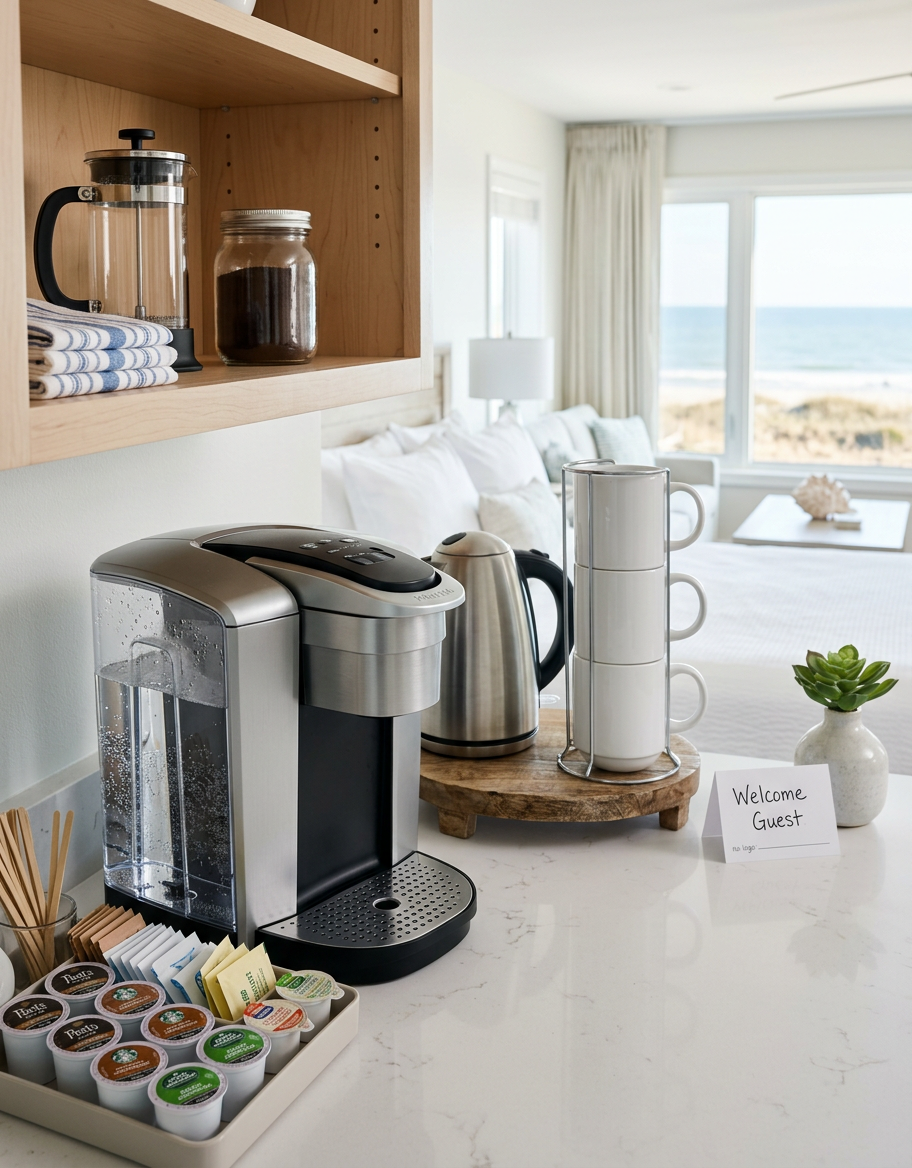
For vacationers arriving along the Grand Strand, the first morning of their stay sets the tone for their entire stay. A clean, fully stocked coffee station is more than a convenience; it is a critical touchpoint that directly impacts guest satisfaction and online reviews. However, the combination of coastal humidity, hard local water, and fast-paced Saturday turnarounds makes coffee makers a primary vector for mold, scale, and rancid oil buildup. Implementing a rigorous, repeatable sanitation protocol ensures your beverage stations remain pristine, hygienic, and ready to secure five-star ratings.
The High Stakes of the First Morning: Why Guest Coffee Stations Drive Mid-Stay Reviews
In the vacation rental industry, first impressions are forged in the kitchen within the first twelve hours of arrival. Guests who wake up on their first morning at a beach property expect a seamless, hygienic coffee-brewing experience. When they encounter a crusty drip basket, a dusty water reservoir, or sticky sugar residues from the previous guest, their confidence in the overall cleanliness of the home evaporates immediately. This psychological shift often triggers hyper-vigilance, leading guests to search for other housekeeping oversights throughout the property.
Dirty beverage stations are among the most common catalysts for immediate, frustrated guest communication to property managers and hosts. Rather than enjoying the ocean breeze, the guest is forced to scrub a machine or wait for a replacement unit to be delivered. These preventable friction points regularly lead to partial refund demands and damaging public reviews on platforms like Airbnb and Vrbo. A standardized cleaning protocol for these small appliances is essential to protect both your property's reputation and your operational sanity during the peak summer season.
From an operational standpoint, treating the coffee maker as an afterthought during a busy Saturday turnover is a recipe for long-term equipment failure and guest complaints. By elevating the beverage station to a high-priority inspection point, you establish a baseline of quality that guests notice immediately. Consistent execution of these steps by your housekeeping team ensures that every incoming guest begins their vacation with complete confidence in their morning routine, protecting your rental's hard-earned booking momentum.
The Chemistry of Coastal Coffee Hazards: Mold, Scale, and Rancid Lipids
The Grand Strand's unique coastal environment accelerates the degradation of coffee equipment in ways that inland properties rarely experience. High relative humidity provides an ideal breeding ground for mold and mildew inside dark, enclosed spaces, such as water reservoirs and internal pod-holder chambers. When a guest leaves water sitting in a closed machine at checkout, the warm indoor climate transforms that stagnant pool into a biological hazard within a matter of days, leading to musty odors and unsightly black biofilms.
Simultaneously, the municipal water systems serving Myrtle Beach and surrounding areas carry mineral loads that lead to rapid calcium and magnesium carbonate buildup. This hard-water scale coats heating elements, clogs narrow internal water lines, and constricts puncture needles. Over time, scale accumulation reduces water temperature, slows down the brewing cycle, and causes machines to sputter or fail entirely. Without regular descaling, a high-end coffee maker can become completely inoperable in less than a single rental season.
Compounding the issue are coffee lipids—organic oils that escape from the beans during grinding and brewing. These oils deposit a stubborn, sticky film on glass decanters, plastic filter baskets, and pod needles. In a humid coastal environment, these trapped lipids oxidize rapidly, turning rancid and releasing a bitter, unpleasant taste into subsequent brews. This film also acts as an adhesive, trapping airborne dust, sand grit, and lint, which further degrades the machine's hygiene and overall aesthetic appeal.
The Drip Coffee Maker Protocol: Decanter Descaling and Basket Sanitization
Standard multi-cup drip coffee makers require a systematic multi-step sanitation process during every turnover to eliminate rancid oils and mineral haze. Housekeepers must first empty the filter basket of all spent grounds and paper filters, inspecting the spring-loaded drip-stop valve for trapped debris. Wash the basket and the glass decanter in warm, soapy water using a non-abrasive sponge to prevent micro-scratches that can harbor bacteria. Pay special attention to the decanter's plastic lid and rim, where dried coffee often dries into a dark crust.
For decanters with stubborn brown stains or mineral clouding, housekeepers should use a food-grade oxygenated destainer or a brief soak with warm water and coarse salt. Avoid using harsh steel wool or abrasive powders, which ruin the glass surface and make it more prone to shattering. Wipe down the heating plate beneath the carafe with a damp microfiber cloth, removing any burned-on coffee rings. Ensure the plate is completely dry before replacing the clean decanter to prevent rust and paint peeling.
Inspect the upper spray head where hot water exits the machine into the brew basket. This area regularly collects condensation, coffee splashes, and rising steam, making it a prime spot for mold growth. Wipe the spray head with a sanitized cloth damp with a food-safe disinfectant, ensuring all nozzle openings are clear of blockages. Finally, leave the reservoir lid slightly ajar to allow air to circulate and dry the interior, preventing musty odors from developing before the next guest arrives.
The Single-Serve Pod System Standard: Needle Clearing and Reservoir Decontamination
Single-serve pod systems, like Keurig machines, require specialized attention due to their intricate internal mechanics and puncture needles. The entry and exit needles can easily become clogged with coffee grounds and sticky cocoa residues, restricting water flow and causing the machine to short-brew. Housekeepers must inspect the pod holder daily, using a clean, food-safe tool or a paperclip to gently clear any debris from the hollow needles. Rinse the removable pod holder assembly in warm water to dissolve dried sugars.
The water reservoir of a single-serve machine is highly vulnerable to green algae and white mold growth along its interior corners and base seals. During the turnover, housekeepers should remove the reservoir, empty any remaining water, and wash it thoroughly with a mild dish soap. Use a soft bottle brush to reach into the bottom corners where slime layers form. Wipe the exterior of the reservoir dry with a lint-free cloth to eliminate water spots, which instantly look unpolished to arriving guests.
Before completing the turn, reinstall the reservoir and run a single hot-water rinse cycle without a pod inserted. This simple step purges any stale water trapped within the internal heating chamber and verifies that the pump and needle are functioning correctly. It also ensures the next guest receives fresh, clean water for their first cup. If the machine's low-water or descale indicator light is active, flag the unit immediately for maintenance intervention before the guest checks in.
The Milk Frother and Espresso Machine Addendum: Mitigating Burnt Dairy Biofilms
Premium properties along the Grand Strand often feature high-end beverage stations equipped with standalone milk frothers or integrated espresso steam wands. These accessories demand a zero-tolerance sanitation policy, as dairy residues spoil rapidly under coastal temperatures, creating dangerous bacterial hazards. Housekeepers must inspect frothing pitchers immediately upon entry, looking for scorched milk rings on the heating base. Clean these using warm soapy water and a non-scratch pad, taking care not to damage the delicate non-stick interior coatings.
For integrated steam wands, the protocol requires an immediate purge and wipe after every single use, but busy guests frequently neglect this step. If a wand is found coated in dried, crusty milk, wrap the wand in a damp, warm microfiber cloth for several minutes to soften the residue. Once softened, wipe the wand clean and use a specialized tip wrench or pin to clear the steam holes. Run a brief steam cycle to blow out any internal dairy proteins that may have siphoned back into the wand.
Any detachable frothing whisks or magnetic stirrers must be removed from the pitcher, washed, and dried completely. These tiny components are easily lost or misplaced during a rushed clean, so housekeepers should verify they are present and properly seated in the machine before leaving. A missing whisk renders the frother useless, leading to an immediate guest complaint. Keep a small inventory of spare whisks and frother parts in your central supply vehicle to quickly resolve these issues.
The Beverage Tray and Condiment Station Reset: Organizing Pods, Sugars, and Stirrers
A pristine coffee maker is only half of the equation; the surrounding presentation must also be flawless to create a true luxury experience. Start by wiping down the countertop, tray, or drawer where the coffee station sits, removing any sticky syrup rings, stray coffee grounds, and dust. If you use a wooden or acrylic organizer tray, sanitize it thoroughly with a surface-safe cleaner, paying attention to the corners where dust and loose sugar tend to collect.
Next, discard any opened, torn, or damp sugar packets, stirrers, or creamer cups left behind by previous guests. Grand Strand humidity can cause paper sugar packets to absorb moisture, turning the contents into hard, unappealing clumps. Restock the station with fresh, individually wrapped condiments, organizing them neatly by type. If you provide coffee pods, ensure they are turned label-side up and arranged uniformly, creating a clean, organized appearance that signals thoughtful preparation.
Ensure that the complementary mugs, spoons, or cups provided at the station are clean and free of water spots, lipstick rings, or cabinet dust. Arrange them neatly with handles pointing in the same direction, adjacent to the machine. This level of visual organization takes less than two minutes to execute but provides an immediate feeling of luxury and cleanliness when guests first inspect the kitchen, helping to secure positive reviews and repeat bookings.
Scaling the Process: Incorporating Descaling Cycles into the Off-Season and Mid-Season PMS Schedule
While routine sanitizing must occur on every Saturday turn, deep descaling is a time-consuming process that cannot realistically be performed during a tight four-hour turnaround window. To manage this scale buildup effectively, property managers must schedule deep descaling cycles as part of their recurring maintenance calendar. Using your Property Management System (PMS), trigger a automated task every sixty to ninety days—or more frequently during peak summer—to run a professional descaling agent through each machine.
When performing a scheduled descaling, use a commercial citric-acid-based solution or a designated appliance descaler rather than straight household vinegar. Vinegar can leave a persistent, pungent odor and taste that requires dozens of rinse cycles to eliminate, which is impractical for vacation rentals. Run the descaling solution through the machine according to the manufacturer's instructions, followed by at least three full reservoirs of clean, filtered water to ensure no chemical residue remains in the heating lines.
During these scheduled maintenance visits, technicians should also inspect the machine's power cords for fraying, check the water seals for leaks, and test the overall brewing temperature. Documenting these services within your PMS creates a clear history of preventive maintenance, helps extend the lifespan of your small appliances, and ensures that you are never caught off guard by a wave of broken coffee makers during the busiest weeks of the summer season.
Quality Assurance Checkpoints for Field Inspectors: The Five-Point Coffee Station Audit
Field inspectors play a crucial role in preventing coffee station complaints by acting as the final line of defense before guest arrival. An effective inspection protocol should include a dedicated five-point audit of the beverage station. First, the inspector must open the pod chamber or filter basket to verify it is empty, dry, and free of mold or leftover grounds. Second, they should check the water reservoir for clarity, ensuring there is no slime on the bottom or dust on the lid.
Third, the inspector must examine the glass carafe or frothing pitcher, checking for water spots, lipstick smudges, or dried coffee stains on the handle. Fourth, they should run their hand along the warming plate and surrounding countertop to ensure no sticky residues or loose grinds remain. Finally, the inspector must verify that the condiment tray is neatly arranged, fully restocked, and that all provided cups or mugs are clean, dry, and free of dust.
If any of these checkpoints fail, the inspector must direct the housekeeper to correct the issue immediately before signing off on the clean. By enforcing these strict, objective standards, you eliminate the risk of oversight and guarantee that every guest experiences the same high level of hygiene and hospitality. This attention to detail protects your rental business from costly call-backs, negative reviews, and unnecessary guest friction during your busiest times of the year.
Key takeaway
A spotless, fully stocked coffee station is essential for securing positive guest reviews and protecting your rental properties from early-morning complaints. By implementing a standardized cleaning and maintenance protocol, hosts and property managers can easily combat the mold, scale, and rancid oils common to the coastal Grand Strand. For professional assistance keeping your vacation rentals in pristine condition year-round, contact A2Z Cleaning & Linen Services at 843.800.2788.
Keep Reading
Vacation Rentals
The Coastal Vacation Rental Small Kitchen Appliance and Coffee Station Turnover Protocol: Mitigating Hard-Water Scale, Sticky Residues, and Moldy Reservoirs under Grand Strand Saturday Turn Pressures
ReadVacation Rentals
The Coastal Ceiling Fan and Vent Dust-Release Protocol: Mitigating Humid Grey Lint, Static-Cling Dander, and Airflow Failures in Grand Strand Rental Turnovers
ReadVacation Rentals
The Smart TV Guest-Mode Reset and Remote Control Decontamination Protocol: Stopping Account Hijacking, Sticky Hardware, and Entertainment Failures in Grand Strand Turnovers
ReadReady for a spotless property?
Call 843.800.2788 or request a free quote from A2Z Cleaning & Linen Services.