Vacation Rentals
The Coastal Vacation Rental High-Density Bunk Bed and Loft System Turnover Protocol: Mitigating Hidden Structural Detritus, Safety Rail Sand-Grit, and Ladder Fastener Checks under Grand Strand Saturday Turn Pressures
Optimize safety, cleanliness, and turnover times for your Grand Strand vacation rental bunk beds with our comprehensive, step-by-step structural and housekeeping protocol.
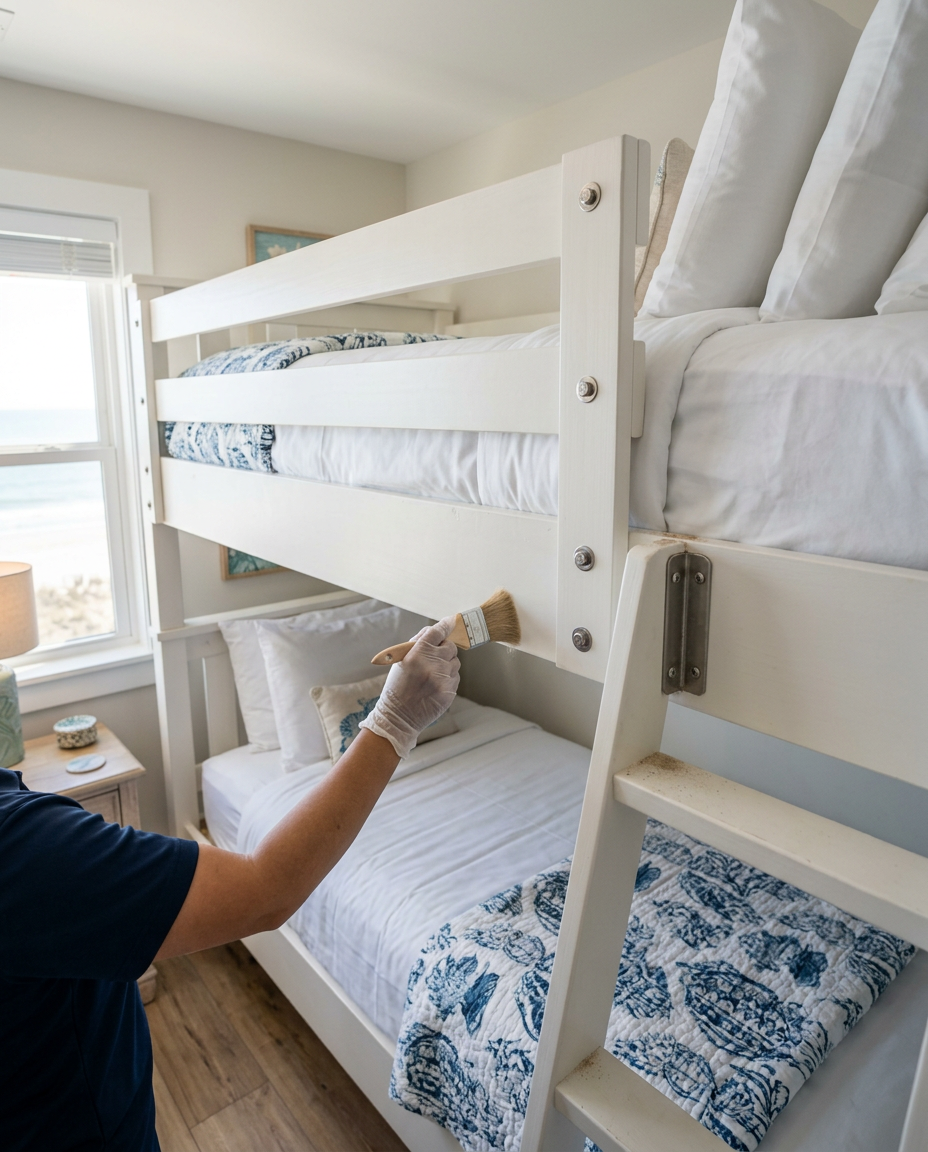
Grand Strand vacation rentals frequently rely on high-density bunk beds and loft systems to maximize sleeping capacity for multi-family groups. However, these complex wooden and metal structures present unique housekeeping and safety challenges during high-volume Saturday turnovers. From sand accumulation in tight crevices to loose hardware and hidden trash tucked away by children, bunk beds require a disciplined, methodical approach to ensure guest safety and pristine reviews. By implementing a standardized cleaning and maintenance protocol, hosts can protect their property assets and prevent negative feedback from families.
The High-Density Bunk Bed Challenge on the Grand Strand
Bunk beds are highly effective for boosting occupancy rates in Myrtle Beach vacation homes, but they are also magnets for deep-seated dirt, sand, and trash. Unlike standard king or queen beds, bunk systems feature vertical surfaces, ladders, safety rails, and under-bed voids that are easily missed during a hurried Saturday turnover. When multiple families share a property, children often treat these spaces as private play zones, resulting in unique cleaning challenges.
Sand-grit brought back from the beach acts as an abrasive agent, settling into the joints and grooves of wooden bunk frames. Over time, this grit grinds against the finish, wearing down protective sealants and leaving the wood vulnerable to the humid Grand Strand air. If left unchecked, this damp environment can cause wood swelling, warping, and even structural weakness, creating a safety hazard for future guests.
Furthermore, the physical effort required to clean and make top bunks often leads housekeepers to cut corners under tight seasonal deadlines. Reaching high-elevation corners, tucking in tight-fitting sheets against safety rails, and wiping down top-tier slats require specific tools and physical agility. To maintain a five-star rating, property managers must equip their cleaning crews with a standardized, ergonomic, and thorough protocol designed specifically for high-density sleeping quarters.
Structural Integrity and Ladder Fastener Safety Audits
Safety is the single most critical factor when hosting guests in rooms with elevated sleeping systems. Every Saturday turnover must include a physical structural audit to ensure that the bunk bed is stable and secure. High-capacity use by active children and teens can loosen joint bolts, causing the frame to wobble and pose a serious liability risk for the property owner.
Housekeepers must physically shake the bed frame from multiple angles to check for excessive play or sway. Special attention must be paid to the ladder fasteners and bracket connections, which bear the brunt of dynamic daily loads. If a ladder hook is loose or a wood screw is backing out, it must be reported immediately to the maintenance team for rapid resolution before the next guest arrives.
Safety rails on the upper bunk must also be checked for rigidity and correct height alignment. These rails must be securely attached to prevent rolling falls during the night, especially given the height of modern, thick mattresses. Documenting these quick safety checks as part of your PMS turnover checklist provides essential liability protection and peace of mind for owners.
- Grip and shake the ladder to verify that hooks, screws, or bolts are tightly anchored.
- Inspect upper safety rails for cracks, loose brackets, or wobbles that exceed one half-inch of play.
- Verify that mattress support slats are properly seated in their tracks and have not shifted.
- Examine the ladder rungs for built-up sunscreen residue that could create a dangerous slipping hazard.
- Confirm that all safety warning labels remain visible and intact on the inner frame.
Mitigating Sand-Grit and Dust on Bed Frame Rails and Slats
Sand is the ultimate nemesis of Grand Strand vacation properties, and it behaves differently when suspended in high-humidity coastal air. It binds with body oils, lotions, and dust to form a sticky, abrasive paste that adheres to wood and metal bed frames. To remove this crust, cleaners must use a dual-action approach: dry micro-vacuuming followed by a damp microfiber wipe-down.
Using a vacuum with a soft brush attachment, the cleaner should sweep along the top edges of all guardrails, down the ladder rungs, and deep into the corners of the headboard and footboard. Pay close attention to the structural ledge where the mattress sits on the wooden slats, as this area acts as a natural shelf for falling sand. Removing this loose grit prevents it from grinding into the bed's finish during subsequent cleaning steps.
After dry vacuuming, a microfiber cloth lightly dampened with a neutral, pH-balanced wood cleaner or a mild multi-surface sanitizer should be used to wipe all surfaces. Avoid overwetting the wood, as excessive moisture can degrade glues and finishes in humid climates. This step removes the sticky salt-air film, finger oils, and sunscreen smears, leaving the bed looking polished and feeling completely clean to the touch.
High-Efficiency Top Bunk Bed-Making Techniques
Making a top bunk bed is notoriously difficult and physically taxing, often taking twice as long as a standard bed. Under the intense time pressure of a peak-season Saturday turn, housekeepers need a technique that maximizes efficiency without sacrificing quality. The most effective method involves pulling the top mattress partially off its platform to drape and tuck the sheets before sliding it back into place.
To execute this safely, the housekeeper should slide the mattress about halfway off the foot of the bed, allowing easy access to three of the four corners. Fitted sheets can be easily stretched over these corners without straining the cleaner's back or scraping fingers against the safety rail. Once the sheets and flat blankets are secured on these corners, the mattress is pushed back into its frame, and the final corner is tucked.
For bunk beds positioned against walls, utilizing high-quality, lightweight coverlets instead of heavy, bulky comforters streamlines the process significantly. It is also recommended to use specialized zipper-based bunk bedding systems or neatly folded hospitality-grade sheets that require minimal tucking. This technical approach dramatically reduces physical fatigue, allowing the cleaning crew to maintain high standards across the entire property.
Headboard Grease Bands, Drool Yeast, and Sanitization Protocols
Children and teens sleeping in bunk beds often rest their heads directly against the headboards or the surrounding wall surfaces, leaving behind unsightly grease bands from hair oils, sweat, and skin cells. Over several weeks of high-occupancy rentals, these organic deposits combine with humid air to cultivate localized yeast and mold growth. Standard dusting will not remove these bio-films; they require targeted sanitization.
Cleaners should treat headboards, wall panels, and safety rails with a hospital-grade, EPA-registered disinfectant that is safe for wood and painted surfaces. Spray the disinfectant onto a microfiber cloth rather than directly onto the furniture to prevent dripping and chemical pooling. Wipe down the entire headboard area, paying special attention to the corners and decorative grooves where organic soils naturally accumulate.
Pillowcases and pillow protectors on bunk beds must also be changed during every single turnover, even if they look unused. Children often toss pillows around during play, exposing them to floor dirt and pet dander. Sanitizing the surrounding hard surfaces and replacing all soft goods ensures that the sleeping environment is completely hygienic, preventing musty coastal odors and protecting guest health.
Under-Bunk Storage and Clearance Cleanout Routines
The dark, low-clearance void underneath the bottom bunk is a prime collection point for dust bunnies, sand dunes, and forgotten guest items. Because it is difficult to see under there without bending down, this area is frequently overlooked during quick turnovers. However, savvy guests will inspect these spots, and finding dust or old trash will instantly lower their overall satisfaction and review scores.
Cleaners must use a long-reach dust mop or a low-profile vacuum wand to thoroughly sweep out the entire space under the bottom bunk. This routine must extend from the front edge all the way to the back wall, ensuring no sand or lint remains. In properties where trundle beds or under-bed storage drawers are installed, these units must be rolled out completely to clean the floor beneath them.
If the under-bed area is used to store extra blankets, pillows, or beach toys, these items must be organized neatly and inspected for dampness. In the high humidity of Myrtle Beach, items stored on the floor can easily trap moisture and develop mold. Keeping this space completely clean, dry, and well-organized prevents unpleasant odors and ensures that the room feels spacious and meticulously maintained.
Elevating the Guest Experience and Protecting Platform Ratings
In the competitive Grand Strand vacation rental market, families are highly discerning, and their reviews can make or break a listing's performance. When a family arrives and finds a bunk room that is structurally sound, sparkling clean, and free of sand, they immediately feel comfortable and valued. This attention to detail directly translates into higher occupancy rates, better reviews, and repeat bookings year after year.
Conversely, a single loose ladder rung or a dusty top-bunk corner can trigger immediate complaints to property managers or bad reviews on booking platforms. By formalizing your bunk bed turnover protocol, you establish a reliable benchmark of quality that protects your brand reputation. This operational discipline shows guests that you prioritize their family's safety and comfort, which is the cornerstone of successful hospitality.
Professional cleaning services like A2Z Cleaning & Linen Services understand the high stakes of Grand Strand turnovers and are trained to execute these intensive protocols with precision. Partnering with an expert team ensures that every high-density bunk bed is meticulously cleaned, sanitized, and safety-checked every single week. Contact A2Z Cleaning & Linen Services at 843.800.2788 to schedule your comprehensive vacation rental cleaning service and elevate your property management standards today.
Key takeaway
Standardized bunk bed maintenance and cleaning protocols are essential for preventing safety hazards and negative guest reviews in high-density Grand Strand rentals. Taking the time to perform structural safety checks, remove sand-grit, and sanitize child-contact areas protects your property and guest satisfaction. Partner with professional turnover specialists like A2Z Cleaning & Linen Services by calling 843.800.2788 to keep your rental running smoothly all season long.
Keep Reading

Vacation Rentals
The Coastal Vacation Rental Decorative Throw Pillow, Accent Blanket, and Bed Scarf Turnover Protocol: Mitigating Unwashed Textile Soil, Sand-Grit Accumulation, and Guest Hygiene Complaints under Grand Strand Turn Pressures
ReadVacation Rentals
The Coastal Vacation Rental Under-Bed and Behind-Furniture Turnover Protocol: Mitigating Hidden Guest Detritus, Sand Dunes, and Low-Score Reviews under Grand Strand Saturday Turn Pressures
ReadVacation Rentals
The Grand Strand Peak-Season Vacation Rental Turnover Specialist Career Pathway: Technical Pace-Setting Certifications, Saturday-Turn Behavioral Interview Matrices, and High-Retention Compensation Models
ReadReady for a spotless property?
Call 843.800.2788 or request a free quote from A2Z Cleaning & Linen Services.