Vacation Rentals
The Coastal Vacation Rental Refrigerator and Ice Maker Turnover Protocol: Mitigating Seafood Odor Residues, Condensation-Induced Mold, and Ice-Bin Biofilms under Grand Strand Saturday Turn Pressures
A highly operational guide to sanitizing rental refrigerators, neutralizing tough seafood odors, and eliminating ice maker biofilms under intense Grand Strand turnover schedules.
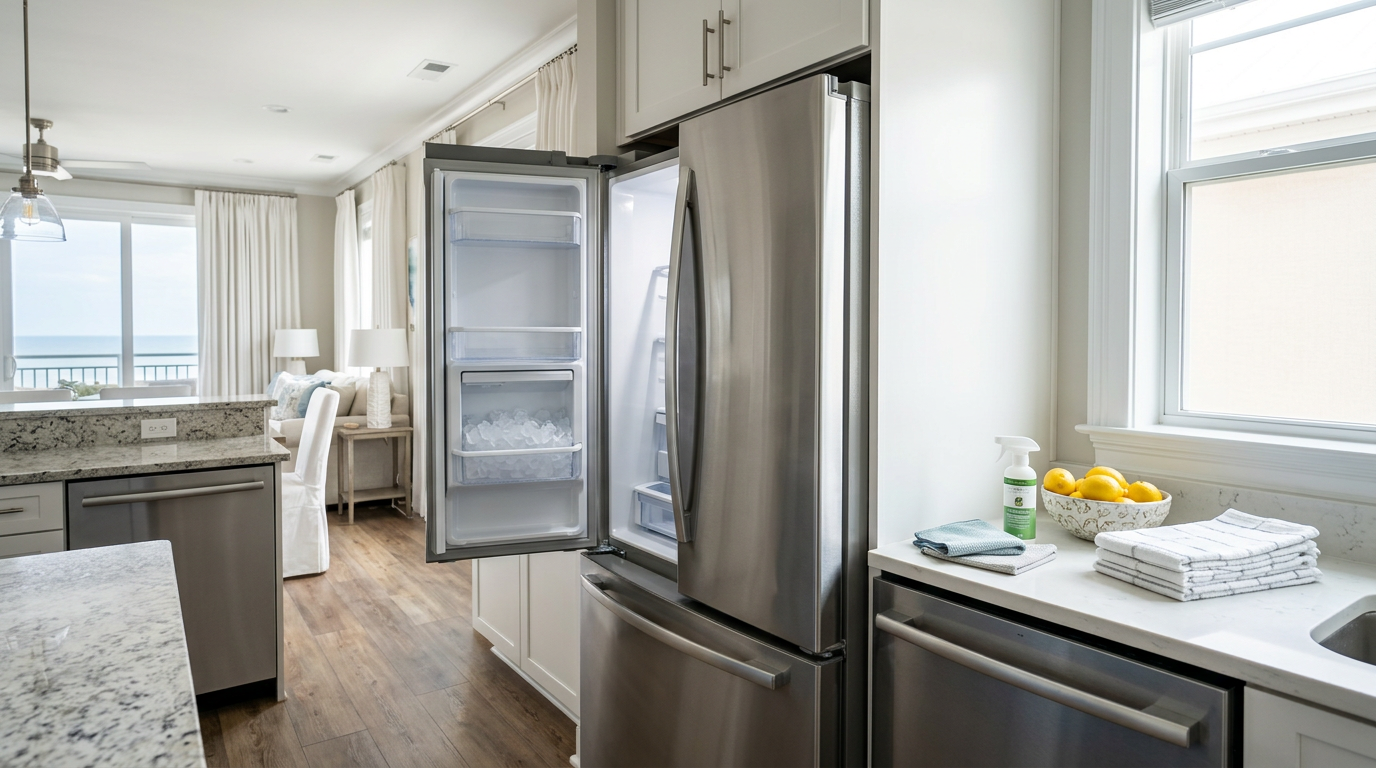
When a vacation guest arrives at a Myrtle Beach rental after a long, humid drive down Highway 501, the refrigerator is often the very first appliance they open to store their cold groceries and beverages. If they are greeted by a faint draft of leftover shrimp boil, sticky rings of sweet tea on the shelves, or black spotting along the rubber door gaskets, their confidence in the property's sanitation immediately plummets. In the high-stakes environment of Grand Strand Saturday turnovers, managing these refrigerator pain points is a critical operational variable that directly influences guest reviews and platform ranking metrics. Implementing a standardized, highly efficient refrigeration decontamination protocol ensures that this high-touch appliance remains sparkling, scent-free, and safe for every incoming family.
The High-Stakes First Impression of the Vacation Rental Refrigerator
In the vacation rental industry, guest reviews live and die by the cleanliness of the kitchen and bathrooms. While a dusty baseboard might escape a guest's notice on day one, the refrigerator is accessed immediately upon arrival as families unpack hundreds of dollars in perishable groceries. A warm, stained, or foul-smelling refrigerator is a primary trigger for immediate guest complaints, refund demands, and low cleanliness ratings on major booking platforms.
The unique coastal climate of Myrtle Beach compounds these challenges significantly. High ambient humidity means that whenever the refrigerator doors are held open during unloading or cleaning, warm, moisture-laden air rushes inside. This rapid air exchange deposits heavy condensation on the cold interior walls and shelves, creating an immediate breeding ground for mold spores, yeast, and bacteria if not addressed with professional speed and precision.
Managing this appliance under the pressure of tight Saturday turn windows requires a systematic approach. Standard household cleaning methods are simply too slow and often overlook critical sanitary details. To maintain a competitive edge and protect your property's reputation, cleaning crews must execute a disciplined, multi-step decontamination process that addresses visual cleanliness, molecular odor neutralization, and biological sanitization before the next guest checks in.
The Chemistry of Seafood Odor Extraction: Neutralizing Crabs, Shrimp, and Fish Residues
Grand Strand vacationers love purchasing fresh catch from Murrells Inlet seafood markets or hosting low-country boils on their balconies. However, the remnants of raw shrimp, crab legs, and fish packages left in the refrigerator can emit trimethylamine (TMA). This highly volatile, alkaline chemical compound quickly penetrates the porous plastic liners and drawers of the refrigerator, leaving a stubborn, fishy smell that lingers long after the physical trash is removed.
Attempting to mask these pungent seafood odors with heavy synthetic perfumes or standard household sprays only compounds the problem, creating an artificial, chemical-organic smell that signals poor cleaning practices to guests. To truly eliminate TMA and other fishy residues, cleaning technicians must apply an acidic, food-safe neutralizer. A mild solution of white vinegar or a specialized, fragrance-free enzymatic odor digester is required to chemically break down the alkaline amine compounds on contact.
The operational protocol requires removing all drawers and shelves, spraying the entire plastic liner with the neutralizing agent, and allowing a dwell time of three to five minutes. This dwell time ensures the solution penetrates the microscopic pores of the plastic. After wiping the surfaces clean, the refrigerator should be left with a fresh, neutral scent profile that reassures incoming guests of a hygienic, professionally managed kitchen environment.
Mitigating Condensation-Induced Mold on Magnetic Door Seals
The flexible rubber magnetic gaskets surrounding refrigerator and freezer doors are designed to seal in cold air, but their deep accordion pleats make them a primary reservoir for organic debris and mold. Every time a guest opens the door, airborne moisture, food crumbs, and skin cells settle into these folds. The dark, moist environment within the gasket folds acts as an ideal incubator for black mold and mildew species.
During a fast-paced turnover, standard surface wipes often glide over the top of these gaskets, leaving the deep pleats untouched. When guests open the door and look down, they can easily spot these black, mold-streaked folds, which is a common reason for failed quality control inspections. Cleaning crews must make it a standard, non-negotiable step to physically spread the rubber folds apart during every single turn.
To clean these delicate structures safely, use a food-safe botanical disinfectant or a mild hydrogen peroxide solution applied with a detailed micro-scrub brush. Avoid using concentrated chlorine bleach, as it dries out and degrades the natural rubber compound over time. Dried rubber cracks, loses its flexibility, and weakens the magnetic seal, which forces the compressor to run constantly, increases energy bills, and causes premature appliance failure.
- Physically pull back rubber gasket folds to inspect for hidden organic material, crumbs, and black spotting.
- Avoid harsh bleach solutions that degrade magnetic rubber; utilize food-safe hydrogen peroxide or botanical sanitizers instead.
- Wipe down the door frame contact points where the gasket rests to ensure a tight, energy-efficient seal.
- Completely dry the gaskets after cleaning to prevent immediate moisture re-accumulation in the humid coastal climate.
The Ice Maker and Water Dispenser Biofilm Audit
The ice maker and external water dispenser are highly susceptible to pink mold, yeast, and bacterial biofilms, which thrive in wet, cold environments. Because Myrtle Beach municipal water contains natural minerals that can precipitate out on plastic components, these deposits create a textured surface where biofilms can easily anchor. If left unaddressed, these biological films can contaminate the ice supply, causing off-tastes and posing potential health risks.
During every turnover, the ice bin must be physically inspected. If the previous guests have departed, or if the unit has been sitting vacant, the ice bin should be completely emptied. Stale ice acts like a sponge, absorbing food and ambient odors from the freezer, resulting in poor-tasting ice that prompts immediate guest complaints. Clumped, half-melted ice blocks must also be removed to prevent jamming the dispenser mechanism.
Housekeepers must wipe down the ice discharge chute and the water dispensing nozzle using a clean, food-safe sanitizing wipe. Technicians should use a flashlight to look up into the dispenser chute, checking for any pink yeast or black mold accumulation. Keeping these water pathways sterile protects guest health, preserves the flavor of beverages, and prevents costly service calls for clogged or leaking dispenser lines.
- Empty the ice bin completely during every deep turn to eliminate stale ice, odor absorption, and clumped blocks.
- Wipe the exterior water and ice dispensing nozzle with a food-safe sanitizing wipe to remove hard water scale and biological residue.
- Inspect the ice harvest fingers and mold assembly for pink yeast or black mold using a high-powered flashlight.
- Confirm that the water filter light is green, and log filter replacement dates in the PMS database to ensure water quality.
High-Speed Spill Management: Shelf Removal Logistics and Tempered Glass Care
Sugary soda spills, sticky marinades, and condensation drips frequently find their way down the back wall of the refrigerator, pooling beneath the vegetable crisper drawers. These spills dry into a sticky adhesive that glues glass shelves to their tracking, making it impossible to clean them thoroughly in place. Attempting to wipe down shelves without removing them leaves organic matter trapped in the seams, attracting pests and creating sour odors.
To manage this efficiently under Saturday turn pressures, cleaning staff must immediately remove all drawers and movable glass shelves upon entering the kitchen. However, a critical safety warning must be observed: never wash cold, tempered glass shelves with hot water. The sudden temperature differential can cause thermal shock, shattering the expensive glass panel, creating a dangerous physical hazard, and rendering the refrigerator unusable for the incoming guest.
Allow the removed shelves to sit on the counter for a few minutes to acclimate to room temperature while cleaning the interior plastic liner. Wash the shelves and drawers in the sink using lukewarm water and a grease-cutting, residue-free dish soap. Dry each component completely with a lint-free microfiber cloth before sliding them back into place, ensuring there are no water streaks or lingering sticky residues.
The Temperature Stabilization Protocol for Same-Day Turnovers
A major operational bottleneck during the hot Myrtle Beach summer is refrigerator recovery time. When a refrigerator door is left wide open during a long cleaning session, or if departing guests turn off the appliance, the internal temperature quickly rises into the food danger zone, which is above 40 degrees Fahrenheit. It can take a modern, energy-efficient refrigerator up to six hours to cool back down to a safe operating temperature of 37 degrees Fahrenheit.
If incoming guests arrive at 4:00 PM with carloads of fresh groceries and load them into a warm refrigerator, the unit will struggle to cool, leading to spoiled food and urgent calls to property management. To prevent this, turnover cleaners must work in rapid, targeted bursts to keep the doors closed as much as possible. Spray down the interior, close the door to let the cleaning agent dwell, then open it briefly to wipe and dry.
If a refrigerator is found completely turned off or unplugged at check-out, immediately turn it to its coldest setting upon entry. This jumpstarts the cooling process during the cleaning window. Before leaving the property, the technician must verify that the temperature control is reset to the manufacturer's recommended mid-range setting, ensuring the compressor does not freeze up or run excessively.
Preventive Maintenance and Quality Control Verification
A clean refrigerator must be verified by a secondary inspector before the turnover is marked complete in the property management system. This quality control audit should include checking the exterior surfaces of the appliance. Stainless steel refrigerators require special care, including wiping with the grain using a high-quality, non-greasy stainless steel polish to remove greasy fingerprints, salt-air smudges, and water spots.
Inspectors must also check the kick plate and grill at the bottom of the refrigerator. This area frequently accumulates pet hair, sand, and dust, which restricts airflow to the condenser coils. Restricted airflow causes the refrigerator to work harder, run hotter, and fail prematurely. Vacuuming this grill during deep cleans is a simple preventive maintenance step that saves property owners thousands of dollars in premature replacement costs.
Finally, checking that the internal light bulbs are working and that the water filter light is not illuminated prevents minor guest complaints from escalating. Taking a high-resolution, timestamped photo of the clean, organized refrigerator interior provides essential documentation. This photo serves as proof of standard-operating-procedure compliance in the event of a guest dispute regarding the property's condition upon arrival.
Streamlining Refrigerator Audits with PMS Checklists
Scaling a vacation rental business along the Grand Strand requires integrating these precise physical steps into a digital property management system (PMS). Cleaning crews should follow a photo-mandatory checklist that guides them through each phase of the refrigerator turnover protocol. This digital trail ensures that no step is forgotten during the chaotic peak summer season.
By requiring cleaning technicians to upload photos of the cleaned gaskets, the empty ice bin, and the organized shelves, property managers can remotely verify quality without needing to physically visit every property. This level of verification protects the homeowner's valuable appliance asset, reduces administrative overhead, and builds trust with property owners who expect premium care.
This structured approach turns a historically problematic appliance into a predictable, high-scoring feature of your rental. Partnering with a professional team like A2Z Cleaning & Linen Services ensures these meticulous standards are executed consistently, safeguarding your reviews and revenue. Contact A2Z Cleaning & Linen Services at 843.800.2788 to elevate your property's turnover standards.
Key takeaway
Maintaining a pristine, odor-free refrigerator and sterile ice maker is essential for securing five-star guest reviews and preventing immediate check-in complaints. By implementing a strict, chemical-specific decontamination protocol, vacation rental managers can protect their valuable appliances, ensure food safety, and deliver an exceptional first impression. Partnering with a professional turnover specialist ensures these critical details are handled flawlessly during every Grand Strand turnover.
Keep Reading

Vacation Rentals
The Coastal Under-Bed and Behind-Furniture "Look-Back" Inspection Protocol: Mitigating Hidden Guest Detritus, Lost Charging Cables, and Low-Angle Inspection Failures in Grand Strand Vacation Rentals
ReadVacation Rentals
The Coastal High-Chair and Pack-and-Play Sanitization Protocol: Preventing Organic Biofilms, Sand-Grit Accumulation, and Mold Spores in Grand Strand Family Rentals
ReadVacation Rentals
The Coastal Smart-Fridge and Ice Maker Sanitation Protocol: Mitigating Hard-Water Scale, Seafood Odor Migration, and Chute Biofilms in Grand Strand Rental Turnovers
ReadReady for a spotless property?
Call 843.800.2788 or request a free quote from A2Z Cleaning & Linen Services.